
GUIDE
Elvie Double Electric vs. Medela Pump In Style
Published on
Both are solid double electric breast pumps with hands-free capability. The Elvie is quieter, truly wireless, and fits inside your bra. The Medela offers stronger hospital-grade suction and costs significantly less. Your priority — portability or raw pumping power — determines the winner.
The Elvie Double Electric and Medela Pump In Style represent two very different philosophies in breast pump design. Elvie went all-in on discretion and wearability. Medela leaned on decades of hospital pump engineering. Both get milk out. The experience of using them could not be more different.
Log nursing, pumping, and bottles
Two Very Different Pumping Experiences
The Elvie Double Electric and the Medela Pump In Style both call themselves hands-free breast pumps. And technically, they both are. But using them feels nothing alike.
The Elvie disappears into your bra. No tubes. No motor dangling off your waistband. No rhythmic whooshing sound announcing to everyone within earshot that you are pumping. You can wear it under a shirt and nobody knows. That level of discretion is what you are paying the premium for.
The Medela Pump In Style is a more traditional setup — a motor unit, tubing, flanges, and bottles. You need a hands-free pumping bra to go hands-free. It is not silent. It is not invisible. But it has decades of hospital-grade engineering behind it, and many lactation consultants consider Medela the gold standard for consistent output.
So which one should you buy? That depends on where and how you pump.
For guidance on how much milk to expect at various ages, check out our baby feeding chart.
| Feature | Elvie Double Electric | Medela Pump In Style | What It Means |
|---|---|---|---|
| Manufacturer | Elvie (UK-based) | Medela (Switzerland-based) | Both are established companies. Medela has been in the breast pump space for over 60 years. Elvie launched in 2018. |
| Pump type | Wearable, in-bra, fully wireless | Traditional double electric with hands-free bra compatibility | Elvie fits entirely inside your bra. Medela requires a motor unit, tubing, and a hands-free pumping bra. |
| Maximum suction | ~200 mmHg | ~270 mmHg | Medela wins on raw suction strength. This matters most for those who respond to higher vacuum levels. |
| Noise level | Near-silent (~20 dB) | Moderate (~55 dB) | Elvie is whisper-quiet. Medela sounds like a typical breast pump. Big difference in meetings or shared spaces. |
| Milk capacity per side | 5 oz (150 mL) | 8 oz (240 mL) with included bottles | Medela holds more per session. The Elvie's 5 oz limit means you may need to empty mid-session if you produce more. |
| Battery life | ~2.5 hours (rechargeable built-in) | ~2 hours (rechargeable battery pack) | Similar battery life. Elvie charges via USB-C. Medela uses a separate rechargeable battery pack or wall outlet. |
| App connectivity | Yes — Bluetooth app tracks volume, duration, and history | Yes — Medela Family app with session tracking | Both offer companion apps. The Elvie app is generally reviewed as more polished and reliable. |
| Number of parts to clean | 5 per side | 7–8 per side (plus tubing) | Elvie has fewer parts and no tubing. Less cleanup is a real quality-of-life win at 2 AM. |
| Flange sizes included | 2 sizes (21 mm and 24 mm) | 2 sizes (21 mm and 24 mm) | Tie. Both include two standard sizes. Additional sizes available separately for both brands. |
| Portability | Fits in a bra — fully portable | Requires carrying motor unit and tubing | Elvie wins by a mile. You can pump while grocery shopping. Medela ties you to a spot near the motor. |
| Insurance coverage | Covered by some plans, often with upgrade fee | Widely covered, often at no cost | Medela is easier to get through insurance. Elvie may require out-of-pocket spending depending on your plan. |
Suction Power vs. Silence: The Core Tradeoff
Here is the fundamental tension between these two pumps.
Medela Pump In Style delivers around 270 mmHg of maximum suction. That is closer to hospital-grade territory. For parents who have a harder time letting down or who respond better to stronger vacuum, this extra power can translate directly into more milk per session.
Elvie Double Electric tops out at roughly 200 mmHg. That is enough for most people, but it is a meaningful gap. Some users report that the Elvie takes longer per session to empty, or that they get slightly less output compared to a traditional pump.
The tradeoff? The Elvie is nearly silent at about 20 dB — quieter than a whisper. The Medela runs at roughly 55 dB, which is normal conversation volume. If you are pumping in a shared office, on a conference call, or while your baby naps in the same room, that noise difference matters enormously.
Neither pump is objectively better. You are choosing between power and stealth.
The Portability Gap Is Massive
This is where the Elvie truly separates itself.
The Elvie Double Electric fits entirely inside your nursing bra. The collection cups sit against your body. There is nothing external. You can wear a regular shirt over it, walk around Target, sit in a meeting, or ride the subway while pumping. Nobody will know unless you tell them.
The Medela Pump In Style requires you to be tethered to the motor unit via tubing. You can move around a room, sure. But you are not walking through a grocery store with it. You need to set up, plug in or use the battery pack, attach the tubing, position the flanges in your pumping bra, and sit somewhere relatively stationary.
For parents who pump exclusively at home, this difference does not matter much. For parents who work outside the home, travel, or simply want to multitask while pumping, the Elvie's wearable design is a genuine game-changer.
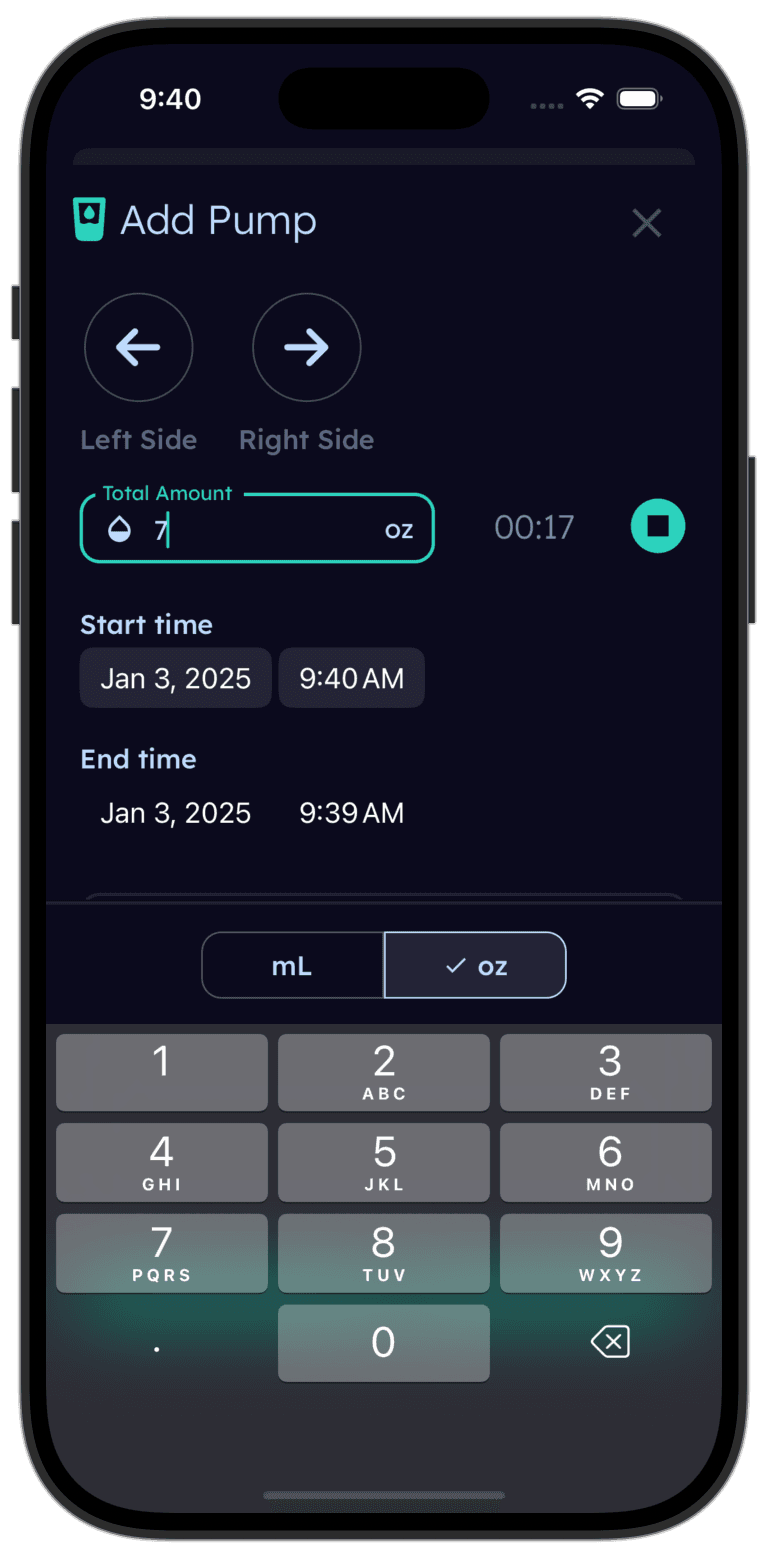
Tinylog tracks pumping sessions so you can see your output over time.
Log each pump session, track total daily output in ounces or mL, and spot supply trends before they become problems. Share data with your lactation consultant.


Cleaning and Daily Maintenance
Nobody talks about this enough, but cleaning is a huge part of the pumping experience. You do it after every single session, multiple times a day, for months.
The Elvie breaks down into 5 parts per side: the breast shield, the bra interface, the container, the valve, and the spout. No tubing. Disassembly takes about 30 seconds. Reassembly is intuitive.
The Medela Pump In Style has 7–8 parts per side plus tubing and connectors. The tubing needs to be checked for condensation and moisture regularly. If moisture gets into the tubing, you need to run the pump with the tubes disconnected to air them out. It is not hard, but it adds up over hundreds of sessions.
At 3 AM, when you are half asleep and just finished pumping, the difference between washing 5 parts and washing 8 parts plus tubing feels significant. This is one of those things that does not show up in spec sheets but absolutely affects your daily quality of life.
| Product | Typical Price | Cost Per Diaper | Monthly Estimate |
|---|---|---|---|
| Elvie Double Electric Wearable Pump | $280–$350 | N/A | ~$8–$12 (replacement parts) |
| Medela Pump In Style Hands-Free | $150–$200 | N/A | ~$6–$10 (replacement parts) |
| Elvie replacement breast shields (2-pack) | $25–$35 | N/A | Replace every 2–3 months |
| Medela replacement membranes + valves | $8–$15 | N/A | Replace every 1–2 months |
Price: The Elvie Premium Is Real
Let us talk money. The Elvie Double Electric typically runs $280–$350 at retail. The Medela Pump In Style sits at $150–$200. That is a $100–$150 gap, which is not trivial when you are already spending on diapers, formula, pediatrician visits, and everything else.
Insurance complicates the picture. Most plans cover the Medela Pump In Style at zero out-of-pocket cost. The Elvie is covered by fewer plans and often requires an upgrade fee of $100–$200 on top of what insurance pays.
Ongoing costs are similar. Both pumps need replacement parts every few months — shields, valves, membranes. Elvie parts cost slightly more and have fewer third-party alternatives. Medela's larger market share means more aftermarket options.
If budget is a real concern, the Medela gives you excellent pumping performance at a significantly lower price point. The Elvie premium buys you convenience and discretion, not better milk output.
Choose the Elvie Double Electric If
- You need to pump discreetly at work, in meetings, or during your commute
- Noise is a dealbreaker — you share a workspace or pump while the baby sleeps nearby
- You want a truly wireless experience with no tubes or external motor
- You are willing to pay more upfront for convenience and portability
- Fewer parts to wash matters to you (especially during nighttime sessions)
- You produce 5 oz or less per side in a typical session
Choose the Medela Pump In Style If
- You pump mostly at home and do not need silent, wearable pumping
- You respond better to stronger suction and want maximum output per session
- You produce more than 5 oz per side and need a larger collection container
- Budget matters — the Medela costs roughly half the price of the Elvie
- You want the easiest possible insurance coverage with no upgrade fee
Where to Buy
If portability and discretion are your top priorities, the Elvie Double Electric Wearable Pump (~$300 retail) is the most seamless pumping experience on the market. It fits in your bra, makes almost no noise, and has fewer parts to clean. The premium price is real, but for parents who pump on the go, it pays for itself in sanity.
If you want proven suction power and the best value, the Medela Pump In Style Hands-Free (~$170 retail) delivers hospital-grade performance backed by 60 years of breast pump engineering. It is widely covered by insurance, has a huge aftermarket parts ecosystem, and many lactation consultants recommend it as their default. You give up wearability, but you gain output and savings.
Our honest take: if you can afford the Elvie and you pump outside the home regularly, it is worth it. If you pump mostly at home or budget is tight, the Medela is the smarter buy.
Tinylog earns a small commission on purchases made through these links, at no cost to you.
Want to save a few bucks? promo.new is worth a quick look. It won't always have your product, but when it does, the savings are real.
The Bottom Line
The Elvie Double Electric and Medela Pump In Style are both capable double electric breast pumps that get the job done. They just get it done very differently.
Elvie Double Electric wins on portability, noise level, wearability, ease of cleaning, and discretion. It is the pump that disappears into your life instead of interrupting it.
Medela Pump In Style wins on suction strength, milk capacity, insurance coverage, price, and a decades-long track record. It is the workhorse pump that lactation consultants trust.
For most parents, the deciding factor comes down to where you pump. If the answer is "at my desk, in the car, at the store, and everywhere in between," the Elvie is hard to beat. If the answer is "mostly at home in my pumping spot," save the money and go with the Medela.
If you are tracking pump output — which is especially helpful for spotting supply dips early — Tinylog makes it simple to log sessions and see trends over time.
Related Guides
- Baby Feeding Chart — How much your baby should eat by age
- Breastfeeding Positions — Finding the hold that works for you and baby
- How to Increase Milk Supply — Evidence-based tips for boosting production
- Bottle Feeding Guide — Paced feeding, nipple flow rates, and formula prep
Sources
- Elvie.com. "Elvie Pump — Product Specifications." 2026.
- Medela.com. "Pump In Style Hands-Free — Product Information." 2026.
- Wirecutter (NYT). "The Best Breast Pumps." nytimes.com/wirecutter, 2026.
- BabyGearLab. "Best Breast Pump Review." babygearlab.com, 2026.
- Lactation Network. "Breast Pump Comparison Guide." lactationnetwork.com, 2025.
- Aeroflow Breastpumps. "Insurance Coverage for Breast Pumps." aeroflowbreastpumps.com, 2026.
This guide is for informational purposes only. Breast pump choice is a personal decision based on your body, schedule, and pumping goals. If you are experiencing supply issues or pain while pumping, consult a board-certified lactation consultant.
Frequently asked questions
- Is the Elvie Double Electric worth the higher price?
- It depends on your lifestyle. If you need to pump at work, during meetings, or while moving around, the Elvie's silent, wireless design can be genuinely life-changing. If you pump mostly at home and want maximum suction power, the Medela Pump In Style delivers comparable or better output for roughly half the cost.
- Which pump has stronger suction?
- The Medela Pump In Style offers stronger maximum suction at around 270 mmHg compared to the Elvie's approximately 200 mmHg. For most people this difference does not matter, but those with lower milk supply or who respond better to stronger suction may see better output with the Medela.
- Can I use the Elvie pump while walking around?
- Yes. The Elvie Double Electric is fully wireless and fits inside a standard nursing bra. There are no tubes, no dangling bottles, and no external motor unit. You can walk, cook, commute, or sit in a meeting while pumping. The Medela Pump In Style requires a motor unit and tubing, so movement is more limited even with a hands-free bra.
- Are replacement parts expensive for either pump?
- Replacement parts for both pumps run between $15 and $40 per set. Elvie parts tend to cost slightly more and are proprietary, so you cannot substitute third-party alternatives as easily. Medela has a larger aftermarket ecosystem with more third-party compatible parts available.
- Will my insurance cover either of these pumps?
- Most US insurance plans cover a breast pump under the Affordable Care Act. The Medela Pump In Style is widely covered with little or no out-of-pocket cost. The Elvie Double Electric is covered by some plans but may require an upgrade fee of $100–$200 depending on your insurer. Check with your insurance provider or use a DME supplier like Aeroflow to verify coverage.
- How do I clean the Elvie vs. the Medela?
- The Elvie has fewer parts to disassemble and clean — five pieces per side. The Medela Pump In Style has tubing, connectors, flanges, membranes, and bottles to wash after each session. Neither is dishwasher-safe for all parts. The Elvie's simpler teardown is a real advantage during those bleary 3 AM sessions.