
GUIDE
Ergobaby Omni Classic vs. Ergobaby Adapt
Published on
Both are excellent structured carriers from the same trusted brand. The Omni Classic offers all four carrying positions including forward-facing. The Adapt skips forward-facing but is lighter, simpler, and slightly more affordable.
Ergobaby is one of the most recommended baby carrier brands by parents and pediatricians alike. The Omni Classic All-Position and the Adapt are their two most popular buckle carriers. Both work from newborn to toddler without an infant insert. The real differences come down to carrying positions, weight, breathability, and price.
Log feeds, sleep, and growth
Same Brand, Different Priorities
Ergobaby makes some of the most trusted structured baby carriers on the market. The Omni Classic All-Position Carrier and the Adapt Carrier are both part of their core lineup, and both share the same ergonomic M-position design that pediatric orthopedists recommend.
So why do two carriers from the same company exist at similar price points? Because parents have different needs. The Omni Classic is built for maximum versatility — four carrying positions including forward-facing. The Adapt is built for simplicity — three positions, slightly lighter, and a bit easier to learn.
Both work from newborn to toddler without an infant insert. Both are hip-healthy certified by the International Hip Dysplasia Institute. And both will serve you well for 1–3 years of daily carrying.
The question is which set of trade-offs fits your family better.
We compared the features, comfort, price, and real-world usability of both carriers so you can pick the one that fits your daily routine — not just what looks good on a spec sheet.
| Feature | Omni Classic | Adapt | What It Means |
|---|---|---|---|
| Manufacturer | Ergobaby | Ergobaby | Same brand, same core ergonomic philosophy. Both are hip-healthy certified by the IHDI. |
| Carrying positions | 4 — front inward, front outward, hip, back | 3 — front inward, hip, back | Omni wins if forward-facing matters to you. Many parents never use it. |
| Weight range | 7–45 lbs (newborn to ~4 years) | 7–45 lbs (newborn to ~4 years) | Tie. Both cover the same weight range with no infant insert needed. |
| Carrier weight | ~1.8 lbs | ~1.5 lbs | Adapt is slightly lighter, which adds up over long wearing sessions. |
| Lumbar support | Yes — padded lumbar waistband included | Yes — padded lumbar waistband included | Tie. Both include lumbar support, which matters enormously for longer carries. |
| Crossable shoulder straps | Yes | No | Omni allows straps to cross in the back for a better fit on petite wearers. |
| Hood / sun cover | Yes — UPF 50+ tuckaway hood | Yes — UPF 50+ tuckaway hood | Tie. Both include a privacy and sun hood that tucks into the panel. |
| Adjustable seat width | Slider-based adjustment | Velcro-based adjustment | Both adjust for newborn to toddler. Omni's slider is quieter; Adapt's Velcro is simpler. |
| Storage pocket | Yes — zippered | Yes — zippered | Tie. Both have a small zippered pocket on the waistband. |
| Machine washable | Yes | Yes | Tie. Both are machine washable on cold, air dry recommended. |
The Forward-Facing Question
The single biggest difference between these two carriers is that the Omni Classic allows forward-facing carry and the Adapt does not.
Forward-facing carry lets your baby face outward, seeing the world from your chest. Many babies love this once they have full head and neck control (typically around 5–6 months). It can be especially helpful for curious babies who fuss when carried inward.
However, there are reasons some parents skip it entirely:
- Babywearing educators often recommend inward carry for most situations. It better supports the baby's developing spine and hips, and it allows the baby to turn away from overstimulation.
- Forward-facing distributes weight less efficiently. You may feel heavier pressure on your shoulders and lower back compared to inward carry.
- Many parents who buy the Omni never use forward-facing mode. It is the most common "feature I paid for but did not use" in carrier reviews.
If you know you want the option, the Omni is the clear pick. If you are unsure or do not care, the Adapt saves you money on a feature you may never use.
Comfort for the Wearer
Both carriers include padded shoulder straps and a lumbar support waistband. For most parents, either carrier is comfortable for carries up to 1–2 hours.
Where they differ:
The Omni Classic has crossable shoulder straps. This allows you to cross the straps in the back instead of wearing them in an H-shape. Crossable straps are especially helpful for petite parents or those with narrow shoulders — the straps stay put and distribute weight more evenly.
The Adapt is about 0.3 lbs lighter. That does not sound like much, but when you are wearing a carrier plus a growing baby for an hour-long walk, every ounce matters. The Adapt also has a slightly simpler buckle system, which some parents find easier to put on and take off solo.
Both carriers accommodate a wide range of wearer body types. The waistband fits approximately 25–55 inch waists.
One underrated comfort factor: the break-in period. Both carriers feel a bit stiff out of the box. After a week or two of regular use, the fabric softens and the buckles move more smoothly. Do not judge either carrier based on the first wear alone.
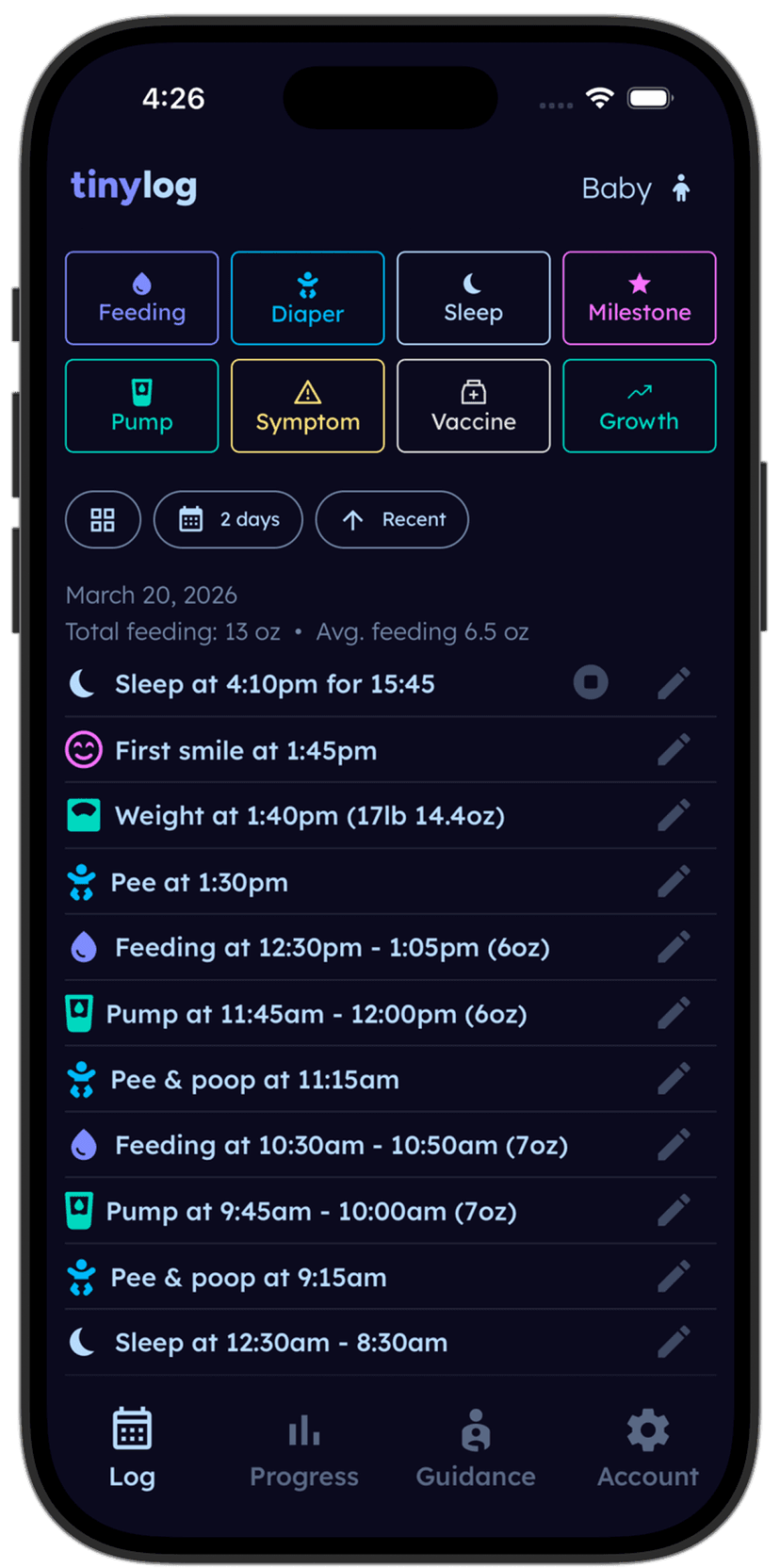
Tinylog helps you track your baby's growth milestones.
Log feeds, sleep, diaper changes, and milestones. See patterns over days and weeks. Bring the data to your next pediatrician visit.


Seat Width Adjustment: Slider vs. Velcro
Both carriers adjust the seat width to accommodate your baby as they grow — from a narrow newborn seat to a wide toddler seat. But they use different mechanisms.
The Omni Classic uses a slider system. You pull a tab along a track to widen or narrow the seat. It is quiet, smooth, and easy to adjust one-handed once you learn the motion.
The Adapt uses Velcro tabs. You peel and restick to change the seat width. It is intuitive and fast, but the ripping sound can startle a sleeping baby. Some parents cover the Velcro with a small cloth when adjusting mid-nap.
Neither system is objectively better. The slider is quieter; the Velcro is simpler. Both hold securely.
One thing to keep in mind: as your baby grows, you will adjust the seat width less frequently. Most parents set it once every few months. So while the adjustment mechanism matters, it is not something you will interact with daily.
| Product | Typical Price | Cost Per Use | Notes |
|---|---|---|---|
| Ergobaby Omni Classic All-Position Carrier | $135–$165 | ~$0.25–$0.45 | Based on daily use for 12–18 months |
| Ergobaby Adapt Carrier | $115–$145 | ~$0.20–$0.40 | Based on daily use for 12–18 months |
Price: A Modest Gap
The Ergobaby Adapt typically runs $20–$30 less than the Omni Classic. The difference reflects the Omni's additional forward-facing position and crossable strap system.
On a cost-per-use basis, both carriers are remarkably affordable. If you carry your baby once a day for a year, you are paying roughly a quarter per use — less than a cup of coffee. A structured carrier that fits well and supports your back is one of the highest-value baby purchases you can make.
Tips to save:
- Buy during sales. Ergobaby runs regular promotions, especially around holidays and Amazon Prime events.
- Check your registry discount. Most registries (Amazon, Target, Babylist) offer a completion discount of 10–15%.
- Consider secondhand. Ergobaby carriers hold up well. A gently used carrier at half price is a smart buy if the buckles and fabric are in good condition.
- Skip the accessories. The carrier comes with everything you need. Add-on drool pads and covers are nice but not essential.
- Watch for bundle deals. Ergobaby occasionally offers carrier + swaddle or carrier + nursing pillow bundles at a discount.
Choose the Ergobaby Omni Classic If
- You want the option to carry your baby forward-facing once they have head control
- You are petite and want crossable shoulder straps for a better fit
- You prefer a slider-based seat width adjustment over Velcro
- You plan to use the carrier in all four positions over your baby's first two years
- You want the most versatile single carrier in the Ergobaby lineup
Choose the Ergobaby Adapt If
- You do not plan to use forward-facing carry
- You prefer a slightly lighter carrier for everyday use
- You want to save $20–$30 and do not need the extra carry position
- You prefer a simpler design with fewer adjustment points
- You are buying a second carrier and want something streamlined for quick trips
Where to Buy
If you want maximum versatility, the Ergobaby Omni Classic All-Position Carrier (~$135–$165) gives you all four carrying positions, crossable shoulder straps, and the confidence that you will never outgrow a carry position. It is the best choice for parents who want one carrier to do everything.
If you prefer simplicity and value, the Ergobaby Adapt Carrier (~$115–$145) delivers the same ergonomic design and comfort in a lighter, more streamlined package. You give up forward-facing carry and crossable straps, but many parents never miss either feature.
Whichever you choose, make sure to adjust the carrier properly. A well-fitted carrier should feel like the baby's weight is on your hips, not your shoulders. Watch Ergobaby's official fitting videos before your first wear.
Tinylog earns a small commission on purchases made through these links, at no cost to you.
Want to save a few bucks? promo.new is worth a quick look. It won't always have your product, but when it does, the savings are real.
The Bottom Line
The Ergobaby Omni Classic and Ergobaby Adapt are both excellent carriers from a brand with a strong safety and ergonomic track record. The differences are real but specific:
Ergobaby Omni Classic wins on versatility — four carrying positions, crossable straps, and slider-based seat adjustment. It is the better choice if you want every option available.
Ergobaby Adapt wins on simplicity — lighter weight, lower price, and fewer adjustment points. It is the better choice if you want a straightforward carrier and do not need forward-facing carry.
For most families, either carrier will work beautifully for 1–3 years. The "right" choice depends on whether forward-facing carry and crossable straps matter enough to justify the price difference. If you are unsure, the Adapt is the safer bet — you can always add a forward-facing carrier later if your baby demands it.
If you are tracking your baby's feeds, sleep, and milestones, Tinylog makes it easy to log daily patterns and share data with your pediatrician.
Related Guides
- Baby Feeding Chart — How much your baby should eat by age
- Tummy Time — When to start and how to build up
- Baby Milestones — Month-by-month developmental milestones
Sources
- Ergobaby.com. "Omni Classic All-Position Baby Carrier — Product Information." 2026.
- Ergobaby.com. "Adapt Baby Carrier — Product Information." 2026.
- International Hip Dysplasia Institute. "Hip-Healthy Product Directory." hipdysplasia.org, 2026.
- Wirecutter (New York Times). "The Best Baby Carriers." nytimes.com/wirecutter, 2026.
- Lucie's List. "Ergobaby Carrier Comparison: Omni vs. Adapt vs. Embrace." lucieslist.com, 2025.
- BabyGearLab. "Best Baby Carriers of 2026." babygearlab.com, 2026.
- American Academy of Pediatrics. "Baby Carriers and Slings Safety Tips." healthychildren.org.
This guide is for informational purposes only. Baby carrier choice is a personal preference based on your family's individual needs. Always follow the manufacturer's weight and age guidelines. If you have concerns about your baby's hip development, consult your pediatrician.
Frequently asked questions
- Can the Ergobaby Omni Classic and Adapt both be used from birth?
- Yes. Both carriers are designed for newborns starting at 7 pounds without an infant insert. They adjust internally to accommodate a newborn's smaller frame and grow with the child up to 45 pounds.
- What is the main difference between the Ergobaby Omni and the Adapt?
- The biggest difference is carrying positions. The Omni Classic supports four positions — front inward, front outward, hip, and back. The Adapt supports three positions — front inward, hip, and back. It does not offer forward-facing carry.
- Is forward-facing carry safe for babies?
- Forward-facing carry is considered safe for babies with full head and neck control, typically around 5–6 months. The Ergobaby Omni Classic is designed to maintain an ergonomic M-position even in forward-facing mode. However, many babywearing educators recommend inward-facing carry for most situations because it supports the baby's developing spine and hips.
- Which Ergobaby carrier is better for hot weather?
- Both carriers come in mesh versions (Omni Breeze and Adapt SoftFlex Mesh) for improved airflow. In their standard fabric versions, they perform similarly in warm weather. If heat is a primary concern, look at the mesh variants rather than choosing between the Omni and Adapt.
- Can both carriers be used for back carrying?
- Yes. Both the Omni Classic and the Adapt support back carry for babies who can sit unassisted, typically around 6 months. Both use the same buckle system for transitioning to back carry.
- Is the Ergobaby Adapt being discontinued?
- Ergobaby has shifted focus toward the Omni line and newer models like the Embrace. The Adapt remains available but may have limited color options. If you prefer the Adapt's simpler design and lighter weight, it is worth purchasing while stock is available.