
1. Place on their side
Gently place your child on their side on a flat, safe surface (floor, bed, firm couch). This is called the recovery position and prevents any saliva or vomit from blocking the airway.
GUIDE
Published on
Terrifying to witness, but almost always harmless — and they do not cause brain damage.
Febrile seizures affect 2-5% of children between 6 months and 5 years. They are triggered by a rapid rise in body temperature, not by the peak of the fever. Knowing what to do — and what NOT to do — during a febrile seizure can make the difference between a controlled response and a panicked one.
Share logs with your pediatrician
Febrile seizures are one of the most frightening experiences a parent can go through. Your child suddenly stiffens, their eyes roll back, their body begins jerking, and for a moment — which feels like an hour — you are certain something catastrophic is happening. Every parent who has been there will tell you the same thing: it felt like their child was dying.
They were not.
Febrile seizures are convulsions triggered by fever, and they affect 2 to 5 percent of children between the ages of 6 months and 5 years. They are the most common type of seizure in childhood, and despite how terrifying they look, the overwhelming medical consensus is that they are almost always benign — meaning they do not cause brain damage, they do not cause intellectual disability, and they do not mean your child has epilepsy.
Understanding what febrile seizures are, what they look like, and exactly what to do during one is the best preparation you can give yourself. Because if it happens, you will not have time to Google it.
David and Elena's 14-month-old daughter, Mia, had been fussy all afternoon with what seemed like a developing cold. She had a slight runny nose but no detected fever. Elena was giving Mia a bath before bed when she noticed Mia felt very warm. She took her out of the tub and was reaching for the thermometer when Mia suddenly went rigid in her arms.
Mia's whole body stiffened. Her eyes rolled upward. Then the jerking started — rhythmic, involuntary movements of her arms and legs. Elena screamed for David. He ran in and saw Mia's lips turning slightly bluish. Both parents were terrified.
David grabbed his phone. He remembered reading somewhere to time it. The seizure lasted about 90 seconds — though both parents would later say it felt like ten minutes. Then Mia went limp, her eyes closed, and her breathing became regular again. She looked like she had fallen into a deep sleep.
They called 911. By the time the paramedics arrived, Mia was waking up — groggy, confused, crying, but responsive. Her temperature was 103.4F. The paramedics took them to the ER, where the doctors confirmed it was a simple febrile seizure. Mia was back to her normal self within two hours.
Elena later said the worst part was not knowing what was happening. She had never heard of febrile seizures. If she had known what they were and what to do, those 90 seconds would still have been frightening — but they would not have been the single most terrifying moment of her life.
Febrile seizures are not caused by how high the fever gets. This is one of the most important things to understand, because it changes how you think about prevention.
Febrile seizures are triggered by the rapid rise in body temperature — the speed of the climb, not the peak. This is why they often occur at the very beginning of an illness, before a parent even realizes the child has a fever. The child's temperature may spike from normal to 102F within a short period, and that rapid change is what triggers the seizure in susceptible children.
This also explains why fever-reducing medications do not prevent febrile seizures. By the time you detect the fever and give a dose of acetaminophen or ibuprofen, the rapid rise has already happened. The medication will help with comfort, but it will not prevent a seizure. Multiple clinical studies have confirmed this.
Why some children have febrile seizures and others do not appears to be largely genetic. If a parent or sibling had febrile seizures, the risk is significantly higher. The developing brain between 6 months and 5 years of age appears to have a lower threshold for seizure activity in response to rapid temperature changes, and this threshold varies from child to child based on their genetic makeup.
The peak age for febrile seizures is between 12 and 18 months. They are rare before 6 months and uncommon after 5 years. Most children who are going to have febrile seizures will have their first one before age 3.
Not every seizure looks dramatic. Some are subtle — brief stiffening, a fixed stare, or a few seconds of unresponsiveness. If you are not sure whether what you witnessed was a seizure, describe it to your pediatrician in detail.
If your child has a seizure, your instinct will be to do something — to stop it, to hold your child, to fix it. The hardest part of managing a febrile seizure is accepting that there is nothing you can do to stop it. What you can do is keep your child safe while it runs its course. Here are the steps, in order:
Gently place your child on their side on a flat, safe surface (floor, bed, firm couch). This is called the recovery position and prevents any saliva or vomit from blocking the airway.
Move any hard or sharp objects away from your child. If they are near furniture edges, move the furniture or place a pillow or blanket between your child and the object.
This is critical. Your child cannot swallow their tongue — that is a myth. Putting fingers, a spoon, a wallet, or anything else in their mouth can cause choking, broken teeth, or injury to you or your child.
Do not try to hold your child still or stop the jerking movements. You cannot stop a seizure by restraining the body, and you risk causing injury. Let the seizure run its course.
This is the most important piece of clinical information. Grab your phone and start a timer or note the clock time. If the seizure lasts more than 5 minutes, call 911. Knowing the exact duration helps medical professionals determine what type of seizure it was.
Do not leave them alone. Watch their breathing and their color. Your calm presence matters — for both of you.
Keep your child on their side. They will likely be sleepy, confused, or irritable — this is the postictal period and is completely normal. Do not try to wake them aggressively. Let them rest. Call your pediatrician to report what happened.
If in doubt, call 911. No one will judge you for calling emergency services for a seizing child. It is always the right call if you are unsure.
Febrile seizures are classified into two types, and the distinction matters for follow-up care and long-term outlook.
Simple febrile seizures are the most common type, making up about 80 to 85 percent of all febrile seizures. They are generalized (affecting the whole body symmetrically), last less than 15 minutes (most are under 5 minutes), and occur only once within a 24-hour period. The child recovers fully within an hour or two. Simple febrile seizures carry an excellent prognosis — they do not cause brain damage and carry only a very slightly elevated risk of epilepsy compared to the general population.
Complex febrile seizures are less common (15 to 20 percent of febrile seizures) and have one or more of these features: they last longer than 15 minutes, they involve only one side of the body (focal), or they occur more than once within 24 hours. Complex febrile seizures still carry a good overall prognosis, but they typically warrant more thorough evaluation — your pediatrician may recommend an EEG (electroencephalogram) or, in some cases, imaging studies to rule out other causes.
The important thing to know is that even complex febrile seizures are, in most cases, a benign childhood phenomenon. The additional follow-up is precautionary, not because the outcome is expected to be bad.
| Feature | Simple Febrile Seizure | Complex Febrile Seizure |
|---|---|---|
| Duration | Less than 15 minutes (usually 1-3 minutes) | Longer than 15 minutes, or seizure activity stops and restarts within 24 hours |
| Body involvement | Generalized — affects the whole body symmetrically | Focal — may affect only one side of the body or one limb |
| Frequency | Once within a 24-hour period | More than one seizure within 24 hours |
| Recovery | Child returns to normal within 1-2 hours | Prolonged confusion or neurological symptoms after the seizure |
| How common | About 80-85% of all febrile seizures | About 15-20% of all febrile seizures |
| Follow-up needed | Pediatrician evaluation — usually no further workup | More thorough evaluation — may include EEG or other testing |
| Risk of epilepsy | Minimally increased (2-4% vs. 1-2% general population) | Slightly higher than simple, but still relatively low (6-8%) |
| Risk of recurrence | About 33% will have another febrile seizure | Similar recurrence risk for another febrile seizure |
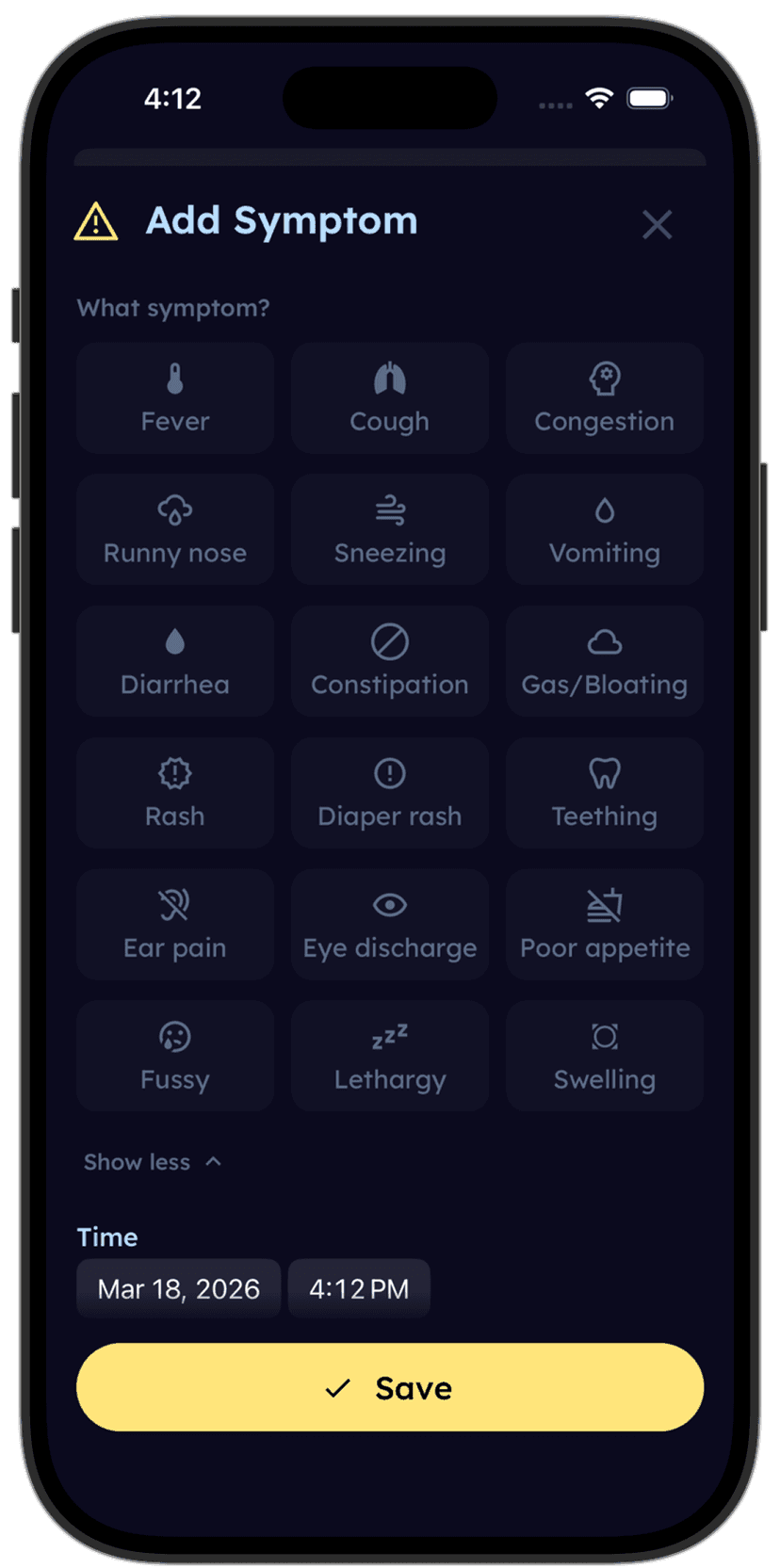
After a febrile seizure, your pediatrician will want to know exactly when the fever started, how high it got, when the seizure happened, and what medications were given. If you have been logging temperatures and symptoms in Tinylog, you already have this timeline. Bring it to your follow-up appointment — accurate data helps your doctor make better decisions about your child's care.


After a febrile seizure ends, your child will enter what is called the postictal period. This is the recovery phase, and it can look almost as alarming as the seizure itself if you do not know what to expect.
Your child will likely be very sleepy — sometimes so deeply asleep that you have trouble waking them. This is normal. They may be confused, disoriented, or irritable when they do wake. Some children cry inconsolably for a while. Others just want to be held and drift in and out of sleep. This period typically lasts 15 minutes to an hour, sometimes longer.
During the postictal period, keep your child on their side, monitor their breathing, and let them rest. Do not try to force fluids immediately — wait until they are more alert. Once they are fully awake and responsive, you can offer breast milk, formula, or water.
Your child should be returning to their baseline behavior within one to two hours after a simple febrile seizure. If they are still very lethargic, confused, or not acting like themselves after two hours, call your pediatrician or go to the ER.
If you do not have a rectal thermometer yet, the Frida Baby thermometer (~$13) has a flexible stopper so you literally cannot insert it too far — which takes the stress out of the whole thing. Reads in 10 seconds, backlit for 3 AM checks. The AAP recommends rectal temps for babies under one, and this is the easiest way to do it.
Tinylog earns a small commission on purchases made through these links, at no cost to you.
Before you buy, it's worth checking promo.new for a deal. It doesn't cover everything, but we've had good luck with it.
About one-third of children who have a febrile seizure will have at least one more. The recurrence rate is higher under certain circumstances.
Most recurrences happen within the first year after the initial seizure. If a child makes it two years without another febrile seizure, recurrence becomes less likely — though not impossible as long as they are in the susceptible age range (up to about 5 years old).
There is no medication that is routinely recommended to prevent febrile seizure recurrence. In the past, some doctors prescribed daily anti-seizure medication (particularly phenobarbital), but the side effects — including behavioral changes and cognitive effects — outweigh the benefits for a condition that is itself benign. The AAP does not recommend routine preventive medication for simple febrile seizures.
The best approach is preparation, not prevention. Know the signs. Know the steps. Have a plan. Tell your caregivers. And take comfort in the fact that even if your child has another febrile seizure, the overwhelming likelihood is that it will be just as harmless as the first one.
Even with multiple risk factors, febrile seizure recurrences are almost always simple and benign. The risk factors help you prepare, not predict harm.
Every child who has a febrile seizure for the first time should be evaluated by their pediatrician, even if the seizure was brief and the child seems completely fine afterward. Your pediatrician will assess whether the seizure was simple or complex, look for the underlying cause of the fever, and discuss a plan for future episodes.
For a first-time simple febrile seizure, additional testing (EEG, imaging) is generally not needed. The AAP specifically recommends against routine EEGs or brain imaging for simple febrile seizures, as these tests rarely reveal anything actionable and can lead to unnecessary anxiety and further testing.
Additional evaluation is warranted if the seizure was complex (prolonged, focal, or repeated within 24 hours), if there are concerns about your child's development or neurological status, or if the cause of the fever is unclear and meningitis or encephalitis cannot be ruled out clinically. In these cases, your pediatrician may recommend blood tests, EEG, or imaging.
Your pediatrician will want to hear from you after any febrile seizure, even if everything seems fine. They will help you build an action plan for future episodes.
This is physically impossible. The tongue is attached to the floor of the mouth. What can happen is that the tongue falls back slightly, which is why you place your child on their side — gravity helps keep the airway clear. Putting objects in the mouth to 'prevent tongue swallowing' is one of the most dangerous things you can do during a seizure.
This is the fear that haunts every parent who has witnessed one. Decades of research have been remarkably consistent: simple febrile seizures do not cause brain damage, cognitive problems, or learning disabilities. Multiple large, long-term studies — including the National Collaborative Perinatal Project following over 1,700 children with febrile seizures — have confirmed this.
If only it were that simple. Multiple studies have shown that treating fever with acetaminophen or ibuprofen does not reduce the risk of febrile seizures. This is because the seizure is triggered by the rapid rise in temperature, which often occurs before you even know your child has a fever. Give fever medication for comfort — not as seizure prevention.
The vast majority will not. About 2-4% of children with simple febrile seizures go on to develop epilepsy, compared to about 1-2% of the general population. That is a very small increase in absolute risk. Children with complex febrile seizures have a slightly higher risk (6-8%), but even then, most do not develop epilepsy.
No. A cold bath will not stop a seizure, and the temperature shock can actually make things worse. It can also cause shivering, which raises core body temperature. A lukewarm bath after the seizure for comfort is fine. During the seizure, your only job is to keep your child safe and time it.
Almost every parent who witnesses their child's first febrile seizure describes it as one of the most terrifying experiences of their life. Many describe thinking their child was dying. This fear is completely natural and completely understandable. But here is the reality: your child will almost certainly be fine. The seizure looks far worse than it is. Your job during the seizure is to keep your child safe and time it. Processing the emotional aftermath is something you do after.
If your child has had one febrile seizure, there is about a 1 in 3 chance they will have another one. Talk to your pediatrician about an action plan. Know the steps. Know when to call 911 vs. when to call the pediatrician. Having a plan written down means you do not have to think clearly during one of the most stressful moments of parenthood — you just follow the steps.
If your child has a history of febrile seizures, every caregiver needs to know. Give them the same action plan you follow: place on side, clear area, time it, call 911 if over 5 minutes. Many daycare providers have seizure training, but they need to know your child's specific history.
If you are able to safely record the seizure (after placing your child on their side and ensuring their safety), the video can be incredibly helpful for your pediatrician. It helps them determine whether the seizure was simple or complex, whether both sides of the body were involved equally, and what the recovery looked like. No one will judge you for filming — it is actually medically useful.
When to Go to the ER for Baby Fever: Clear Guidelines by Age — the complete fever triage framework
Infant Tylenol vs. Motrin: Dosing, Timing, and When to Use Each — fever reducer comparison and safety guide
This guide is for informational purposes only and is NOT a substitute for professional medical advice. When in doubt, always call your pediatrician. If your baby is under 3 months with a fever, having difficulty breathing, showing signs of dehydration, or seems seriously unwell, seek immediate medical attention.