
GUIDE
Fisher-Price Jumperoo vs. Baby Einstein Neptune Ocean Activity Jumper
Published on
Both are solid activity jumpers that babies go wild for. The Jumperoo is slightly cheaper and ready at 4 months. The Neptune has a fourth height setting and language-switching features. Neither will disappoint.
The Fisher-Price Jumperoo and Baby Einstein Neptune Ocean Activity Jumper are two of the most popular stationary jumpers on the market. Both offer 360-degree rotation, lights, music, and bouncing action. The differences come down to age readiness, height adjustability, theme, and a few extras that may or may not matter to your household.
Log tummy time, standing, and activity sessions
Two Jumpers Walk Into a Nursery
OK so your baby has discovered their legs. They are pushing off your lap, stomping on your thighs, and basically demanding to bounce on something that is not you. You need a jumper. And you have probably narrowed it down to these two.
The Fisher-Price Jumperoo and the Baby Einstein Neptune Ocean Activity Jumper are two of the best-selling stationary jumpers out there. Both let your baby bounce, spin, grab toys, and light up like a tiny DJ booth. Both will buy you 15–20 minutes of hands-free time to eat food that is still warm.
The differences are real but not dramatic. We broke them all down so you can stop spiraling through Amazon reviews at midnight.
We looked at age requirements, height adjustability, sensory features, build quality, and price to give you the full picture — no filler, no sponsored opinions, just the stuff that matters when you are trying to make a decision before nap time ends.
| Feature | Fisher-Price Jumperoo | Baby Einstein Neptune | What It Means |
|---|---|---|---|
| Manufacturer | Fisher-Price (Mattel) | Baby Einstein (Kids II) | Both backed by major baby product companies with long track records. |
| Recommended age | 4+ months (head control required) | 6+ months | Jumperoo gets you started two months earlier. That can feel like a lifetime when you need a break. |
| Weight limit | 25 lbs | 25 lbs | Tie. Both tap out at 25 lbs. |
| Seat rotation | 360 degrees | 360 degrees | Tie. Full spin access to all the toys and activities around the tray. |
| Height adjustment | 3 positions | 4 positions | Neptune gives you one extra height setting, which means a slightly longer usable lifespan. |
| Bounce mechanism | Spring-loaded base | Spring-loaded base | Tie. Both use springs for that satisfying baby bounce. |
| Lights & sounds | Music, lights, and sounds activated by bouncing | Electronic sea station with lights, melodies, and ocean sounds | Both deliver sensory overload in the best way. Neptune leans into the ocean theme hard. |
| Language features | English only | Language switching (English, Spanish, French) | Neptune wins if multilingual exposure matters to you. Three languages built in. |
| Theme / design | Rainforest or generic colorful (varies by model) | Ocean / undersea adventure | Purely aesthetic. Your baby does not care. You might. |
| Seat pad | Machine-washable seat pad | Machine-washable seat pad | Tie. Both are washable, which you will absolutely need because drool happens. |
| Assembly | Moderate — about 20 minutes | Moderate — about 25 minutes | Neither is a nightmare. Budget half an hour and a cup of coffee for either one. |
The Age Thing Is Actually a Big Deal
Here is the single most practical difference between these two jumpers.
The Fisher-Price Jumperoo is designed for babies 4 months and up (with head control). The Baby Einstein Neptune recommends waiting until 6 months.
Two months does not sound like much on paper. In practice, when your baby is 4 months old and desperate to be upright and bouncing, those two months feel like an eternity. If your baby has solid head control at 4 months and you need somewhere to park them safely while you shower, the Jumperoo gets you there sooner.
If your baby is already 6 months or older, this difference is irrelevant. Move on to the other features.
Worth noting: regardless of age recommendations, the real readiness test is head control. If your baby cannot hold their head up steadily and independently, they are not ready for any jumper. Check with your pediatrician if you are unsure.
Height Adjustability: One Extra Click Matters
The Jumperoo gives you 3 height positions. The Neptune gives you 4.
That one extra position means the Neptune can theoretically fit a slightly wider range of baby heights, which translates to a marginally longer usable lifespan. In practice, most babies outgrow jumpers by weight (25 lbs) or developmental stage (crawling takes over) before height becomes the limiting factor.
Still, if you have a tall baby or want maximum flexibility, the Neptune has a slight edge here. And hey, one more click of adjustment means one less week of your baby's toes barely grazing the floor while they look at you with betrayal in their eyes.
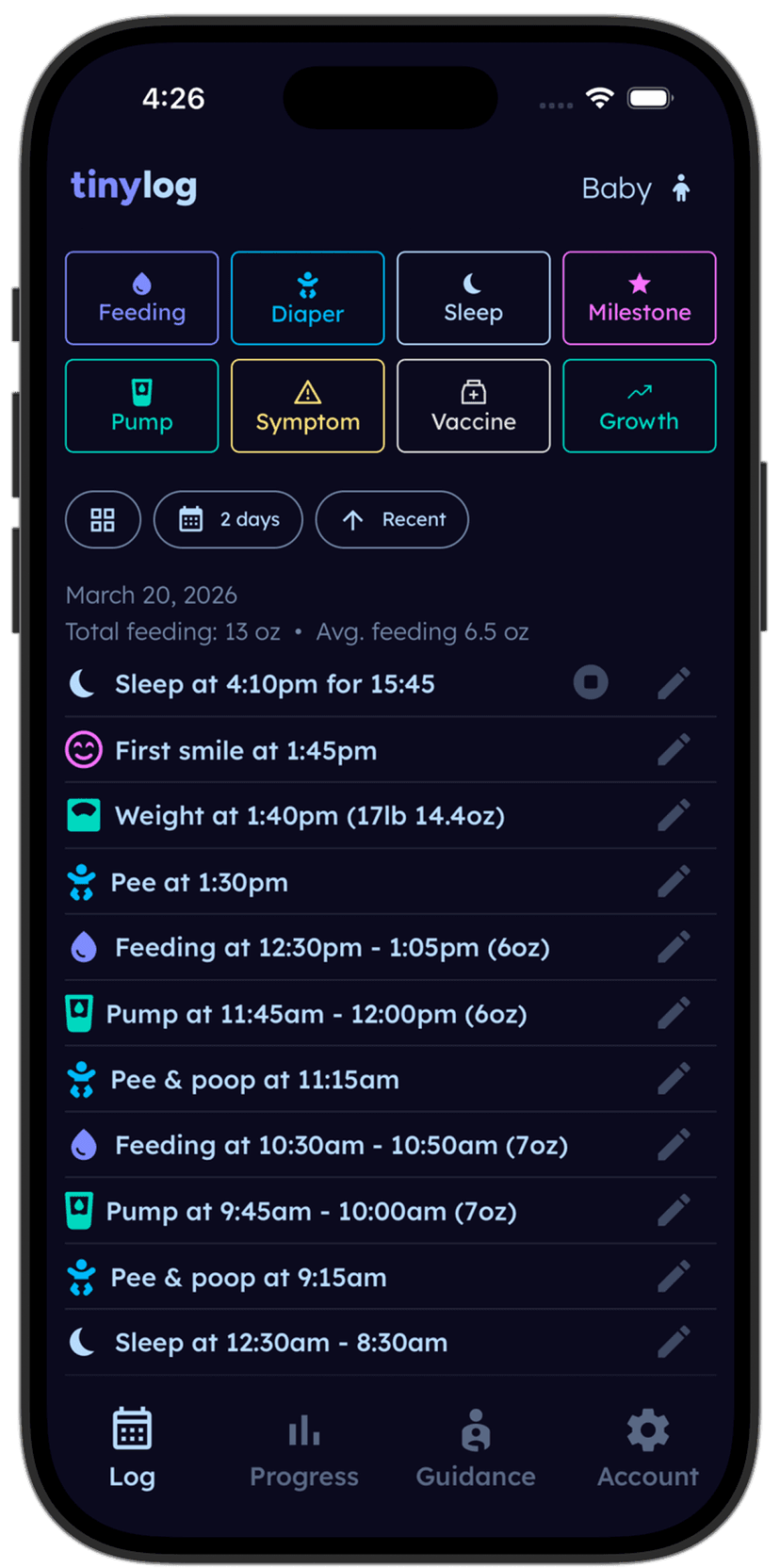
Tinylog tracks milestones so you can see the big picture.
Log standing, bouncing, tummy time, and activity sessions. Watch patterns emerge over days and weeks. Bring the data to your next pediatrician visit.


Stimulation: Both Are a Sensory Party
Let us be real — your baby is going to lose their mind in either of these jumpers. Both have 360-degree spinning seats surrounded by toys, lights, and sounds.
The Jumperoo activates lights and music when your baby bounces. The cause-and-effect connection (I jump, noise happens) is great for cognitive development. Different models have different themes, but the classic rainbow version is the most common.
The Neptune goes all-in on the ocean theme. It has an electronic "sea station" with ocean-specific melodies and sounds. It also includes language switching — your baby can hear toy labels and phrases in English, Spanish, and French. If you are raising a bilingual or multilingual kid, or you just want early language exposure, that is a genuinely useful feature you will not find on the Jumperoo.
Neither jumper is going to turn your baby into a genius. Both will make them very, very happy for 15–20 minutes at a time, and that is the whole point.
The Boring Stuff That Actually Matters
Both jumpers have machine-washable seat pads. You will wash these constantly. Babies drool. Babies spit up. Babies have blowouts in jumpers. Washability is not a bonus feature, it is a survival requirement.
Both jumpers take about 20–25 minutes to assemble. Neither folds flat for storage. Both eat up a chunk of floor space in your living room. Measure before you buy — seriously, grab a tape measure and see if you have room.
Both run on AA batteries for the electronic features. Neither has a rechargeable option or wall plug. Stock up on batteries or invest in rechargeables. Your baby will want the music on every single time.
| Product | Typical Price | Cost Per Day (over 6 months) | Average Total |
|---|---|---|---|
| Fisher-Price Jumperoo | $70–$90 | ~$0.33–$0.50 | ~$80 average |
| Baby Einstein Neptune Ocean Activity Jumper | $80–$100 | ~$0.40–$0.55 | ~$90 average |
Price: Ten Bucks Apart
The Jumperoo runs about $80 on average. The Neptune runs about $90. That is a $10 gap, which is not going to break any budgets but is also not nothing when you are buying seventeen other baby things this month.
A few ways to save on either one:
- Watch for sales. Both go on sale regularly during Prime Day, Black Friday, and random Amazon Lightning Deals.
- Buy used. Jumpers are one of the safest baby items to buy secondhand because there are no safety expiration dates like car seats. Check Facebook Marketplace or a local Buy Nothing group.
- Check registry completion discounts. If you have an Amazon or Target registry, the completion discount applies to these.
The Jumperoo wins on pure price. The Neptune wins on features-per-dollar if you value the language switching and extra height setting.
Choose the Fisher-Price Jumperoo If
- Your baby is 4 months old and ready to bounce now — you cannot wait two more months
- You want to spend a little less and the $10 difference matters to your budget
- You prefer the classic Jumperoo look and do not need an ocean theme
- English-only audio is fine for your household
- You want something with a massive pool of parent reviews and a long track record
Choose the Baby Einstein Neptune If
- Your baby is 6 months or older and you want that extra height adjustment position
- Multilingual audio exposure matters to you — Spanish and French are built in
- You love the ocean theme and want a more cohesive visual design
- You want 4 height settings instead of 3 for a slightly longer usable window
- The electronic sea station with ocean-specific sounds appeals to you
- You do not mind spending an extra $10 for the additional features
Where to Buy
The Fisher-Price Jumperoo (~$80) is the tried-and-true pick that has been making babies bounce since forever. It is ready at 4 months, costs a bit less, and has thousands upon thousands of parent reviews backing it up. Grab it on Amazon or Target for the best price.
The Baby Einstein Neptune Ocean Activity Jumper (~$90) is worth the extra ten bucks if you want the multilingual audio, the fourth height setting, and that adorable ocean theme. The electronic sea station is genuinely charming, and babies who love water-themed anything will be obsessed.
Real talk: your baby will love whichever one you pick. They just want to bounce. Get the one that fits your budget and your living room.
Tinylog earns a small commission on purchases made through these links, at no cost to you.
Before you buy, it's worth checking promo.new for a deal. It doesn't cover everything, but we've had good luck with it.
The Bottom Line
Both the Fisher-Price Jumperoo and the Baby Einstein Neptune Ocean Activity Jumper are well-built, entertaining jumpers that babies absolutely love. The differences are modest but real:
Fisher-Price Jumperoo wins on earlier start age (4 months), lower price (~$80), and a massive track record of parent reviews.
Baby Einstein Neptune wins on height adjustability (4 positions vs. 3), multilingual audio (English, Spanish, French), and a cohesive ocean theme.
For most families, the deciding factor will be timing. If your baby is 4 months old and ready to go, the Jumperoo is the obvious pick. If your baby is already 6 months or older, the Neptune offers a bit more for a bit more money.
Either way, limit jumper sessions to 15–20 minutes at a time, balance with plenty of floor time and tummy time, and enjoy those precious minutes of hands-free sanity. If you are tracking your baby's activity and milestones, Tinylog makes it easy to log sessions and see progress over time.
Related Guides
- Baby Feeding Chart — How much your baby should eat by age
- Tummy Time Guide — When to start and how to make it work
- Baby Milestones — What to expect month by month
- Baby Play Ideas — Age-appropriate activities for every stage
Sources
- Fisher-Price.com. "Jumperoo Activity Center — Product Information." 2026.
- BabyEinstein.com. "Neptune's Ocean Discovery Jumper — Product Information." 2026.
- American Academy of Pediatrics. "Choosing Safe Baby Products." HealthyChildren.org, 2025.
- Consumer Reports. "Best Baby Jumpers and Activity Centers." consumerreports.org, 2026.
- WhatToExpect. "Best Baby Jumpers and Bouncers of 2026." whattoexpect.com.
- BabyGearLab. "Best Baby Jumpers — Tested & Reviewed." babygearlab.com, 2026.
This guide is for informational purposes only. Jumper use should be limited to short sessions as recommended by your pediatrician. Always supervise your baby while in a jumper and follow the manufacturer's age, weight, and height guidelines.
Frequently asked questions
- At what age can my baby use the Fisher-Price Jumperoo?
- Fisher-Price recommends the Jumperoo for babies 4 months and older who can hold their head up independently. The weight limit is 25 lbs. Most babies outgrow it between 9–12 months.
- At what age can my baby use the Baby Einstein Neptune jumper?
- Baby Einstein recommends the Neptune Ocean Activity Jumper for babies 6 months and older. The weight limit is 25 lbs. It has 4 height positions to grow with your baby.
- How long should a baby be in a jumper each day?
- Most pediatricians recommend limiting jumper time to 15–20 minutes per session, a few times per day. Extended time in a jumper can put stress on developing hip joints and delay crawling motivation.
- Are stationary jumpers bad for baby development?
- Stationary jumpers are fine in moderation. They build leg strength and provide sensory stimulation. The concern is overuse — too much time in a jumper can delay crawling and affect hip development. Stick to short sessions and balance with floor time.
- Can I fold either jumper for storage?
- Neither jumper folds flat. The Jumperoo disassembles more easily for storage. The Neptune is roughly the same footprint. Both take up a decent chunk of floor space — measure your room before buying.
- Do both jumpers need batteries?
- Yes. Both use batteries for lights, music, and sounds. The Jumperoo and Neptune each require AA batteries. Neither includes a rechargeable option or AC adapter.