
GUIDE
Fisher-Price Jumperoo vs. Skip Hop Grow-with-Me Activity Center
Published on
Both are solid picks for keeping babies entertained and building leg strength. The Jumperoo is a pure bounce-fest that babies go absolutely feral for. The Skip Hop converts from activity center to toddler table, lasting years longer. Your call depends on whether you want peak baby joy now or long-term value.
The Fisher-Price Jumperoo and Skip Hop Grow-with-Me Activity Center are two of the most popular stationary activity stations for babies. They solve the same problem — give your baby a safe, upright place to play while you eat food with both hands — but they take very different approaches. One is a dedicated bouncing machine. The other shapeshifts through three stages.
Log motor milestones, tummy time, and play sessions
Two Totally Different Approaches to the Same Problem
Real talk: the Fisher-Price Jumperoo and Skip Hop Grow-with-Me Activity Center both solve the same parenting equation — baby needs to be upright, entertained, and not in your arms for twenty blessed minutes so you can reheat coffee or, you know, exist.
But they solve it very differently. The Jumperoo is a dedicated bounce machine. Spring-loaded base. Lights that go off when baby jumps. Music that plays when baby bounces. It is a baby nightclub and your kid is the DJ. Babies lose their minds over it.
The Skip Hop is a slow burn. Activity center first, pull-up toy second, toddler art table third. Less flashy. More versatile. The kind of purchase that makes you feel like a responsible adult who plans ahead.
Neither is wrong. They are just different philosophies about baby gear.
We compared features, pricing, noise levels, longevity, and real-world parent feedback so you can pick the right one without standing in the Target aisle for 45 minutes spiraling. Let us break it down.
| Feature | Fisher-Price Jumperoo | Skip Hop Grow-with-Me | What It Means |
|---|---|---|---|
| Manufacturer | Fisher-Price (Mattel) | Skip Hop (owned by Carter's) | Both are well-established baby gear brands with long track records. |
| Price | ~$80 | ~$100 | Skip Hop costs more upfront but converts into a toddler table, stretching the value. |
| Age range | 4+ months until walking (up to 25 lbs) | 4 months to ~4 years | Skip Hop wins here by a mile. Three stages vs. one. That toddler table gets real use. |
| Primary activity | Spring-loaded bouncing | Spinning seat with discovery toys | Jumperoo is a bounce machine. Skip Hop is more of a spin-and-explore station. |
| Seat rotation | 360-degree spinning seat | 360-degree rotating seat | Tie. Both let baby spin around to access all the toy stations. |
| Height adjustments | 3 height positions | Adjustable to multiple heights | Both accommodate growing babies. Make sure toes touch the floor — not flat feet, not dangling. |
| Lights, music, and sounds | Yes — activated by bouncing | Minimal — mostly tactile toys | Jumperoo is a full sensory party. Skip Hop is quieter and more tactile. Depends on your noise tolerance. |
| Convertibility | Single-use product | 3 stages: activity center → pull-up toy → toddler table | Skip Hop wins. The toddler table conversion alone makes it a better long-term investment. |
| Discovery window (floor view) | No | Yes — clear window in base | Skip Hop's discovery window lets baby see the floor and their feet. Surprisingly entertaining for them. |
| Footprint / space required | Large circular base, does not fold | Similar footprint, converts to smaller table | Both eat floor space. Skip Hop becomes a table, which at least feels intentional in your living room. |
| Washability | Seat pad is machine washable | Seat pad is machine washable | Tie. Both seat covers come off for washing, which you will absolutely need. |
The Bounce Factor: Why Babies Lose It for the Jumperoo
There is something primal about the Jumperoo. You put a 5-month-old in there and they discover they can make things happen by pushing off the floor, and suddenly they are bouncing like their life depends on it.
The spring-loaded base gives real bounce feedback. Not wimpy, not dangerous — just enough that baby feels powerful. Add in the lights that flash and music that plays when they jump, and you have got a cause-and-effect toy on steroids. Babies learn fast that their movements control the show.
The Skip Hop does not bounce. It spins. Baby rotates around the base exploring different toy stations, which is engaging in a different way — more exploratory, less cardio. The discovery window in the base lets baby look down at the floor and their feet, which sounds boring but genuinely fascinates them.
If your baby is the type who kicks like crazy during diaper changes and bounces in your lap nonstop, the Jumperoo will be their happy place. If your baby is more of a "let me examine this thing from every angle" type, the Skip Hop might be the better match.
Quick safety note on both: pediatricians recommend limiting activity center sessions to about 15–20 minutes at a time. These are not substitutes for tummy time and floor play. They are breaks — for baby and for you.
The Real Argument for Skip Hop: It Keeps Going
Here is where the Skip Hop pulls ahead for a lot of families. The Jumperoo has a hard expiration date. Once baby walks (or hits 25 lbs), it is done. That is usually somewhere around 9–12 months of age, meaning you get roughly 5–8 months of active use.
The Skip Hop converts through three stages:
- Activity center (4+ months) — the spinning seat with toy stations, just like you would expect
- Pull-up toy (around 9–11 months) — remove the seat and baby uses it to pull themselves up to standing. This is actually brilliant for that cruising stage.
- Toddler table (1–4 years) — flip it, and it becomes a play table for coloring, snacks, puzzles, whatever
That third stage is the real kicker. A $100 activity center that becomes a toddler table you use for three more years is a very different value proposition than an $80 bouncer you use for six months and then try to sell on Facebook Marketplace.
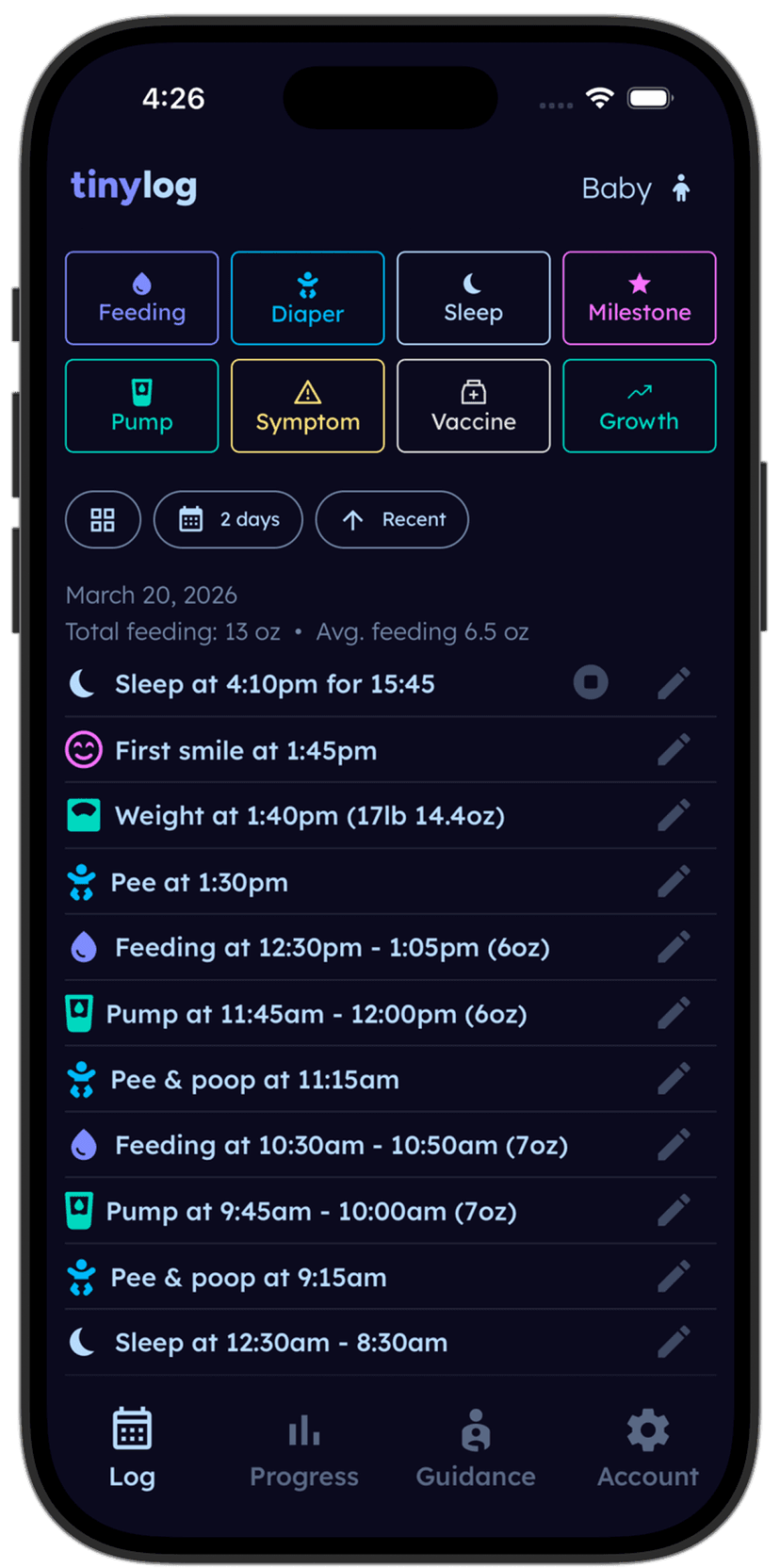
Tinylog tracks milestones so you can spot patterns.
Log motor milestones, tummy time, and play sessions. See when baby starts bouncing, pulling up, and cruising. Bring the data to your next pediatrician visit.


Noise Levels: Let's Be Honest About This
The Jumperoo is loud. Not dangerously loud, but "you will hear Baby Shark-adjacent melodies in your sleep" loud. The lights and sounds activate every time baby bounces, and baby will bounce a lot. Some parents remove the batteries from the toy pods. Others embrace the chaos.
The Skip Hop is significantly quieter. Most of the toys are tactile — spinners, beads, textured surfaces. There are fewer electronic components. If you work from home, have a noise-sensitive dog, or simply value your sanity, this matters more than you think it will.
Nobody warns you about the cumulative psychological effect of electronic baby toy sounds playing eight hours a day. Consider yourself warned.
Volume control exists on the Jumperoo but there is no full mute. The Skip Hop, being mostly mechanical toys, is as quiet as your baby allows it to be. If you have a napper in the next room, factor this in.
| Product | Typical Price | Cost Per Month | Usable Life |
|---|---|---|---|
| Fisher-Price Jumperoo | $70–$90 | ~$10–$15/month | ~6–8 months of use |
| Skip Hop Grow-with-Me Activity Center | $90–$110 | ~$2–$3/month | ~3–4 years of use |
The Money Math
Sticker price: the Jumperoo wins. It is about $20 cheaper. But the cost-per-month math tells a different story.
At ~$80 for 6–8 months of use, the Jumperoo runs about $10–$15 per month. The Skip Hop at ~$100 for 3–4 years works out to roughly $2–$3 per month. That is a significant difference if you are thinking about value over time.
Of course, this only matters if you actually use all three stages. If you convert to the toddler table and your kid uses it for coloring and snacks for two years, the Skip Hop is a screaming deal. If you skip the table conversion and just use it as an activity center, the value gap narrows.
The Jumperoo also has strong secondhand resale. They are everywhere on marketplace apps, which means you can buy one used for $25–$40 and sell it when you are done. That changes the math entirely.
One more thing: both products occasionally go on sale during Amazon Prime Day, Black Friday, and Target Circle events. If you are not in a rush, waiting for a sale can knock 20–30% off either option.
Choose the Fisher-Price Jumperoo If
- Your baby lives for bouncing and you want to see that pure, unhinged joy on their face
- You want the lights-and-sounds sensory experience that rewards movement
- Budget is a factor and you want to spend less upfront
- You do not need the product to last beyond the pre-walking stage
- You have floor space for a dedicated bounce station and you are at peace with that
Choose the Skip Hop Grow-with-Me If
- You want a product that grows with your kid through multiple stages
- Long-term cost-per-month value matters more than sticker price
- You prefer quieter, tactile play over lights and electronic sounds
- The idea of a toddler table conversion genuinely appeals to you
- You want the discovery window so baby can see their feet and the floor
- You are trying to buy fewer single-use baby products overall
Where to Buy
The Fisher-Price Jumperoo (~$80) is the classic pick if you want maximum baby entertainment per dollar right now. The spring-loaded bounce, the lights and music, the 360-degree spin — babies go absolutely wild for it. It will not last forever, but the months you get will be some of the most entertaining of early parenthood. Grab it on Amazon or Target for the best price.
The Skip Hop Grow-with-Me Activity Center (~$100) is the smarter long-game purchase. Activity center, pull-up toy, and toddler table in one package that lasts from 4 months to 4 years. If buying fewer things that last longer is your vibe, this is the one. Available at Target, Amazon, and Buy Buy Baby.
Honestly, you cannot go wrong with either. One gives you peak baby joy. The other gives you years of use. Both give you free hands, and that is the real product.
Tinylog earns a small commission on purchases made through these links, at no cost to you.
Looking for a discount? Try checking promo.new. It doesn't always find what you're looking for, but when it does, it works like a charm.
The Bottom Line
The Fisher-Price Jumperoo and Skip Hop Grow-with-Me Activity Center are both excellent products that solve the same core need. The differences are real:
Fisher-Price Jumperoo wins on pure bounce entertainment, sensory stimulation, cause-and-effect learning, and upfront cost. Babies absolutely love it. It is a single-purpose product with a limited lifespan, and it is worth every month you get.
Skip Hop Grow-with-Me wins on longevity, versatility, cost-per-month value, and noise levels. Three stages means you are not buying (and storing and reselling) a separate activity center, pull-up toy, and toddler table.
If your apartment is small and you want one product that does triple duty, go Skip Hop. If you want to see your baby experience pure, unfiltered bouncing joy and you will deal with resale later, go Jumperoo.
If you are tracking motor milestones — when baby starts bouncing, pulling up, standing, cruising — Tinylog makes it easy to log those wins and share them with your pediatrician. You will be surprised how fast these stages fly by, and having a record of when things happened is genuinely useful at checkups.
Related Guides
- Baby Milestones — Month-by-month motor and cognitive milestones
- Tummy Time Guide — How much, when to start, and tips for fussy babies
- Baby Feeding Chart — How much your baby should eat by age
- Baby Proofing Guide — Room-by-room safety checklist
Sources
- Fisher-Price.com. "Jumperoo Activity Centers — Product Information." 2026.
- SkipHop.com. "Explore & More Grow-with-Me Activity Center — Product Information." 2026.
- American Academy of Pediatrics. "Active Play and Screen Time Guidelines for Infants." HealthyChildren.org, 2025.
- Consumer Reports. "Best Baby Activity Centers of 2026." consumerreports.org.
- What to Expect. "Best Baby Jumpers and Activity Centers." whattoexpect.com, 2026.
- BabyGearLab. "Best Baby Activity Centers — Tested & Reviewed." babygearlab.com, 2026.
- Mommyhood101. "Best Baby Jumpers of 2026, Tested & Reviewed." mommyhood101.com.
This guide is for informational purposes only. Always follow the manufacturer's age, weight, and usage guidelines. Supervised use only. If you have concerns about your baby's motor development, consult your pediatrician.
Frequently asked questions
- At what age can a baby use the Fisher-Price Jumperoo?
- Fisher-Price recommends starting the Jumperoo at 4 months or when baby can hold their head up steadily with good neck support. Baby must be able to reach the floor with their toes. Stop using it once baby can walk independently or exceeds 25 lbs.
- How long does the Skip Hop Grow-with-Me Activity Center last?
- The Skip Hop Grow-with-Me converts through three stages: activity center (4+ months), pull-up toy (around 9–11 months), and toddler play table (up to age 4). That is significantly more lifespan than a traditional jumper.
- Is bouncing in a jumperoo safe for babies?
- Used within the manufacturer's guidelines, yes. Pediatricians generally say short sessions (15–20 minutes) in a properly adjusted jumperoo are fine. The key is that baby's toes touch the floor — not flat-footed, not dangling. Extended use is not recommended as a replacement for floor play and tummy time.
- Does the Fisher-Price Jumperoo take up a lot of space?
- Yes. The Jumperoo has a wide circular base and does not fold flat. Plan on it being a semi-permanent fixture in your living room. The Skip Hop has a similar footprint in activity center mode but converts to a smaller table later.
- Can you turn off the sounds on the Fisher-Price Jumperoo?
- The lights and sounds are activated by baby's movements. There is a volume control but no full mute option on most models. Some parents remove the batteries from the sound toys for a quieter experience.
- Which activity center has better resale value?
- The Skip Hop Grow-with-Me tends to hold resale value better because of its longer usable lifespan and convertible design. Jumperoos are extremely common on secondhand markets, which drives prices lower.