GUIDE

Signs of Food Allergy in Babies

True allergic reactions involve hives, swelling, vomiting, or breathing difficulty — not just redness where food touched the skin. Most reactions happen within minutes to 2 hours.

The redness around the mouth from tomato sauce is probably irritation, not an allergy. Here's how to tell the difference.

The Anxiety Is Normal — But Most Reactions Are Mild

Introducing allergens to your baby is nerve-racking. You're intentionally giving your baby a food that you know could cause a reaction, and that feels counterintuitive to every protective instinct you have. This anxiety is completely normal.

Here's the reassuring reality: most first allergic reactions in infants are mild. A few hives around the mouth. Some skin redness. Maybe a single episode of vomiting. Severe anaphylaxis on a first exposure is rare — not impossible, but rare. And knowing what to look for, and what to do, turns a vague fear into a manageable plan.

The other reassuring reality: most of the things parents worry are allergic reactions turn out to be something else entirely. The redness around the mouth from tomato sauce. The loose stool after trying lentils for the first time. The refusal to eat eggs. These are all normal and not allergic reactions.

Mild Allergic Reaction Signs

  • A few hives (raised, red, itchy bumps) — usually near the mouth or on the face
  • Mild swelling of the lips
  • Skin redness or rash that appears within 2 hours of eating
  • Runny nose or sneezing shortly after eating
  • Mild increase in eczema flare within 24-48 hours of eating
  • One episode of vomiting without other symptoms

Mild reactions are the most common type of allergic response in infants. They're concerning but usually not dangerous. Contact your pediatrician before re-introducing the food.

Severe Reaction Signs — Call 911

  • Widespread hives covering multiple body areas — not just around the mouth
  • Swelling of the tongue, throat, or face (beyond the lips)
  • Difficulty breathing, wheezing, or persistent coughing
  • Sudden hoarseness or change in cry
  • Vomiting repeatedly (more than once)
  • Pale or blue skin, especially around lips and fingernails
  • Sudden limpness, unresponsiveness, or loss of consciousness
  • Combination of multiple symptoms (hives + vomiting, or swelling + breathing difficulty)

Any combination of these symptoms, or any difficulty breathing, is a medical emergency. Call 911 immediately. Use epinephrine if available. Do not wait.

Things That Look Like Allergies But Usually Aren't

  • Redness only where food touched the skin (contact irritation from acidic foods like tomato, citrus, berry)
  • Mild rash around the mouth that resolves within 30 minutes of cleaning the area
  • Loose stools after trying a new food (digestive adjustment, not allergy)
  • Gas or mild fussiness after a new food (normal GI adaptation)
  • Refusing or spitting out a food (taste/texture preference, not allergy)
  • Red cheeks during or after eating (increased blood flow from chewing, or teething — not allergy)

These are common, harmless reactions to new foods. They don't require avoidance of the food. If you're ever unsure, a quick call to your pediatrician can provide clarity.

Allergy vs. Intolerance vs. Irritation
IgE-mediated food allergy
TimingMinutes to 2 hours
SymptomsHives, swelling, vomiting, breathing difficulty, anaphylaxis
MechanismImmune system produces IgE antibodies that trigger histamine release
SeverityCan be life-threatening (anaphylaxis). Requires avoidance and emergency plan.
Common TriggersPeanut, tree nuts, egg, milk, wheat, soy, fish, shellfish, sesame
Non-IgE food allergy (e.g., FPIES)
Timing2-6 hours (delayed)
SymptomsSevere vomiting, diarrhea, lethargy, dehydration. No hives or swelling.
MechanismImmune-mediated but not through IgE pathway. Less understood.
SeverityCan cause dehydration and shock. Requires ER visit for severe episodes.
Common TriggersMilk, soy, rice, oats, other grains
Food intolerance
TimingVariable (hours to a day)
SymptomsGas, bloating, loose stools, discomfort. No hives, no swelling, no breathing difficulty.
MechanismDigestive issue — body has difficulty processing the food. Not immune-mediated.
SeverityUncomfortable but not dangerous. Does not cause anaphylaxis.
Common TriggersLactose (in milk), certain fibers, some fruits
Contact irritation
TimingDuring or immediately after eating
SymptomsRedness only where food touched skin. No hives, no swelling elsewhere.
MechanismSkin irritation from acidic or rough-textured food. Not immune-mediated.
SeverityHarmless. Resolves when food is cleaned off.
Common TriggersTomatoes, citrus, strawberries, pineapple
Understanding the type of reaction helps determine the response. Only IgE-mediated allergies and FPIES are potentially dangerous. Intolerances and contact irritation are uncomfortable but harmless.

What to Do When You See a Reaction

Mild reaction: stay calm and monitor

A few hives around the mouth or mild lip swelling — stop offering the food, clean baby's face, and watch closely for 2 hours. If symptoms resolve on their own, contact your pediatrician before offering that food again. Take a photo of the reaction if possible — it'll be useful at the pediatrician visit.

Moderate reaction: medicate and call

Hives spreading beyond the contact area, significant swelling, or vomiting — give antihistamine (if your pediatrician has pre-authorized a dose), and call your pediatrician or go to urgent care. Keep monitoring for progression to severe symptoms.

Severe reaction: 911 immediately

Difficulty breathing, widespread hives, throat or tongue swelling, limpness — call 911. Use epinephrine auto-injector if available. Do not wait to see if it gets better. Anaphylaxis can progress rapidly and is life-threatening. Time matters.

When in doubt, call

Pediatricians would rather get a call about nothing than not get a call about something. If you're unsure whether what you're seeing is an allergic reaction, call. Describe what you see, when the food was eaten, and what's happening now. They'll tell you what to do.

tinylog food log with reaction notes

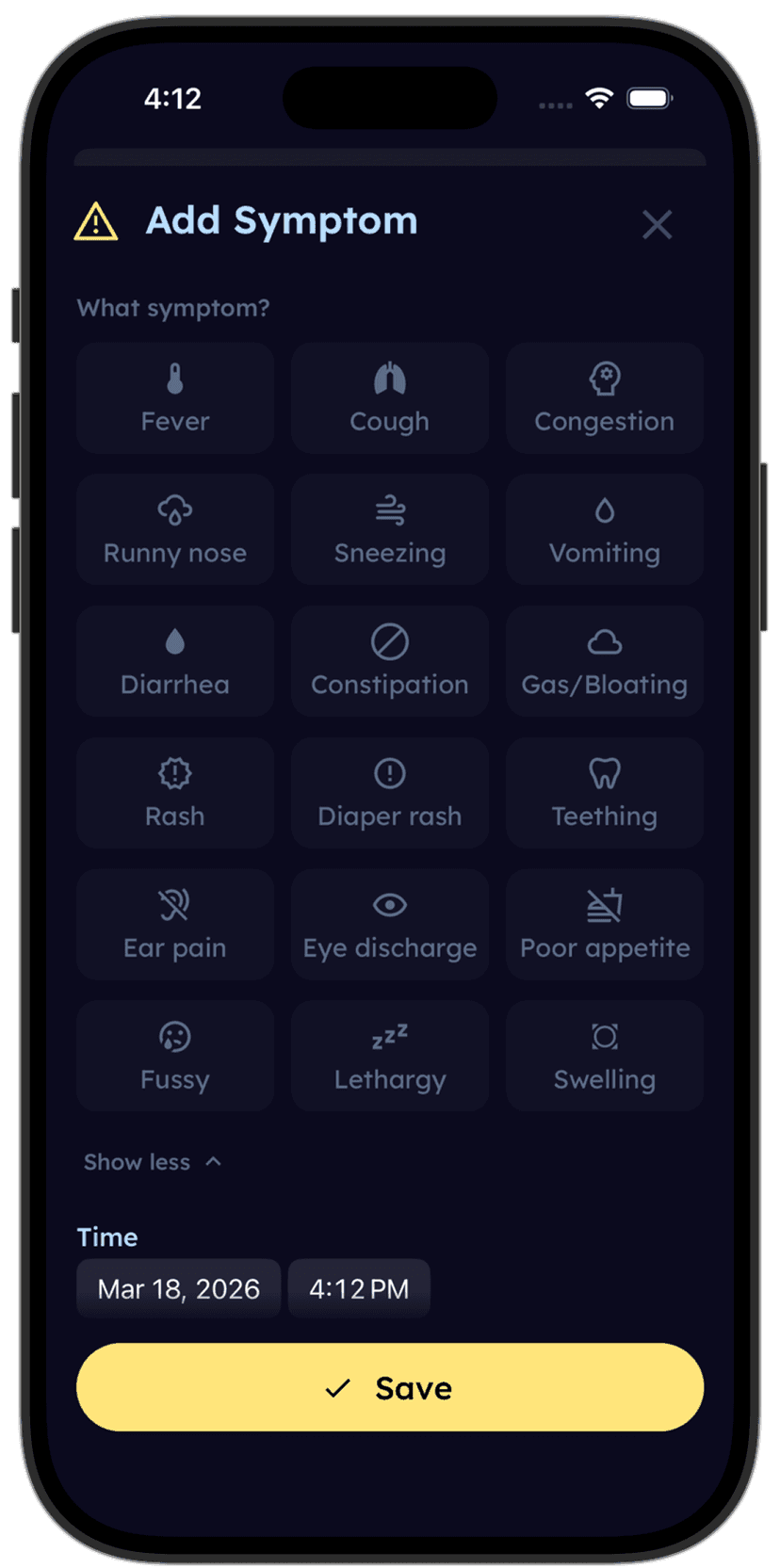
A timestamped log of what baby ate and when symptoms appeared is exactly what your allergist is going to ask for.

tinylog lets you log meals with a timestamp and add notes about any symptoms you observe. If you end up in the allergist's office, having a clear record of what was eaten and when saves time and guesswork.

Download on the App StoreGet It On Google Play

FPIES: The Reaction Most Parents Haven't Heard Of

Food Protein-Induced Enterocolitis Syndrome (FPIES) is a non-IgE food allergy that most parents and many healthcare providers are less familiar with. It's worth knowing about because it looks different from typical allergic reactions.

What it looks like: Severe, repeated vomiting starting 2-6 hours after eating the trigger food. No hives, no swelling, no breathing difficulty. Baby may become pale, lethargic, and floppy. In severe cases, it can cause dehydration and shock.

Common triggers: Milk and soy are the most common triggers in infants. Rice, oats, and other grains can also cause FPIES. It can occur with foods not typically considered allergenic.

Why it's confusing: Because there are no hives or swelling, FPIES often gets mistaken for a stomach bug. The delayed timing (hours, not minutes) doesn't match what parents expect from an allergic reaction. And standard allergy tests (skin prick, IgE blood test) are usually negative for FPIES because it's not IgE-mediated.

What to do: If your baby has repeated severe vomiting 2-6 hours after eating a specific food — especially if it happens more than once with the same food — talk to your pediatrician about FPIES. Management involves avoiding the trigger food and having an emergency plan for accidental exposures.


When to See an Allergist

Your pediatrician may refer you to a pediatric allergist if:

  • Your baby had a clear allergic reaction (hives, swelling, vomiting) to a food
  • Your baby has severe eczema (which increases food allergy risk)
  • There's a strong family history of food allergies
  • You want allergy testing before introducing a specific high-risk allergen
  • Your baby had a FPIES reaction

Allergy testing in infants typically involves skin prick testing and/or blood tests for food-specific IgE antibodies. These tests can help guide introduction decisions, but they're not perfect — false positives are common, meaning a positive test doesn't always mean a true allergy. An allergist can interpret results in context.

Related Guides

Sources

  • American Academy of Allergy, Asthma & Immunology. (2024). Food Allergy in Infants and Children.
  • Sampson, H. A., et al. (2014). Food allergy: A practice parameter update. JACI, 134(5), 1016-1025.
  • Nowak-Węgrzyn, A., et al. (2017). Food Protein-Induced Enterocolitis Syndrome (FPIES). JACI: In Practice, 5(1), 24-35.
  • Du Toit, G., et al. (2015). Randomized trial of peanut consumption in infants at risk for peanut allergy. NEJM, 372(9), 803-813.
  • American Academy of Pediatrics. (2024). Food Allergies in Children. HealthyChildren.org.
  • Togias, A., et al. (2017). Addendum Guidelines for the Prevention of Peanut Allergy. JACI, 139(1), 29-44.

Medical Disclaimer

This guide is for informational purposes only and is not a substitute for professional medical advice. Consult your pediatrician before starting solids, especially regarding allergen introduction for high-risk infants. All caregivers should be trained in infant CPR before offering solid foods.

Get this guide in your inbox.
We'll email you the reaction signs checklist so you can reference it quickly if something looks off.
When you introduce a new food, a quick log entry might matter more than you think.
Download tinylog free — log new foods and note reactions in real time.
Download on the App StoreGet It On Google Play