
GUIDE
Guava Lotus Travel Crib vs. HALO BassiNest Swivel Sleeper 3.0
Published on
These solve different problems. The Guava Lotus is a lightweight, packable travel crib that doubles as a playard and works from birth through toddlerhood. The HALO BassiNest is a bedside bassinet that swivels and lowers for easy nighttime access during the first ~5 months. If you need portability, get the Lotus. If you want the safest bedside sleeping setup, get the BassiNest.
The Guava Lotus Travel Crib and HALO BassiNest Swivel Sleeper 3.0 are two of the most recommended baby sleep products — but they serve fundamentally different purposes. One travels with you and grows with your child. The other stays beside your bed and makes nighttime feeding and soothing dramatically easier. Understanding what you actually need narrows this decision fast.
Log naps, nighttime sleep, and feeding sessions
Different Products for Different Problems
The Guava Lotus Travel Crib and HALO BassiNest Swivel Sleeper 3.0 get compared a lot, but they are not really competitors. They solve different problems for different stages and situations.
The Guava Lotus is a travel crib that folds into a backpack. It weighs 13 lbs, sets up in seconds, fits in an airplane overhead bin, and works as a full-size crib from birth through toddlerhood. It is a sleep space that goes where you go.
The HALO BassiNest is a bedside bassinet that swivels over your mattress and lowers its side wall so you can reach your baby without getting out of bed. It has built-in soothing features — vibration, sounds, a nightlight — and it makes the first four to five months of nighttime feeds dramatically easier.
The real question is not "which is better" but "which problem do you need to solve right now?" If you need portability and long-term value, the Lotus. If you need bedside convenience during the newborn months, the BassiNest.
For tracking your baby's sleep patterns as they develop, see our newborn sleep guide.
| Feature | Guava Lotus Travel Crib | HALO BassiNest 3.0 | What It Means |
|---|---|---|---|
| Product type | Travel crib / play yard | Bedside bassinet | Different categories entirely. The Lotus is portable and long-lasting. The BassiNest is a bedside convenience tool for the first few months. |
| Weight limit | Up to 45 lbs (crib mode) | Up to 20 lbs | Lotus wins on longevity. It can serve as a sleep space well into toddlerhood. The BassiNest tops out around 4–5 months. |
| Product weight | ~13 lbs | ~26 lbs (assembled) | Lotus is half the weight and designed to travel. The BassiNest is meant to stay in one room. |
| Setup time | ~15 seconds (after learning the fold) | ~10–15 minutes (one-time assembly) | Lotus wins for repeated setup. BassiNest is assemble-once and leave in place. |
| Sleep surface size | 42" x 24" (full crib size) | 34" x 18" (bassinet size) | Lotus has a significantly larger sleep surface. Baby has more room to stretch and grow. |
| Bedside access | Side zipper door (manual) | 360° swivel, lowering side wall, slides over bed | BassiNest wins decisively. The swivel and lower-wall design gives you direct reach to baby without standing up. |
| Portability | Folds into backpack, fits in overhead bins | Not portable — stays in bedroom | Lotus was built to travel. BassiNest was built to stay put. |
| Mattress | Included — CertiPUR-US foam pad | Included — polyester fiber mattress with newborn insert | Both include mattresses that meet safe sleep standards. The Lotus pad is firmer; the BassiNest pad is thinner but adequate. |
| Mesh sides | Full mesh on all sides | Mesh panels with fabric exterior | Lotus has better airflow with 360° mesh. Both provide adequate ventilation. |
| Extras | Backpack carry case, side zipper for toddler access | Nightlight, vibration, soothing sounds, nursing timer | BassiNest has more built-in features for nighttime soothing. Lotus keeps it simple and functional. |
| Safety certifications | CPSC, ASTM, JPMA certified | CPSC, ASTM certified | Both meet all required safety standards for their respective product categories. |
Bedside Access: Where the BassiNest Dominates
This is the HALO BassiNest's entire reason for existing, and it does it exceptionally well.
The base slides under your bed frame. The sleeping pod swivels 360 degrees. The side wall lowers with one hand. The result: your baby sleeps inches from you, and you can reach over, soothe, nurse, or pick them up without ever leaving your bed.
If you have had a C-section, this is not a luxury — it is a genuine recovery tool. Getting in and out of bed with a fresh incision is painful. Being able to reach your baby from a lying position changes the math on nighttime feeds entirely.
The Guava Lotus has a zippered side panel that opens to let you reach in, which is helpful for settling a baby or for toddler access later. But it is not designed for bedside use. It sits on the floor like a standard crib, and you will need to stand up and lean over to pick up your baby at night.
If nighttime accessibility is your primary concern, the BassiNest wins this comparison outright.
Portability: Where the Lotus Has No Competition
The Guava Lotus was engineered from the ground up to travel. It folds into a compact backpack that weighs about 13 lbs and fits in standard airplane overhead bins. There are no loose parts, no tools, no confusing assembly steps. You unzip it, pop it open, and it locks into shape.
Parents who travel regularly — whether that means flying to visit grandparents, road-tripping to a rental house, or just bringing a safe sleep space to a friend's home — swear by the Lotus. It removes the single biggest stress of traveling with a baby: "Where will they sleep safely?"
The HALO BassiNest weighs about 26 lbs assembled and is not designed to be moved around. You can relocate it within your home, but it is a bedroom fixture, not travel gear.
If you need a portable, airline-friendly sleep space, the Lotus is one of the best options on the market. The BassiNest does not even try to compete here.
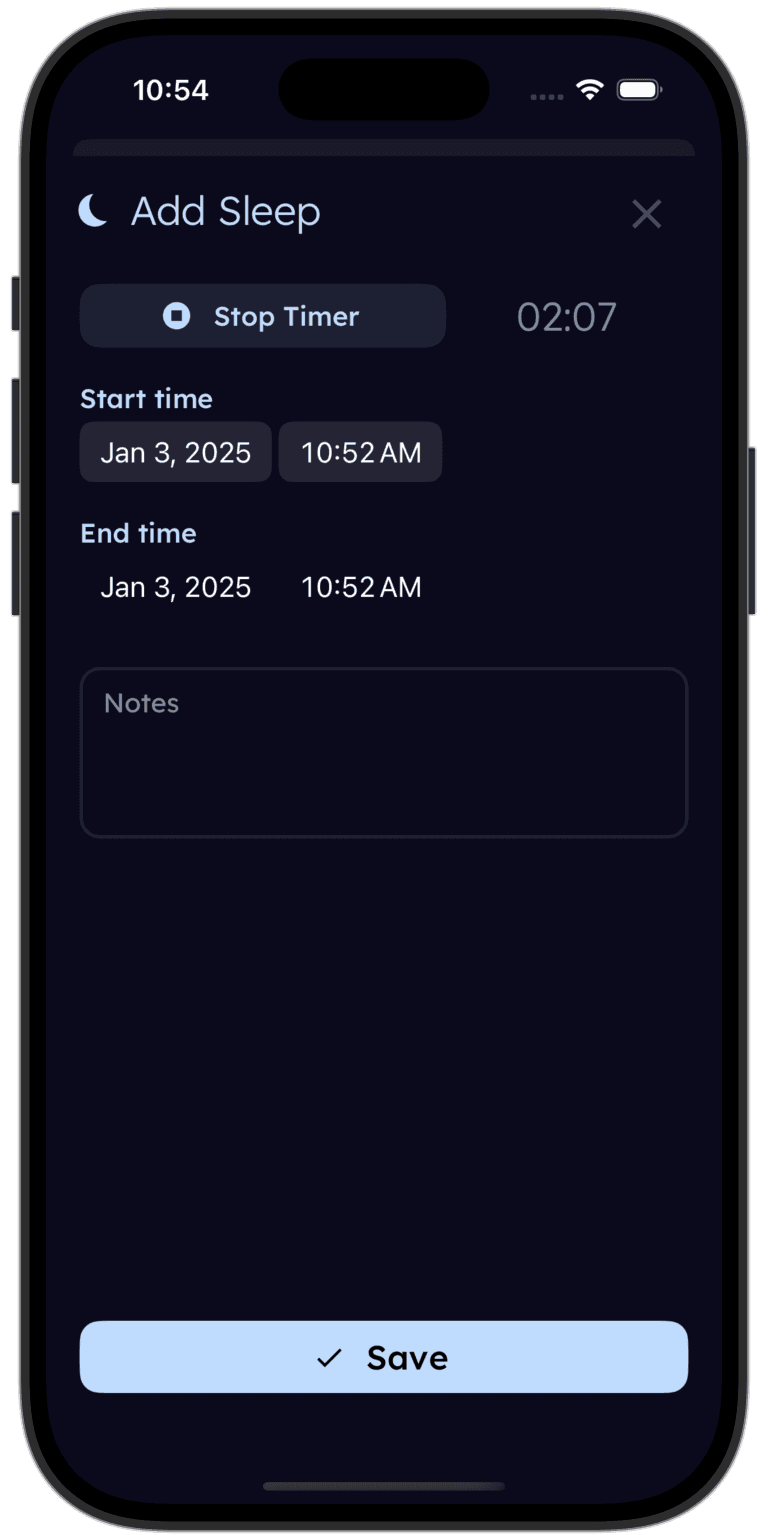
Tinylog tracks sleep so you can spot patterns and build better routines.
Log naps and nighttime stretches, see daily sleep totals, and track how your baby's sleep evolves week by week. Bring the data to your pediatrician.


Lifespan: The Lotus Keeps Going
The HALO BassiNest is designed for the first four to five months. Once your baby can roll over, push up on hands and knees, or hits 20 lbs, you are done. That is a short window — and for a product that costs $250 or more, the per-month cost is steep.
The Guava Lotus works from birth through toddlerhood (up to 45 lbs in crib mode). That is potentially three or more years of use from a single product. The side zipper door even lets mobile toddlers climb in and out independently, turning it into a cozy play space or quiet reading nook.
If you are buying one sleep product and want it to last, the Lotus gives you dramatically more mileage. If you are buying the BassiNest, think of it as a four-month convenience investment — and plan to have a crib ready for the transition.
Sleep Surface and Safety
Both products meet all CPSC and ASTM safety standards for their respective categories. Both come with firm, flat mattresses that meet safe sleep guidelines. Neither requires additional padding or accessories — and you should not add any.
The Guava Lotus has a larger sleep surface (42" x 24") with full mesh sides on all panels. Airflow is excellent. The CertiPUR-US foam mattress pad is firm and sits flat on the crib floor. The all-mesh design also means you can see your baby from any angle.
The HALO BassiNest has a smaller sleep surface (34" x 18") with mesh panels and a polyester fiber mattress. It includes a newborn insert that provides a slightly cozier fit for very small babies. The smaller space can feel more snug and womb-like, which some newborns prefer.
Both are safe for unsupervised sleep when used according to manufacturer instructions. Follow the ABCs of safe sleep — Alone, on their Back, in a bare Crib — regardless of which product you choose.
Soothing Features: BassiNest's Built-In Toolkit
The HALO BassiNest 3.0 comes with electronic soothing features that the Lotus does not offer:
- Vibration — two speed settings to help settle a fussy baby
- Soothing sounds — white noise, heartbeat, and nature sounds
- Nightlight — soft amber glow for nighttime feeds without turning on overhead lights
- Nursing timer — built-in reminder for alternating sides
These are not gimmicks. White noise and gentle vibration genuinely help many newborns settle. Having a nightlight at exactly the right height is a small thing that makes the 3 AM feed slightly less miserable.
The Guava Lotus has no electronic features. It is a crib. If you want white noise or vibration, you will add a separate sound machine or portable vibrator — which many parents do anyway.
Whether built-in soothing features matter depends on your setup. If your nursery already has a sound machine and nightlight, the BassiNest's extras are redundant. If you want an all-in-one bedside station, they add real value.
| Product | Typical Price | Notes |
|---|---|---|
| Guava Lotus Travel Crib (standard) | $209–$250 | Includes mattress and backpack carry case. One purchase covers birth through toddler years. |
| Guava Lotus Travel Crib (with quilted mattress upgrade) | $250–$290 | The upgraded mattress is thicker and more cushioned. Optional but popular. |
| HALO BassiNest Swivel Sleeper 3.0 | $250–$330 | Price varies by fabric/edition. Includes nightlight, vibration, and soothing sounds. Usable for ~5 months. |
| HALO BassiNest replacement sheets (2-pack) | $20–$30 | You will want at least one spare. Spit-up and diaper leaks are inevitable. |
Price: Similar Sticker, Very Different Value Per Month
The Guava Lotus and HALO BassiNest land in a similar price range — roughly $210–$330 depending on model and retailer. But the value equation is very different.
The HALO BassiNest at ~$280 lasts about 5 months. That is roughly $56 per month of use.
The Guava Lotus at ~$230 can last 3+ years. That is roughly $6 per month of use.
Does that mean the BassiNest is a bad deal? Not necessarily. If it saves you from getting out of bed eight times a night for four months, many parents consider that money extremely well spent. It is a convenience purchase, not a value purchase.
If you can only buy one product, the Lotus gives you far more utility over time. If you can buy both, the BassiNest handles months 0–5 and the Lotus takes over from there — and travels with you forever.
Choose the Guava Lotus Travel Crib If
- You travel frequently and need a safe, portable sleep space you can take anywhere
- You want one product that works from newborn through toddler age
- Budget efficiency matters — you want to avoid buying a bassinet and a crib separately
- You visit grandparents or family often and need a reliable sleep setup on the go
- You prefer a larger sleep surface that gives baby more room
- You value simplicity — no batteries, no electronics, just a well-designed crib
Choose the HALO BassiNest Swivel Sleeper 3.0 If
- Nighttime feeding and soothing is your top priority and you want baby within arm's reach
- You are recovering from a C-section and cannot easily get in and out of bed
- You want built-in soothing features like vibration, sounds, and a nightlight
- You already have a full-size crib and need a dedicated bedside sleeper for the newborn months
- You co-sleep and want a safer alternative that keeps baby close but in their own space
- The swivel-and-lower design matters — being able to reach baby without standing up is a priority
Where to Buy
The Guava Lotus Travel Crib (~$220–$250) is one of the best travel cribs available. It folds into a backpack, sets up in seconds, fits in airplane overhead bins, and works from birth through toddlerhood. If you travel at all or want a single sleep product that lasts for years, this is the one. Available on the Guava Family website, Amazon, and most major baby retailers.
The HALO BassiNest (~$260–$330) is the gold standard in bedside bassinets. The 360-degree swivel, lowering side wall, and built-in soothing features make nighttime feeds and soothing as painless as possible during those intense first months. If bedside access is your priority — especially post-C-section — it is worth every penny. Available on the HALO website, Amazon, Target, and Buy Buy Baby.
Many families end up with both: the BassiNest for the newborn months, then the Lotus as their travel crib and long-term portable sleep solution. That combination covers every scenario.
Tinylog earns a small commission on purchases made through these links, at no cost to you.
Before you buy, it's worth checking promo.new for a deal. It doesn't cover everything, but we've had good luck with it.
The Bottom Line
The Guava Lotus Travel Crib and HALO BassiNest Swivel Sleeper 3.0 are both excellent products — but they are built for different jobs.
Guava Lotus wins on portability (folds into a backpack, airplane-friendly), lifespan (birth through toddler), value per month of use, sleep surface size, and simplicity.
HALO BassiNest wins on bedside access (swivel + lowering wall), nighttime convenience (soothing sounds, vibration, nightlight), and the overall experience of having your newborn within arm's reach at 3 AM.
For most families, the deciding factor is simple: are you solving a travel problem or a nighttime-access problem? If travel, get the Lotus. If bedside convenience, get the BassiNest. If budget allows, get both — they complement each other perfectly.
If you are tracking your baby's sleep — which helps you understand emerging patterns and know when nap transitions are coming — Tinylog makes it easy to log sleep, spot trends, and share data with your pediatrician.
Related Guides
- Newborn Sleep Guide — What to expect from sleep in the first months
- 4-Month Sleep Regression — When it hits, what to do, and when it ends
- Baby Development: 3 Months — Milestones at the age when many babies outgrow bassinets
- Safe Sleep for Babies — The ABCs of safe sleep and current AAP guidelines
Sources
- Guava Family. "Lotus Travel Crib — Product Specifications." guavafamily.com, 2026.
- HALO Innovations. "BassiNest Swivel Sleeper 3.0 — Product Specifications." halosleep.com, 2026.
- Consumer Reports. "Best Bassinets of 2026." consumerreports.org, 2026.
- Wirecutter (NYT). "The Best Bassinets." nytimes.com/wirecutter, 2025.
- BabyGearLab. "Guava Lotus Travel Crib Review — Tested & Rated." babygearlab.com, 2025.
- BabyGearLab. "HALO BassiNest Swivel Sleeper Review — Tested & Rated." babygearlab.com, 2025.
- American Academy of Pediatrics. "Safe Sleep Recommendations." aap.org, 2024.
- CPSC. "Safe Sleep for Babies." cpsc.gov, 2025.
- Babylist. "Best Travel Cribs of 2026." babylist.com, 2026.
This guide is for informational purposes only and is not a substitute for pediatric sleep safety guidance. Product specifications and safety standards can change — always verify current specs on the manufacturer's website before purchasing. Follow the American Academy of Pediatrics safe sleep guidelines regardless of which sleep product you choose.
Frequently asked questions
- Can the Guava Lotus Travel Crib be used as a primary sleeping space?
- Yes. The Guava Lotus meets all CPSC and ASTM safety standards for full-size cribs and play yards. It is certified as a safe sleep space from birth and can serve as your baby's only crib. Many families use it as their primary crib at home and their travel crib on the road.
- How long can a baby sleep in the HALO BassiNest?
- HALO recommends using the BassiNest until your baby shows signs of rolling over or pushing up on hands and knees, or reaches 20 lbs — whichever comes first. For most babies, that is around 4–5 months. After that, you will need to transition to a crib.
- Does the Guava Lotus fit in overhead airplane bins?
- Yes. The Guava Lotus folds down to roughly the size of a large backpack and weighs about 13 lbs. It fits in most standard overhead bins on domestic flights. The included travel backpack makes it easy to carry through the airport.
- Can the HALO BassiNest swivel over the bed?
- Yes. The BassiNest's base slides under most bed frames, and the sleeping area swivels 360 degrees to position directly over your mattress. This lets you reach your baby without getting out of bed — especially helpful for C-section recovery or nighttime breastfeeding.
- Is the Guava Lotus easy to set up?
- Most parents can set up the Guava Lotus in about 15 seconds once they have done it a few times. The first time takes a couple of minutes to learn the folding mechanism. There are no loose parts or tools required — it pops open and locks into place.
- Do I need both a travel crib and a bassinet?
- Not necessarily, but many families end up with both. A bedside bassinet is a convenience tool for the first few months — it makes nighttime feeds and soothing much easier. A travel crib solves a different problem: portable, safe sleep anywhere. If budget forces a choice, consider which problem matters more to your daily life right now.