
GUIDE
HALO SleepSack Swaddle vs. Kyte Baby Sleep Bag
Published on
These are two different products for two different stages. The HALO SleepSack Swaddle is a swaddle for newborns who need that snug, womb-like feeling. The Kyte Baby Sleep Bag is a wearable blanket for older babies who have outgrown swaddling. If your baby hasn't started rolling, HALO. If they have, Kyte.
The HALO SleepSack Swaddle and Kyte Baby Sleep Bag are two of the most-loved sleep products on the market — but they serve different purposes at different stages. HALO dominates the hospital swaddle market and is designed for newborns up to about 3–6 months. Kyte Baby has built a devoted following among parents who want buttery-soft bamboo fabric for older babies. Comparing them is less about which is 'better' and more about which one your baby needs right now.
Log naps, bedtime, and wake windows
A Swaddle and a Sleep Bag Walk Into a Nursery
Here's the thing most comparison articles get wrong: the HALO SleepSack Swaddle and the Kyte Baby Sleep Bag are not really direct competitors. They are designed for different developmental stages and solve different problems.
The HALO SleepSack Swaddle is a swaddle. It wraps your newborn's arms snugly to dampen the Moro (startle) reflex that wakes babies up. It is designed for the first few months of life, before your baby starts rolling.
The Kyte Baby Sleep Bag is a wearable blanket. Arms are free. It replaces loose blankets in the crib and keeps your baby warm without the suffocation risk. It is designed for babies who have moved past swaddling — typically from about 3–4 months through toddlerhood.
Many families end up buying both — HALO for the newborn stage and Kyte for everything after. This guide breaks down where each product shines so you can figure out what your baby actually needs right now.
For more on newborn sleep patterns and wake windows, see our baby sleep schedule guide.
| Feature | HALO SleepSack Swaddle | Kyte Baby Sleep Bag | What It Means |
|---|---|---|---|
| Product type | Swaddle (arms in, arms out, or one arm out) | Wearable blanket / sleep bag (arms always free) | Different categories. HALO is for newborns who need swaddling. Kyte is for babies who have moved past the swaddle stage. |
| Primary fabric | 100% cotton (also available in microfleece and organic cotton) | Bamboo rayon (97% bamboo rayon, 3% spandex) | Kyte's bamboo rayon is softer and more temperature-regulating. HALO's cotton is durable and easier to care for. |
| Age range | Newborn to ~3–6 months (until rolling begins) | Newborn to 36 months (sizes available up to toddler) | HALO covers the swaddle window only. Kyte carries your baby through toddlerhood. |
| Temperature regulation | Good — cotton breathes well, microfleece adds warmth | Excellent — bamboo rayon wicks moisture and regulates body temperature | Kyte's bamboo fabric has a real edge here, particularly for babies who run warm. |
| TOG ratings | Not officially rated by TOG (varies by fabric choice) | 1.0 TOG and 2.5 TOG options | Kyte provides clearer guidance on warmth levels. With HALO, you choose warmth by fabric type. |
| Closure system | Velcro swaddle wings + bottom zipper | Two-way zipper from bottom | HALO's velcro wings allow adjustable swaddle tightness. Kyte's zipper is simpler and quieter for diaper changes. |
| Diaper access | Bottom zipper for easy diaper changes | Two-way zipper opens from the bottom | Both make middle-of-the-night diaper changes manageable without fully undressing your baby. |
| Hospital use | Used in 1,600+ US hospitals | Not commonly used in hospitals | HALO has significant institutional credibility. Kyte is a direct-to-consumer brand. |
| Washing durability | Holds up well — cotton gets softer over time | Holds up well but bamboo can pill after many washes if not cared for properly | HALO's cotton is more forgiving in the wash. Kyte recommends cold water and low heat to preserve softness. |
| Color and pattern options | Moderate selection — neutrals and basics | Wide selection — seasonal prints, limited editions, trending colors | Kyte Baby wins on aesthetics. Their seasonal drops and color palette have a dedicated fan following. |
| Safe sleep compliance | Yes — AAP recognized, hip-healthy design (IHDI certified) | Yes — meets AAP guidelines, hip-healthy loose sack design | Both are designed for safe sleep. HALO has the formal IHDI hip-health certification. |
Fabric: Cotton vs. Bamboo Rayon
This is where the two products diverge most noticeably in day-to-day use.
HALO SleepSack Swaddle comes in several fabric options. The standard cotton version is breathable, machine-washable, and gets softer with every wash. The microfleece version adds warmth for cooler nurseries. The organic cotton version appeals to parents who want certified organic materials. All are solidly constructed and hold up to the relentless washing that newborn life demands.
Kyte Baby Sleep Bag uses bamboo rayon fabric that parents describe as "buttery" — and they are not exaggerating. Bamboo rayon is naturally moisture-wicking, hypoallergenic, and temperature-regulating. It pulls heat away from warm babies and retains warmth for cool babies. The fabric feels noticeably more luxurious than standard cotton.
The practical difference: if your baby tends to overheat at night or you live somewhere warm, Kyte's bamboo rayon has a genuine functional advantage. If you just need something that works reliably and survives the washing machine without fussing over care instructions, HALO's cotton is dead simple.
The Swaddle-to-Sleep-Bag Transition
This is the part most parents stress about unnecessarily.
Around 3–4 months (or whenever your baby first shows signs of rolling), you need to stop swaddling. The AAP is clear on this: a swaddled baby who rolls onto their stomach is at increased risk of suffocation because their arms are restrained.
The HALO SleepSack Swaddle actually handles part of this transition well. It has a three-way swaddle system: arms in, one arm out, or both arms out. You can gradually wean your baby from the full swaddle by freeing one arm at a time. This staged approach helps many babies adjust without a complete sleep meltdown.
Once both arms are out, though, you are essentially using a sleeveless sack — and that is where a dedicated sleep bag like the Kyte Baby Sleep Bag takes over. The Kyte bag is designed from the ground up to be a post-swaddle product, with comfortable armholes, a roomy sack for hip-healthy leg movement, and sizing that goes all the way up to 36 months.
The natural progression for many families: HALO swaddle (birth to ~4 months) then Kyte sleep bag (4 months to toddlerhood).
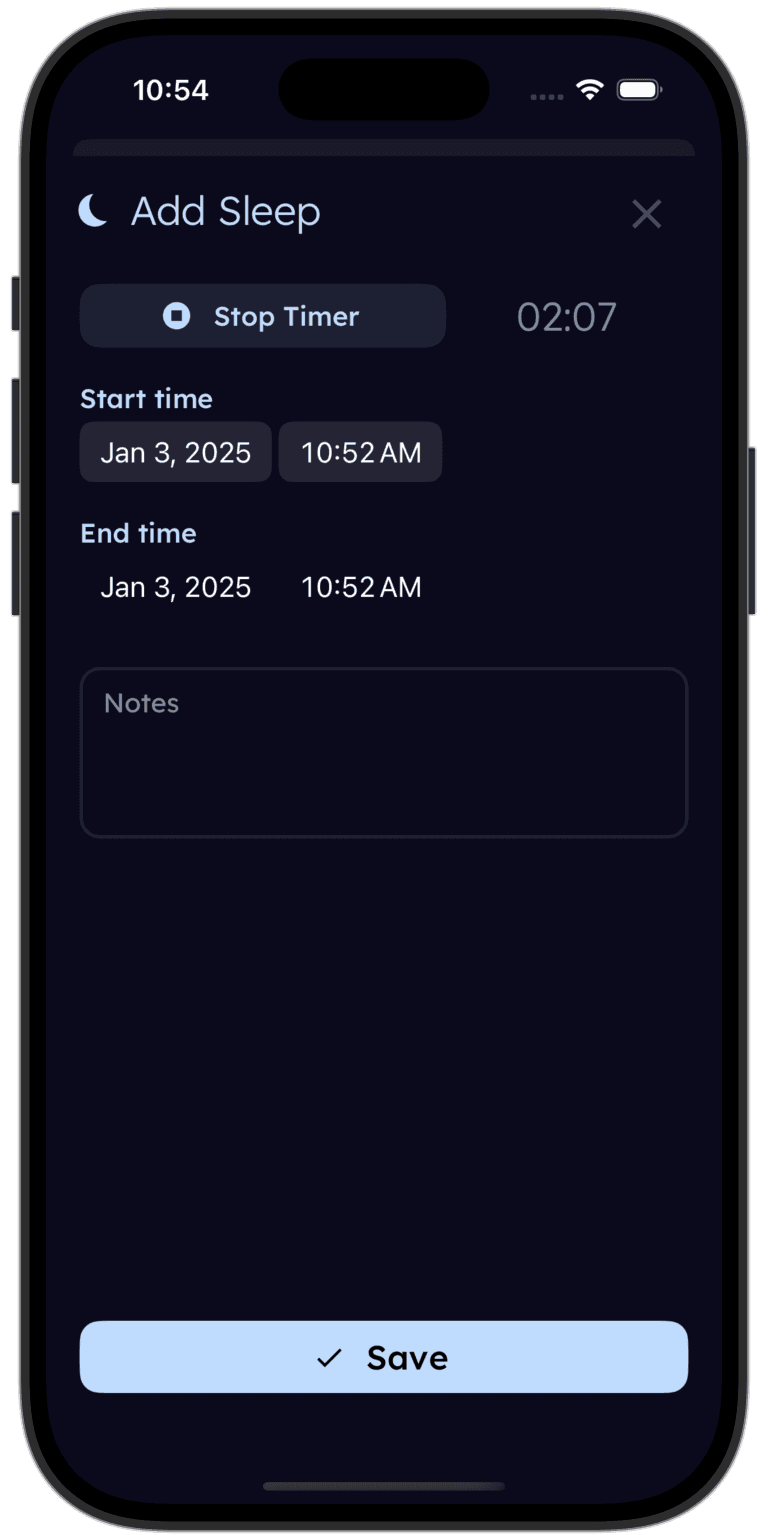
Tinylog tracks sleep so you can find your baby's rhythm.
Log naps, bedtime, night wakes, and wake windows. See patterns over days and weeks. Bring the data to your next pediatrician visit.


Safety: Both Take It Seriously
Safe sleep is non-negotiable, and both products are built around it.
HALO is certified as "hip-healthy" by the International Hip Dysplasia Institute (IHDI). Their sack design allows the legs to bend up and out at the hips, which supports healthy hip joint development. HALO also partners with over 1,600 hospitals and actively promotes the AAP's Back to Sleep guidelines.
Kyte Baby follows AAP safe sleep recommendations with a loose-fitting sack that allows full leg movement. The design eliminates the need for loose blankets in the crib. While Kyte does not have the same formal hospital partnership program, their sleep bags meet the same fundamental safety principles.
Both products replace loose blankets — which is the entire point. A wearable sleep product that stays put is dramatically safer than a traditional blanket that can bunch up around a baby's face.
One critical safety note: never use a sleep bag that is too large for your baby. An oversized neck opening can ride up and cover the face. Always size according to the manufacturer's weight and length guidelines.
| Product | Typical Price | Cost Per Unit | Notes |
|---|---|---|---|
| HALO SleepSack Swaddle (cotton, single) | $25–$32 | — | One-time purchase (most families buy 2–3) |
| HALO SleepSack Swaddle (organic cotton, single) | $30–$38 | — | One-time purchase (most families buy 2–3) |
| Kyte Baby Sleep Bag (1.0 TOG, single) | $36–$46 | — | One-time purchase per size (most families buy 2) |
| Kyte Baby Sleep Bag (2.5 TOG, single) | $40–$50 | — | One-time purchase per size (most families buy 2) |
Price: HALO Is Easier on the Budget
There is a real price difference here, and it is worth being honest about.
A single HALO SleepSack Swaddle in standard cotton runs about $25–$32. You will likely buy 2–3 for rotation, putting your total investment around $50–$96 for the entire swaddle stage.
A single Kyte Baby Sleep Bag runs about $36–$50 depending on the TOG rating and any special edition prints. You will need to size up as your baby grows, and most parents buy 2 per size for laundry backup. That can add up to $150–$200+ over the first two years.
Is the Kyte Baby Sleep Bag worth the premium? That depends on how much you value the bamboo rayon fabric and temperature regulation. Some parents consider it the single best baby purchase they made. Others find that a less expensive sleep bag works perfectly fine for their baby.
Ways to save on both:
- Registry discounts — most major retailers offer a completion discount
- Buy during sales — both brands run seasonal promotions
- Buy secondhand — both products hold up well and have active resale markets
- Stick with one TOG — the 1.0 TOG works for most home temperatures year-round
Choose the HALO SleepSack Swaddle If
- Your baby is a newborn who hasn't started rolling yet
- You want a swaddle that can transition from arms-in to arms-out as your baby grows
- Your hospital used HALO and your baby is already used to it
- You prefer a more affordable option with proven safety credentials
- You want the flexibility of cotton, microfleece, or organic cotton fabrics
Choose the Kyte Baby Sleep Bag If
- Your baby has outgrown the swaddle stage and is rolling or close to rolling
- You want the softest possible fabric against your baby's skin
- Your baby runs warm or you live in a warmer climate
- You want clear TOG ratings to match the sleep bag to your nursery temperature
- You plan to use a sleep bag through toddlerhood (up to 36 months)
- You care about prints and colors — Kyte's seasonal collections are genuinely beautiful
Where to Buy
For newborns who need swaddling, the HALO SleepSack Swaddle (~$28 for standard cotton) is the gold standard — used in over 1,600 hospitals, IHDI-certified for hip health, and designed with a three-way swaddle system that grows with your baby through the arms-out transition. Grab two so you always have a clean one ready.
For babies past the swaddle stage, the Kyte Baby Sleep Bag (~$40 for 1.0 TOG) is the one parents rave about — the bamboo rayon fabric is genuinely softer and more breathable than anything else on the market, and the TOG rating system takes the guesswork out of dressing your baby for sleep. Sizes go all the way up to 36 months.
Many families end up owning both. That is not a marketing ploy — they genuinely serve different stages and there is a natural handoff point around 3–4 months.
Tinylog earns a small commission on purchases made through these links, at no cost to you.
Want to save a few bucks? promo.new is worth a quick look. It won't always have your product, but when it does, the savings are real.
The Bottom Line
The HALO SleepSack Swaddle and the Kyte Baby Sleep Bag are both excellent products that serve different needs at different stages.
HALO SleepSack Swaddle is the go-to for the newborn swaddle stage. Hospital-trusted, affordable, and built with a smart transition system that lets you gradually free your baby's arms. It is the right product from birth until your baby starts rolling.
Kyte Baby Sleep Bag takes over after swaddling ends. The bamboo rayon fabric is in a class of its own for softness and temperature regulation, and the sizing range carries you through toddlerhood. It costs more, but many parents call it one of their favorite baby purchases.
You do not have to pick one or the other. The most common path is HALO first, Kyte second — and your baby sleeps safely through both.
If you are tracking your baby's sleep patterns — and you should be, especially in the early months — Tinylog makes it simple to log naps, bedtime, and night wakes so you can see what is actually working.
Related Guides
- Baby Sleep Schedule — Age-by-age sleep needs and wake windows
- Sleep Training Methods — Ferber, chair method, gentle approaches compared
- Baby Feeding Chart — How much your baby should eat by age
- Swaddle Transition Guide — When and how to stop swaddling safely
Sources
- HALO Innovations. "HALO SleepSack Swaddle — Product Information." halosleep.com, 2026.
- Kyte Baby. "Sleep Bag — Product Information and TOG Guide." kytebaby.com, 2026.
- American Academy of Pediatrics. "Safe Sleep: Back Is Best." aap.org, 2024.
- International Hip Dysplasia Institute. "Hip-Healthy Swaddling." hipdysplasia.org, 2025.
- Consumer Reports. "Best Baby Sleep Sacks of 2026." consumerreports.org, 2026.
- BabyGearLab. "Best Swaddles and Sleep Sacks Reviewed." babygearlab.com, 2026.
- What to Expect. "When to Stop Swaddling Your Baby." whattoexpect.com, 2025.
This guide is for informational purposes only and is not medical advice. Always follow the AAP safe sleep guidelines and consult your pediatrician if you have questions about your baby's sleep environment or safe sleep practices.
Frequently asked questions
- Can I use the HALO SleepSack Swaddle after my baby starts rolling?
- No. Once your baby shows signs of rolling (typically around 3–4 months), you need to stop swaddling immediately. The HALO SleepSack Swaddle has arms-out options that can help with the transition, but most parents move to a sleep bag like the Kyte Baby at that point.
- Is the Kyte Baby Sleep Bag worth the higher price?
- Many parents think so. The bamboo rayon fabric is exceptionally soft, breathable, and temperature-regulating. If your baby runs warm or you live in a warmer climate, the moisture-wicking properties can genuinely improve sleep quality. But plenty of babies sleep perfectly well in less expensive sleep bags too.
- What TOG rating should I choose for the Kyte Baby Sleep Bag?
- Kyte Baby offers 1.0 TOG (standard year-round warmth) and 2.5 TOG (cooler rooms or winter). For most homes kept between 68–72°F, the 1.0 TOG works well. If your nursery runs below 68°F, go with 2.5 TOG. Always check your baby's chest temperature — not hands or feet — to gauge if they are comfortable.
- Do hospitals actually use the HALO SleepSack Swaddle?
- Yes. HALO has partnerships with over 1,600 hospitals across the United States. Many NICUs and newborn nurseries use the HALO SleepSack Swaddle as their standard swaddling product. It is one of the most hospital-trusted baby sleep products on the market.
- Can I use the Kyte Baby Sleep Bag from birth?
- Technically yes — Kyte Baby makes a newborn size. But newborns generally benefit from swaddling to reduce the startle reflex and improve sleep. Most parents use a swaddle like the HALO for the first few months, then transition to a sleep bag like the Kyte Baby once swaddling is no longer safe or effective.
- Are both products safe for sleep?
- Yes. Both follow the AAP safe sleep guidelines when used correctly. The HALO SleepSack Swaddle replaces loose blankets in the crib and keeps the swaddle securely fastened. The Kyte Baby Sleep Bag is a wearable blanket that eliminates the need for loose bedding. Neither product should be used with additional blankets in the crib.