GUIDE

Hand, Foot, and Mouth Disease

HFMD is a common, self-limiting viral illness. It is miserable but not dangerous.

Your daycare just sent the dreaded notification, or your toddler is refusing to eat because their mouth hurts. HFMD is one of those illnesses that looks and feels terrible but resolves on its own within a week.

What HFMD Is and Why It's So Common

Hand, foot, and mouth disease is caused by viruses in the enterovirus family — most commonly coxsackievirus A16 and enterovirus 71. It is one of the most common childhood illnesses, with peak seasons in summer and early fall, and it predominantly affects children under five.

The disease follows a predictable pattern: fever and sore throat first, then painful sores inside the mouth (tongue, gums, inner cheeks), followed by a rash on the palms of the hands, soles of the feet, and sometimes the buttocks. The mouth sores are by far the worst part — they are the reason your child stops eating and drinking, which is the main concern.

HFMD is not related to foot-and-mouth disease in cattle. Different virus, different species, no connection. You will be asked this by at least one relative.

The illness is self-limiting, meaning it runs its course and resolves without treatment. There is no antiviral for it. Your job for the next 7-10 days is pain management and hydration — keeping your child comfortable and preventing dehydration from the reduced intake.


HFMD Day-by-Day Timeline
Day 1-2 (incubation ends)
What's HappeningFever (100-103°F), sore throat, fussiness, decreased appetite. No rash yet.
What to DoAcetaminophen or ibuprofen for fever. Push fluids. Baby may not want to eat — that is okay for now.
Day 2-3
What's HappeningPainful sores appear inside the mouth — tongue, gums, inside of cheeks. Baby may refuse to eat or drink.
What to DoCold foods: ice pops, cold yogurt, cold milk. Avoid citrus, tomatoes, and anything acidic. Pain relief before meals.
Day 3-5
What's HappeningRash appears on hands (palms), feet (soles), and sometimes buttocks and legs. May be flat red spots or small blisters.
What to DoBlisters do not need to be popped or covered. They are not as painful as the mouth sores. Focus on hydration.
Day 5-7
What's HappeningFever resolves. Mouth sores begin healing. Rash starts to fade. Appetite returns.
What to DoContinue soft foods. Resume normal diet as tolerated. Baby is feeling better.
Day 7-10
What's HappeningRash fully resolved. Some peeling of skin on hands and feet may occur. Occasional nail changes weeks later.
What to DoNormal activity. Nail peeling or shedding (onychomadesis) can occur 4-8 weeks later — this is harmless and temporary.
This is a typical timeline. Some children have milder courses (done in 5 days) and some have more prolonged symptoms. The overall pattern — fever, then mouth sores, then rash, then improvement — is consistent.
HFMD vs. Similar Conditions
HFMD
Key FeatureMouth sores + hand/foot blisters. Fever first, then rash.
Contagious?Very
Duration7-10 days
Herpangina
Key FeatureMouth sores (back of throat) but NO hand/foot rash. Same virus family.
Contagious?Very
Duration5-7 days
Herpes Gingivostomatitis
Key FeatureMouth sores + swollen, bleeding gums. No hand/foot rash. High fever. More painful.
Contagious?Yes
Duration10-14 days
Chickenpox
Key FeatureItchy blisters EVERYWHERE (trunk, face, limbs). Multiple stages at once. Blisters on trunk, not palms.
Contagious?Extremely
Duration7-10 days
Aphthous Ulcers (Canker Sores)
Key Feature1-2 mouth sores without fever or rash. Not contagious.
Contagious?No
Duration7-10 days per sore
The combination of mouth sores AND hand/foot rash is distinctive to HFMD. Mouth sores alone could be several conditions.
tinylog feed log showing fluid intake tracking during illness

'Is she drinking less today or the same as yesterday?' Check the log.

During HFMD, tracking fluid intake is the most important thing you can do. Log every bottle, nursing session, and syringe of Pedialyte in tinylog so you can see the trend — and so you can tell your pediatrician exactly how much your baby is drinking when they ask.

Download on the App StoreGet It On Google Play

Comfort Care: Getting Through the Worst Days

Cold is your best friend

Cold numbs the mouth sores temporarily. Offer ice pops (even for babies over 6 months — just let it melt on a spoon), cold breast milk or formula, chilled purees, cold yogurt, or ice chips in a mesh feeder. Anything cold that gets fluid in.

Pain relief before meals

Give acetaminophen or ibuprofen (for babies 6+ months) 20-30 minutes before attempting a feeding. The window of pain relief makes eating and drinking more tolerable.

Avoid acidic and salty foods

Citrus, tomatoes, strawberries, pickles, and salty foods will sting the mouth sores intensely. Stick to bland, soft, cool foods: mashed potatoes, yogurt, applesauce, bananas, oatmeal.

Syringe fluids if needed

If your baby is refusing bottles or cups, use an oral syringe to slowly squirt small amounts of breast milk, formula, Pedialyte, or water into the cheek. Aim for the side of the mouth, not the back of the throat.

Skip the mouthwash

Some guides suggest adult mouthwash or 'magic mouthwash' mixtures. Do not use these on babies or young toddlers without your pediatrician's direction. They can be harmful if swallowed.

Reassuring Signs — You're Getting Through It

  • Baby is drinking fluids — even if eating less, hydration is what matters
  • Wet diapers are normal frequency (at least 3-4 per day)
  • Fever is responding to acetaminophen or ibuprofen
  • Baby has periods of playfulness or normal behavior between bouts of fussiness
  • The rash is following the expected timeline — mouth sores first, then hand/foot spots
  • Symptoms are stable or improving after day 3-4

If your child is drinking fluids and having wet diapers, you are doing the most important thing right.

Warning Signs — Call Your Pediatrician

  • Baby is not drinking enough — fewer than 3-4 wet diapers per day, no tears when crying, dry lips and mouth
  • Fever above 104°F or fever lasting more than 3 days
  • Baby seems increasingly lethargic, difficult to wake, or inconsolable
  • Symptoms are getting worse after day 5 instead of improving
  • Baby under 3 months with any fever — ER, regardless of suspected cause
  • Stiff neck, severe headache (in older children), or confusion — very rare but possible viral meningitis

The main risk of HFMD is dehydration from refusing to drink. Monitor wet diapers closely. If output drops significantly, call your pediatrician.

Tips From Parents Who Survived HFMD

Hydration over calories

For the 3-5 days when eating hurts, do not worry about nutrition. Your baby can go several days on reduced food intake without any problems. What they cannot go without is fluids. Focus exclusively on getting liquids in — breast milk, formula, water, Pedialyte, ice pops, anything wet. Calories can wait. Dehydration cannot.

The nail thing is weird but normal

About 4-8 weeks after HFMD, some children's fingernails and toenails start peeling or falling off. It looks alarming, but it is a well-documented phenomenon called onychomadesis. The virus temporarily disrupts nail growth, and the affected nail eventually grows out and is replaced by a healthy one. No treatment needed.

You probably cannot avoid it

HFMD spreads through saliva, blister fluid, and stool — and it is most contagious before symptoms appear, when you have no idea your child is infected. In a daycare setting, containment is nearly impossible. Do not beat yourself up about exposure. Wash hands, sanitize surfaces, and accept that most children under 5 will get it at least once.

The daycare letter is not a personal attack

When the daycare sends the 'a child in your class has been diagnosed with HFMD' letter, your job is to watch for symptoms and keep your child home if they develop them. You do not need to preemptively quarantine, and you do not need to blame anyone. This is just childhood.

Related Guides

Sources

  • Centers for Disease Control and Prevention (CDC). (2024). Hand, Foot, and Mouth Disease. CDC.gov.
  • American Academy of Pediatrics (AAP). (2024). Hand, Foot, and Mouth Disease (Coxsackievirus). HealthyChildren.org.
  • Aswathyraj, S., et al. (2016). Hand, Foot and Mouth Disease (HFMD): Emerging Epidemiology and the Need for a Vaccine Strategy. Medical Microbiology and Immunology, 205(5), 397-407.
  • Omaña-Cepeda, C., et al. (2019). A literature review and case report of hand, foot, and mouth disease in an immunocompetent adult. BMC Research Notes, 12(1), 165.

Medical Disclaimer

This guide is for informational purposes only and is not a substitute for professional medical advice. If your child shows signs of dehydration, has a very high fever, or appears seriously unwell, please contact your pediatrician or seek emergency care.

Get this guide in your inbox.
We'll email you the day-by-day timeline and comfort care tips so you know what to expect.
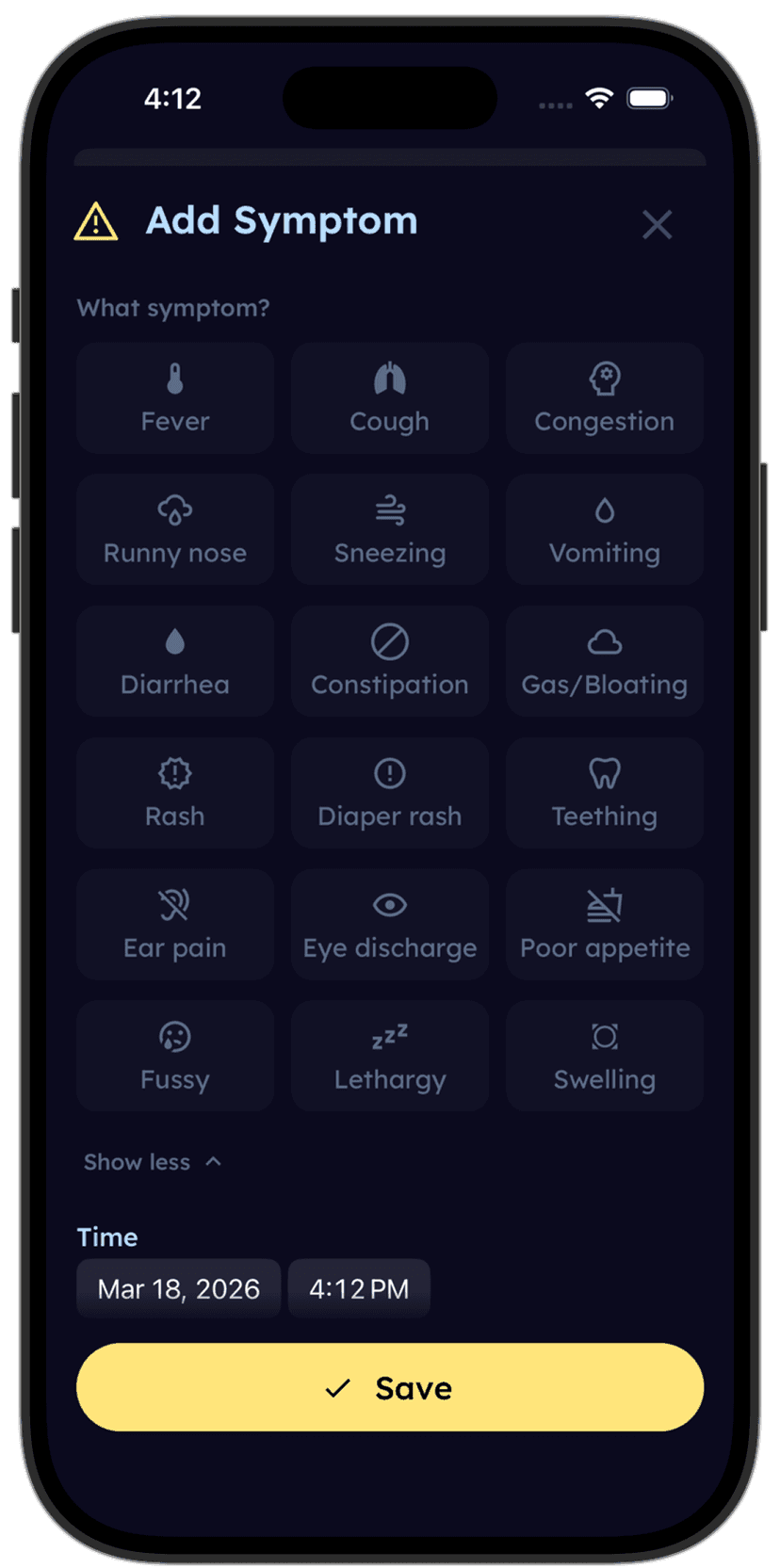
Day 3 and they still won't eat? Check the symptom log.
Download tinylog free — track fevers, feeds, and symptoms so you know what's improving.
Download on the App StoreGet It On Google Play