
GUIDE
MAM Original Day & Night vs. Frida Baby Get-A-Grip Teether
Published on
These products solve different problems. The MAM Original Day & Night is a pacifier built for non-nutritive soothing and nighttime findability. The Frida Baby Get-A-Grip Teether is a hands-free teething ring designed to stay on your baby's wrist. You might need both at different stages — or at the same time.
Comparing a pacifier to a teether is like comparing a blanket to a jacket — related goals, completely different tools. But parents search for both when their baby is fussy, drooly, and chewing on everything, so it is worth laying out exactly what each one does, who it is for, and whether you should grab one or both. We did the side-by-side so you can make a quick, confident call.
Log feeds, sleep, and soothing
Different Problems, Different Tools
Here is the truth that product pages will not tell you: the MAM Original Day & Night and the Frida Baby Get-A-Grip Teether are not competitors. They are teammates. They solve completely different problems, and many families end up owning both.
The MAM Original Day & Night is a pacifier. It is designed for non-nutritive sucking — the rhythmic, calming suck reflex that helps babies self-soothe, fall asleep, and stay settled. MAM developed the nipple shape with pediatric dentists. The shield has a glow-in-the-dark button for nighttime retrieval. It comes with a self-sterilizing microwave case. It is engineered to keep your baby calm.
The Frida Baby Get-A-Grip Teether is a teething ring built for babies who need to chew. It is made from soft, food-grade silicone with textured surfaces that provide counter-pressure to swollen gums. The standout feature is the wristband design — the teether stays on your baby's hand so they cannot fling it across the room. If you have ever retrieved a dropped teether from a restaurant floor for the fifth time in one meal, you understand why this matters.
The question is not which one to buy. It is when your baby needs each one — and sometimes the answer is both at the same time.
| Feature | MAM Original Day & Night | Frida Baby Get-A-Grip Teether | What It Means |
|---|---|---|---|
| Product type | Pacifier (non-nutritive soothing) | Teething ring (gum relief) | Different categories entirely. One satisfies the sucking reflex, the other gives swollen gums something to chew on. |
| Manufacturer | MAM (Austria, est. 1976) | Frida Baby (USA) | MAM is a legacy European baby brand. Frida Baby is known for practical, no-nonsense baby tools. |
| Primary material | SkinSoft silicone (nipple) with a BPA-free plastic shield | 100% food-grade silicone | Both use safe, medical-grade silicone. The teether is all-silicone with no hard plastic parts. |
| Recommended age | 0–6 months and 6–16 months (size-dependent) | 3+ months | The MAM works from birth. The Frida teether is for when teething symptoms appear, typically around 3-4 months. |
| Primary purpose | Calming through non-nutritive sucking; sleep aid | Gum pain relief through chewing and counter-pressure | If your baby wants to suck, they need the pacifier. If they want to gnaw, they need the teether. |
| Hands-free design | Stays in mouth via sucking; can use a pacifier clip | Wrist-worn — baby cannot drop it easily | The Frida teether's wristband design means fewer trips to pick it up off the floor. Clever and practical. |
| Glow-in-the-dark | Yes — button on the shield glows after light exposure | No | MAM wins for nighttime. Teethers are mostly used during awake hours, so the glow feature matters less here. |
| Sterilization | Comes with a microwave sterilizing case; also boilable and dishwasher-safe | Boilable; dishwasher-safe (top rack) | MAM's included case is convenient. Both can handle standard sterilization methods without trouble. |
| BPA/PVC/phthalate-free | Yes | Yes | Tie. Both are free of the chemicals parents worry about most. |
| Can be refrigerated for extra relief | Not recommended — silicone nipple is thin and not designed for cold therapy | Yes — chilling adds soothing relief to sore gums | The Frida teether benefits from a quick fridge chill. Cold pacifiers are not really a thing. |
| Orthodontic design | Yes — symmetrical orthodontic nipple developed with dental professionals | Not applicable — teethers are not designed for sucking patterns | Orthodontic shape only matters for pacifiers. The teether is chewed, not sucked. |
| Durability | Replace every 4–8 weeks | Replace when teeth marks are deep or silicone tears | Both hold up well with normal use. Inspect regularly — baby teeth are sharper than they look. |
Why This Is a Cross-Category Comparison
Most comparison guides pit two pacifiers or two teethers against each other. We are doing something different here because parents often search for both during the same window — typically between 3 and 6 months, when babies are fussy, drooly, and chewing on anything they can reach. Sometimes they want to suck at 2 AM and chew at 2 PM.
Pacifiers like the MAM satisfy the sucking reflex. Babies are born with this reflex, and it is a powerful calming mechanism — sucking releases endorphins and lowers heart rate. It is why pacifiers work so well at bedtime and during fussy periods that are not hunger-related.
Teethers like the Frida Baby satisfy the chewing urge. When teeth push through the gums, babies instinctively want to bite down on something firm. The counter-pressure provides genuine relief from aching and swelling. A pacifier nipple is too soft and thin to do this job.
The MAM Original Day & Night: What It Does Well
The MAM Original is one of the most popular pacifiers on the market, and for good reason. A few things stand out:
SkinSoft silicone nipple. MAM's proprietary material is softer than standard medical-grade silicone with a textured surface designed to feel familiar against a baby's palate. It is symmetrical and orthodontic — meaning it was shaped in collaboration with pediatric dentists to support jaw development and it works in any orientation.
Glow-in-the-dark button. The shield button charges under natural or artificial light and glows in the dark. It produces enough light to find the pacifier in a dark crib without turning on a lamp. Parents who use this feature tend to call it the single most practical pacifier innovation they have encountered.
Self-sterilizing case. Every MAM pacifier comes with a case that doubles as a microwave sterilizer. Add water, microwave for three minutes, done. The case also keeps the pacifier clean in your diaper bag.
Orthodontic design developed with dental professionals. MAM has partnered with pediatric dentists since 1976. The nipple shape reduces pressure on the palate and supports natural jaw development.
The MAM is at its best from birth through six months for sleep settling, car rides, post-feeding comfort, and nighttime wake-ups. It is a soothing tool, not a teething tool.
The Frida Baby Get-A-Grip Teether: What It Does Well
Frida Baby has a reputation for solving real parenting pain points with practical design, and the Get-A-Grip Teether is a good example.
Wristband design. This is the headline feature. The teether attaches to your baby's wrist with a soft silicone band. Babies older than 3 months can bring it to their mouth for chewing but cannot easily drop or throw it. For parents who have spent entire outings retrieving floor-bound teethers, this is a meaningful quality-of-life upgrade.
Textured silicone surfaces. The chewing portion has varied textures — ridges, bumps, and smooth areas — that provide different types of counter-pressure to sore gums depending on where the discomfort is.
Food-grade silicone throughout. No hard plastic components, no paint, no fabric that can harbor bacteria. Simple and safe.
Fridge-friendly. Chill it in the refrigerator for ten to fifteen minutes and the cool silicone adds another layer of gum relief. Avoid the freezer — frozen teethers become too rigid and can hurt sensitive gums.
The Frida Baby teether is at its best from 3 months through the active teething phase — a chewing tool for daytime use, not a sleep-soothing tool.
Tinylog tracks feedings so you can spot patterns.
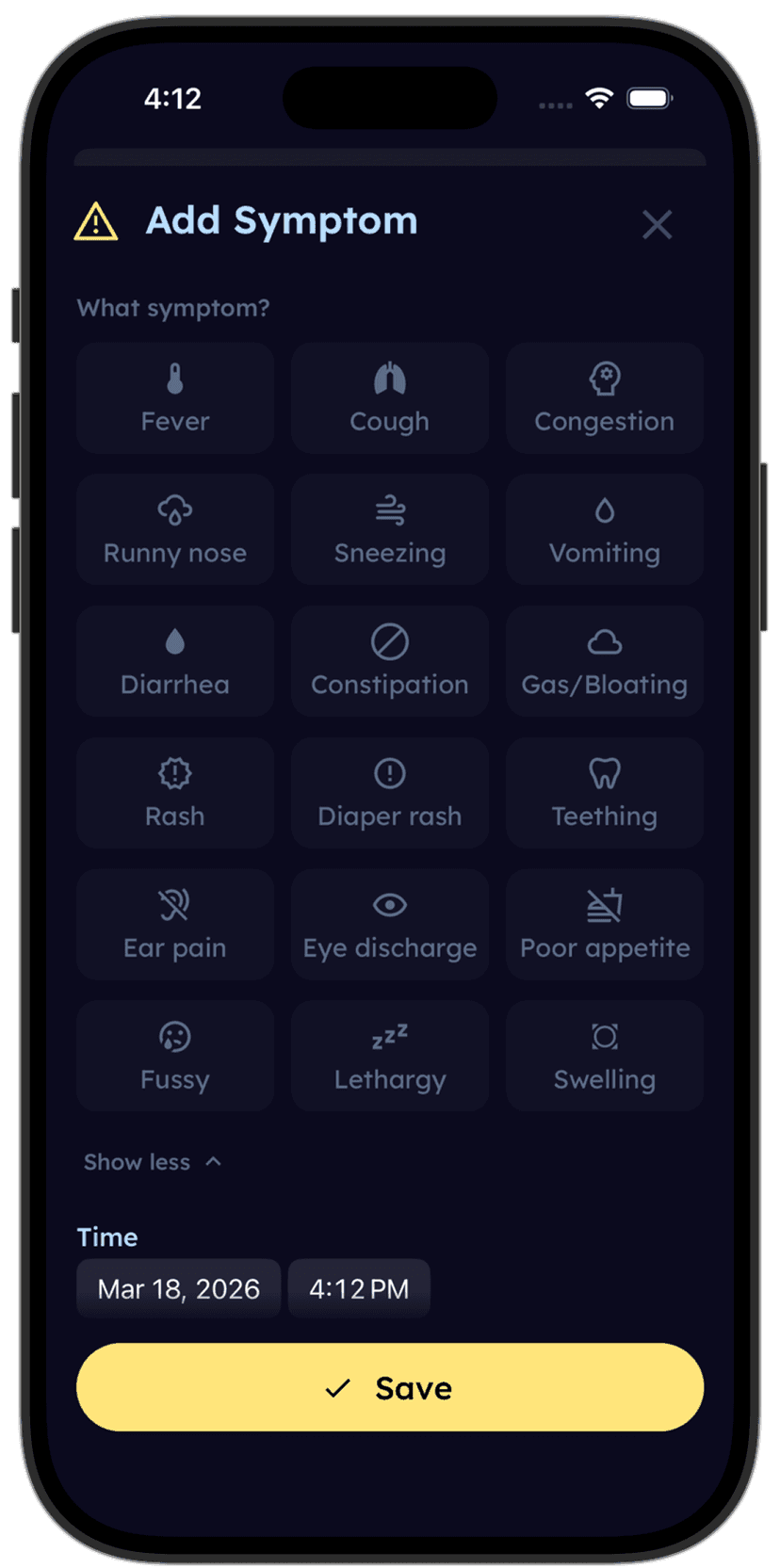
Log teething symptoms, fussy periods, and feeding changes in one place. Spot trends over time and share data with your pediatrician at the next visit.


Can You Use Both at the Same Time?
Yes, and many families do. The typical pattern looks something like this:
Birth to 3 months: Pacifier only. Babies this young are not teething yet. They need soothing, comfort, and help settling. The MAM Original Day & Night handles this stage well.
3 to 6 months: Both. Teething symptoms often start well before any tooth actually appears. Your baby might want a pacifier to fall asleep at naptime and a teether to gnaw on during awake playtime. Keep both in rotation.
6 to 12 months and beyond: Both, with teether use increasing. As more teeth push through, chewing becomes a bigger need. Pacifier use typically shifts toward sleep-only. The Frida Baby teether becomes the daytime go-to.
There is no conflict between using a pacifier and a teether in the same day. They are different tools for different moments, and the context determines which one you reach for.
How to Tell Whether Your Baby Needs a Pacifier or a Teether
This is one of those things that sounds obvious but gets confusing at 4 AM when your baby is fussy and you are cycling through every comfort tool you own.
Signs your baby wants to suck (reach for the pacifier):
- Rooting or turning toward your hand when you touch their cheek
- Sucking on fingers or fists in a rhythmic way
- Fussing that calms quickly once they latch onto something
- Bedtime restlessness or post-feeding comfort seeking
Signs your baby wants to chew (reach for the teether):
- Gnawing on toys, fingers, or your shoulder with visible jaw pressure
- Excessive drooling that started recently
- Red, swollen, or puffy gums
- Irritability that does not improve with sucking
Some babies flip between both needs within the same hour. Teething discomfort comes and goes in waves, and the sucking-versus-chewing preference can shift quickly.
| Product | Typical Price | Cost Per Unit | Notes |
|---|---|---|---|
| MAM Original Day & Night (2-pack) | $8–$12 | ~$4–$6 | Includes self-sterilizing case with each pacifier |
| Frida Baby Get-A-Grip Teether | $8–$11 | ~$8–$11 (sold individually) | Wrist-worn design; one piece per package |
| MAM Original Day & Night (6-pack value) | $20–$28 | ~$3.30–$4.70 | Best per-unit price; stock up for home, car, and daycare |
Price and Value
The MAM Original Day & Night runs about $4–$6 per pacifier in a 2-pack, dropping to roughly $3.30–$4.70 each in a 6-pack. You will need replacements every 4–8 weeks, and most families keep 4–6 pacifiers in rotation across the house, car, and diaper bag.
The Frida Baby Get-A-Grip Teether costs about $8–$11 per unit. It is typically sold individually. The all-silicone construction is durable, so you may not need to replace it as often — but having two (one in use, one in the fridge) is a practical move.
Over the first year, expect to spend roughly $25–$50 on pacifiers and $15–$25 on teethers. Neither is a major expense in the grand scheme of baby gear, and both are well worth having on hand when your baby is miserable.
Ways to keep costs down:
- Buy MAM multi-packs. The per-unit cost drops noticeably in 3- or 6-packs.
- Check registry completion discounts. Amazon, Target, and BuyBuyBaby discounts work on pacifiers and teethers.
- Inspect before replacing. Replace when you see damage — not on a strict calendar.
Choose the MAM Original Day & Night If
- Your baby is under 3 months and needs soothing through non-nutritive sucking
- You want a glow-in-the-dark feature for nighttime pacifier retrieval
- Your baby fusses at bedtime and a pacifier helps them settle to sleep
- You need a built-in sterilizing case for quick cleanup on the go
- Your pediatrician has recommended a pacifier for reflux or colic comfort
Choose the Frida Baby Get-A-Grip Teether If
- Your baby is 3 months or older and showing classic teething signs — drooling, gnawing, fussiness
- You are tired of picking up dropped teethers off the floor every thirty seconds
- Your baby wants to chew on everything but cannot hold a standard teether yet
- You want something you can chill in the fridge for extra gum relief
- Your baby rejects pacifiers but still needs oral comfort during the day
- You need a teether that stays with your baby during car rides and stroller outings
Where to Buy
If your baby needs soothing through sucking — especially at bedtime and during nighttime wake-ups — the MAM Original Day & Night (~$4–$6/pacifier) is a dependable pick. The orthodontic nipple, glow-in-the-dark button, and included sterilizing case make it one of the most practical pacifiers available.
If your baby is 3 months or older and showing teething signs — drooling, gnawing, puffy gums — the Frida Baby Get-A-Grip Teether (~$9) is a smart hands-free solution. The wristband design keeps the teether within reach so your baby can self-soothe without you playing fetch all day.
Honest recommendation: if your baby is approaching 3–4 months, grab one of each. The pacifier handles sleep and general soothing. The teether handles daytime teething discomfort. Together they cover the full range of oral comfort your baby needs.
Tinylog earns a small commission on purchases made through these links, at no cost to you.
Tip: check promo.new before purchasing. It's hit or miss depending on the product, but when it hits, you'll be glad you checked.
The Bottom Line
The MAM Original Day & Night and the Frida Baby Get-A-Grip Teether are not interchangeable. They are complementary.
The MAM Original Day & Night is the pacifier you reach for at bedtime, during fussy spells, and at 2 AM when you need that glow-in-the-dark button to save you from crawling around the nursery floor. It satisfies the sucking reflex, supports orthodontic development, and comes with a sterilizing case that makes daily cleaning painless.
The Frida Baby Get-A-Grip Teether is the teething tool you hand over during the day when your baby is drooly, irritable, and gnawing on everything in reach. The wristband design means it stays with your baby instead of ending up on the floor, and chilling it in the fridge adds real gum relief.
Most families with babies between 3 and 12 months benefit from having both. Use the pacifier for soothing and sleep. Use the teether for chewing and gum pain. Track both alongside feedings and sleep in Tinylog so you can spot patterns and share useful data with your pediatrician.
Sources
- MAM Baby. "MAM Original Day & Night Pacifier — Product Information." mambaby.com, 2026.
- Frida Baby. "Get-A-Grip Teether — Product Information." frida.com, 2026.
- American Academy of Pediatrics. "Teething: 4 to 7 Months." healthychildren.org, 2025.
- American Academy of Pediatric Dentistry. "Policy on Non-Nutritive Sucking Habits." aapd.org, 2024.
- Consumer Product Safety Commission. "Pacifier and Teether Safety Requirements." cpsc.gov, 2025.
- BabyGearLab. "Best Teethers of 2026." babygearlab.com, 2026.
Related Guides
This guide is for informational purposes only and does not replace medical advice. If your baby develops a rash, fever above 101°F, or persistent irritability during teething, consult your pediatrician. Always supervise pacifier and teether use, and inspect products before each use for signs of wear or damage.
Frequently asked questions
- Can a pacifier help with teething pain?
- A pacifier provides non-nutritive sucking comfort, which can calm a teething baby, but it is not designed for chewing. The soft silicone nipple does not offer the firm counter-pressure that swollen gums need during active teething. If your baby is gnawing on their pacifier rather than sucking, they probably need a dedicated teether.
- At what age should I switch from a pacifier to a teether?
- You do not necessarily switch — many babies use both at the same time. Pacifiers are used from birth for soothing. Teethers typically become relevant around 3-4 months when drooling and gum discomfort start. Some babies want a pacifier for sleep and a teether during awake fussy periods.
- Is the Frida Baby Get-A-Grip Teether safe for newborns?
- Frida Baby recommends the Get-A-Grip Teether for babies 3 months and older. Newborns do not yet have the jaw strength or teething need for this product. For newborn soothing, a pacifier like the MAM Original is the better fit.
- Can I put the Frida Baby teether in the fridge or freezer?
- The fridge is fine and recommended — a cool teether feels soothing on inflamed gums. The freezer is not recommended because frozen teethers become too hard and can hurt tender gums. Ten to fifteen minutes in the refrigerator is usually enough to get a gentle chill.
- Does the MAM Original Day & Night pacifier really glow in the dark?
- Yes. The shield has a small button that glows after exposure to natural or artificial light. It produces a soft glow, enough to spot the pacifier in a dark crib without turning on a lamp. It is not a nightlight — it is a locator beacon for 2 AM pacifier hunts.
- Do I need both a pacifier and a teether?
- Most families end up using both at some point. Pacifiers address the sucking reflex and general comfort, especially for sleep. Teethers address gum pain and the urge to chew during active teething. They serve different purposes, and one does not replace the other.