
Arrange help before the birth
Regardless of delivery type, the first two weeks are the hardest. Line up meals, childcare for older kids, and someone who can do laundry. Recovery goes better when you aren't trying to do everything.
GUIDE
Published on
Vaginal birth recovery is typically shorter — most women feel functional within 2-3 weeks. C-section recovery takes 6-8 weeks because it's major abdominal surgery. Both involve real pain, real healing, and real adjustment.
Recovery is the part nobody spends enough time thinking about before birth. Here's the honest breakdown.
Track recovery and baby care from day one
“C-sections come with risks for the mother, including risks from anesthesia, blood loss, infection, a longer recovery period and potential for a higher risk of postpartum depression.”
 Dr. Rebecca Starck, MD, OB-GYN, Cleveland Clinic
Most birth preparation focuses on labor — the breathing techniques, the pain management options, the birth plan. That makes sense. But recovery is where you actually live for weeks afterward, and it deserves just as much planning.
Vaginal birth recovery and C-section recovery are fundamentally different experiences. One involves healing from a physiological process your body was designed for. The other involves healing from major abdominal surgery. Neither is easy, and both deserve respect.
A 2018 study in BJOG found that C-section recovery was associated with higher pain scores, longer hospital stays, and more difficulty with early infant care compared to vaginal birth. But the same study noted that women who had traumatic vaginal births — prolonged labor, severe tearing, instrumental delivery — reported recovery experiences comparable to C-section. The type of birth matters, but so does how it goes.
| Aspect | Vaginal Birth | C-Section |
|---|---|---|
| Initial recovery | Up and walking within hours. Soreness peaks in first 2-3 days. | Monitored for 24 hours post-surgery. Walking encouraged within 12-24 hours but painful. |
| Pain type | Perineal soreness, afterpains (uterine contractions), potential stitches from tearing. | Incision pain, gas pain, difficulty with any movement that engages core muscles. |
| Hospital stay | Typically 1-2 days for uncomplicated delivery. | Typically 2-4 days. Longer if complications arise. |
| Return to daily activities | Most women feel functional within 2-3 weeks. Driving usually fine within a week. | 6-8 weeks for most activities. No driving for 2-4 weeks. Lifting restrictions for 6 weeks. |
| Breastfeeding impact | Milk typically comes in within 2-3 days. Positioning is generally straightforward. | Milk may come in slightly later (3-5 days). Positioning requires creativity to avoid incision pressure. |
| Emotional recovery | Hormonal shifts are significant regardless. Some women experience trauma from difficult vaginal births. | Higher rates of postpartum depression reported in some studies. Grief over birth experience is common if C-section was unplanned. |
| Long-term effects | Potential pelvic floor weakness, urinary incontinence. Usually treatable with physical therapy. | Abdominal adhesions, numbness around scar, implications for future pregnancies. Scar tissue requires ongoing care. |
These timelines assume an uncomplicated vaginal delivery without instrumental assistance.
Pelvic floor physical therapy can address most of these issues effectively when started early.
Many C-sections are medically necessary and result in healthy outcomes for both mother and baby.
Recovery improves significantly with adequate support, pain management, and gradual return to activity.
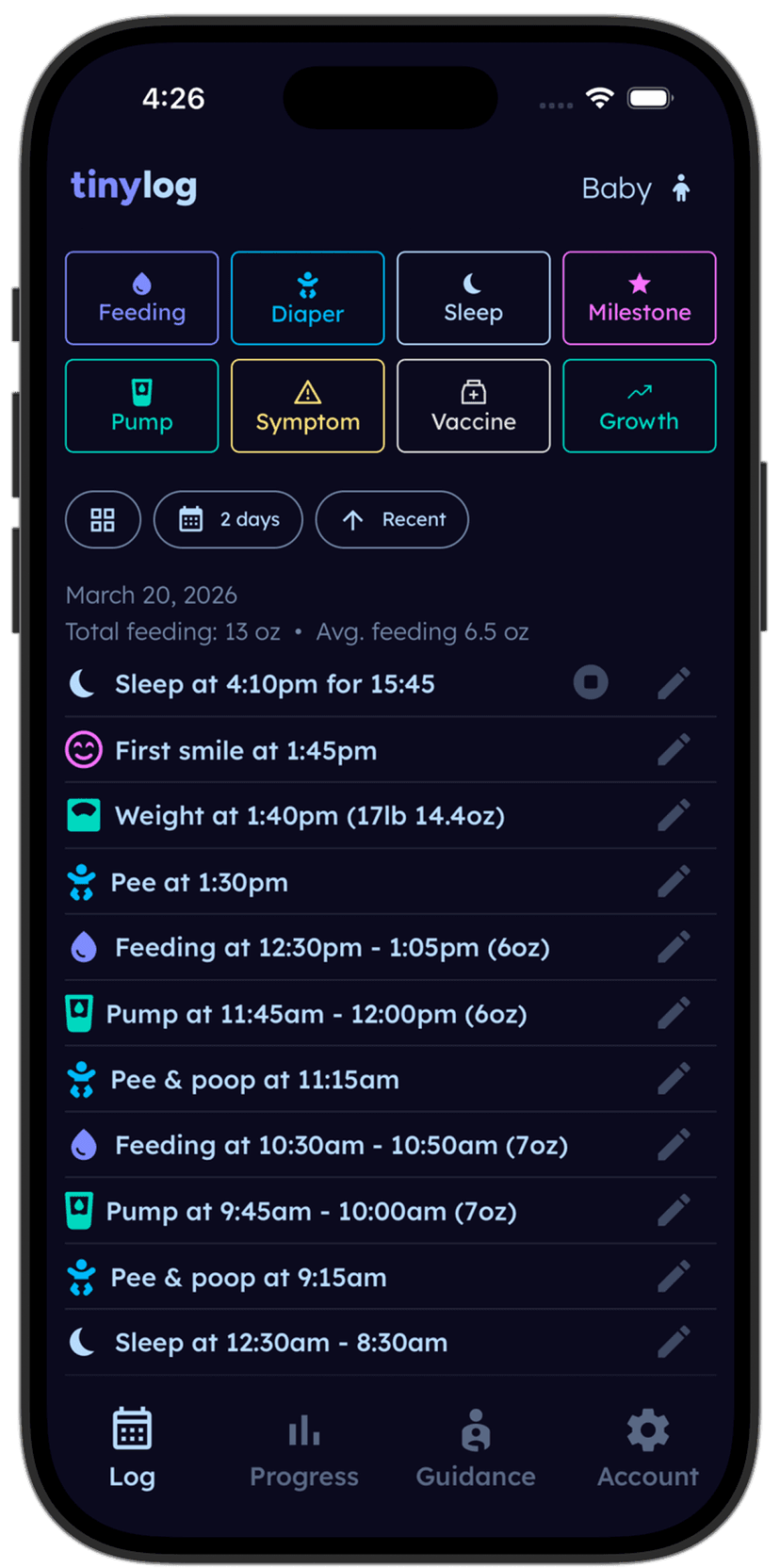
Tinylog lets you log symptoms, feeds, diapers, and sleep from the first day — so you can focus on healing while staying on top of your newborn's needs.


After a vaginal birth, the first 48 hours involve the heaviest bleeding (lochia), the most intense afterpains as your uterus contracts, and the steepest learning curve with breastfeeding. Most women are up and walking within hours. By day 3-4, perineal swelling begins to subside and sitting becomes more comfortable. Pain is real but manageable with ice packs, sitz baths, and over-the-counter pain medication.
After a C-section, the first 48 hours are dominated by surgical recovery. The catheter comes out within 12-24 hours. You'll be asked to walk — slowly, painfully — within 24 hours to prevent blood clots. Getting out of bed requires rolling to one side and pushing up with your arms to avoid engaging your abdominal muscles. Coughing, sneezing, and laughing all hurt. Holding a pillow against your incision helps. Pain management typically involves prescription medication for the first few days.
Both paths involve sleep deprivation, hormonal shifts, and the overwhelming reality of caring for a newborn. The delivery method changes the physical recovery, but the emotional and logistical adjustment is universal.
If you have a choice between vaginal and cesarean birth, the evidence generally favors vaginal delivery for recovery. The shorter healing time, lower complication rates, and faster return to function are well-documented. ACOG recommends vaginal birth as the preferred delivery method for most low-risk pregnancies.
But birth doesn't always go as planned. About 32% of US births are cesarean, and many of those are unplanned. If you end up with a C-section — whether scheduled or emergency — the recovery is manageable with preparation, support, and realistic expectations. It's major surgery, and treating it that way (accepting help, resting, following restrictions) leads to better outcomes.
The most useful thing you can do regardless of delivery type: prepare for recovery before the birth. Stock the freezer, arrange help, set up a recovery station, and download a tracking app so you're not scrambling during the hardest days.
Regardless of delivery type, the first two weeks are the hardest. Line up meals, childcare for older kids, and someone who can do laundry. Recovery goes better when you aren't trying to do everything.
Logging pain levels, bleeding, mood, and energy daily gives you a clear picture of your recovery trajectory. It also gives your healthcare provider useful data at your postpartum checkup.
Fever above 100.4°F, heavy bleeding that soaks a pad in an hour, foul-smelling discharge, increasing pain, or signs of infection at an incision site all warrant an immediate call to your provider.
This guide is for informational purposes only and is not a substitute for professional medical advice. Consult your healthcare provider for guidance specific to your situation.