
GUIDE
Nested Bean Zen Sack vs. Kyte Baby Sleep Bag
Published on
Both are premium sleep sacks but serve different purposes. The Nested Bean Zen Sack has a lightly weighted pad on the chest designed to mimic a parent's hand. The Kyte Baby Sleep Bag is an unweighted bamboo sack prized for its buttery-soft fabric and temperature regulation. Your pick depends on whether you want gentle pressure or breathable softness.
The Nested Bean Zen Sack and Kyte Baby Sleep Bag are two of the most popular sleep sacks among new parents. They sit at similar price points but take fundamentally different approaches — one uses light weight to soothe, the other relies on premium bamboo rayon fabric to keep baby comfortable and cool. Understanding what each does well helps you pick the right one for your baby's sleep needs.
Log naps, bedtime, and wake windows
Two Premium Sleep Sacks, Two Different Philosophies
The Nested Bean Zen Sack and Kyte Baby Sleep Bag both cost roughly the same and both get strong reviews from parents. But they are solving different problems.
The Nested Bean Zen Sack is built around a single idea: a lightly weighted pad on the chest that mimics the gentle pressure of a parent's hand. The theory is that this "Cuddle Cue" helps babies feel secure and settle faster, especially babies who startle awake or struggle with the swaddle-to-sack transition.
The Kyte Baby Sleep Bag is built around fabric. The bamboo rayon material is exceptionally soft, breathable, and moisture-wicking. There is no weight, no gimmick — just a well-made sleep sack in a premium material that keeps babies comfortable across a range of temperatures.
One offers a soothing feature. The other offers a superior material. Both work. The right choice depends on what your baby needs most at bedtime.
| Feature | Nested Bean Zen Sack | Kyte Baby Sleep Bag | What It Means |
|---|---|---|---|
| Manufacturer | Nested Bean | Kyte Baby | Nested Bean specializes in weighted sleepwear. Kyte Baby is known for premium bamboo fabric across a full baby clothing line. |
| Fabric | 100% cotton (Classic) or bamboo rayon blend | Bamboo rayon (97% bamboo rayon, 3% spandex) | Kyte's bamboo rayon is softer and more breathable. Nested Bean offers cotton and bamboo options depending on the line. |
| Weighted design | Yes — lightly weighted pad on chest and sides (Cuddle Cue) | No — standard unweighted sleep sack | The defining difference. Nested Bean's weight mimics a parent's gentle touch. Kyte Baby relies on fabric comfort alone. |
| Weight of pad | ~0.15–0.3 oz (non-toxic poly beads) | N/A | The weight is very light — roughly the pressure of resting two fingers on baby's chest. |
| TOG options | 1.0 TOG (Classic), 0.5 TOG (Bamboo) | 0.5, 1.0, 1.5, and 2.5 TOG | Kyte Baby offers significantly more TOG options to match different room temperatures and seasons. |
| Breathability | Good (cotton); better in bamboo version | Excellent — bamboo rayon is naturally moisture-wicking | Kyte Baby wins on breathability. Bamboo rayon regulates temperature better than cotton. |
| Size range | 0–6 months, 6–15 months, 15–24 months | Newborn, 0–6 months, 6–18 months, 18–36 months | Both cover the full sleep sack age range. Kyte extends to 36 months for toddlers. |
| Zipper | Two-way zipper | Two-way zipper | Tie. Both allow bottom-up unzipping for easy diaper changes without fully removing the sack. |
| Colors and patterns | Moderate selection — neutral tones, some prints | Wide selection — seasonal drops, many colors and prints | Kyte Baby has a much larger color and pattern range, with frequent limited-edition releases. |
| Machine washable | Yes | Yes | Tie. Both are machine washable. Kyte Baby recommends gentle cycle to preserve bamboo softness. |
The Weight Question: Does It Actually Help?
This is the central question with the Nested Bean Zen Sack. The lightly weighted pad sits on the baby's chest and contains non-toxic poly beads weighing about 0.15–0.3 ounces depending on the size.
The weight is subtle. It is nowhere near a weighted blanket — it is closer to the feeling of resting two fingers on a baby's chest. Nested Bean designed it to mimic the calming sensation babies feel when a parent's hand rests on them during sleep.
Does it work? The honest answer: it depends on the baby. Many parents report that the Zen Sack helped their baby settle faster, especially during the transition out of a swaddle. A small 2023 study showed some improvements in time to fall asleep. But other parents notice no difference at all.
The weight meets all AAP safe sleep guidelines — it is well under the threshold of concern. So the downside risk is minimal. If your baby is a restless sleeper who calms with touch, the weighted design is worth trying. If your baby sleeps fine without extra soothing, you are paying for a feature you do not need.
Fabric: Where Kyte Baby Stands Out
If you have ever felt Kyte Baby fabric in person, you understand the hype. The bamboo rayon material is genuinely softer than most baby clothing — parents frequently describe it as "buttery" and that description is accurate.
Beyond softness, bamboo rayon has real functional advantages:
- Temperature regulation. Bamboo fibers naturally wick moisture away from skin and allow airflow. Babies who run hot or live in warm climates stay more comfortable.
- Hypoallergenic. Bamboo rayon is naturally gentle on sensitive skin.
- Durability. The fabric holds up well through repeated washes, though Kyte recommends a gentle cycle.
Nested Bean offers a bamboo version of the Zen Sack as well, but Kyte Baby's entire product line is built around bamboo rayon. The fabric quality and consistency is their core competency, and it shows.
If fabric feel and breathability are what matter most to you, Kyte Baby wins this category clearly.
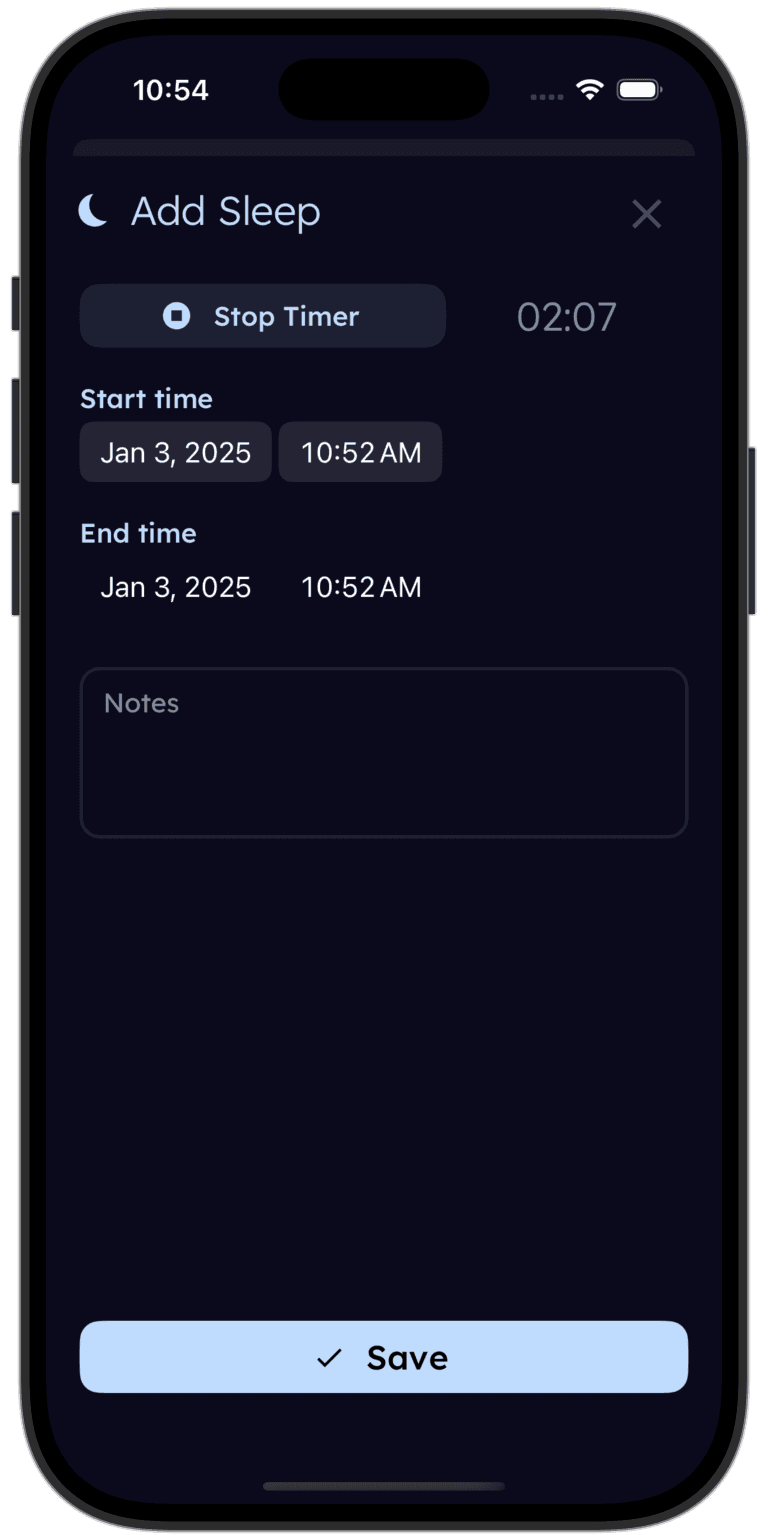
Tinylog tracks sleep so you can spot patterns.
Log naps and nighttime sleep, track wake windows and sleep totals, note what helps baby settle. Bring the data to your next pediatrician visit.


TOG Ratings: Matching the Sack to the Room
TOG measures how much thermal resistance a fabric provides. Higher TOG means warmer. Getting the right TOG for your nursery temperature matters — an overheated baby sleeps poorly and overheating is a risk factor for SIDS.
Kyte Baby offers four TOG ratings: 0.5, 1.0, 1.5, and 2.5. This gives you a sleep sack for every season and room temperature. Many parents own two or three in different TOGs and rotate based on the weather.
Nested Bean offers fewer TOG options — the Classic cotton version is 1.0 TOG and the bamboo version is 0.5 TOG. If you live in a climate with cold winters and need a 2.5 TOG sack, Kyte Baby is the better option.
A quick guide:
- Above 75°F: 0.5 TOG or less, light pajamas underneath
- 68–74°F: 1.0 TOG, standard pajamas
- 64–68°F: 1.5–2.5 TOG, warmer pajamas
- Below 64°F: 2.5 TOG, warm layered pajamas
If your nursery stays at a consistent temperature year-round, a single 1.0 TOG sack from either brand will serve you well.
The Swaddle Transition: Where Nested Bean Shines
One of the hardest sleep transitions in babyhood is moving from a swaddle to a sleep sack. Babies who are used to the snug compression of a swaddle can struggle with the sudden freedom of arms-out sleeping.
The Nested Bean Zen Sack was essentially designed for this moment. The light chest weight provides a small amount of the "held" feeling that swaddled babies are used to, without restricting arm movement. It is not the same as a swaddle, but it is a step-down rather than a cold-turkey switch.
Kyte Baby does not offer a weighted option or a specific swaddle-transition product. Their sleep bag is a straightforward sack — arms out, no added sensory features. If your baby handles the swaddle transition without drama, this is perfectly fine. If your baby screams the moment the swaddle comes off, the Zen Sack's gentle weight may genuinely help.
For babies who have never been swaddled or who transitioned easily, this advantage is irrelevant.
| Product | Typical Price | Cost Per Diaper | Monthly Estimate |
|---|---|---|---|
| Nested Bean Zen Sack Classic (cotton, 1.0 TOG) | $32–$38 | — | One-time purchase |
| Nested Bean Zen Sack Bamboo (0.5 TOG) | $36–$42 | — | One-time purchase |
| Kyte Baby Sleep Bag (1.0 TOG) | $36–$42 | — | One-time purchase |
| Kyte Baby Sleep Bag (2.5 TOG) | $40–$48 | — | One-time purchase |
Price: Similar, With a Few Differences
Both sleep sacks are premium-priced compared to basic options from Halo or Carter's. You are paying $32–$48 per sack depending on the version, and you will need at least two (one to wear, one in the wash) plus new sizes as your baby grows.
Where the costs differ:
- Kyte Baby's higher TOG ratings cost more. The 2.5 TOG version runs $40–$48, while the 1.0 TOG is $36–$42.
- Kyte Baby's limited-edition prints sometimes sell at a premium on resale markets. Popular patterns sell out fast.
- Nested Bean pricing is consistent across the line. The bamboo version costs a few dollars more than the cotton Classic.
The total cost over a year — assuming you buy two sacks per size and go through two or three sizes — runs roughly $130–$200 for either brand. That is real money, but not drastically different between them.
Budget-conscious tip: both brands run sales periodically, and gently used versions hold up well on resale sites.
Choose the Nested Bean Zen Sack If
- Your baby startles awake easily or struggles with the Moro reflex after transitioning out of a swaddle
- You want gentle pressure that mimics a parent's hand on baby's chest
- Your baby sleeps well when touched but wakes the moment you remove your hand
- You are transitioning from swaddling and want a gradual step-down
- You prefer a simpler product line without too many options to choose from
Choose the Kyte Baby Sleep Bag If
- Your baby runs hot or you live in a warm climate
- Fabric softness and quality are your top priority
- You want multiple TOG options to match different seasons and room temperatures
- You prefer a wide range of colors and patterns
- Your baby does not need extra soothing pressure to fall asleep
- You want a sleep sack that extends into the toddler years (up to 36 months)
Where to Buy
If your baby needs extra soothing at bedtime — especially during the swaddle transition — the Nested Bean Zen Sack (~$35) is worth trying. The lightly weighted chest pad mimics a parent's touch and helps restless babies settle without being held. The cotton Classic is a solid all-rounder; the bamboo version is better for warm sleepers.
If premium fabric and temperature versatility are your priorities, the Kyte Baby Sleep Bag (~$38) is the one to grab. The bamboo rayon is genuinely the softest sleep sack fabric on the market, the TOG range covers every season, and the color selection is unmatched. It is a straightforward, beautifully made sleep sack.
If you cannot decide, buying one of each is a reasonable move — the Zen Sack for bedtime soothing and the Kyte for naps or warmer nights. Many parents end up with both.
Tinylog earns a small commission on purchases made through these links, at no cost to you.
Before you buy, it's worth checking promo.new for a deal. It doesn't cover everything, but we've had good luck with it.
The Bottom Line
The Nested Bean Zen Sack and Kyte Baby Sleep Bag are both premium sleep sacks that justify their price — but for different reasons.
Nested Bean Zen Sack is the better choice if your baby needs help settling. The light weighted pad provides gentle, safe pressure that can make a real difference for babies transitioning out of a swaddle or babies who calm with touch. The fabric is good but not the star of the show.
Kyte Baby Sleep Bag is the better choice if you want the highest-quality sleep sack material available. The bamboo rayon is softer, more breathable, and better at temperature regulation than cotton. The wide TOG range means you can match the sack to any season. It does not offer any soothing features beyond comfort itself.
For most families, both will work well. Start with whichever addresses your baby's biggest sleep challenge right now — if that is settling, go Nested Bean; if that is overheating or comfort, go Kyte.
If you are tracking your baby's sleep — which is especially helpful when trying new sleep sacks or adjusting routines — Tinylog makes it simple to log naps, bedtime, wake-ups, and see patterns over time.
Related Guides
- Baby Sleep Schedule — Age-by-age sleep expectations and wake windows
- Sleep Regression vs. Sleep Problem — How to tell the difference and what to do
- Baby Wake Windows — How long your baby should stay awake between naps
- Baby Sleep Tips — Evidence-based strategies for better baby sleep
Sources
- Nested Bean. "Zen Sack — Product Information and Safety." nestedbean.com, 2026.
- Kyte Baby. "Sleep Bag — Product Information." kytebaby.com, 2026.
- American Academy of Pediatrics. "Safe Sleep Recommendations." healthychildren.org, 2024.
- Moon, R.Y. et al. "Sleep-Related Infant Deaths: Updated 2022 Recommendations for Reducing Infant Deaths in the Sleep Environment." Pediatrics, 2022.
- Barnett, N. "Can Weighted Sleep Sacks Help Babies Sleep?" Journal of Clinical Sleep Medicine, 2023.
- Wirecutter (NYT). "The Best Sleep Sacks and Wearable Blankets." nytimes.com/wirecutter, 2025.
- Babylist. "Best Sleep Sacks of 2026." babylist.com.
This guide is for informational purposes only. Sleep sack choice is a personal preference based on your baby's individual needs. Always follow AAP safe sleep guidelines — place baby on their back, on a firm flat surface, with no loose bedding. If your baby has persistent sleep difficulties, consult your pediatrician.
Frequently asked questions
- Is the Nested Bean Zen Sack safe for newborns?
- Yes. The Nested Bean Zen Sack meets AAP safe sleep guidelines. The weighted pad is only about 0.15–0.3 oz depending on the size, which is well under 10% of a newborn's body weight. It is designed for back sleeping only, and Nested Bean provides clear safety guidance with every product.
- Can I use the Kyte Baby Sleep Bag in warm weather?
- Yes. Kyte Baby offers sleep bags in multiple TOG ratings, including a 0.5 TOG for warm rooms and summer months. The bamboo rayon fabric is naturally moisture-wicking and breathable, making it one of the better sleep sack options for warm climates or babies who run hot.
- Do weighted sleep sacks actually help babies sleep longer?
- The evidence is limited but promising. A small 2023 study found that lightly weighted sleep sacks helped some infants fall asleep faster, though total sleep duration was not significantly different. Many parents report subjective improvements. The weight is very light — think gentle hand pressure, not a weighted blanket.
- What TOG rating should I choose for a sleep sack?
- TOG measures thermal resistance. For rooms at 68–72°F, a 1.0 TOG sleep sack works well for most babies. For warmer rooms (above 72°F), choose 0.5 TOG. For cooler rooms (below 68°F), consider 1.5–2.5 TOG. Kyte Baby offers a wider range of TOG options than Nested Bean.
- When should my baby stop using a sleep sack?
- Most babies can use sleep sacks until age 2–3, or whenever they start climbing out of the crib. There is no rush to stop. Sleep sacks replace loose blankets in the crib, which are not recommended until at least 12 months per AAP guidelines.
- Can I use both sleep sacks and alternate between them?
- Yes. Many parents own multiple sleep sacks and rotate based on the situation — a Nested Bean Zen Sack for initial bedtime soothing and a Kyte Baby Sleep Bag for naps or warmer nights. Babies adapt to different sleep sacks without issue.