
GUIDE
Nuby Nananubs Banana vs. Baby Einstein Opus the Octopus
Published on
Both are affordable, effective teethers with very different designs. Nuby Nananubs is a banana-shaped silicone massager with soft bristles that doubles as a first toothbrush. Baby Einstein Opus is a multi-textured octopus with eight silicone tentacles for varied gum relief. Price is close — both land under $12.
The Nuby Nananubs Banana Massaging Toothbrush and the Baby Einstein Opus the Octopus Teether are two of the most popular budget-friendly teethers parents reach for. They look nothing alike and take different approaches to soothing sore gums. The Nananubs focuses on bristle massage and early oral hygiene. Opus focuses on texture variety and multi-area coverage. Your baby's age, teething stage, and chewing preferences will point you toward the right pick.
Log feedings, teething symptoms, and sleep
Two Budget Favorites — Different Approaches to Sore Gums
The Nuby Nananubs Banana and the Baby Einstein Opus the Octopus are both sitting in diaper bags across the country, covered in drool and earning their keep. They cost about the same, they are both made with safe materials, and they both show up on "best teether" lists constantly. But they take completely different approaches to teething relief.
Nuby Nananubs is a banana-shaped silicone massager with soft nub bristles on the tip. It is designed to do two things: soothe sore gums and introduce babies to the sensation of having their teeth brushed. The banana peel handles give babies an easy grip and act as a shield that prevents the teether from going too far back. It is simple, focused, and practical.
Baby Einstein Opus is a small octopus with eight silicone tentacles, each featuring a different texture — ridges, bumps, nubs, and wavy patterns. The body has crinkle fabric for extra sensory stimulation. It is designed to give babies multiple chewing surfaces so they can find the texture that feels best on whichever part of their gums is bothering them at the moment.
The honest version: both work well for teething babies. The right pick depends on whether your baby needs deep bristle massage for back molars or varied textures for broad gum coverage — and whether the toothbrush function matters to you.
For more on when teeth come in and what to watch for, see our baby teething timeline.
| Feature | Nuby Nananubs Banana | Baby Einstein Opus | What It Means |
|---|---|---|---|
| Manufacturer | Nuby (USA) | Baby Einstein (Kids2) | Both are well-known US baby brands. Nuby has a wide product line focused on feeding and teething. Baby Einstein is backed by Kids2, a large toy company. |
| Material | 100% medical-grade silicone | BPA-free silicone tentacles with soft fabric body | Nuby is all silicone — easier to fully sanitize. Opus mixes silicone and fabric for a different sensory feel. |
| BPA / Phthalate-free | Yes — also latex-free | Yes | Tie. Both are free of BPA, phthalates, and PVC. |
| Recommended age | 3+ months | 3+ months | Same starting age. Both work best once babies are actively mouthing objects. |
| Design approach | Banana shape with soft bristles on the tip — functions as teether and first toothbrush | Octopus with eight textured silicone tentacles — each arm has different ridges and bumps | Nuby focuses on bristle massage and oral hygiene. Opus focuses on texture variety across multiple surfaces. |
| Grip design | Banana peel handles — easy two-hand grip with anti-gag shield | Multiple tentacles as grab points; compact body fits small palms | Nuby's peel handles are intuitive and prevent babies from pushing the teether too far back. Opus gives more grab points. |
| Reaches back gums | Yes — elongated tip reaches back gums well | Somewhat — tentacles reach different areas but compact shape limits depth | Nuby wins for back-molar teething. The banana tip extends further into the mouth. |
| Texture variety | Soft nub bristles on the tip — one consistent texture | Multiple textured tentacles — ridges, bumps, nubs, and wavy patterns | Opus offers more variety. Different tentacles target different gum areas and let baby find their preference. |
| Sensory stimulation | Bright yellow color, soft bristle texture | Crinkle sounds in tentacles, bright colors, multiple textures | Opus provides more sensory input overall — crinkle, color, and tactile variety. |
| Doubles as toothbrush | Yes — soft bristles clean gums and early teeth | No | Nuby's dual function is a real advantage for building oral hygiene habits early. |
| Cleaning | Dishwasher-safe (top rack), boil-safe, sterilizer-safe | Silicone parts wipe clean; fabric body is spot-clean only | Nuby is easier to fully sanitize. Opus's fabric body limits cleaning options. |
| Price range | ~$5–$7 | ~$8–$12 | Nuby is slightly cheaper, but both are budget-friendly. The difference is small enough that it should not be the deciding factor. |
Bristle Massage vs. Texture Variety: The Core Difference
This is where these two teethers diverge most, and it is worth understanding because it affects which one your baby will actually use.
Nuby Nananubs has soft silicone nub bristles concentrated on the banana tip. These bristles are spaced to massage gum tissue and gently clean emerging teeth. The sensation is consistent — your baby gets the same bristle texture no matter which part of the tip they chew on. That consistency is the point. The bristles are specifically designed to mimic a toothbrush and get babies comfortable with something rubbing against their gums in a brushing motion.
The elongated banana shape also means your baby can push the bristled end toward the back of their mouth, which is a genuine advantage when molars start coming in. Many teethers are great for front-gum relief but fall short when the back teeth arrive. The Nananubs handles that stage well.
Baby Einstein Opus takes the opposite approach: variety over consistency. Each of the eight tentacles has a different surface texture. Some have raised ridges, some have small nubs, some have wavy patterns. The idea is that different textures feel better on different parts of the gums, and your baby can rotate between tentacles to find the one that brings the most relief at any given moment.
This matters because teething is not one event — it is a rolling process where different teeth emerge at different times, and the gum soreness moves around. A teether with varied textures gives babies options as those sore spots shift.
The tradeoff is clear: Nuby is the specialist (deep bristle massage, back-molar reach, oral hygiene introduction). Opus is the generalist (broad texture variety, multi-area coverage, sensory exploration).
Grip, Safety, and How Babies Actually Use Them
Both teethers are designed for babies 3 months and older, and both are built for small hands. But the grip experience is quite different.
Nuby Nananubs has banana peel handles that flare outward from the base. These handles are easy for babies to grab with one or both hands, and they serve double duty as a gag-prevention shield. The peels stop the teether from being pushed too deep into the mouth, which is a real concern with elongated teethers. Parents of babies who aggressively shove things into their mouths tend to appreciate this feature.
The downside: the peel handles make the Nananubs a bit bulkier than it looks. It takes up more space in a bag than you would expect from a simple banana shape.
Baby Einstein Opus is compact and squat. The soft body fits in a small palm, and the eight tentacles radiate outward, giving babies multiple grab points. At roughly 55 grams, it is lightweight and easy for developing hands to lift. The tentacles are thin enough for small fingers to wrap around. Babies tend to grab one or two tentacles and bring them to their mouths while holding the body in their palm or against their chest.
The compact shape also means Opus is easier to carry. It fits in a stroller pocket, a small purse compartment, or a diaper bag side pouch without creating bulk.
For babies who gag easily: Nuby's peel handles provide built-in protection. Opus is compact enough that gagging is less of a concern, but it does not have a dedicated safety shield.
For on-the-go parents: Opus is more portable. The Nananubs works fine for travel but takes up a bit more real estate.
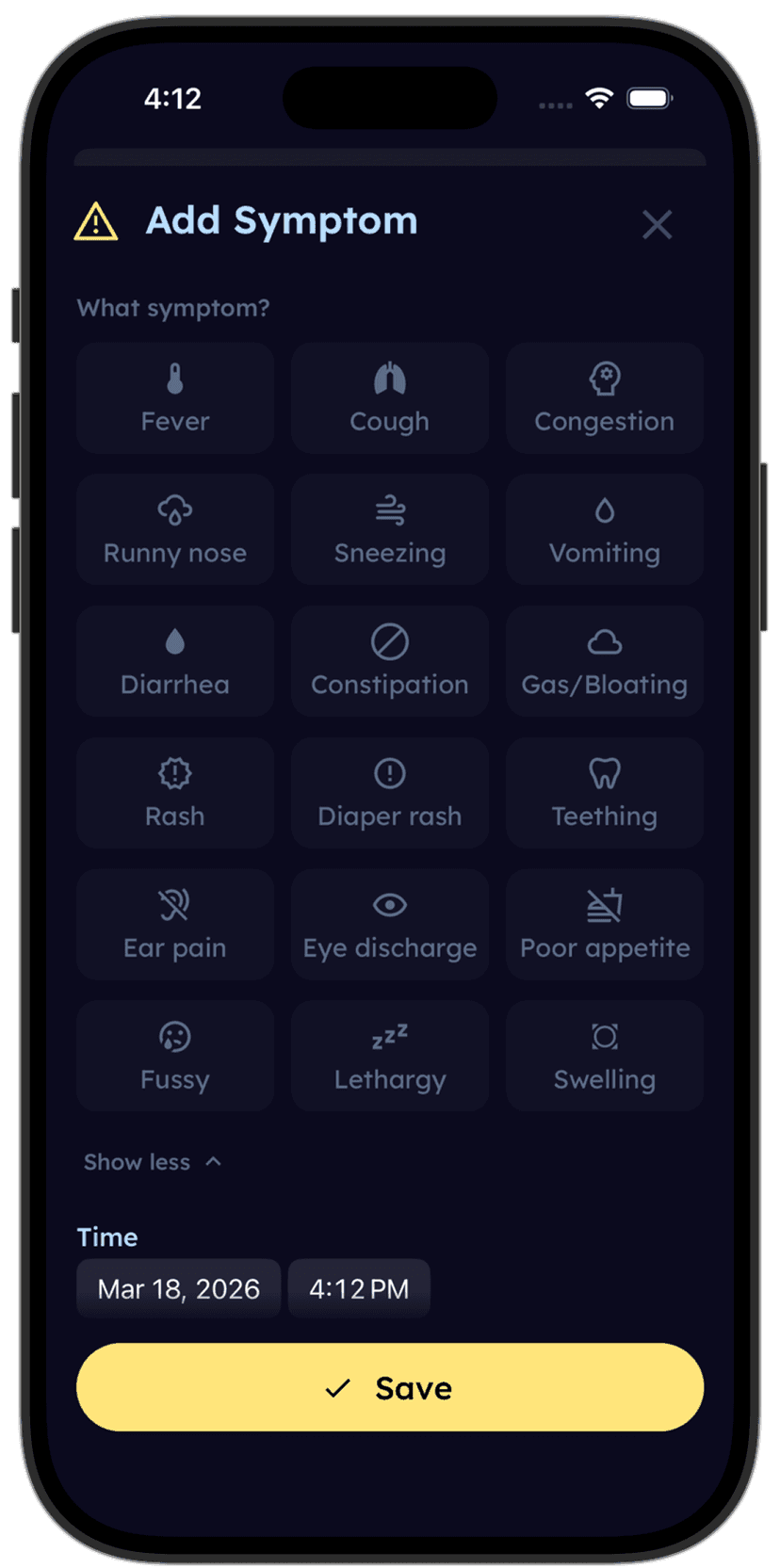
Tinylog tracks feedings so you can spot patterns.
Log breast and bottle feeds, note teething fussiness and appetite changes, and track patterns over days and weeks. Bring the data to your next pediatrician visit.


Sensory Stimulation: Opus Has the Edge
Teethers are not only about pain relief. They are also sensory tools that contribute to your baby's development. If sensory richness matters to you, these two teethers are not equal.
Nuby Nananubs is simple on the sensory front. It is bright yellow, and the bristle texture is interesting to explore. But it does not make sounds, does not have mixed materials, and does not offer the kind of multi-sensory experience that some babies crave. It is a focused tool — gum massage and early oral hygiene — and it does that job well without extras.
Baby Einstein Opus packs in more sensory input. The crinkle fabric in the body makes sounds when squeezed, which babies find fascinating. The multiple textures across the tentacles give different tactile feedback depending on which arm your baby is chewing. The bright colors and playful octopus design add visual interest. Opus works as both a teether and a sensory exploration toy.
If your baby is the type who gets bored with a single texture and wants to explore different surfaces and sounds, Opus will hold their attention longer. If your baby just wants something to gnaw on without distraction, the Nananubs' simplicity is actually an advantage — fewer things to fuss over, more chewing.
Cleaning: Nuby Wins on Convenience
Keeping teethers clean is non-negotiable — these things live in your baby's mouth. How easy that cleaning is varies between these two.
Nuby Nananubs is about as easy to clean as a teether gets. It is solid medical-grade silicone with no hollow cavities, no fabric, and no mixed materials. You can:
- Toss it on the top rack of the dishwasher
- Boil it for 3–5 minutes
- Run it through a steam sterilizer
- Hand-wash with warm soapy water
There is no mold risk because there is nowhere for moisture to hide. The solid construction means you can sanitize it thoroughly and know it is clean.
Baby Einstein Opus is a mixed-material teether, and that complicates cleaning. The silicone tentacles wipe down easily with soap and water or a sanitizing wipe. The fabric body, however, is spot-clean only. You should not submerge Opus in water, boil it, or run it through the dishwasher because the fabric will degrade. The fabric can also absorb moisture and drool over time, which means it needs to be dried thoroughly after cleaning.
This does not make Opus unhygienic — plenty of baby toys have fabric elements, and spot cleaning works fine with regular maintenance. But if you are the kind of parent who wants to fully sterilize teethers regularly, the Nananubs makes that effortless while Opus requires more careful handling.
| Product | Typical Price | Cost Per Unit | Notes |
|---|---|---|---|
| Nuby Nananubs Banana Massaging Toothbrush (single) | $5–$7 | $5–$7 | Budget-friendly; easy to buy multiples for home, daycare, and the diaper bag |
| Nuby Nananubs Banana (2-pack) | $9–$12 | ~$4.50–$6.00 | Best value for keeping spares on hand |
| Baby Einstein Opus the Octopus Teether (single) | $8–$12 | $8–$12 | Strong value for a multi-texture teether with crinkle features |
Price: Both Are Wallet-Friendly
Unlike some teether comparisons where one product costs four or five times as much as the other, this matchup is refreshingly close on price.
Nuby Nananubs runs $5–$7 for a single teether, and you can grab a 2-pack for $9–$12. At that price, it is easy to keep one at home, one in the diaper bag, one at daycare, and one at the grandparents' house. Losing one at the park is a shrug, not a search party.
Baby Einstein Opus runs $8–$12 for a single teether. A few dollars more than the Nananubs, but still firmly in the "affordable" category. The price difference is small enough that it should not be the deciding factor. Pick the one that matches what your baby needs — the savings either way are measured in a few dollars, not a few meals.
The practical tip: If you want to try both, you can pick up a Nananubs and an Opus for under $20 total. That is less than the cost of a single premium teether, and it lets your baby vote with their mouth on which one they prefer.
Choose Nuby Nananubs Banana If
- Your baby is cutting back molars and needs something that reaches deep into the mouth
- You want to introduce oral hygiene habits early with a combo teether-toothbrush
- Easy, thorough cleaning matters to you — dishwasher, boiling, or sterilizer
- You want the lowest-cost option you can buy in multiples without a second thought
- Your baby prefers a consistent bristle texture over varied surfaces
Choose Baby Einstein Opus If
- Your baby is teething on multiple areas of their gums and needs varied textures
- You want a teether with crinkle sounds and tactile variety for sensory development
- Your baby likes exploring different surfaces and gets bored with a single texture
- You need something compact and easy to toss in a diaper bag or stroller pocket
- Your baby responds well to multi-sensory input — sound, texture, and bright colors together
- You want a teether that doubles as a sensory exploration toy, not just gum relief
Where to Buy
If you want a teether that doubles as a first toothbrush and reaches back molars with ease, the Nuby Nananubs Banana Teether (~$6) is a workhorse. The soft silicone bristles massage sore gums, the peel handles prevent gagging, and you can toss it in the dishwasher without a second thought. At this price, grab a couple so you always have one clean and ready.
If you want multi-texture teething relief with built-in sensory stimulation, the Baby Einstein Opus the Octopus Teether (~$10) gives your baby eight different textured tentacles to explore plus crinkle sounds to keep them engaged. It is compact, portable, and built for babies who like variety.
Our honest advice: at a combined cost of under $20, there is no reason not to try both. Teething preferences are personal and unpredictable — your baby will tell you which one they prefer by chewing on it instead of throwing it on the floor.
Tinylog earns a small commission on purchases made through these links, at no cost to you.
Want to save a few bucks? promo.new is worth a quick look. It won't always have your product, but when it does, the savings are real.
The Bottom Line
The Nuby Nananubs Banana and Baby Einstein Opus the Octopus are both solid, affordable teethers that earn their popularity through smart design and reasonable prices.
Nuby Nananubs Banana wins on bristle massage effectiveness, back-molar reach, toothbrush dual function, and cleaning convenience. It is the practical pick for parents who want a focused gum-relief tool that introduces oral hygiene early and can be fully sterilized without hassle. The peel handles add a thoughtful safety feature that parents of aggressive chewers will appreciate.
Baby Einstein Opus wins on texture variety, sensory stimulation, compact portability, and the kind of multi-surface design that keeps babies engaged as teething shifts around the mouth. It is the pick for parents who want a teether that doubles as a sensory exploration toy and provides broad coverage across different gum areas.
For most families, these two teethers complement each other rather than compete. The Nananubs is the go-to for focused bristle massage and back-molar days. Opus is the go-to for texture exploration and fussy days when your baby needs sensory distraction alongside gum relief.
If teething is disrupting your baby's feeding patterns — which it often does — Tinylog can help you log feeds, note fussy periods, and spot changes over time. That data is surprisingly useful when you are trying to figure out whether the crankiness is teeth, hunger, or something else entirely.
Sources
- Nuby. "Nananubs Banana Massaging Toothbrush — Product Information." nuby.com. 2026.
- Baby Einstein (Kids2). "Opus the Octopus Teether — Product Details." babyeinstein.com. 2026.
- American Academy of Pediatric Dentistry. "Teething and Oral Care for Infants." aapd.org. 2025.
- American Academy of Pediatrics. "Teething: 4 to 7 Months." healthychildren.org. 2025.
- FDA. "Safely Soothing Teething Pain and Sensory Needs in Babies and Older Children." fda.gov. 2025.
- BabyCenter. "Best Teething Toys for Babies." babycenter.com. 2026.
- What to Expect. "Best Baby Teethers." whattoexpect.com. 2026.
Related Guides
This guide is for informational purposes only and does not constitute medical advice. Teether choice is a personal preference based on your baby's individual needs. Always supervise your baby during teether use and inspect toys regularly for wear or damage. If your baby has persistent teething pain or feeding difficulties, consult your pediatrician.
Frequently asked questions
- Is the Nuby Nananubs Banana safe for babies?
- Yes. The Nuby Nananubs is made from 100% medical-grade silicone that is free of BPA, phthalates, and latex. The soft bristles are gentle on gums. Always supervise your baby during use and replace the teether if you notice any signs of wear or damage to the bristles.
- What age is Baby Einstein Opus the Octopus designed for?
- Baby Einstein Opus is designed for babies 3 months and older. The multiple textured tentacles give babies several surfaces to chew on, and the compact body fits small hands well. Most babies get the most use from it between 3 and 12 months when teething is most active.
- Can the Nuby Nananubs really work as a toothbrush?
- It is a massaging toothbrush designed for the pre-tooth and early-tooth stages. The soft silicone bristles gently clean gums and emerging teeth, and they help babies get used to the sensation of brushing. It is not a replacement for a proper infant toothbrush once several teeth have erupted, but it is a great introduction to oral hygiene habits.
- Which teether is better for back molars?
- The Nuby Nananubs has an advantage for back molars. Its elongated banana shape lets babies push the bristled tip toward the back of their mouths. Baby Einstein Opus's tentacles can reach different gum areas, but the compact shape does not extend as far back as the Nananubs. For serious molar teething, the Nananubs is the better pick.
- Is Baby Einstein Opus easy to clean?
- The silicone tentacles are easy to wipe down with soap and water or a sanitizing wipe. The fabric body portion is spot-clean only and should not be submerged or machine washed. The silicone parts do not trap moisture, which helps keep things hygienic.
- Can I put the Nuby Nananubs in the dishwasher?
- Yes. The Nuby Nananubs is dishwasher-safe on the top rack. It can also be sterilized by boiling or placed in a steam sterilizer. The solid silicone construction means there are no hollow cavities where water or mold can hide.