
GUIDE
NUK Simply Natural Glass Bottles vs. Lansinoh Anti-Colic Baby Bottles
Published on
Both are solid choices for breastfed babies. NUK stands out with its glass construction and multi-hole nipple that mimics the breast. Lansinoh excels in colic reduction with its AirVentaire venting system and a nipple shape designed for a deep latch. Pricing is comparable.
NUK Simply Natural Glass Bottles and Lansinoh Anti-Colic Baby Bottles are two of the most recommended bottles for parents who breastfeed and bottle-feed. Both brands emphasize breast-to-bottle compatibility, but they take different approaches to nipple shape, venting, and materials. The right pick depends on whether you prioritize glass durability, colic prevention, or how your baby latches.
Log bottles, nursing sessions, and amounts
Two Great Bottles — Here's What Actually Sets Them Apart
NUK Simply Natural Glass Bottles and Lansinoh Anti-Colic Baby Bottles both target the same parent: someone who breastfeeds and wants a bottle that won't confuse their baby. Both brands have built their reputation around breast-to-bottle compatibility, and both deliver on that promise in different ways.
The key differences come down to material (glass vs. plastic), anti-colic approach (nipple vent vs. bottom vent), and nipple design philosophy (multi-hole flow vs. wave-like flexibility). These aren't marketing distinctions — they affect how your baby feeds, how much air they swallow, and how you clean up afterward.
We compared the design, materials, venting systems, and real-world costs so you can pick the right bottle for your baby — or feel confident using both.
For more on how much your baby should eat at each age, see our baby feeding chart.
| Feature | NUK Simply Natural Glass | Lansinoh Anti-Colic | What It Means |
|---|---|---|---|
| Manufacturer | NUK (Newell Brands) | Lansinoh Laboratories | NUK is a German-heritage brand; Lansinoh started as a breastfeeding accessories company. |
| Bottle material | Borosilicate glass (also available in plastic) | Polypropylene plastic (BPA-free) | Glass is more durable long-term and chemical-free. Plastic is lighter and won't shatter if dropped. |
| Nipple design | Multiple micro-holes to mimic the breast | NaturalWave nipple with wave-like flexibility | Different approaches — NUK mimics milk flow from multiple points. Lansinoh mimics the breast's flexibility. |
| Anti-colic system | Built-in air vent in the nipple collar | AirVentaire bottom venting system | Lansinoh's bottom vent keeps air completely separate from milk. NUK's vent is simpler but less thorough. |
| Breast-to-bottle transition | Multi-hole nipple encourages natural latch | NaturalWave clinically tested for breast-to-bottle | Both are designed for breastfed babies. Lansinoh has the clinical data; NUK has strong parent reviews. |
| Flow rates available | Slow, medium, fast, and Y-cut | Slow, medium, and fast | NUK offers a Y-cut option for thicker feeds like cereal. Lansinoh covers the standard range. |
| Bottle shape | Wide-neck, slightly curved | Wide-neck, straight cylinder | Both are wide-neck for easy filling and cleaning. NUK's curve fits the hand well but can be harder to dry. |
| Ease of cleaning | Glass cleans easily, no staining or odor retention | Plastic can stain over time; fewer parts to disassemble | Glass wins long-term. Lansinoh has fewer total pieces, which simplifies daily cleaning. |
| Weight | Heavier (glass) | Lightweight (plastic) | Lansinoh is easier to hold for long feeds and for older babies to self-feed. |
| Dishwasher safe | Yes | Yes (top rack) | Tie. Both are dishwasher-safe, though glass tolerates high heat better. |
| BPA / BPS / phthalate free | Yes — glass eliminates plastic concerns entirely | Yes — BPA, BPS, and phthalate free | Both are safe. Glass has no plastic chemicals at all; Lansinoh's plastic meets all safety standards. |
Nipple Design: The Biggest Difference You'll Notice
The nipple is the part your baby actually interacts with, and these two bottles take very different approaches.
NUK Simply Natural uses a nipple with multiple micro-holes arranged to mimic the way milk flows from a real breast. Instead of a single opening, milk comes from several small points. NUK claims this creates a more natural feeding experience and encourages a wide latch. Many parents report that babies who refuse standard single-hole bottles accept the NUK nipple more readily.
Lansinoh's NaturalWave nipple is designed to flex and stretch the way breast tissue does. It encourages a deep, wide latch and requires the baby to use the same tongue and jaw motion as breastfeeding. Lansinoh has published clinical data showing that the NaturalWave nipple supports successful breast-to-bottle switching without increasing nipple confusion.
Both approaches work. The "right" one is whichever nipple your baby latches onto without fussing. If you are pumping and bottle-feeding regularly, try both — most babies have a preference, and you will not know until you offer them.
Anti-Colic Systems: Where Lansinoh Has an Edge
All babies swallow some air during bottle feeding. The question is how much — and how the bottle handles it.
NUK Simply Natural has a vent built into the nipple collar. Air enters through the vent and equalizes pressure inside the bottle, which prevents the nipple from collapsing and reduces the vacuum that forces babies to gulp air. It works, but air still passes through the same general area as the milk.
Lansinoh Anti-Colic uses the AirVentaire system — a vent at the bottom of the bottle. Air enters from below and never contacts the milk at all. This means your baby drinks from the top while air flows in from the bottom, keeping air bubbles completely out of the milk stream.
For babies with significant gas, reflux, or colic symptoms, Lansinoh's bottom-venting system is the stronger design. The tradeoff: bottom vents add one more part to clean and assemble. If your baby doesn't have colic issues, NUK's simpler venting is perfectly adequate.
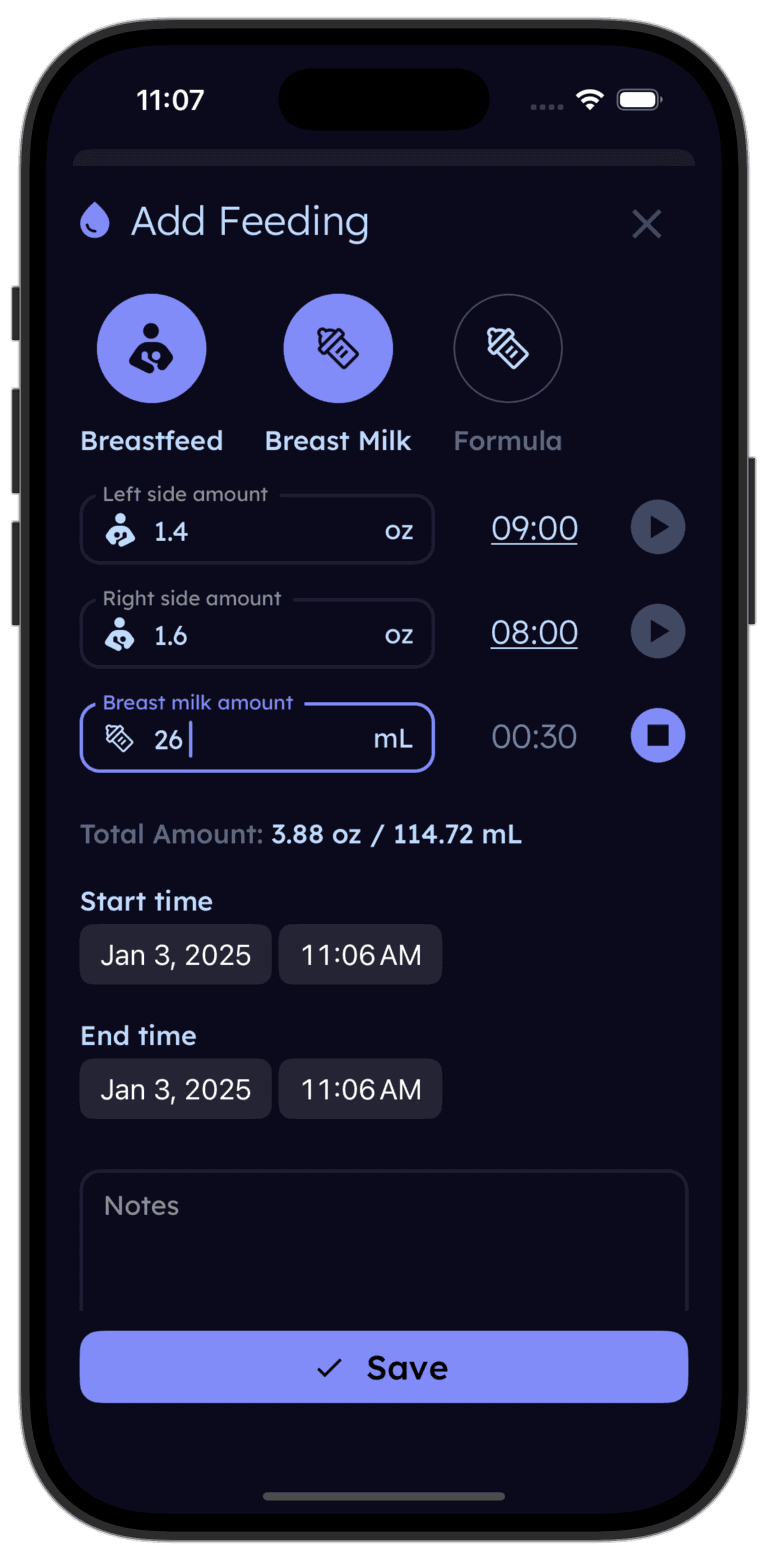
Tinylog tracks feeds so you can spot patterns.
Log bottle feeds and nursing sessions, track ounces and duration, note spit-up or fussiness. Bring the data to your next pediatrician visit.


Glass vs. Plastic: A Real Tradeoff
This is the most straightforward difference and the one most parents have strong feelings about.
NUK's glass bottles are made from borosilicate glass — the same material used in lab equipment. It resists thermal shock (you can go from freezer to warm water without cracking), doesn't absorb odors or stains, and contains zero plastic chemicals. Glass is heavier, though, and it will break if dropped on a hard surface. NUK sells silicone sleeves separately to reduce breakage risk.
Lansinoh's plastic bottles are made from polypropylene, which is BPA-free, BPS-free, and phthalate-free. They are significantly lighter, won't shatter, and are easier for older babies to hold during self-feeding. The downside: plastic can scratch over time, develop a cloudy appearance, and retain milk odors even after thorough washing.
If chemical avoidance is your top priority, glass wins outright — there is nothing to leach. If you need bottles for daycare, travel, or a baby who is learning to hold their own bottle, plastic is more practical. Many parents use glass at home and plastic on the go.
| Product | Typical Price | Cost Per Bottle | Notes |
|---|---|---|---|
| NUK Simply Natural Glass (5 oz, 2-pack) | $18–$26 | ~$9–$13 | Glass lasts longer; no replacement needed unless broken. |
| NUK Simply Natural Glass (9 oz, 2-pack) | $20–$28 | ~$10–$14 | Larger size for older babies (4+ months). |
| Lansinoh Anti-Colic (5 oz, 3-pack) | $18–$24 | ~$6–$8 | Lower per-bottle cost. May need replacing sooner due to plastic wear. |
| Lansinoh Anti-Colic (8 oz, 3-pack) | $20–$26 | ~$7–$9 | Larger size for growing babies. |
Price: Lansinoh Costs Less Upfront, NUK May Cost Less Over Time
Lansinoh Anti-Colic bottles are about 30–40% cheaper per bottle than NUK Simply Natural Glass. For parents buying a full set of six to eight bottles, that difference adds up to $20–$40.
However, glass bottles last significantly longer. They do not scratch, cloud, stain, or absorb odors. Many parents reuse glass bottles for a second or third child. Plastic bottles typically need replacing every four to six months due to wear.
Other cost factors worth considering:
- Replacement nipples cost roughly the same for both brands ($5–$8 per two-pack). You will replace nipples every two months regardless.
- Silicone sleeves for NUK glass bottles add $5–$8 per bottle but reduce breakage risk significantly.
- Bottle warmers and sterilizers work with both brands. No special accessories needed.
If you are buying bottles for one baby and do not plan to reuse them, Lansinoh is the better deal. If you want bottles that will last through multiple children, NUK glass pays for itself.
Choose NUK Simply Natural Glass If
- You want glass bottles that are free of all plastic chemicals
- Your baby responds well to a multi-hole nipple with varied flow
- You plan to reuse bottles for a second child (glass holds up better)
- Easy sterilization and no odor retention matter to you
- You need a Y-cut nipple option for thicker feeds
Choose Lansinoh Anti-Colic If
- Your baby has colic, reflux, or excessive gassiness
- You want a clinically tested nipple for breast-to-bottle transition
- Lightweight bottles matter — for travel, daycare, or baby self-feeding
- You are on a tighter budget (lower per-bottle cost)
- You want fewer parts to wash and assemble after each feed
- Drop-proofing matters — plastic won't shatter on tile floors
Where to Buy
If you want glass bottles with a breast-like nipple, the NUK Simply Natural Glass Bottles (~$10–$13/bottle) are a standout choice — borosilicate glass, multi-hole nipple, and zero plastic chemicals. They are heavier but built to last through multiple kids. Best value in a two-pack from Amazon or Target.
If colic prevention is your top concern or you need lightweight bottles, the Lansinoh Anti-Colic Baby Bottles (~$6–$8/bottle) deliver the best bottom-venting system at this price point — clinically tested NaturalWave nipple, AirVentaire system, and an affordable three-pack. Great for daycare and on-the-go feeding.
Our honest advice: buy a small pack of each and let your baby decide. The "right" bottle is the one your baby latches onto and feeds from without excessive fussing, gas, or refusal.
Tinylog earns a small commission on purchases made through these links, at no cost to you.
We've found promo.new handy for finding discounts on baby gear. Doesn't always have what you need, but it's worth a shot.
The Bottom Line
Both NUK Simply Natural Glass and Lansinoh Anti-Colic bottles are well-designed options for breastfed babies transitioning to bottles. The differences are meaningful but come down to priorities:
NUK Simply Natural Glass wins on material safety (pure glass, no plastic chemicals), long-term durability, multi-hole nipple design, and ease of sterilization.
Lansinoh Anti-Colic wins on colic and gas reduction (superior bottom-venting), clinical breast-to-bottle data, lighter weight, lower upfront cost, and drop-proof practicality.
For most families, the best approach is to try both and see which nipple your baby prefers. Babies are opinionated — and they will let you know.
If you are tracking feeds — which is especially important in the early weeks to make sure your baby is eating enough — Tinylog makes it easy to log bottles, nursing sessions, and amounts over time.
Related Guides
- Baby Feeding Chart — How much your baby should eat by age
- Baby Spitting Up — What's normal and when to call your doctor
- Baby Constipation — What's normal and when to worry
- Breastfeeding Essentials — What you actually need for nursing and pumping
Sources
- NUK USA. "Simply Natural Glass Baby Bottles — Product Information." nuk-usa.com, 2026.
- Lansinoh. "Anti-Colic Baby Bottles with NaturalWave Nipple — Product Information." lansinoh.com, 2026.
- Lansinoh. "Clinical Study: NaturalWave Nipple and Breastfeeding Maintenance." lansinoh.com, 2025.
- BabyGearLab. "Best Baby Bottles of 2026." babygearlab.com, 2026.
- Wirecutter (New York Times). "The Best Baby Bottles." nytimes.com/wirecutter, 2026.
- Consumer Reports. "Best Baby Bottles From Our Tests." consumerreports.org, 2026.
- American Academy of Pediatrics. "Bottle Feeding Basics." healthychildren.org, 2025.
This guide is for informational purposes only. Bottle choice is a personal preference based on your baby's individual needs. If your baby has persistent feeding difficulties, excessive gas, or refuses bottles entirely, consult your pediatrician or a lactation consultant.
Frequently asked questions
- Are NUK Simply Natural bottles made of glass or plastic?
- NUK Simply Natural bottles come in both glass and plastic versions. The glass version is made of borosilicate glass, which is thermal-shock resistant and free of BPA and other plastic-related chemicals. The glass is heavier but easier to sterilize and does not retain odors or stains over time.
- Do Lansinoh Anti-Colic bottles actually reduce colic?
- Lansinoh Anti-Colic bottles use the AirVentaire venting system at the bottom of the bottle. This vents air away from the milk so your baby swallows less air during feeds. Clinical studies on bottom-vented bottles show a measurable reduction in air ingestion. Many parents report less gassiness and spit-up, though individual results vary — colic has multiple causes.
- Which bottle is better for switching between breast and bottle?
- Both are designed with breastfeeding parents in mind. NUK's nipple has multiple holes arranged like a real breast, encouraging a natural latch. Lansinoh's NaturalWave nipple is clinically shown to support babies who switch between breast and bottle. Either is a strong choice — it often comes down to which nipple shape your baby prefers.
- Can I use Lansinoh nipples on NUK bottles or vice versa?
- No. NUK and Lansinoh use proprietary nipple and collar systems that are not interchangeable. You need to use each brand's nipples with its own bottles. Mixing brands can cause leaks and improper venting.
- How do I clean NUK glass bottles versus Lansinoh plastic bottles?
- NUK glass bottles are dishwasher-safe and can be sterilized in boiling water or a steam sterilizer without any risk of warping. Lansinoh plastic bottles are also dishwasher-safe (top rack) and compatible with steam sterilizers. Glass is simpler to keep odor-free long-term. Both brands recommend replacing nipples every two months or at the first sign of wear.
- Which bottle is cheaper, NUK or Lansinoh?
- Lansinoh bottles are generally less expensive per bottle. A three-pack of Lansinoh Anti-Colic bottles typically costs $18–$24, while a two-pack of NUK Simply Natural Glass bottles runs $18–$26. Glass bottles cost more upfront but last longer because they do not discolor, scratch, or retain odors.