
GUIDE
Pampers Pure Protection vs. Honest Company Clean Conscious Diapers
Published on
Both are solid plant-based diaper options. Honest Company offers more design variety and slightly better ingredient transparency. Pampers Pure Protection edges out on absorbency and availability. Cost is comparable at a premium price point.
These two diapers sit in the 'cleaner ingredients' category — made without chlorine bleaching, fragrance, parabens, or latex. They compete directly for parents who want fewer synthetic chemicals on their baby's skin but still need reliable leak protection. The real differences come down to materials sourcing, absorbency under pressure, and how much you care about cute prints.
Log changes, blowouts, and rashes
Two 'Clean' Diapers — But They Are Not the Same
Here's the deal: both Pampers Pure Protection and Honest Company Clean Conscious Diapers market themselves as the eco-friendlier, cleaner-ingredient alternative to standard diapers. And both deliver on that promise — no fragrance, no chlorine bleaching, no parabens, no latex.
But "clean" is a marketing term, not a regulated one. These two diapers take meaningfully different approaches to what that means in practice. The materials are different. The certifications are different. The absorbency is different.
Neither one is a truly green diaper (both still contain superabsorbent polymer that will sit in a landfill for centuries). But if you want fewer synthetic chemicals touching your baby's skin, both are a clear step up from standard diapers.
For more on how many diapers to expect per day, see our baby feeding chart.
| Feature | Pampers Pure Protection | Honest Company Clean Conscious | What It Means |
|---|---|---|---|
| Manufacturer | Procter & Gamble | The Honest Company | P&G is a legacy giant. Honest Company was founded by Jessica Alba in 2012 specifically around cleaner baby products. |
| Fragrance | Fragrance-free | Fragrance-free | Tie. Neither contains added fragrance, lotions, or scented liners. |
| Chlorine bleaching | Not bleached with elemental chlorine | Totally chlorine-free (TCF) | Honest uses a stricter TCF process. Pampers uses ECF (elemental chlorine-free), which still uses chlorine dioxide. A small but real difference. |
| Outer cover material | Plant-based outer cover (cotton-enhanced) | Plant-based outer cover (sugarcane-derived) | Both use renewable materials for the shell. Different plant sources, similar end result. |
| Absorbent core | Superabsorbent polymer (SAP) + wood pulp | Sustainably harvested fluff pulp + bio-based SAP | Pampers absorbs faster at peak volumes. Honest uses more plant-sourced materials but slightly less total capacity. |
| Inner liner | Soft plant-based liner with shea butter | Plant-based liner, no lotions | Pampers adds a touch of shea butter for skin conditioning. Honest keeps it stripped down — no additives at all. |
| Wetness indicator | Yes — color-changing line | Yes — color-changing line | Tie. Both change color when wet. |
| Prints and designs | Minimal — simple white or light pattern | Wide variety of fun seasonal prints | Honest Company wins if cute prints matter to you. They rotate designs regularly and it is honestly a selling point for a lot of parents. |
| Size range | Newborn through Size 6 | Newborn through Size 6 | Tie. Same full range for both. |
| Certifications | Dermatologist-tested, hypoallergenic | EPA Safer Choice certified, dermatologist-tested | Honest Company holds the EPA Safer Choice certification, which requires third-party ingredient verification. |
| Ingredient transparency | Published ingredient list on website | Full ingredient disclosure + third-party audits | Honest Company is more transparent. They publish detailed breakdowns and have independent verification. |
| Sustainability claims | Plant-based materials, FSC-certified pulp | Plant-based materials, carbon-neutral manufacturing | Honest makes broader sustainability commitments including carbon-neutral production. Neither diaper is compostable. |
The Chlorine Question: ECF vs. TCF
This one gets technical, but it matters if chemical exposure is why you are shopping in this category.
Pampers Pure Protection uses elemental chlorine-free (ECF) bleaching. This means the wood pulp in the absorbent core is bleached with chlorine dioxide instead of elemental chlorine gas. It is a cleaner process than traditional bleaching, but it still uses a chlorine compound.
Honest Company uses totally chlorine-free (TCF) processing. No chlorine compounds at all — they use oxygen, ozone, or hydrogen peroxide instead. TCF processing produces fewer dioxins and furans (trace chemical byproducts that are persistent environmental pollutants).
Is the real-world difference significant for your baby? Probably not — the trace amounts in ECF-processed diapers are extremely small. But if you are choosing between these two diapers specifically because you want to minimize chemical exposure, Honest Company's TCF process is objectively the stricter standard.
Absorbency: Where Pampers' P&G Heritage Shows
Procter & Gamble has been engineering diaper absorbency for decades, and it shows. In side-by-side testing, Pampers Pure Protection absorbs liquid faster — especially at high volumes. The SAP-heavy core locks moisture into gel quickly, keeping the surface drier against baby's skin.
Honest Company diapers use more plant-based fluff pulp in their core, which absorbs more slowly but feels softer. For average daytime use with regular changes every 2–3 hours, you will not notice a difference. But for overnight stretches or heavy wetters, Pampers Pure has a slight edge.
One thing worth noting: because Honest uses more natural pulp, their diapers tend to feel slightly bulkier on smaller babies. It is not dramatic, but you can feel it.
If your baby regularly soaks through diapers overnight, also consider sizing up at night — that works with both brands and costs nothing extra.
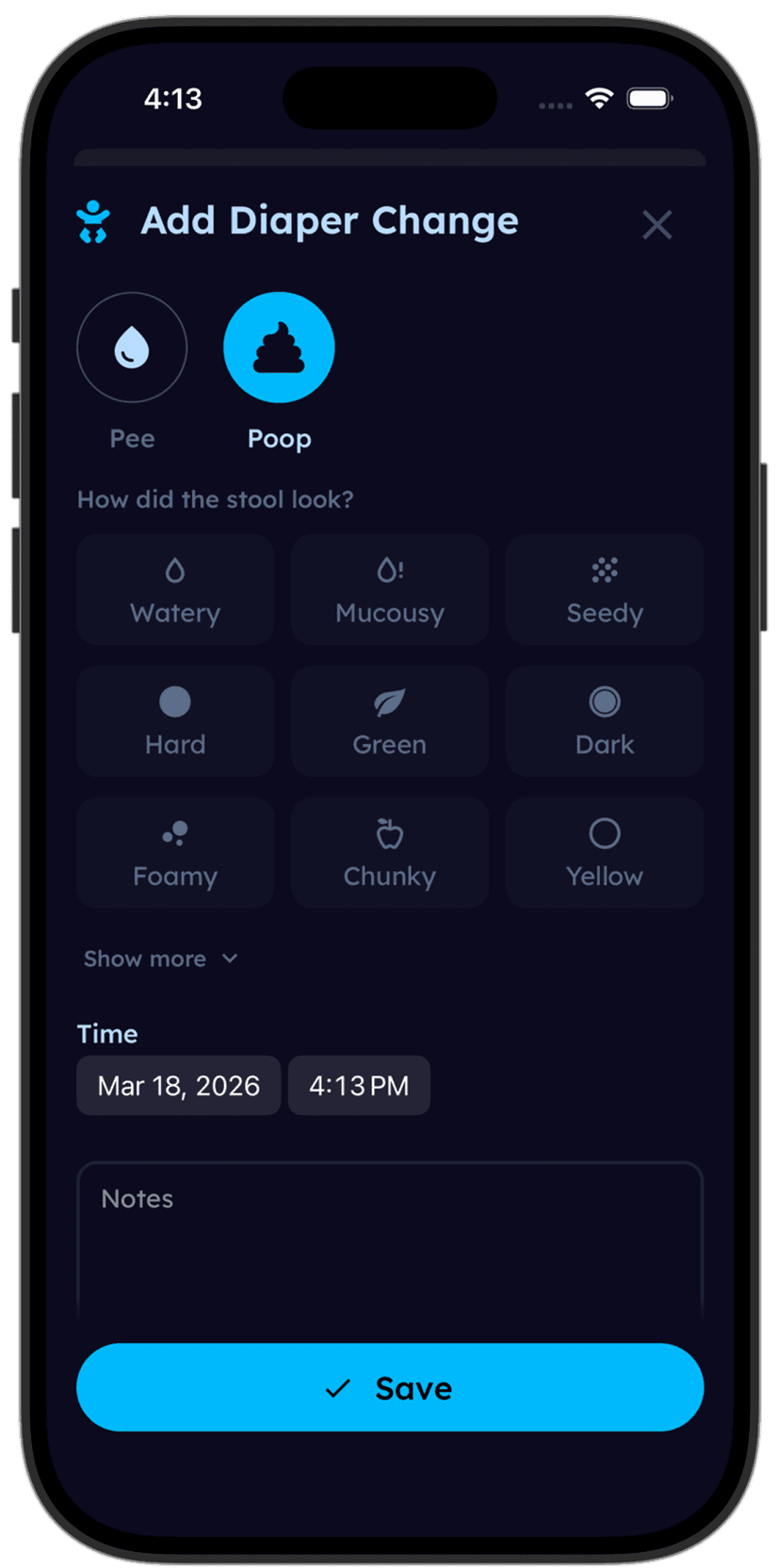
Tinylog tracks diapers so you can spot patterns.
Log wet and dirty diapers, note blowouts and rashes, track output over days and weeks. Bring the data to your next pediatrician visit.


Fit, Feel, and the Print Factor
Pampers Pure Protection fits similarly to standard Pampers — slightly longer and narrower through the body. The tabs are secure, the leg cuffs are snug, and the overall construction feels like a premium Pampers diaper with plant-based upgrades.
Honest Company diapers run slightly wider and have a softer, more cloth-like outer shell. The fit is a bit more relaxed, which some chunky babies do better in. The tabs are a little less grippy than Pampers — worth noting if you have a wiggler.
And then there are the prints. Look, it sounds silly, but Honest Company's rotating seasonal designs are genuinely fun. Pandas, cacti, strawberries, tie-dye — your baby is going to blow out of them regardless, but at least they look cute in the meantime. Pampers Pure keeps it minimal with simple white or subtle patterns. If aesthetics play zero role in your decision, ignore this. If they bring you even a tiny bit of joy during the 3,000th diaper change, give Honest a look.
| Product | Typical Price | Cost Per Diaper | Monthly Estimate |
|---|---|---|---|
| Pampers Pure Protection (Size 1, 132-ct box) | $42–$50 | ~$0.32–$0.38 | ~$77–$114 |
| Honest Company Clean Conscious (Size 1, 136-ct box) | $44–$54 | ~$0.32–$0.40 | ~$77–$120 |
| Pampers Pure Protection (Size 3, 92-ct box) | $38–$46 | ~$0.41–$0.50 | ~$82–$120 |
| Honest Company Clean Conscious (Size 3, 88-ct box) | $38–$48 | ~$0.43–$0.55 | ~$86–$132 |
Price: Both Are Premium, Both Have Discounts
Let's be real — both of these diapers cost more than standard Pampers or Huggies. You are paying a 25–40% premium for cleaner ingredients and plant-based materials. That adds up over a year of diapering.
Ways to bring the cost down:
- Honest Company subscriptions (via honest.com) offer 15–20% off bundles that include diapers and wipes. Auto-ship on your schedule.
- Pampers Pure on Amazon Subscribe & Save knocks 5–15% off depending on how many subscriptions you have active.
- Target Circle and Walmart+ run periodic diaper deals on both brands.
- Buy the biggest box available. Per-diaper cost drops significantly with larger count boxes.
The per-diaper difference between these two brands is 3–5 cents in most sizes. Over a month that is maybe $10–$15. Not nothing, but probably not the deciding factor either. Pick based on fit and ingredients first, then optimize on price.
Choose Pampers Pure Protection If
- You want a big-brand eco option with wide retail availability (Target, Walmart, Amazon, CVS — everywhere)
- Your baby is a heavy wetter and you need fast absorption at peak volumes
- You like the shea butter liner for extra skin conditioning
- You prefer buying in-store and grabbing whatever is on the shelf
- You already trust Pampers and want a cleaner version of what you know
Choose Honest Company Clean Conscious If
- Ingredient transparency and third-party certifications matter to you
- You want totally chlorine-free (TCF) processing, not just elemental chlorine-free
- Cute diaper prints bring you a small but real amount of joy at 3 AM
- You want to subscribe directly and get diapers + wipes bundles delivered on a schedule
- You care about the company's broader sustainability commitments (carbon-neutral manufacturing)
- Your baby has very reactive skin and you want the most stripped-down ingredient list possible
Where to Buy
For wide availability and solid absorbency, Pampers Pure Protection (~$0.35/diaper in bulk) is the safe pick — P&G's engineering in a cleaner package. You can grab these at basically any store in America plus Amazon, which makes emergency diaper runs painless.
For stricter ingredient standards and TCF processing, Honest Company Clean Conscious Diapers (~$0.36/diaper in bulk) are worth the slight premium — EPA Safer Choice certified, carbon-neutral manufacturing, and those ridiculously cute prints do not hurt. Their subscription bundles through honest.com are the best value.
Same advice as always: buy a small pack of each first. The best diaper is the one that fits your baby without leaking. Everything else is secondary.
Tinylog earns a small commission on purchases made through these links, at no cost to you.
Want to save a few bucks? promo.new is worth a quick look. It won't always have your product, but when it does, the savings are real.
The Bottom Line
Both Pampers Pure Protection and Honest Company Clean Conscious are genuine upgrades over standard diapers if you want cleaner ingredients. The differences are real but specific:
Honest Company edges out on chlorine-free processing (TCF vs. ECF), ingredient transparency, third-party certifications (EPA Safer Choice), sustainability commitments, and design variety.
Pampers Pure Protection edges out on absorbency speed, retail availability, and familiarity for parents already in the Pampers ecosystem.
For most families choosing between these two, it comes down to: how much does ingredient sourcing and certification rigor matter to you versus pure absorption performance? There is no wrong answer. Both are keeping unnecessary chemicals off your baby's skin, and that is the whole point.
If you are tracking diaper output to watch for feeding or hydration patterns, Tinylog makes it easy to log every change and share the data with your pediatrician.
Related Guides
- Baby Diaper Rash — Causes, treatment, and when to call your doctor
- Pampers Swaddlers vs. Huggies Little Snugglers — The two best-selling mainstream diapers compared
- Baby Feeding Chart — How much your baby should eat by age
- Baby Constipation — What's normal and when to worry
Sources
- Honest.com. "Clean Conscious Diaper — Ingredient List and Certifications." The Honest Company, 2026.
- Pampers.com. "Pampers Pure Protection Diapers — Product Information." Procter & Gamble, 2026.
- EPA.gov. "Safer Choice Program — Certified Products." United States Environmental Protection Agency, 2026.
- Consumer Reports. "19 Best Diapers From Our Tests." consumerreports.org, 2026.
- Mommyhood101. "The Best Eco-Friendly Diapers of 2026, Tested & Reviewed." mommyhood101.com.
- BabyGearLab. "Best Disposable Diapers." babygearlab.com, 2026.
- Korin Miller. "The 12 Best Diapers for Babies, According to Experts." Parents.com, 2025.
This guide is for informational purposes only. Diaper choice is a personal preference based on your baby's individual needs. If your baby develops persistent rash or skin irritation with any diaper brand, consult your pediatrician.
Frequently asked questions
- Are Pampers Pure Protection or Honest Company diapers more absorbent?
- Pampers Pure Protection tends to absorb liquid slightly faster due to its superabsorbent polymer core, while Honest Company diapers use more plant-based materials in their absorbent layer. For average wetters, both perform well. Heavy wetters may notice better overnight performance with Pampers Pure.
- Are Honest Company diapers actually better for sensitive skin?
- Both diapers are free of chlorine bleaching, fragrance, parabens, and latex. Honest Company publishes a more detailed ingredient list and uses plant-based materials more prominently. However, neither brand guarantees zero skin reactions — every baby's skin is different. If your baby has eczema, test a small pack of each.
- Which eco-friendly diaper is cheaper, Pampers Pure or Honest Company?
- They are priced within 3–5 cents per diaper of each other. Both cost roughly $0.30–$0.45 per diaper depending on size and retailer. Honest Company subscriptions (via their website) and Pampers bulk boxes on Amazon are the best ways to bring cost down.
- Are these diapers biodegradable or compostable?
- Neither diaper is fully biodegradable or compostable. Both use plant-based materials in the outer layers and lining, but the absorbent core still contains superabsorbent polymer (SAP), which does not break down. They are 'cleaner' diapers, not zero-waste diapers.
- Do Pampers Pure Protection diapers have fragrance?
- No. Unlike standard Pampers Swaddlers, Pampers Pure Protection is completely fragrance-free. Both Pampers Pure and Honest Company diapers are unscented.
- Can I use Pampers Pure Protection and Honest Company diapers interchangeably?
- Yes. There is no reason you cannot switch between them. Many parents use one brand at home and another in the diaper bag, or simply buy whichever is on sale. The only concern would be if your baby reacts to one brand's specific materials.