
GUIDE
Pampers Pure Protection vs. Amazon Mama Bear Diapers
Published on
These two diapers sit in very different price tiers — and the gap is real. Pampers Pure Protection offers cleaner ingredients, plant-based materials, and superior absorbency. Mama Bear delivers solid everyday performance at roughly half the cost. For most families, it comes down to how much the 'clean' premium is worth to you.
Pampers Pure Protection is Procter & Gamble's plant-based, fragrance-free diaper line aimed at parents who want fewer synthetic chemicals. Amazon Mama Bear is a no-frills store-brand diaper that quietly performs well at a budget price. Comparing them head to head is really a question about priorities: do you want the cleanest possible ingredients, or do you want a functional diaper that saves you real money every month?
Log changes, blowouts, and rashes
A Premium Diaper vs. a Budget Diaper — Is the Gap Worth It?
This is not a comparison between two similar products. Pampers Pure Protection costs roughly twice what Mama Bear costs per diaper, and that price difference reflects real differences in materials, construction, and ingredient sourcing.
But here is what the price tag does not tell you: Mama Bear is a genuinely functional diaper. It holds liquid, it fits most babies reasonably well, and it does not contain fragrance or latex. The question is whether the upgrades in Pampers Pure — plant-based materials, shea butter liner, better absorbency — are worth $40–$70 extra per month for your family.
We broke down both diapers on the things that actually matter so you can decide for yourself.
For more on how many diapers to expect per day, see our baby feeding chart.
| Feature | Pampers Pure Protection | Mama Bear | What It Means |
|---|---|---|---|
| Manufacturer | Procter & Gamble | Amazon (store brand) | P&G brings decades of diaper engineering. Amazon entered the diaper market in 2018 and has improved steadily. |
| Price per diaper | ~$0.32–$0.45 | ~$0.14–$0.20 | Mama Bear costs roughly half as much. This is the single biggest difference between these two diapers. |
| Fragrance | Fragrance-free | Fragrance-free | Tie. Neither adds fragrance, which is the right call for any baby diaper. |
| Chlorine processing | Elemental chlorine-free (ECF) | Chlorine-free processing | Both avoid traditional chlorine bleaching. Pampers uses ECF; Mama Bear claims chlorine-free without specifying the method. |
| Outer cover | Plant-based, cotton-enhanced shell | Standard cloth-like outer cover | Pampers uses renewable plant-based materials. Mama Bear uses conventional synthetic materials that still feel soft. |
| Inner liner | Plant-based liner with shea butter | Standard soft liner, no lotions | Pampers adds shea butter for skin conditioning. Mama Bear keeps it simple — no additives at all. |
| Absorbent core | Premium SAP + sustainably sourced wood pulp | Standard SAP + wood pulp | Pampers uses more superabsorbent polymer per diaper, resulting in faster absorption and higher capacity. |
| Wetness indicator | Yes — color-changing line | Yes — color-changing line | Tie. Both work reliably. |
| Fit and waistband | Contoured fit, secure stretchy tabs | Flexible waistband, functional tabs | Pampers has a more refined, snugger fit. Mama Bear is decent but can gap on skinny thighs. |
| Size range | Newborn through Size 6 | Newborn through Size 6 | Tie. Same range for both. |
| Certifications | Dermatologist-tested, hypoallergenic | Dermatologist-tested, latex-free | Pampers carries a hypoallergenic claim. Mama Bear emphasizes being free of latex, lotions, and fragrances. |
| Ingredient transparency | Published ingredient list on Pampers.com | Detailed ingredient disclosure on packaging | Both publish ingredients. Pampers is more specific about plant-based sourcing. Mama Bear is straightforward about what is excluded. |
Materials: This Is Where the Money Goes
The biggest difference between these two diapers is what they are made of.
Pampers Pure Protection uses a plant-based outer cover (cotton-enhanced), a sustainably sourced wood pulp core, and a soft inner liner infused with shea butter. The materials are designed to minimize synthetic chemical contact with your baby's skin. P&G also uses elemental chlorine-free processing for the pulp.
Mama Bear uses conventional diaper materials — standard synthetic outer cover, wood pulp plus superabsorbent polymer core, and a basic soft liner with no additives. The materials are functional and safe, but they are not plant-based or sustainably sourced in the same way.
Does this matter for your baby's day-to-day comfort? For most babies, honestly, no. Both diapers feel soft, both keep skin reasonably dry, and both avoid the obvious irritants (fragrance, latex). But if you are specifically trying to reduce your baby's exposure to synthetic materials, Pampers Pure offers something Mama Bear does not.
Absorbency: Where P&G's Engineering Shows Up
Procter & Gamble has been making diapers for decades, and their absorbent core technology is noticeably better than budget alternatives. Pampers Pure Protection absorbs liquid faster and holds more of it before feeling wet against baby's skin.
Mama Bear uses a standard superabsorbent polymer core that handles normal daytime output without issues. If you are changing every 2–3 hours, you probably will not notice a difference. But for longer stretches — naps, car rides, overnight sleep — Pampers Pure has a meaningful edge.
The practical takeaway: if your baby is an average wetter and you change frequently, Mama Bear handles the job. If your baby is a heavy wetter or you need a diaper that lasts 10+ hours overnight, Pampers Pure is the safer bet.
Many parents split the difference by using Mama Bear during the day and a premium diaper at night. That alone can save $25–$40 per month compared to using Pampers Pure full-time.
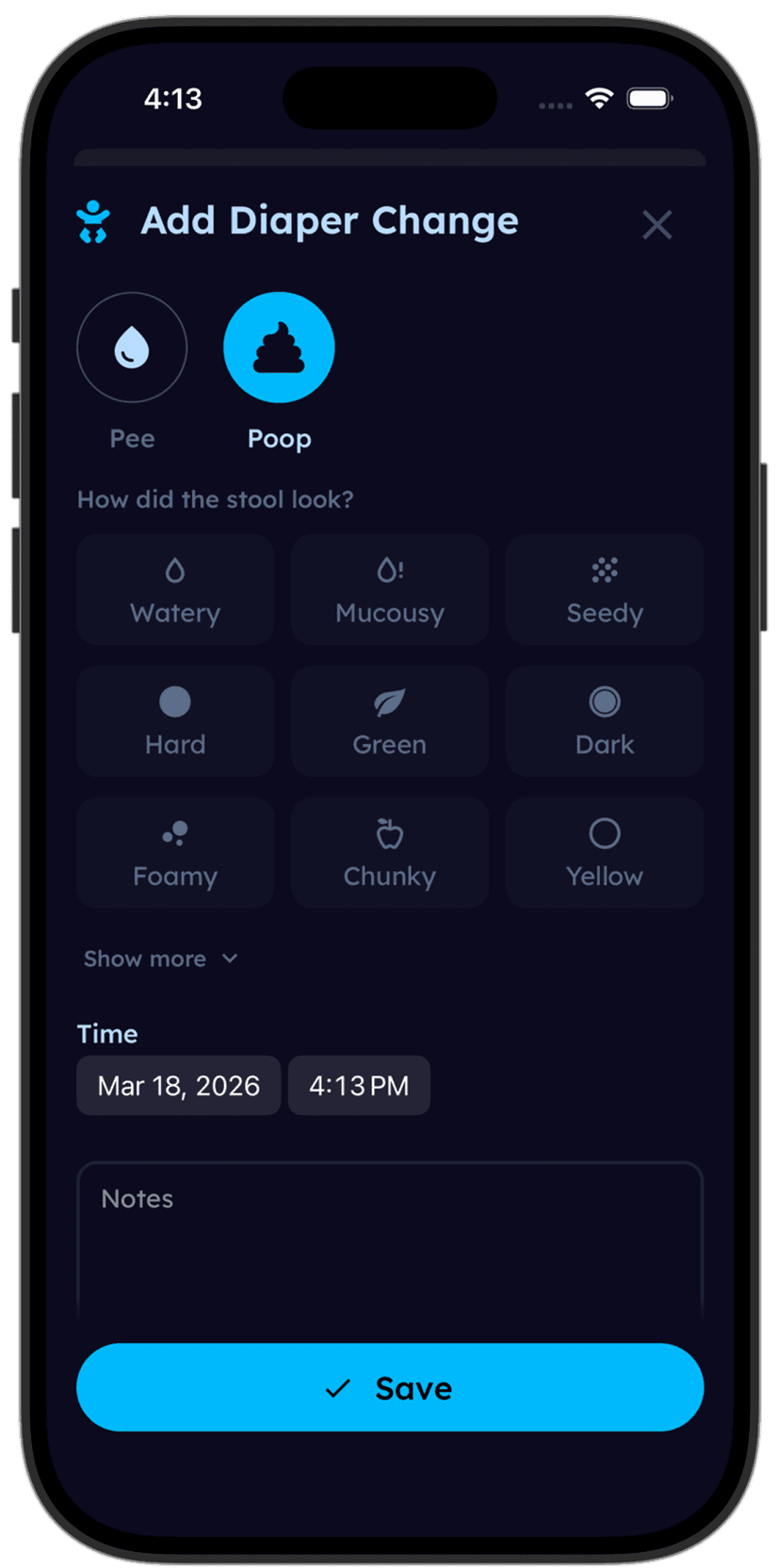
Tinylog tracks diapers so you can spot patterns.
Log wet and dirty diapers, note blowouts and rashes, track output over days and weeks. Bring the data to your next pediatrician visit.


Fit: Premium Feels More Refined, Budget Gets the Job Done
Pampers Pure Protection fits like a Pampers diaper — contoured shape, snug leg cuffs, secure tabs that grip well even on a squirming baby. The overall construction feels like a thoughtfully engineered product.
Mama Bear has a more relaxed fit with a flexible waistband. It works well on average-to-chunky babies but can gap at the legs on thinner thighs. The tabs are functional but not as grippy as Pampers. You may occasionally get a less-than-perfect seal, especially during active play.
The honest truth about diaper fit: every baby's body is different. A $0.40 diaper that gaps on your baby leaks more than a $0.17 diaper that fits snugly. Buy a small pack of each before committing to a bulk order. That one test is worth more than any comparison guide.
| Product | Typical Price | Cost Per Diaper | Monthly Estimate |
|---|---|---|---|
| Pampers Pure Protection (Size 1, 132-ct box) | $42–$50 | ~$0.32–$0.38 | ~$77–$114 |
| Mama Bear (Size 1, 196-ct box) | $28–$34 | ~$0.14–$0.17 | ~$35–$51 |
| Pampers Pure Protection (Size 3, 92-ct box) | $38–$46 | ~$0.41–$0.50 | ~$82–$120 |
| Mama Bear (Size 3, 160-ct box) | $30–$36 | ~$0.19–$0.23 | ~$38–$55 |
Price: The Gap Is Hard to Ignore
This is where the comparison gets uncomfortable for Pampers. At roughly $0.35 per diaper versus $0.17 per diaper, Mama Bear costs about half as much. Over a month, that is $40–$70 in savings. Over a year, you are looking at $500–$800 in your pocket by going with Mama Bear.
That is real money. Enough to buy a car seat, a crib, or several months of baby food.
Ways to narrow the gap if you want Pampers Pure:
- Amazon Subscribe & Save on Pampers Pure knocks 5–15% off, bringing per-diaper cost closer to $0.30.
- Target Circle and retailer promotions run periodic deals on Pampers Pure, especially around Prime Day and holiday weekends.
- Buy the largest box available. Per-diaper pricing drops significantly in bulk.
- Mix brands. Use Pampers Pure at night and Mama Bear during the day. You get the best of both worlds.
If budget is tight and your baby is not having skin issues, there is no shame in the Mama Bear choice. A diaper that works and costs half as much is a smart call.
Choose Pampers Pure Protection If
- Cleaner ingredients and plant-based materials are a top priority for you
- Your baby has sensitive or reactive skin and you want the shea butter liner
- You need strong overnight absorbency without sizing up
- You want a premium eco-friendly diaper available at most major retailers
- You already trust Pampers and want the cleanest version in their lineup
- You are willing to pay more per diaper for ingredient peace of mind
Choose Mama Bear If
- Your budget matters more than premium ingredients right now
- Your baby tolerates standard diapers without skin reactions
- You already shop on Amazon and want Subscribe & Save convenience
- You want a solid daytime diaper and plan to use a premium brand only at night
- You go through 8–12 diapers a day and need to keep costs manageable
- You want chlorine-free processing without the premium price tag
Where to Buy
For cleaner ingredients, plant-based materials, and strong absorbency, Pampers Pure Protection (~$0.35/diaper in bulk) is the premium pick in this matchup. Available at Target, Walmart, Amazon, CVS, and most grocery stores — you will never have trouble finding them. Best value comes from Amazon Subscribe & Save or big-box bulk packs.
For reliable everyday performance at a fraction of the cost, Amazon Mama Bear Diapers (~$0.17/diaper in bulk) are hard to argue with on value. Chlorine-free, fragrance-free, and delivered to your door with Subscribe & Save. They handle daytime diapering well and free up budget for the things your baby actually needs.
Our take: if your baby has sensitive skin or you want the cleanest possible ingredients, start with Pampers Pure. If your baby is doing fine in standard diapers and you want to save serious money, Mama Bear is a smart move. Many families end up using both.
Tinylog earns a small commission on purchases made through these links, at no cost to you.
Want to save a few bucks? promo.new is worth a quick look. It won't always have your product, but when it does, the savings are real.
The Bottom Line
This is a cross-tier comparison, and both diapers deliver on what they promise at their respective price points.
Pampers Pure Protection wins on ingredient quality, plant-based materials, absorbency, fit, and the shea butter liner. It is the better diaper on paper, full stop.
Mama Bear wins on price — decisively. At roughly half the cost, it offers solid daytime performance, chlorine-free processing, and the convenience of Amazon delivery.
For most families, the right answer is not one or the other. It is figuring out where the premium matters (overnight, sensitive skin, newborn stage) and where the budget option is perfectly fine (daytime changes, older babies, frequent changes). Spend where it counts, save where you can.
If you are tracking diaper output to monitor feeding and hydration — especially in those first few weeks — Tinylog makes it simple to log every change and share the data with your pediatrician.
Related Guides
- Baby Diaper Rash — Causes, treatment, and when to call your doctor
- Pampers Swaddlers vs. Pampers Pure Protection — Comparing the two Pampers lines
- Parent's Choice vs. Mama Bear Diapers — Budget vs. budget store-brand showdown
- Baby Feeding Chart — How much your baby should eat by age
Sources
- Pampers.com. "Pampers Pure Protection Diapers — Product Information and Ingredients." Procter & Gamble, 2026.
- Amazon.com. "Mama Bear Best Fit Diapers — Product Information." 2026.
- Consumer Reports. "19 Best Diapers From Our Tests." consumerreports.org, 2026.
- BabyGearLab. "Best Disposable Diapers of 2026." babygearlab.com.
- Mommyhood101. "The Best Diapers of 2026, Tested & Reviewed." mommyhood101.com.
- ShoeStringBaby.com. "Store Brand Diapers Compared: Which Cheap Diaper Is Best?" 2025.
- Korin Miller. "The 12 Best Diapers for Babies, According to Experts." Parents.com, 2025.
This guide is for informational purposes only. Diaper choice is a personal preference based on your baby's individual needs. If your baby develops persistent rash or skin irritation with any diaper brand, consult your pediatrician.
Frequently asked questions
- Is Pampers Pure Protection worth the extra cost over Mama Bear?
- It depends on your priorities. Pampers Pure Protection uses plant-based materials, chlorine-free processing, and a shea butter liner — none of which Mama Bear offers. If cleaner ingredients and sensitive-skin features matter to you, the premium is justified. If your baby does fine in a basic diaper, Mama Bear saves you $40–$70 per month.
- Are Mama Bear diapers safe for sensitive skin?
- Mama Bear diapers are fragrance-free, latex-free, and dermatologist-tested. They use chlorine-free processing, which is a step up from many budget brands. However, they do not have the plant-based liners or third-party certifications that Pampers Pure Protection offers. Many babies with mild sensitivity do fine in Mama Bear.
- How much cheaper are Mama Bear diapers than Pampers Pure Protection?
- Mama Bear typically costs $0.14–$0.20 per diaper, while Pampers Pure runs $0.32–$0.45 per diaper. That is roughly a 50–60% savings with Mama Bear. Over a year, the difference can add up to $500–$800 depending on your baby's usage.
- Do both Pampers Pure and Mama Bear have wetness indicators?
- Yes. Both brands include a color-changing wetness indicator line. This feature used to be exclusive to premium brands but is now standard across most diapers, including budget options like Mama Bear.
- Can I mix Pampers Pure and Mama Bear diapers to save money?
- Absolutely. Many parents use a premium diaper like Pampers Pure overnight or for sensitive-skin stretches and a budget diaper like Mama Bear for daytime changes. There is no reason you cannot switch between brands throughout the day.
- Which diaper is better for overnight use?
- Pampers Pure Protection has a thicker, more absorbent core with more superabsorbent polymer, so it handles longer overnight stretches better than Mama Bear. If your baby is a heavy wetter at night, Pampers Pure (or sizing up) is the safer bet.