
GUIDE
Parent's Choice vs. Mama Bear Diapers
Published on
Both are solid store-brand diapers at a fraction of name-brand prices. Mama Bear has a slight edge in softness and ingredient transparency. Parent's Choice wins on price and in-store availability. Performance is closer than you'd expect.
Parent's Choice (Walmart) and Mama Bear (Amazon) are the two biggest store-brand diapers in the US. They cost 30–50% less than Pampers or Huggies and have quietly gotten very good. For most babies, either will handle the job without the premium price tag. The differences come down to materials, where you shop, and how your baby's skin reacts.
Log changes, blowouts, and rashes
Store-Brand Diapers Have Gotten Really Good
Here's something the name brands don't love to hear: store-brand diapers in 2026 are legitimately good. Parent's Choice and Mama Bear both use the same core technology — sodium polyacrylate superabsorbent polymer plus wood pulp — and they both include features like wetness indicators that were premium-only a few years ago.
The real question isn't whether store brands work. They do. The question is which store brand works best for your baby and your shopping habits.
We compared Parent's Choice (Walmart's house brand) and Mama Bear (Amazon's house brand) on materials, absorbency, fit, skin safety, and cost so you don't have to buy both and guess.
For more on how many diapers to expect per day, see our baby feeding chart.
| Feature | Parent's Choice | Mama Bear | What It Means |
|---|---|---|---|
| Retailer | Walmart (in-store & online) | Amazon (online only) | Parent's Choice has the advantage of in-store pickup. Mama Bear requires delivery. |
| Price per diaper | ~$0.12–$0.18 | ~$0.14–$0.20 | Parent's Choice is slightly cheaper. Both are 30–50% less than premium brands. |
| Fragrance | Fragrance-free | Fragrance-free | Tie. Neither adds fragrance, which is the right call for baby diapers. |
| Chlorine-free | Not certified chlorine-free | Chlorine-free processing | Mama Bear uses chlorine-free bleaching, which some parents prefer. |
| Softness | Decent — slightly papery feel | Softer outer cover, quilted liner | Mama Bear feels noticeably softer in side-by-side comparison. |
| Absorbency | Good for daytime use | Good for daytime use | Both handle typical daytime output. Neither excels at high-volume overnight use. |
| Wetness indicator | Yes — color-changing line | Yes — color-changing line | Tie. Both work reliably. |
| Waistband | Stretchy tabs, basic waistband | Stretchy tabs, flexible waistband | Mama Bear's waistband has slightly more give, which helps with fit. |
| Leak guards | Dual leg cuffs | Dual leg cuffs | Tie. Both have standard leak guards. Neither has a pocketed back waistband. |
| Size range | Newborn through Size 7 | Newborn through Size 6 | Parent's Choice offers Size 7 for larger toddlers. Mama Bear tops out at Size 6. |
| Ingredient transparency | Basic materials list | Detailed ingredient disclosure | Mama Bear publishes more specific ingredient information on packaging and online. |
| Hypoallergenic | Dermatologist-tested | Dermatologist-tested, latex-free | Both are dermatologist-tested. Mama Bear explicitly calls out being free of latex, lotions, and fragrances. |
Materials and Construction: Similar Guts, Different Feel
Both diapers use the same basic absorbent recipe: sodium polyacrylate (the gel beads that soak up liquid) combined with wood pulp fluff. Neither is reinventing diaper science here. Where they differ is in the outer shell and liner.
Mama Bear uses a softer, cloth-like outer cover and a quilted inner liner. When you hold one, it genuinely feels closer to a Huggies than a generic store brand. Amazon clearly invested in the tactile experience.
Parent's Choice has a slightly more papery, utilitarian feel. It's not rough or uncomfortable, but in a blind side-by-side touch test, most parents pick Mama Bear as the softer diaper.
Does softness affect performance? Not really. But it affects how you feel about putting it on your baby, and that matters too.
One meaningful difference: Mama Bear uses chlorine-free processing for bleaching the wood pulp. Parent's Choice does not make this claim. If you're trying to minimize chemical exposure, that's a real differentiator.
Absorbency: Good Enough for Daytime, Not Great for Overnight
Let's be honest — neither of these diapers will win an absorbency test against Pampers Swaddlers or Huggies Little Snugglers. Premium diapers use more superabsorbent polymer per diaper and have more engineered channeling systems to distribute moisture.
That said, both Parent's Choice and Mama Bear handle normal daytime diaper changes without issues. If you're changing every 2–3 hours (which you should be), leaks are uncommon with either brand.
Where store brands tend to fall short is overnight use and heavy wetters. Both diapers have a thinner core than their premium counterparts, which means they reach capacity faster. Many parents solve this by sizing up at night or switching to a dedicated overnight diaper for sleep.
The practical move: use store brands during the day and a premium overnight diaper at bedtime. You still save a ton of money.
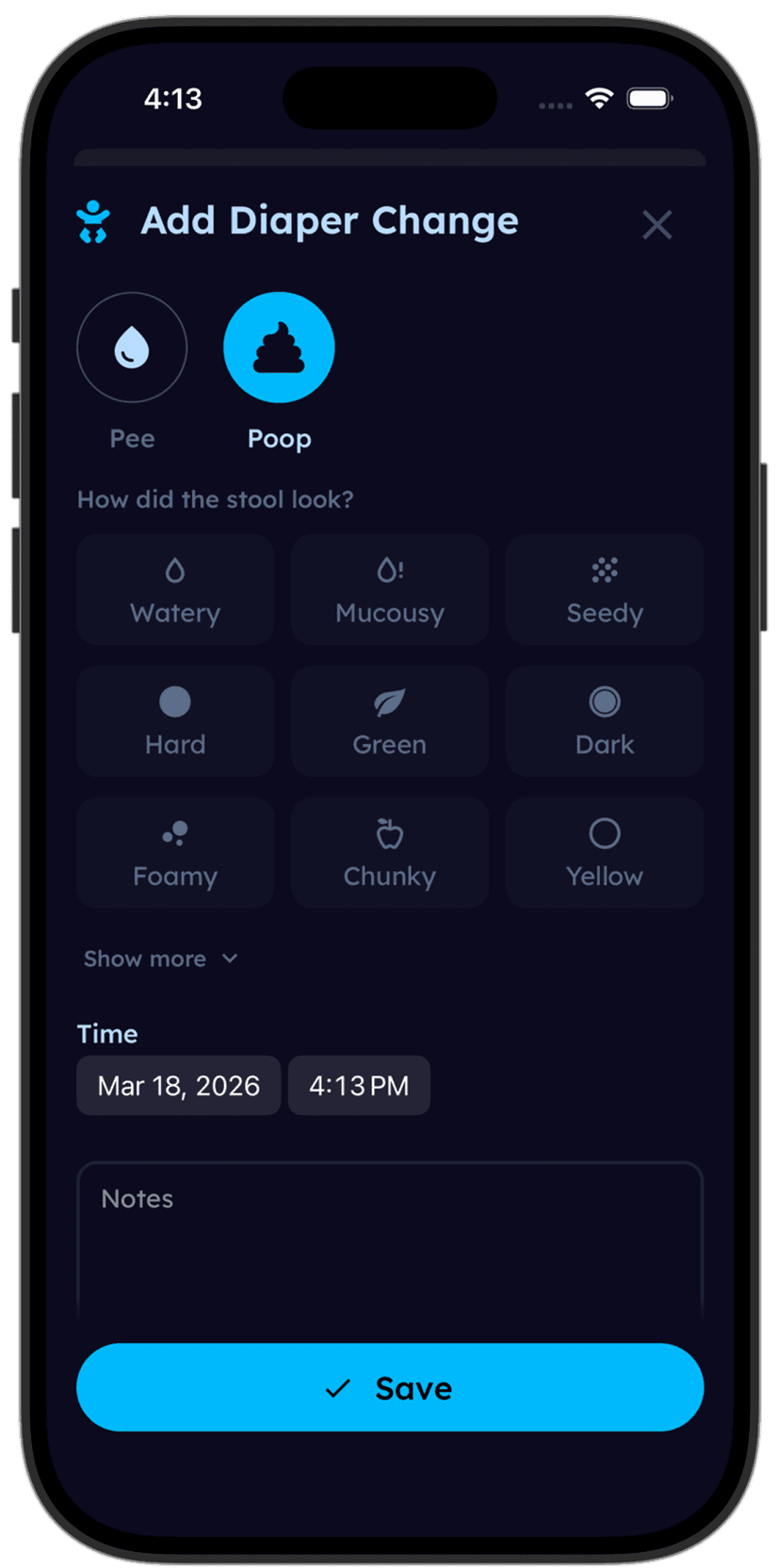
Tinylog tracks diapers so you can spot patterns.
Log wet and dirty diapers, note blowouts and rashes, track output over days and weeks. Bring the data to your next pediatrician visit.


Fit: This Is Where You Just Have to Try Them
Fit is personal. Your baby's thigh circumference, belly shape, and movement patterns all determine which diaper stays snug and which one gaps.
Parent's Choice tends to fit slightly boxier — decent on average-sized babies but can gap at the legs on skinny thighs. The tabs are functional but not as stretchy as premium brands.
Mama Bear has a slightly more contoured fit with a more flexible waistband. It tends to conform better to different body types, though no store brand matches the precision fit of a premium diaper.
The universal truth: buy the smallest available pack of each and try them both. A $6 test pack is worth more than any comparison chart, including this one.
| Product | Typical Price | Cost Per Diaper | Monthly Estimate |
|---|---|---|---|
| Parent's Choice (Size 1, 198-ct box) | $22–$28 | ~$0.11–$0.14 | ~$28–$42 |
| Mama Bear (Size 1, 196-ct box) | $28–$34 | ~$0.14–$0.17 | ~$35–$51 |
| Parent's Choice (Size 3, 168-ct box) | $26–$32 | ~$0.15–$0.19 | ~$30–$46 |
| Mama Bear (Size 3, 160-ct box) | $30–$36 | ~$0.19–$0.23 | ~$38–$55 |
Price: Both Are Cheap, but Parent's Choice Is Cheaper
This is where store brands really shine. You're looking at $0.12–$0.20 per diaper versus $0.22–$0.35 for Pampers or Huggies. Over a year, that adds up to $300–$600 in savings depending on your baby's usage.
Between the two store brands, Parent's Choice is typically 1–3 cents cheaper per diaper. That's roughly $8–$15 per month, or about $100–$180 per year. Not life-changing, but not nothing either.
Mama Bear closes the gap if you use Amazon Subscribe & Save, which knocks off 5–20% depending on how many subscriptions you have active. With maximum Subscribe & Save discounts, the two brands are nearly identical in cost.
Some money-saving moves that work with both:
- Buy the biggest box available. Per-diaper cost drops significantly with larger packs.
- Stack coupons and promotions. Walmart runs rollback pricing; Amazon runs diaper promotions during Prime Day and holiday sales.
- Don't over-size. A diaper that fits snugly leaks less, which means fewer outfit changes and fewer wasted diapers.
Choose Parent's Choice If
- Your number-one priority is the lowest possible per-diaper cost
- You shop at Walmart and want to grab diapers during a regular trip
- You need Size 7 for a bigger toddler
- You like being able to see and feel the product before buying
- You don't want to wait for delivery or plan ahead for auto-ship
Choose Mama Bear If
- You already shop on Amazon and want Subscribe & Save convenience
- Chlorine-free processing matters to you
- You want a softer-feeling diaper at a store-brand price
- Detailed ingredient transparency is important to you
- Your baby has sensitive skin and you want to avoid latex and lotions
- You prefer doorstep delivery over in-store runs with a baby
Where to Buy
If you want the absolute lowest price and shop at Walmart, Parent's Choice Diapers (~$0.14/diaper in bulk) are hard to beat on value. They get the job done, they're available on your next Walmart run, and they come in sizes up through Size 7. Grab a box next time you're picking up groceries.
If you prefer online ordering and want a slightly more refined store-brand diaper, Mama Bear Diapers (~$0.17/diaper in bulk) are worth the small premium — softer feel, chlorine-free processing, better ingredient transparency, and the Subscribe & Save convenience means you never run out at 11 PM on a Tuesday.
Our honest take: both will save you serious money compared to name brands. Try a small pack of each and stick with whichever one your baby's body agrees with.
Tinylog earns a small commission on purchases made through these links, at no cost to you.
Tip: check promo.new before purchasing. It's hit or miss depending on the product, but when it hits, you'll be glad you checked.
The Bottom Line
The store-brand diaper market has come a long way. Both Parent's Choice and Mama Bear are legitimate, functional diapers that will handle most babies' needs at roughly half the cost of premium brands.
Parent's Choice wins on price, in-store availability, and size range (up to Size 7).
Mama Bear wins on softness, chlorine-free processing, ingredient transparency, and the convenience of Subscribe & Save delivery.
For most families, the deciding factor is where you already shop. Walmart family? Parent's Choice. Amazon household? Mama Bear. Either way, you're spending half what the name-brand parents are spending, and your baby probably won't know the difference.
If you're tracking diaper output to make sure your baby is eating enough and staying hydrated — especially in those early weeks — Tinylog makes it simple to log changes and share the data with your pediatrician.
Related Guides
- Baby Diaper Rash — Causes, treatment, and when to call your doctor
- Baby Constipation — What's normal and when to worry
- Baby Feeding Chart — How much your baby should eat by age
- Pampers Swaddlers vs. Huggies Little Snugglers — The premium diaper showdown
Sources
- Walmart.com. "Parent's Choice Diapers — Product Information." 2026.
- Amazon.com. "Mama Bear Best Fit Diapers — Product Information." 2026.
- Consumer Reports. "19 Best Diapers From Our Tests." consumerreports.org, 2026.
- BabyGearLab. "Best Disposable Diapers of 2026." babygearlab.com.
- Mommyhood101. "The Best Diapers of 2026, Tested & Reviewed." mommyhood101.com.
- ShoeStringBaby.com. "Store Brand Diapers Compared: Which Cheap Diaper Is Best?" 2025.
- WeHaveKids. "Parent's Choice vs. Mama Bear — Budget Diaper Comparison." wehavekids.com.
This guide is for informational purposes only. Diaper choice is a personal preference based on your baby's individual needs. If your baby develops persistent rash or skin irritation with any diaper brand, consult your pediatrician.
Frequently asked questions
- Are Parent's Choice diapers as good as name-brand diapers?
- Parent's Choice diapers perform surprisingly well compared to name brands. They use similar absorbent materials (sodium polyacrylate and wood pulp) and include features like wetness indicators and stretchy tabs. The main trade-offs are slightly thinner construction and less refined fit compared to premium brands like Pampers or Huggies.
- Are Mama Bear diapers hypoallergenic?
- Yes. Mama Bear diapers are free from chlorine bleaching, fragrances, lotions, and natural rubber latex. They are dermatologist-tested and considered hypoallergenic, making them a reasonable choice for babies with sensitive skin.
- Which is cheaper, Parent's Choice or Mama Bear?
- Parent's Choice is typically 1–3 cents cheaper per diaper. Parent's Choice runs about $0.12–$0.18 per diaper, while Mama Bear runs $0.14–$0.20 per diaper depending on size and pack. Both are significantly cheaper than premium brands.
- Do Parent's Choice and Mama Bear diapers have wetness indicators?
- Yes. Both brands include a color-changing wetness indicator line that turns blue when the diaper is wet. This feature was once exclusive to premium brands but is now standard on most store-brand diapers.
- Can I use Subscribe & Save with Mama Bear diapers?
- Yes. Mama Bear diapers are available through Amazon Subscribe & Save, which gives you an additional 5–20% discount depending on your number of active subscriptions. This makes the per-diaper cost even more competitive with Parent's Choice.
- Which store-brand diaper is better for overnight use?
- Neither store-brand diaper is specifically designed for overnight use, and both may struggle with heavy overnight wetters. Many parents size up for nighttime or switch to a premium overnight diaper (like Huggies Overnites) for sleep while using store brands during the day to save money.