GUIDE

Partner Survival Guide

A sleep regression is a team sport. Here's how to share the load, communicate through the exhaustion, and keep your relationship intact.

Practical shift schedules, division of labor strategies, and what to do when you're both running on empty.

Sleep Regressions Are a Team Sport

A sleep regression doesn't just happen to your baby. It happens to your whole household. And when multiple adults are operating on broken sleep for weeks at a time, everything gets harder — patience runs thin, communication breaks down, and the smallest disagreements feel enormous at 3 AM.

This guide is about the part of sleep regressions that nobody writes about: how to manage the adults. How to divide the night duty in a way that keeps both of you (or just you, if you're doing this solo) functional. How to communicate when your brain is running on fumes. And how to come out the other side with your relationship and your sanity reasonably intact.

If you want the full picture on what regressions are and when they happen, our sleep regression timeline covers every regression from 4 months to 3 years. This guide is about surviving them as a team.

Shift Systems That Actually Work

The single most important thing you can do during a regression is guarantee that each parent gets at least one block of uninterrupted sleep every 24 hours. Not fragmented dozing. Not "sleeping with one ear open." Actual, real, deep sleep — ideally 4 to 5 hours minimum.

Here are three approaches that work. Pick whichever one fits your family.

The shift system

One parent covers the first half of the night (roughly 8 PM to 2 AM), the other covers the second half (2 AM to 8 AM). The off-duty parent sleeps in a separate space — a spare room, the couch, wherever works — ideally with earplugs or white noise. Each parent gets one guaranteed block of 5 to 6 hours of uninterrupted sleep. This is widely considered the most effective approach during the worst phases of a regression, when the baby is waking every one to two hours.

Alternating nights

One parent is fully 'on' for the entire night while the other sleeps uninterrupted. You swap the next night. This gives the off-duty parent a full night of recovery sleep, which can be more restorative than the split-shift approach. The trade-off is that your 'on' night will be rough. This works well for parents who would rather have one terrible night followed by one full recovery night than two mediocre nights in a row.

Divide-and-conquer roles

Instead of splitting by time, split by task. One parent handles all feeding-related wake-ups. The other handles everything else — diaper changes, resettling, soothing after a nightmare, managing an older sibling who wanders in. This approach works especially well when one parent is breastfeeding, because the roles are clear and neither person feels like they're doing everything.

There's no single right answer. Some families switch between systems depending on how the regression is going — shifts during the worst of it, alternating nights once things start improving. The best system is whichever one both of you can commit to and sustain for the 2 to 6 weeks that a typical regression lasts. For a more detailed comparison including side-by-side breakdowns, check out our guide on splitting night feeds.

When One Parent Is Breastfeeding

The most common question about splitting night duty is: "How does this work if one of us is nursing?" The answer is that the non-nursing parent can still carry a huge share of the load — it just takes a little coordination.

The non-nursing parent can do more than you think

Diaper changes, burping, resettling after feeds, preparing bottles if you're pumping, soothing non-hunger wake-ups, taking the early morning shift — none of these require breastfeeding. If the nursing parent handles the actual feed, the non-nursing parent can handle literally everything else that happens at night. That division alone can make a huge difference.

Pump before your off-shift if you're using shifts

If you're doing a shift system, the nursing parent can pump before their off-shift so a bottle is ready. Your supply will not tank from one missed overnight session — your body adapts within a few nights. If pumping isn't your thing, one formula bottle during the off-shift is a perfectly valid option. Talk to your pediatrician if you have supply concerns.

The 'bring the baby, do the feed, hand them back' approach

Some families find a rhythm where the on-duty parent brings the baby to the nursing parent, the feed happens, and then the on-duty parent takes the baby back for burping, diaper, and resettling. The nursing parent barely has to wake up beyond the feed itself. It's not zero disruption, but it's a lot less than doing the full wake-up alone.

Take the early morning shift

If the nursing parent handled most of the overnight feeds, the non-nursing parent can take over from 5 or 6 AM onward — handling wake-ups, diaper changes, and the morning routine — so the nursing parent can get a longer stretch of uninterrupted sleep. That extra hour or two of recovery sleep can be transformative.

The goal isn't to make breastfeeding harder. The goal is to make sure the nursing parent isn't also doing every diaper change, every resettle, and every non-hunger wake-up on top of the feeds. That's what burns people out — not the feeding itself, but the fact that they're doing everything else too.

Communication When You're Both Exhausted

Most regression arguments aren't really about the baby. They're about feeling unsupported, unseen, or unequally burdened — and not having the cognitive capacity to express that at 3 AM. Here's how to keep communication functional when neither of you is at your best.

Make the plan during the day, not at 3 AM

Every terrible middle-of-the-night argument between parents has one thing in common: both people were exhausted. You cannot negotiate fairly, problem-solve clearly, or regulate your emotions on four hours of broken sleep. Make your night plan during daylight hours, when you're both relatively rested and rational. Write it down if you need to. Then follow the plan at night — no renegotiating in the dark.

Use data instead of perception

Sleep deprivation warps perception. You genuinely believe you were up more than your partner. Your partner genuinely believes the same thing. You're both probably wrong. A shared log — even a simple one — replaces the 'I was up more than you' argument with actual data. It's not about scorekeeping. It's about removing the single biggest source of resentment during a regression.

The on-duty parent makes all the calls

This is the rule that saves relationships. If it's your shift and you decide to try rocking before feeding, your partner does not get to second-guess that from the other room. If you're off-duty, you're off-duty. No backseat parenting, no morning critiques about how they handled the 2 AM wake-up. Trust each other's judgment, even when the approaches differ.

Check in weekly, not nightly

A quick Sunday conversation: Is the current system working? Is one of us more exhausted than the other? Do we need to adjust the shifts? Is there anything we need from each other this week? Regular check-ins prevent resentment from building silently. One short, honest conversation per week beats a hundred whispered 3 AM negotiations.

Say 'thank you' more than you think you need to

When you're both running on empty, it's easy to focus on what your partner isn't doing rather than what they are. A genuine 'thank you for handling that 4 AM wake-up' costs nothing and means everything at this stage. You're both doing hard work. Acknowledge it out loud.

If You're Doing This Alone

Not everyone has a partner to share the night duty with. If you're a solo parent — by choice, by circumstance, or because your partner is deployed, traveling, or otherwise unavailable — this section is for you.

Everything in this guide about shift systems and communication is great in theory, but it means nothing if there's no one to hand the baby to. Here's what actually helps when you're the only one getting up.

Lower the bar on everything except safety

If you're handling a regression alone, the only things that matter are: your baby is safe, fed, and loved, and you are functioning well enough to provide that. The dishes can wait. The laundry can wait. Screen time limits can bend. This is survival mode, and survival mode has an expiration date. Give yourself permission to do the bare minimum on everything that isn't essential.

Accept every offer of help

When someone says 'let me know if you need anything,' give them a specific task. 'Can you come over Tuesday afternoon so I can nap for two hours?' 'Can you drop off dinner this week?' People want to help — they just don't know what you need. Tell them. This is not weakness. This is smart resource management when you're operating on limited sleep.

Build your daytime nap into the plan

If you can get anyone — a family member, a friend, a neighbor, a postpartum doula — to take a daytime shift even once or twice a week, use that time to sleep. Not to clean. Not to catch up on emails. Sleep. A two-hour nap during the day can be the difference between coping and not coping during a regression.

Look into overnight support if it's available to you

Postpartum doulas, overnight newborn care specialists, or even a family member who can stay for a few nights — if any of these are accessible to you, a regression is the time to use them. Even one or two full nights of sleep during the worst of it can reset your capacity to handle the rest.

You are enough

Solo parenting through a sleep regression is genuinely one of the hardest things a person can do. There is no two-person playbook that applies to your situation, and comparing yourself to families with more hands on deck is a trap. You are showing up for your baby every single night. That is extraordinary. Don't let exhaustion convince you otherwise.


Taking Care of Yourselves

During a regression, it's easy to focus entirely on the baby and completely neglect your own needs. That's a mistake — not a moral one, but a practical one. You cannot pour from an empty cup, and a regression can drain you faster than almost anything else in early parenthood.

Protect at least one 4-hour sleep block

Research shows that one consolidated block of 4 to 5 hours of sleep makes a significant difference in cognitive function and emotional regulation compared to the same amount of sleep broken into fragments. Whatever system you use, the goal is to guarantee each parent — or yourself, if you're solo — at least one unbroken stretch every 24 hours.

Eat and hydrate like it's your job

Sleep-deprived brains crave sugar and caffeine. That's fine in moderation, but real meals and water make a bigger difference than you'd think. Keep easy food within reach — granola bars, fruit, cheese, anything you can eat one-handed at 3 AM. Dehydration amplifies every symptom of sleep deprivation.

Watch for signs of postpartum depression or anxiety

Sleep deprivation and postpartum mood disorders share a lot of symptoms — irritability, hopelessness, difficulty concentrating, feeling detached. If what you're experiencing feels like more than tiredness, or if it doesn't improve even on nights when you do get some sleep, talk to your doctor. This applies to all parents, not just the birthing parent. Postpartum depression and anxiety affect partners too.

Know when to call in reinforcements

If you're both drowning, it's time to expand the team. A grandparent or friend who takes the baby for a few hours on a Saturday afternoon. A postpartum doula for a few overnight shifts. A therapist who specializes in new-parent adjustment. Asking for help is not a sign of failure — it's a sign that you understand your limits and you're prioritizing your family's well-being.

What No One Tells You

The regression will end, but the relationship patterns you build during it won't

How you and your partner handle this stretch — the communication habits, the division of labor, the willingness to ask for and offer help — sets the tone for every hard parenting phase that follows. Get the teamwork right now, and you'll have a playbook for teething, illness, toddler tantrums, and every other curveball. That's worth investing in, even when you're exhausted.

Resentment is the real enemy, not the regression

Most couples don't struggle because the regression is hard. They struggle because the load feels unequal and neither person feels seen. Data helps. Communication helps. But the simplest fix is this: assume your partner is doing their best, even when it doesn't look like what you'd do. Sleep deprivation makes everything feel personal. Most of the time, it isn't.

Your baby doesn't need you to be perfect at 3 AM

They need you to be present and safe. That's the bar. You don't need to nail the perfect soothing technique or follow the optimal wake window at 3 AM. You need to keep your baby safe and respond to their needs. Everything beyond that is a bonus. Lower your standards for middle-of-the-night parenting and save your best effort for daylight hours.

It's okay if one parent handles more of the night duty

Equal doesn't always mean identical. If one parent has a more demanding work schedule, or one parent is breastfeeding, or one parent simply handles sleep deprivation better than the other, the split might not be 50/50 — and that's fine. What matters is that both people feel the arrangement is fair, and that fairness is being re-evaluated regularly as circumstances change.

The best thing you can do for your baby is take care of each other

A baby with two functional, reasonably rested caregivers is better off than a baby with two parents who are both completely broken by exhaustion. Prioritizing your own sleep isn't selfish. It's how you stay capable of showing up for your baby tomorrow, and the day after that, and the day after that.

For a deeper look at what's actually happening in your baby's brain during a regression — and why the disruption is temporary — our guide on what causes sleep regressions covers the developmental science. And our baby sleep playbook has age-by-age schedules and strategies for when the regression ends and you're ready to rebuild the routine.

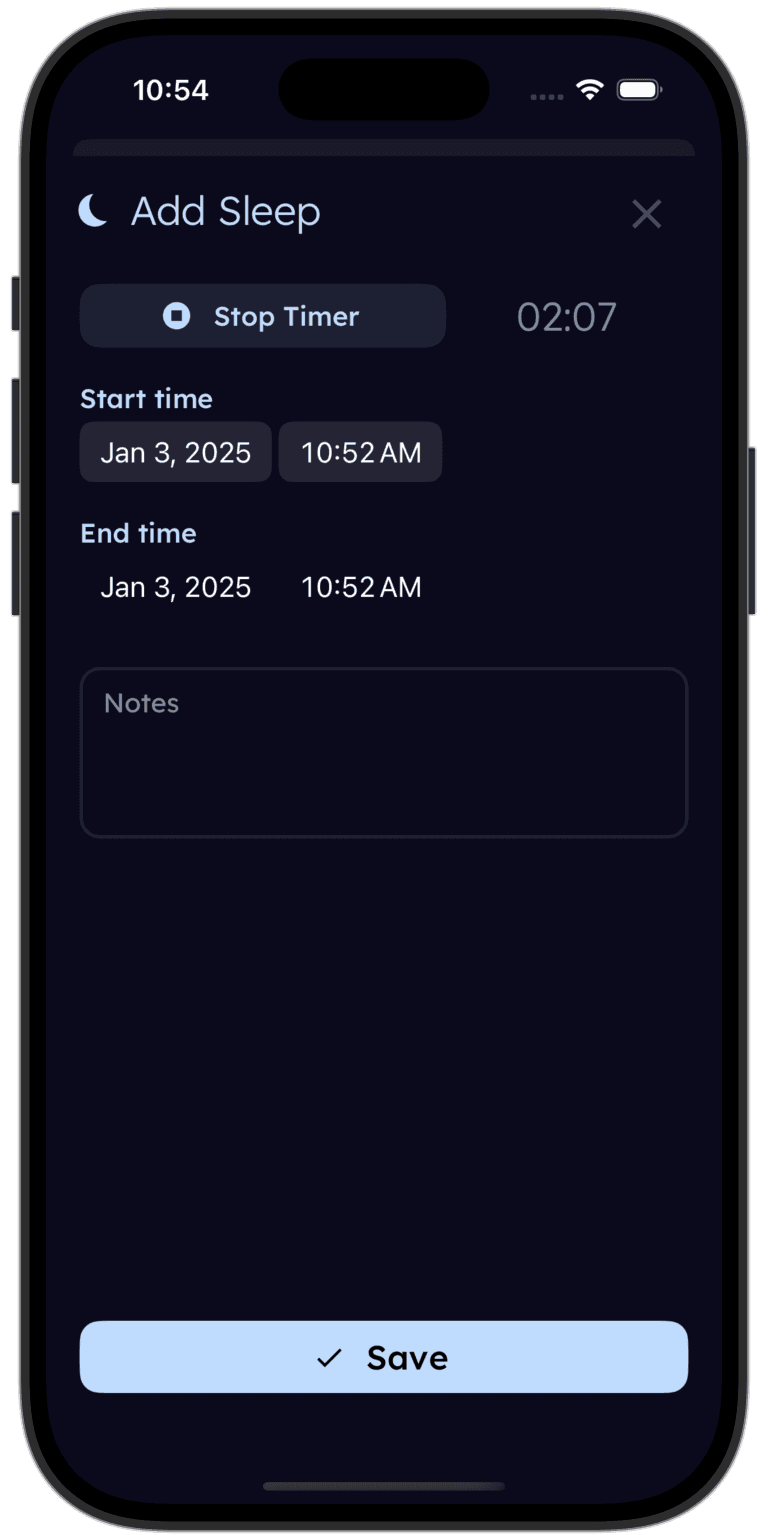
tinylog shared tracking showing overnight feeds and sleep logged by both parents

Both parents. One log. No more 3 AM arguments.

With tinylog, both caregivers can log feeds, diapers, and sleep in real time from their own phone. When it's handoff time, just check the log — no waking anyone up, no whispered status updates. Shared tracking turns the 'whose turn is it?' argument into a non-issue.

Download on the App StoreGet It On Google Play

When to Ask for Professional Support

  • Either parent is experiencing symptoms of postpartum depression or anxiety that go beyond normal exhaustion
  • The regression has lasted more than 6 weeks with no improvement whatsoever
  • Your baby seems to be in pain, is refusing feeds, or weight gain has stalled
  • You notice breathing changes during sleep — snoring, pauses, or labored breathing
  • One or both parents feel unable to safely care for the baby due to exhaustion
  • You're having thoughts of harming yourself or your baby — call your provider immediately or contact the Postpartum Support International helpline at 1-800-944-4773

A sleep regression is temporary. But your mental health matters at every stage. If either parent is struggling beyond normal exhaustion, reach out to your provider. You don't need to justify the call — 'I'm not okay' is reason enough.

You're Going to Get Through This

Sleep regressions are hard. They're harder when you feel alone in them — whether that's because you literally are alone, or because you and your partner are too exhausted to function as a team. Either way, the regression will end. They always do.

What you're building in the meantime — the communication skills, the willingness to adapt, the ability to show up for each other on no sleep — that lasts a lot longer than any regression. This isn't just about surviving the next few weeks. It's about learning how to be a team when things are hard, so you're ready for every hard thing that comes after.

Your baby's sleep will come back. Your energy will come back. And if you're doing this with a partner, your relationship will come out the other side stronger — if you let this be the thing that teaches you to work together instead of against each other.

For the full picture on every regression and when to expect them, check out the sleep regression timeline. And if you're looking for specific sleep strategies beyond the regression, the baby sleep playbook has you covered.

Related Guides

Sources

  • Mindell, J. A., Leichman, E. S., DuMond, C., & Sadeh, A. (2017). Sleep and Social-Emotional Development in Infants and Toddlers. Journal of Clinical Child & Adolescent Psychology, 46(2), 236-246.
  • Galland, B. C., Taylor, B. J., Elder, D. E., & Herbison, P. (2012). Normal sleep patterns in infants and children: A systematic review of observational studies. Sleep Medicine Reviews, 16(3), 213-222.
  • Sadeh, A., Mindell, J. A., Luedtke, K., & Wiegand, B. (2009). Sleep and sleep ecology in the first 3 years: A web-based study. Journal of Sleep Research, 18(1), 60-73.
  • Postpartum Support International. Perinatal Mood and Anxiety Disorders. https://www.postpartum.net
  • American Academy of Pediatrics (AAP). (2022). Sleep-Related Infant Deaths: Updated 2022 Recommendations for Reducing Infant Deaths in the Sleep Environment. Pediatrics, 150(1).
  • Zero to Three. Helping Your Baby Sleep. https://www.zerotothree.org
  • Baby Sleep Information Source (BASIS), Durham University. Normal Infant Sleep Development. https://www.basisonline.org.uk
  • Tikotzky, L., Sadeh, A., & Glickman-Gavrieli, T. (2011). Infant sleep and paternal involvement in infant caregiving during the first 6 months of life. Journal of Pediatric Psychology, 36(1), 36-46.

Medical Disclaimer

This guide is for informational purposes only and is not a substitute for professional medical advice. If you have concerns about your baby's sleep, your mental health, or your family's well-being, please consult your pediatrician or healthcare provider.

Want this guide in your inbox?
We'll send you this guide so both of you can reference it — especially at 3 AM.
Share the log, share the load.
Download tinylog free — both parents can log in real time so you're always on the same page.
Download on the App StoreGet It On Google Play