
GUIDE
Philips Avent Natural vs. Comotomo Baby Bottles
Published on
Both are excellent bottles designed to mimic breastfeeding. Comotomo wins on soft, squeezable feel and simplicity. Philips Avent Natural wins on versatility, capacity options, and anti-colic performance. Cost is similar per bottle.
Philips Avent Natural and Comotomo are two of the most recommended baby bottles for breastfed babies. Both feature wide-neck, breast-shaped nipples to reduce nipple confusion. The real differences come down to material, anti-colic design, cleaning ease, and how your baby responds to each nipple shape.
Log bottles, nursing sessions, and feeding patterns
Two Popular Bottles — Here's What Actually Separates Them
Philips Avent Natural and Comotomo are two of the most frequently recommended baby bottles, especially for babies who are breastfed. Both feature wide, breast-shaped nipples designed to reduce nipple confusion when switching between breast and bottle.
The honest truth: both are good bottles. Most babies will accept either one. But the differences in material, anti-colic design, and cleaning convenience are real and worth understanding before you buy a full set.
We compared materials, nipple design, anti-colic performance, cleaning ease, and pricing so you can pick the right bottle — or at least narrow your trial run to two good options.
For more on how much your baby should eat at each feeding, see our baby feeding chart.
| Feature | Philips Avent Natural | Comotomo | What It Means |
|---|---|---|---|
| Manufacturer | Philips (Avent brand) | Comotomo | Philips is a global conglomerate. Comotomo is a smaller company focused exclusively on baby bottles. |
| Bottle material | Polypropylene (BPA-free plastic) | Medical-grade silicone | Comotomo's silicone is softer and squeezable, mimicking the feel of skin. Avent's plastic is rigid and lightweight. |
| Nipple material | Silicone — wide, breast-shaped | Silicone — wide, breast-shaped | Both use soft silicone nipples designed to reduce nipple confusion. Shapes differ slightly. |
| Anti-colic system | AirFree vent (keeps nipple full of milk) | Dual anti-colic vents in nipple | Avent's AirFree vent is more effective at preventing air intake. Comotomo's vents are simpler but less robust. |
| Sizes available | 4 oz, 9 oz, 11 oz | 5 oz, 8 oz | Avent offers more size options, including a larger 11 oz for older babies. |
| Ease of cleaning | Standard wide-neck; needs bottle brush; extra valve piece | Ultra-wide mouth; hand fits inside; fewer parts | Comotomo wins here. The wide opening means no brush needed, and there are fewer parts to wash and reassemble. |
| Nipple flow rates | Newborn, 1, 2, 3, 4, 5, and variable flow | Slow, medium, fast (3 options) | Avent offers significantly more flow rate options, which helps with paced feeding as your baby grows. |
| Durability | Very durable; scratch-resistant plastic | Durable silicone; can attract dust and lint | Both hold up well. Comotomo's silicone body may collect lint but does not crack or shatter. |
| Dishwasher safe | Yes — top rack | Yes — top rack | Tie. Both are dishwasher safe on the top rack. |
| Shape and grip | Cylindrical; ergonomic curves | Rounded, squat; easy for baby to hold | Comotomo's shape is easier for babies learning to self-feed. Avent's shape fits standard bottle warmers better. |
| Accessory ecosystem | Large — training cups, handles, breast pump compatibility | Minimal — replacement nipples only | Avent has a much larger accessory ecosystem. Bottles work with Philips Avent breast pumps directly. |
The Material Difference That Sets Them Apart
The most obvious difference between these two bottles is what they are made of.
Philips Avent Natural bottles are made from BPA-free polypropylene plastic. They are rigid, lightweight, and durable. They look and feel like a traditional baby bottle — just with a wider, more breast-shaped nipple than older designs.
Comotomo bottles are made from medical-grade silicone — the same material used in breast implants and medical tubing. The body is soft and squeezable. When a baby holds a Comotomo bottle, it gives slightly under pressure, which is closer to the feel of a breast than a rigid plastic bottle.
Does this matter? For some babies, yes. Breastfed babies who refuse rigid bottles sometimes accept Comotomo because the soft body feels more familiar. This is not guaranteed — some babies refuse Comotomo too — but the squeezable silicone body is Comotomo's core selling point, and it works for a meaningful percentage of bottle-resistant babies.
Anti-Colic: Different Approaches, Different Results
Gas and colic are a primary concern for new parents choosing bottles. Both brands address this, but in different ways.
Philips Avent Natural uses an AirFree vent — a small valve inside the bottle that keeps the nipple full of milk even when the bottle is held horizontally. This means the baby swallows less air during feeding. The system works well, and in clinical testing, Avent's anti-colic design has been shown to reduce fussiness and gas.
Comotomo uses dual anti-colic vents built into the nipple itself. These small vents allow air to flow into the bottle without mixing with the milk. The system is simpler and creates fewer parts to clean, but it is generally less effective at preventing air intake compared to Avent's dedicated valve.
If your baby struggles with gas, reflux, or colic, the Philips Avent Natural's AirFree system is the stronger choice. If gas is not a major issue, Comotomo's simpler vents are adequate.
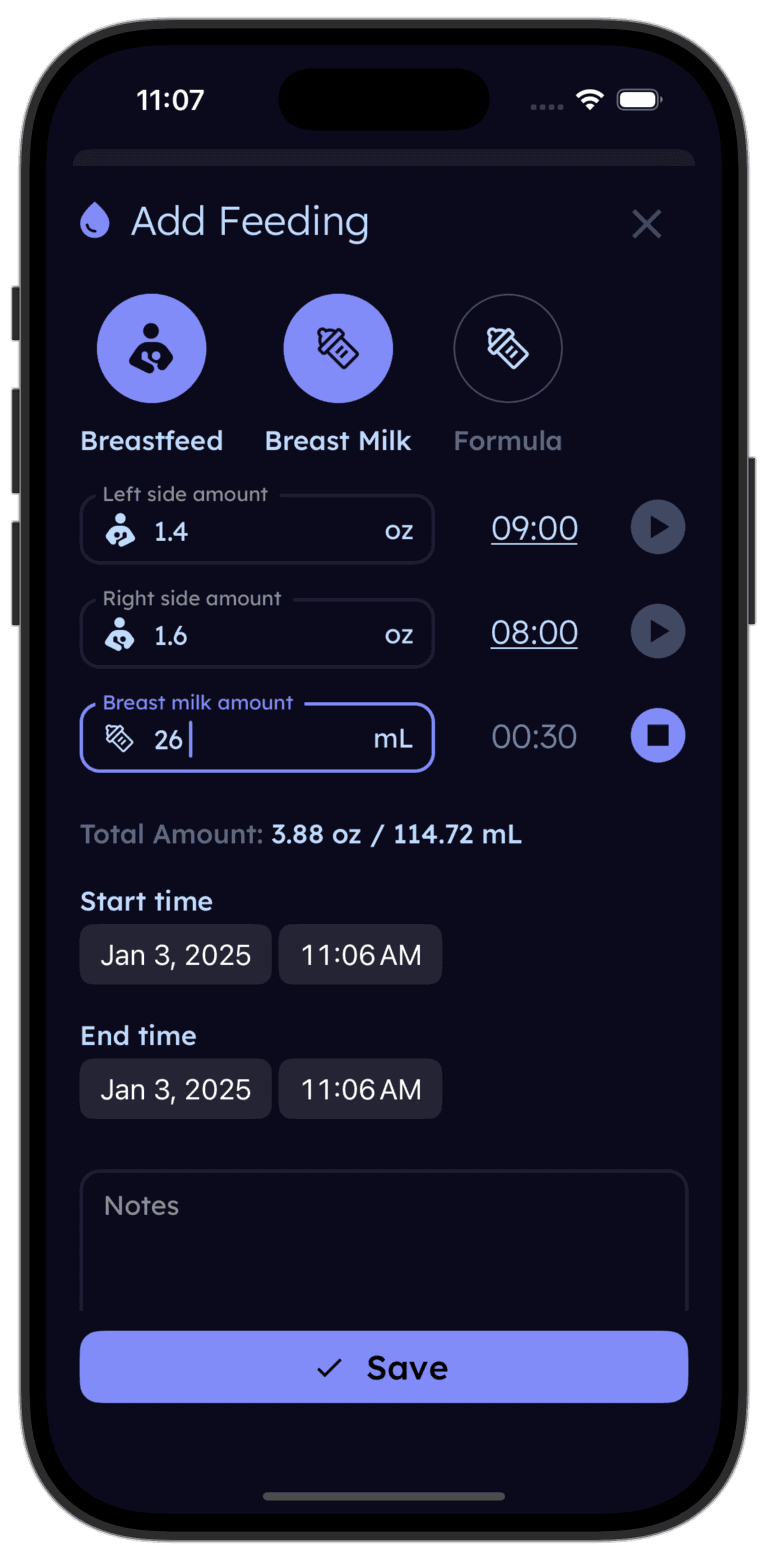
Tinylog tracks feedings so you can spot patterns.
Log bottle feeds and nursing sessions, note gas or refusal, track ounces over days and weeks. Bring the data to your next pediatrician visit.


Cleaning: Comotomo Wins This Round
If you are washing bottles several times a day — and you will be — cleaning convenience matters more than you expect.
Comotomo's wide-mouth design means you can fit your entire hand inside the bottle. No bottle brush needed. You can see and feel every surface, which is reassuring when you are dealing with breast milk residue. The bottle has only three parts: body, nipple, and ring.
Philips Avent Natural bottles have a standard wide-neck opening that still requires a bottle brush to reach the bottom. The anti-colic valve is an additional small piece that needs to be removed, washed, and reassembled each time. It is not difficult, but it is extra work — and small parts can go missing in a busy kitchen.
For parents who value simplicity and speed at the sink, Comotomo is the easier bottle to live with daily.
| Product | Typical Price | Per-Bottle Cost (Multi-Pack) | Notes |
|---|---|---|---|
| Philips Avent Natural (4 oz, single) | $7–$9 | — | — |
| Comotomo (5 oz, single) | $8–$10 | — | — |
| Philips Avent Natural (9 oz, 4-pack) | $26–$34 | ~$6.50–$8.50/bottle | — |
| Comotomo (8 oz, 2-pack) | $24–$30 | ~$12–$15/bottle | — |
Price: Avent Has the Edge in Multi-Packs
Individual bottle prices are similar — both run $7–$10 for a single bottle. The difference shows up when you buy in bulk.
Philips Avent Natural bottles come in 4-packs that drop the per-bottle cost to around $6.50–$8.50. Comotomo sells in 2-packs at $12–$15 per bottle, which is noticeably more expensive when you are building a full set.
Most families need 4–8 bottles. At that volume, the Avent set costs roughly $26–$34 versus $48–$60 for Comotomo. That is a meaningful difference — especially when you factor in replacement nipples over time.
A few ways to save on either brand:
- Registry completion discounts. Amazon, Target, and buybuy Baby all offer 10–15% off remaining registry items.
- Watch for sales. Both brands run promotions around Prime Day, Black Friday, and back-to-school season.
- Buy the starter set. Both brands offer starter/gift sets that include multiple sizes and nipple flows at a lower per-piece cost.
Choose Philips Avent Natural If
- You want a strong anti-colic system (the AirFree vent is excellent for gassy babies)
- You use or plan to use a Philips Avent breast pump (direct bottle compatibility)
- You want more nipple flow rate options as your baby grows
- You prefer a rigid bottle that fits standard bottle warmers and bags
- You want a larger 11 oz size for older babies
- Budget matters — multi-packs bring the per-bottle cost down
Choose Comotomo If
- Your breastfed baby is refusing other bottles (the soft silicone body helps)
- Easy cleaning is a top priority — no bottle brush needed
- You want a bottle your baby can hold themselves as they grow
- You prefer silicone over plastic for any reason
- You value simplicity — fewer parts to wash and reassemble
Where to Buy
If anti-colic performance and versatility are your priorities, the Philips Avent Natural (~$7/bottle in multi-packs) is the stronger all-around choice — the AirFree vent system genuinely reduces gas, you get more nipple flow options, and the bottles work directly with Philips Avent breast pumps. The 4-pack is the best value.
If your breastfed baby is refusing bottles and you need something that feels closer to skin, the Comotomo Silicone Baby Bottles (~$13/bottle) are worth trying — the squeezable silicone body is unlike any other bottle on the market, and the ultra-wide mouth makes cleaning dead simple. Start with a single bottle before buying a set.
Our honest advice: if possible, buy one of each before committing. Babies are unpredictable, and the "best" bottle is simply the one your baby will drink from.
Tinylog earns a small commission on purchases made through these links, at no cost to you.
Tip: check promo.new before purchasing. It's hit or miss depending on the product, but when it hits, you'll be glad you checked.
The Bottom Line
Both Philips Avent Natural and Comotomo are well-designed bottles that work well for breastfed babies. The differences are real but come down to priorities:
Philips Avent Natural wins on anti-colic performance, nipple flow options, accessory ecosystem, size range, and multi-pack value.
Comotomo wins on soft-body feel for bottle-resistant breastfed babies, ease of cleaning, part simplicity, and baby self-feeding grip.
For most families, the best approach is to buy one of each and let your baby decide. If your baby accepts both, the Avent is the more practical long-term choice thanks to its lower multi-pack cost and wider accessory range. If your baby is stubbornly refusing bottles, Comotomo's soft silicone body is worth a shot.
If you are tracking feeding amounts and timing — which helps ensure your baby is getting enough — Tinylog makes it easy to log bottles and nursing sessions and see trends over time.
Related Guides
- Baby Feeding Chart — How much your baby should eat by age
- Baby Constipation — What's normal and when to worry
- Baby Gas Relief — Causes, remedies, and when to call your doctor
- Breastfeeding Tips — Getting started and troubleshooting common issues
Sources
- Philips.com. "Philips Avent Natural Response Baby Bottle — Product Information." 2026.
- Comotomo.com. "Comotomo Baby Bottle — Product Information." 2026.
- BabyGearLab. "Best Baby Bottles of 2026." babygearlab.com.
- What to Expect. "Best Baby Bottles for Breastfed Babies." whattoexpect.com, 2026.
- Wirecutter (NYT). "The Best Baby Bottles." nytimes.com/wirecutter, 2026.
- American Academy of Pediatrics. "Bottle Feeding Basics." healthychildren.org.
- Mommyhood101. "Best Baby Bottles of 2026, Tested & Reviewed." mommyhood101.com.
This guide is for informational purposes only. Bottle choice is a personal preference based on your baby's individual needs. If your baby consistently refuses all bottles or shows signs of feeding difficulty, consult your pediatrician or a lactation consultant.
Frequently asked questions
- Are Philips Avent Natural or Comotomo bottles better for breastfed babies?
- Both are designed to mimic the breast and reduce nipple confusion. Comotomo's ultra-soft silicone body feels more like skin, which some breastfed babies prefer. Philips Avent Natural's wider nipple shape also transitions well from breast to bottle. The best bottle is whichever one your baby will actually accept.
- Do Philips Avent Natural bottles reduce colic better than Comotomo?
- Philips Avent Natural bottles have a more advanced anti-colic system with a dedicated AirFree vent that keeps the nipple full of milk, reducing air ingestion. Comotomo uses dual anti-colic vents in the nipple. Both reduce gas, but the Avent system is generally considered more effective for babies with significant colic or reflux.
- Are Comotomo bottles easier to clean than Philips Avent Natural?
- Yes. Comotomo bottles have a wide-mouth opening that fits your entire hand inside, making them very easy to clean without a bottle brush. Philips Avent Natural bottles have a standard wide-neck opening that requires a brush, plus the anti-colic valve is an extra piece to wash.
- Which bottle is cheaper, Philips Avent Natural or Comotomo?
- They are priced similarly at $7–$10 per bottle depending on size and retailer. Philips Avent Natural bottles are slightly cheaper per bottle when purchased in multi-packs. Both are mid-range in price compared to the overall baby bottle market.
- Can I switch between Philips Avent Natural and Comotomo bottles?
- Yes. There is no reason you cannot use both. However, the nipple shapes are different enough that some babies develop a preference. If your baby is picky, you may want to stick with whichever one they accept. The nipples are not interchangeable between brands.
- Are Comotomo bottles really worth the hype?
- Comotomo bottles are genuinely well-designed — the soft silicone body is unique, the wide mouth makes cleaning simple, and many breastfed babies accept them readily. They are not magic, though. Some babies refuse them just like any other bottle. Buy a single bottle first before committing to a full set.