
GUIDE
Philips Avent Soothie vs. Itzy Ritzy Natural Rubber Pacifier
Published on
The Soothie is a hospital-grade silicone pacifier that most newborns accept immediately. The Itzy Ritzy is a natural rubber option with a more orthodontic shape. Both work well — the main differences are material, nipple shape, and how your baby feels about each.
These two pacifiers sit at opposite ends of the material spectrum. The Soothie is made from medical-grade silicone and is handed out in hospitals across the country. The Itzy Ritzy uses 100% natural rubber latex, appeals to parents who prefer plant-based materials, and has an aesthetic that looks great on Instagram. Your baby, of course, does not care about aesthetics.
Log feeds, pacifier use, and soothing patterns
Two Very Different Pacifiers — Here's What Actually Matters
The Philips Avent Soothie and the Itzy Ritzy Natural Rubber Pacifier could not look or feel more different in your hand. One is a squishy green hospital staple that has been calming newborns for decades. The other is a trendy, earth-toned natural rubber option that looks like it belongs in a Scandinavian nursery.
But your baby does not care about design trends. What matters is whether they will accept the nipple, whether the material is safe, and whether the thing holds up after its fifteenth trip through boiling water.
We broke down the real differences — material science, shape, cleaning, durability, and cost — so you can skip the guesswork and buy the one that actually works for your situation.
For context on when to introduce a pacifier alongside breastfeeding, see our baby feeding chart.
| Feature | Philips Avent Soothie | Itzy Ritzy Natural Rubber | What It Means |
|---|---|---|---|
| Manufacturer | Philips Avent | Itzy Ritzy | Philips is a global health-tech company. Itzy Ritzy is a boutique baby brand focused on modern design. |
| Nipple material | Medical-grade silicone | 100% natural rubber latex | Silicone is more durable and hypoallergenic. Natural rubber is softer and closer to skin texture. |
| Construction | One-piece design (no seams or joints) | Two-piece (rubber nipple + shield) | The Soothie's one-piece build means fewer crevices for bacteria. Easier to sterilize quickly. |
| Nipple shape | Rounded, bulbous | Symmetrical, slightly flattened cherry shape | Both are accepted by newborns. The Itzy Ritzy's shape may feel more natural for breastfed babies. |
| BPA/PVC/phthalate-free | Yes | Yes | Tie. Both are free of BPA, PVC, and phthalates. |
| Hospital use | Used in most US hospitals and NICUs | Not hospital-distributed | The Soothie is the standard pacifier given to newborns in hospitals. That familiarity can help with acceptance. |
| Dishwasher safe | Yes (top rack) | Not recommended | Soothie wins on convenience. The Itzy Ritzy should be hand-washed or boiled. |
| Durability | 4–6 weeks before replacement | 3–4 weeks before replacement | Silicone holds up longer. Natural rubber degrades faster with heat and sunlight exposure. |
| Taste and smell | Odorless and tasteless | Slight natural rubber scent | Some babies are sensitive to the rubber smell. The Soothie has zero taste or odor. |
| Aesthetic options | Limited colors (green, blue, pink) | Wide range of colors and seasonal collections | Itzy Ritzy wins on style. The Soothie looks like what it is — a medical device. |
| Size range | 0–3 months and 3+ months | 0–6 months and 6–18 months | Both offer age-appropriate sizing. The Itzy Ritzy covers a wider age range per size. |
The Material Question: Silicone vs. Natural Rubber
This is the core difference, and everything else flows from it.
Philips Avent Soothie is made from medical-grade silicone — the same type of material used in hospital equipment. It is hypoallergenic, completely odorless, tasteless, and extremely easy to clean. Silicone does not degrade quickly, resists bacteria buildup, and can handle repeated sterilization without breaking down.
Itzy Ritzy uses 100% natural rubber latex, harvested from rubber trees. Natural rubber is softer, more flexible, and has a texture closer to human skin. Some parents love that it is a plant-derived material with no synthetic components. The trade-off is that rubber degrades faster, can develop a slight sticky texture over time, and carries a (very small) risk of latex sensitivity.
For most babies, both materials are perfectly safe. The deciding factor is usually whether your family has latex allergies and whether you prefer the convenience of silicone or the natural feel of rubber.
One more thing: natural rubber has a faint smell and taste that some babies notice. Silicone is completely neutral. If your baby is picky about new textures and tastes, that could tip the scale.
Hospital Familiarity Is a Real Advantage
Here is something worth knowing: the Philips Avent Soothie is the pacifier distributed in most US hospitals and NICUs. If your baby spent any time in a hospital bassinet, there is a solid chance they already had a Soothie in their mouth.
That early exposure matters. Babies develop preferences fast, and a newborn who accepted the Soothie on day one may resist a differently shaped pacifier later. This is not a quality judgment — it is just how infant preferences work.
If your baby has never had a Soothie and you are starting fresh, the playing field is more level. Some breastfed babies actually prefer the Itzy Ritzy's nipple shape because it feels less rigid than silicone.
Worth noting: hospital familiarity does not mean the Soothie is medically superior. Hospitals stock them because they are cheap, easy to sterilize, and one-piece (no choking hazard from detached parts). Those are logistics reasons, not clinical endorsements of one material over another.
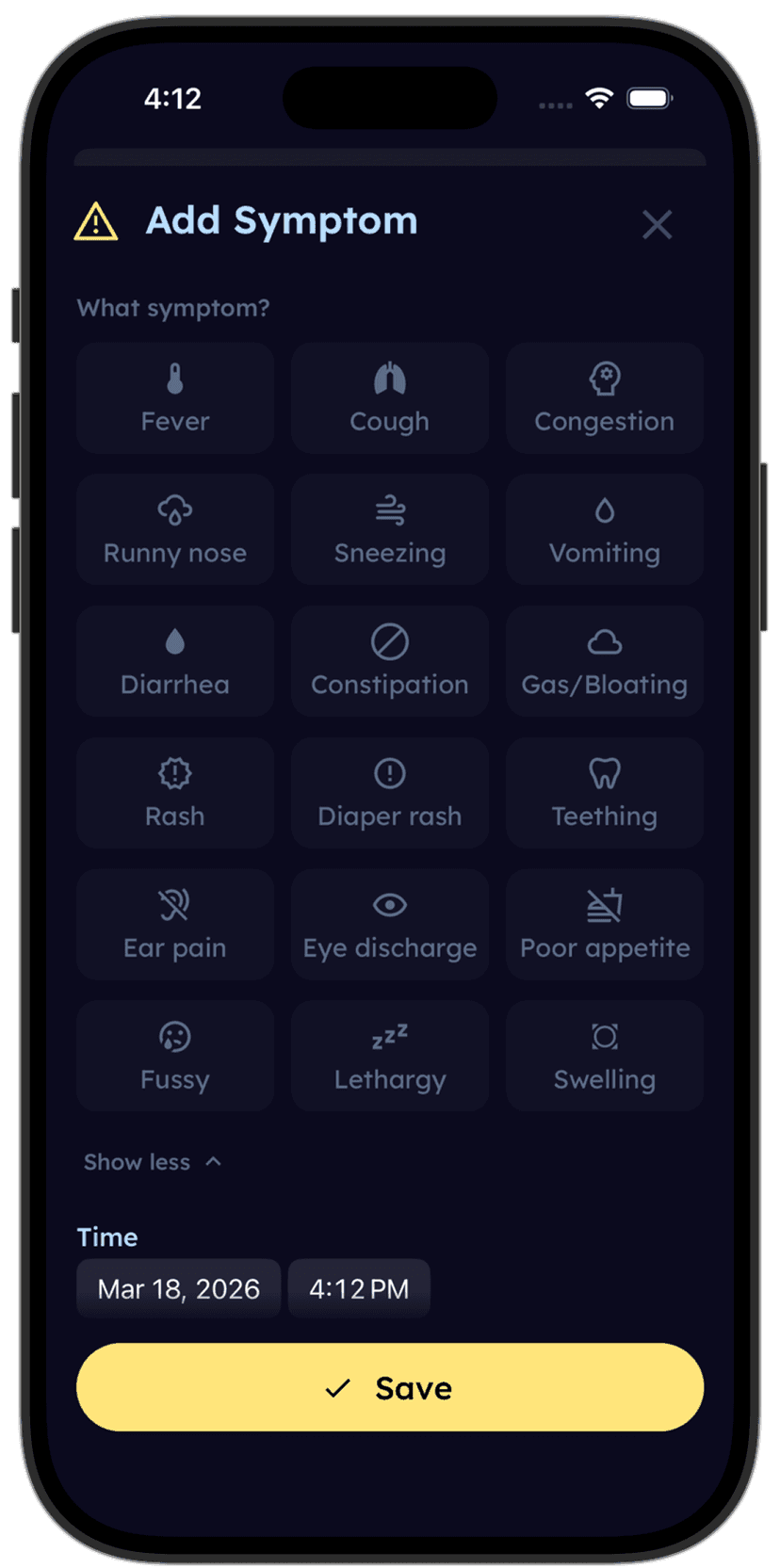
Tinylog tracks feeds and soothing — so you know what's working.
Log breastfeeding sessions, bottle feeds, and pacifier use. See patterns in your baby's fussy periods and figure out what actually helps.


Cleaning and Durability: Silicone Wins on Convenience
Pacifiers hit the floor constantly. They roll under the couch, land in parking lots, and occasionally end up in the dog's mouth. How easy they are to clean matters a lot in daily life.
The Soothie is dishwasher-safe, can be boiled, microwaved in a sterilizer, or wiped down with a sterilizing wipe. Its one-piece construction means there are no joints or seams where milk residue and bacteria can hide. It takes about 10 seconds to inspect the whole thing.
The Itzy Ritzy can be boiled and hand-washed, but is not dishwasher-safe. Natural rubber is more porous than silicone, which means it can harbor bacteria in micro-crevices over time. You will need to replace it more often — roughly every 3 to 4 weeks versus 4 to 6 weeks for silicone.
If you are someone who wants to toss pacifiers in the dishwasher and not think about it, the Soothie is the lower-maintenance choice.
| Product | Typical Price | Cost Per Pacifier | Monthly Replacement Cost |
|---|---|---|---|
| Philips Avent Soothie (2-pack, 0–3 months) | $4–$6 | ~$2–$3 | ~$4–$6/month |
| Itzy Ritzy Natural Rubber (2-pack, 0–6 months) | $10–$14 | ~$5–$7 | ~$10–$14/month |
| Philips Avent Soothie (4-pack value) | $8–$11 | ~$2–$2.75 | ~$4–$6/month |
Price: The Soothie Is Significantly Cheaper
This is not a close call on cost. The Philips Avent Soothie runs about $2–$3 per pacifier. The Itzy Ritzy costs roughly $5–$7 per pacifier. And since rubber pacifiers need replacing more often, the gap widens over time.
Over six months of pacifier use, you might spend $25–$35 on Soothies versus $60–$85 on Itzy Ritzy replacements. That is real money, especially when pacifiers have a habit of disappearing into couch cushions, car seats, and the void.
That said, if natural rubber is a priority for your family, the extra cost is modest in the grand scheme of baby expenses. A few extra dollars per month is not going to break the budget — it is more about whether the material difference matters enough to you.
A few ways to save on either brand:
- Buy multi-packs. The per-unit cost drops noticeably when you buy 4-packs or 6-packs.
- Subscribe on Amazon. Subscribe & Save knocks 5–15% off recurring orders.
- Stock up during sales. Both brands go on sale during Prime Day, Black Friday, and registry completion discounts.
- Keep spares everywhere. Stash one in the car, one in the diaper bag, one by the crib. Losing a pacifier at 2 AM is not fun when it is the only one in the house.
Choose the Philips Avent Soothie If
- Your baby was given a Soothie in the hospital and already takes it well
- You want a one-piece design with no crevices to trap bacteria
- Anyone in your family has a latex allergy
- You prefer dishwasher-safe cleanup over hand-washing
- Budget matters — you will go through a lot of pacifiers in the first year
- You want the pacifier recommended by most pediatricians and NICUs
Choose the Itzy Ritzy Natural Rubber Pacifier If
- You prefer natural, plant-based materials over synthetic silicone
- Your baby is breastfed and you want a nipple shape that feels closer to the breast
- You care about the look and want pacifiers that match your diaper bag aesthetic
- Your baby has rejected stiffer silicone pacifiers and needs something softer
- You are willing to replace pacifiers more frequently for a natural rubber option
Where to Buy
The Philips Avent Soothie (~$2.50/pacifier in a multi-pack) is the standard for a reason — hospital-tested, one-piece silicone, dirt cheap, and accepted by more newborns out of the box than almost any other pacifier. Grab a 4-pack so you always have a clean one within arm's reach.
If you want a natural rubber alternative, the Itzy Ritzy Natural Rubber Pacifier (~$6/pacifier) is a well-made option with a softer feel and a shape that some breastfed babies take to more easily. The colors are beautiful too, if that sort of thing matters to you (no judgment — it matters to a lot of parents).
Whichever you pick, buy at least two. Pacifiers vanish when you need them most.
Tinylog earns a small commission on purchases made through these links, at no cost to you.
Before you buy, it's worth checking promo.new for a deal. It doesn't cover everything, but we've had good luck with it.
The Bottom Line
The Philips Avent Soothie and the Itzy Ritzy Natural Rubber Pacifier are both solid choices, but they serve slightly different priorities.
The Soothie wins on cost, durability, ease of cleaning, hospital familiarity, and hypoallergenic safety. It is the practical, no-nonsense pick.
The Itzy Ritzy wins on material naturalness, nipple softness, aesthetic variety, and a shape that some breastfed babies prefer. It is the thoughtful, plant-based pick.
The honest truth is that pacifier choice often comes down to which one your baby will actually keep in their mouth. Buy one of each if you can, try both, and let your baby cast the deciding vote. If they spit both out, welcome to parenthood — you now own two pacifiers that live on the floor.
If you are tracking feeds and soothing patterns — which is especially helpful in the early weeks when everything feels chaotic — Tinylog lets you log pacifier use alongside feedings and sleep so you can start seeing what works.
Related Guides
- Baby Feeding Chart — How much your baby should eat by age
- Breastfeeding Positions — Find the hold that works for you and your baby
- Baby Sleep Safety — Safe sleep guidelines and pacifier use during sleep
- Newborn Essentials Checklist — What you actually need before baby arrives
Sources
- Philips.com. "Philips Avent Soothie Pacifier — Product Information." 2026.
- ItzyRitzy.com. "Natural Rubber Pacifiers — Product Information." 2026.
- American Academy of Pediatrics. "Pacifiers: Satisfying Your Baby's Needs." healthychildren.org, 2025.
- Pediatric Dentistry Journal. "Pacifier Use and Orthodontic Considerations in Infancy." 2024.
- Consumer Reports. "Best Pacifiers for Babies." consumerreports.org, 2026.
- La Leche League International. "Pacifiers and Breastfeeding." llli.org, 2025.
This guide is for informational purposes only. Pacifier preference varies by baby. If your baby develops mouth irritation, rash, or refuses to feed after pacifier introduction, consult your pediatrician.
Frequently asked questions
- Is the Philips Avent Soothie or Itzy Ritzy pacifier better for newborns?
- Both are designed for newborns. The Soothie is the pacifier most US hospitals distribute and has a one-piece silicone design that is easy to sterilize. The Itzy Ritzy is also newborn-friendly but uses natural rubber latex, which some parents prefer for its softer, more flexible feel. Either works — it depends on which one your baby will actually accept.
- Can babies be allergic to latex pacifiers like the Itzy Ritzy?
- Latex allergies in newborns are extremely rare, but they do exist. If your family has a history of latex allergy, stick with the silicone Soothie. Signs of a latex reaction include redness, swelling, or a rash around the mouth. If you notice any of these, stop using the pacifier and talk to your pediatrician.
- How often should I replace pacifiers?
- Silicone pacifiers like the Soothie last longer and should be replaced every 4–6 weeks or sooner if you notice cracks, tears, or discoloration. Natural rubber pacifiers like the Itzy Ritzy degrade faster and should be replaced every 3–4 weeks. Always inspect before each use.
- Do these pacifiers affect breastfeeding?
- Current research suggests that pacifier use does not significantly interfere with breastfeeding once nursing is established. Most lactation consultants recommend waiting until breastfeeding is going well (usually 2–4 weeks) before introducing any pacifier. The AAP notes that pacifier use at sleep time may reduce the risk of SIDS.
- Can I sterilize both pacifiers in boiling water?
- Yes. Both can be sterilized by boiling for 5 minutes. The Soothie is also dishwasher-safe (top rack). The Itzy Ritzy can be boiled but may degrade slightly faster with repeated high-heat sterilization. Natural rubber is less heat-resistant than silicone over the long term.
- Which pacifier is better for orthodontic development?
- The Itzy Ritzy has a more symmetrical, rounded nipple shape that some pediatric dentists consider slightly better for oral development. The Soothie has a rounded but bulbous nipple. For newborns, the difference is negligible. Prolonged pacifier use beyond age 2 is a bigger factor in dental development than nipple shape.