
GUIDE
Philips Avent Soothie vs. Sophie la Girafe
Published on
These products serve different purposes — the Soothie is a pacifier for non-nutritive sucking and soothing, while Sophie la Girafe is a teether for chewing and gum relief. Most families benefit from having both. The Soothie is ideal from birth; Sophie is best from around 3 months when teething discomfort starts.
The Philips Avent Soothie is the same pacifier used in hospitals across the US. Sophie la Girafe is the iconic French rubber giraffe that has been soothing teething babies since 1961. Comparing them head-to-head is a bit like comparing a blanket to a pillow — they solve related but different problems. This guide breaks down when each product shines, where they overlap, and how to decide what your baby needs right now.
Log feeds, sleep, and soothing
A Pacifier and a Teether Walk Into a Nursery
The Philips Avent Soothie and Sophie la Girafe are two of the most recognizable baby products in the world — and they do completely different things. Comparing them directly is a little unfair to both, but parents search for this matchup because they're trying to figure out what their baby actually needs right now.
Here's the short version: the Soothie is for sucking, Sophie is for chewing. Babies suck for comfort. Babies chew for gum relief. These are different reflexes that show up at different stages and serve different purposes.
The Philips Avent Soothie is the pacifier they hand you at the hospital. One-piece silicone, dead simple, nearly impossible to break. It satisfies the non-nutritive sucking reflex that helps babies self-soothe, fall asleep, and stay calm between feedings. The AAP even recommends pacifier use during sleep as a protective factor against SIDS.
Sophie la Girafe is the 18-centimeter rubber giraffe that has been a fixture in French nurseries since 1961 and has since conquered the world. She squeaks, she has spots, and her legs and ears are perfectly shaped for gnawing. She's a teether, a sensory toy, and a comfort object rolled into one chewable giraffe.
Most families end up using both — the Soothie in the early weeks and Sophie once teething discomfort arrives. The real question is timing.
| Feature | Philips Avent Soothie | Sophie la Girafe | What It Means |
|---|---|---|---|
| Product type | Pacifier (non-nutritive sucking) | Teether / sensory toy | Different categories. The Soothie is for sucking comfort; Sophie is for chewing and gum relief. |
| Recommended age | 0–6 months (newborn size); 0–18 months available | 0+ months; most useful from ~3 months onward | Soothie is the better newborn product. Sophie becomes valuable once baby can grasp and begins teething. |
| Material | One-piece medical-grade silicone | 100% natural rubber (Hevea tree sap) with food-grade paint | Both are high-quality, baby-safe materials. Silicone is more durable; natural rubber is softer on gums. |
| BPA / phthalate free | Yes — medical-grade silicone, free of BPA, PVC, and phthalates | Yes — no BPA, phthalates, or PVC. Made in France under strict EU standards. | Both pass modern safety standards with room to spare. |
| Primary soothing method | Non-nutritive sucking — satisfies the sucking reflex to calm baby | Chewing and counter-pressure on gums, plus sensory stimulation | Different mechanisms for different needs. Sucking soothes fussy newborns; chewing relieves teething pain. |
| Grip / holdability | Round guard with two loops — easy for parent to hold, hard for newborn to grip independently | Long legs and neck designed for small hands to grasp | Sophie is much easier for babies to hold independently. The Soothie often needs a parent or clip. |
| Sensory features | Minimal — simple shape, smooth silicone, single color | Squeaker, varied textures, high-contrast spots, multiple chewable surfaces (ears, legs, head) | Sophie is a full sensory experience. The Soothie is purposefully simple. |
| Cleaning | Dishwasher-safe (top rack), boil, or steam sterilize. Very easy. | Surface wipe only — do NOT submerge in water or sterilize with heat | Soothie is far easier to clean. Sophie requires more careful handling to prevent mold. |
| Durability | Replace every 4–6 weeks or when silicone shows wear | Lasts months with proper care; natural rubber degrades over time with heavy chewing | Sophie lasts longer per unit but costs more. Soothies are cheap enough to replace often. |
| Hospital use | Yes — the standard pacifier in most US hospital nurseries and NICUs | No — not a clinical product | Soothie has clinical credibility. Sophie is beloved at home, not in hospitals. |
| Sleep association | Yes — widely used as a sleep aid; AAP supports pacifier use during sleep to reduce SIDS risk | No — not safe for unsupervised sleep due to size and shape | Only the Soothie is appropriate for sleep. Sophie should be used during supervised awake time only. |
| Price | ~$4–$6 for a 2-pack | ~$25–$28 for one | The Soothie is significantly cheaper. Sophie is a premium product with a premium price tag. |
Sucking vs. Chewing: Why the Difference Matters
Newborns come into the world with a strong sucking reflex. It's one of the few things they can do on purpose, and it's deeply calming. Even when they're not hungry, babies suck to self-regulate, to feel safe, and to fall asleep. That's what pacifiers are for — they give babies something to suck on when feeding isn't the answer.
The Philips Avent Soothie does this job well. The one-piece silicone design means there are no parts to detach or choke on. The nipple shape is similar to the standard hospital bottle nipple, so newborns latch onto it easily. It's the most boring product in your diaper bag, and that's the point.
Around 3–6 months, something shifts. Teeth start pushing up through the gums, and suddenly your baby wants to bite down on everything. The sucking reflex is still there, but now there's a new need: counter-pressure on swollen, aching gums. This is where teethers come in.
Sophie la Girafe is one of the best teethers ever designed — partly because she wasn't designed to be just a teether. Her legs, ears, horns, and head all offer different textures and shapes for chewing. The natural rubber is softer and more flexible than silicone, which many babies prefer against tender gums. And the squeaker provides auditory feedback that keeps babies engaged and reaching for her again and again.
The key insight: pacifiers and teethers satisfy different needs, even though both end up in your baby's mouth. A pacifier won't give the gum pressure a teething baby craves. A teether won't provide the rhythmic sucking comfort a fussy newborn needs.
The Soothie: What Makes It the Hospital Standard
Walk into almost any US hospital nursery or NICU, and you'll find Philips Avent Soothies. There's a reason: they're safe, sterile, and effective.
The one-piece construction is the biggest deal. There's no shield that can separate from the nipple, no small parts to break off. Medical-grade silicone can withstand repeated sterilization by boiling, steam, or dishwasher without degrading. For medically fragile newborns, this matters.
The Soothie also has a distinctive shape — the round guard with two loop handles doubles as a spot where a pacifier clip can attach. The guard sits flat against the face, reducing the risk of obstruction. It's not the most stylish pacifier on the shelf, but it's the one neonatologists trust.
Where the Soothie falls short: it's not a long-term pacifier for most babies. The round nipple shape is fine for newborns but doesn't offer the orthodontic shaping that pediatric dentists prefer for older babies. Many families use the Soothie in the first 3–6 months and then switch to an orthodontic pacifier if their baby still wants one. The Soothie is also hard for babies to keep in their mouths independently — the flat, lightweight design pops out easily, which means you'll be picking it up and reinserting it dozens of times a day.
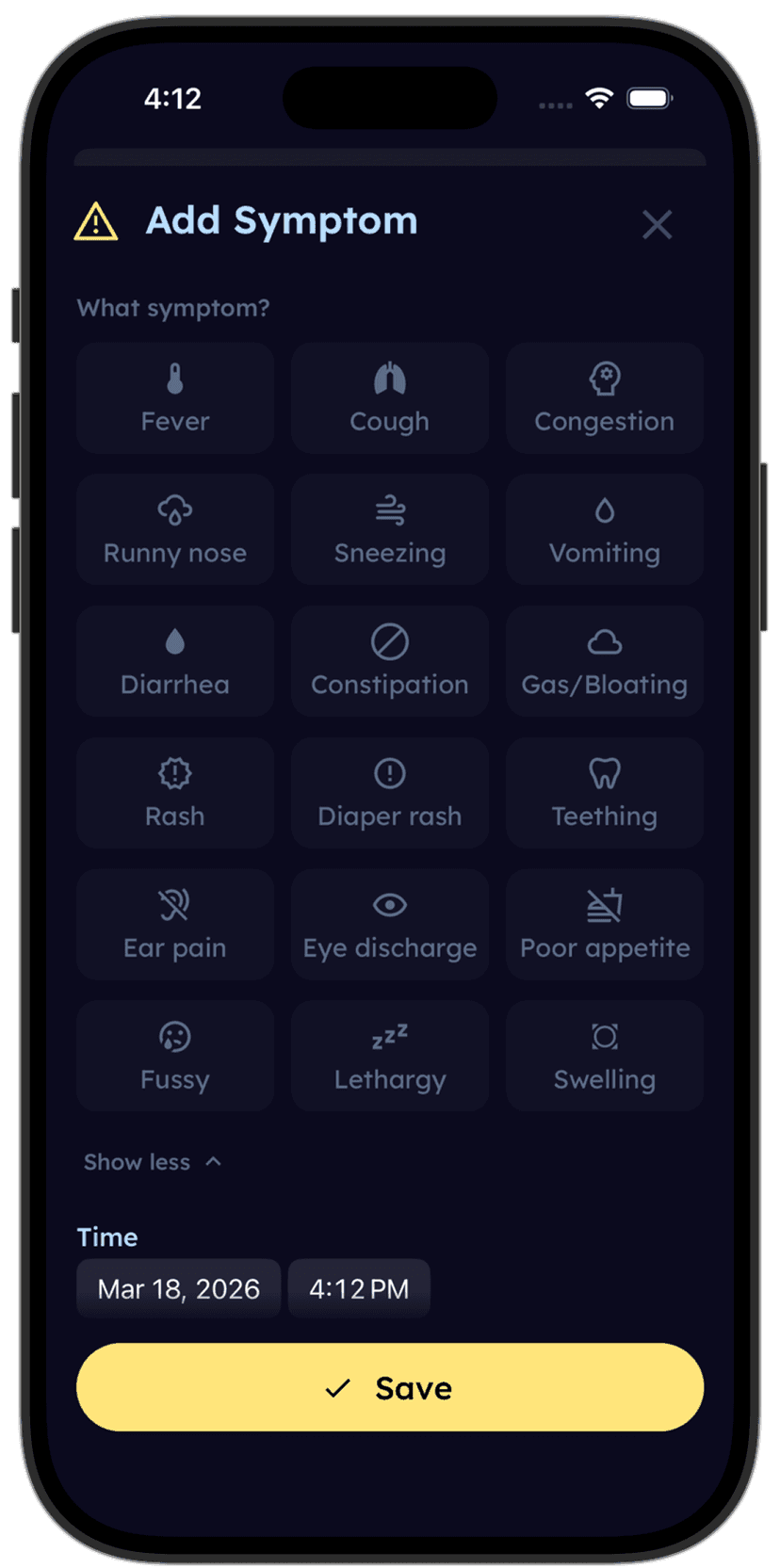
Tinylog tracks feedings so you can spot patterns.
Log feeds, pacifier use, and teething symptoms. See when fussiness spikes, track what helps, and share the data with your pediatrician.


Sophie la Girafe: Why a Rubber Giraffe Conquered the World
Sophie la Girafe has been manufactured by Vulli in Rumilly, France, since 1961. Over 100 million Sophies have been sold worldwide. That kind of longevity in the baby product market is almost unheard of — and it's not because of marketing. It's because the product genuinely works.
What makes Sophie special for teething:
- Natural rubber from the Hevea tree is softer and more flexible than silicone teethers. Babies can bite down hard without hurting their gums.
- Multiple chewing surfaces — the legs, ears, horns, and head all have slightly different shapes and textures, so babies rotate between them as different parts of their gums bother them.
- Easy to grip — the long, slim body with protruding legs was designed specifically for small hands. Babies as young as 3 months can grab and bring Sophie to their mouths independently.
- Sensory stimulation — the squeaker provides sound, the dark spots on light rubber provide high-contrast visual interest, and the natural rubber has a faint scent that babies seem to find comforting.
Where Sophie falls short: she's expensive for what she is. At $25–$28 for a single rubber toy, she costs roughly ten times what a Soothie costs. And the cleaning situation is a real drawback — you cannot submerge Sophie in water, boil her, or run her through a sterilizer. Surface wiping is the only safe cleaning method. If water gets inside through the squeaker hole, mold can develop internally, which made headlines a few years ago and remains a valid concern.
To prevent mold: wipe Sophie with a damp cloth after each use, dry her completely, and never let her sit in standing water. If you squeeze her and see any discoloration coming from the hole, throw her away.
| Product | Typical Price | Cost Per Unit | Notes |
|---|---|---|---|
| Philips Avent Soothie, 2-pack (0–3 months) | $4–$6 | ~$2–$3 each | Hospital-grade silicone; widely available. Stock up — you'll lose a few. |
| Philips Avent Soothie, 2-pack (3–18 months) | $5–$7 | ~$2.50–$3.50 each | Larger nipple and guard for older babies. Same one-piece design. |
| Sophie la Girafe (original) | $25–$28 | $25–$28 each | Handmade in France. Each giraffe requires 14 manual steps to produce. |
| Sophie la Girafe So'Pure teething ring | $12–$16 | $12–$16 each | Smaller, ring-shaped version. Same natural rubber, easier to grip, lower price. |
Price and Value: What You're Really Paying For
The price gap between these two products is significant. You can buy a four-pack of Soothies for roughly the cost of lunch. Sophie la Girafe costs roughly the same as a nice bottle of wine.
Soothie economics: At $2–$3 per pacifier, Soothies are disposable by design. Buy extras. Keep one in the diaper bag, one in the crib, one at grandma's house. When they get chewed up, discolored, or lost under the couch forever, toss them and grab a new one. The AAP recommends replacing pacifiers every 4–6 weeks anyway, so the low cost per unit works in your favor.
Sophie economics: You're paying for handmade French manufacturing, natural rubber sourcing, and 60+ years of brand heritage. Each Sophie goes through 14 manual production steps. Whether that justifies $26 is a personal call. What we can say is that Sophie tends to last several months of daily use, serves as a teether and a toy simultaneously, and many babies form a genuine attachment to her. The cost-per-use can be quite reasonable if your baby loves her.
If the price of the original Sophie stings, consider the Sophie la Girafe So'Pure teething ring at $12–$16. It's the same natural rubber in a smaller ring format that's easier to clean and cheaper to replace.
Choose Philips Avent Soothie If
- Your baby is a newborn (0–3 months) who needs soothing between feeds
- You want a sleep-safe soothing option that aligns with AAP recommendations for SIDS reduction
- You need something that can be fully sterilized — especially for preemies or medically fragile babies
- Your baby is fussy but not yet showing teething signs
- You want an affordable, easy-to-replace product you can keep in every bag and room
Choose Sophie la Girafe If
- Your baby is 3 months or older and starting to show teething discomfort (drooling, gnawing on hands, fussiness)
- You want a teether your baby can hold and explore independently during awake time
- You value sensory stimulation — sight, sound, touch, and taste in a single toy
- Your baby is losing interest in pacifiers and wants to chew rather than suck
- You prefer natural rubber over silicone or plastic for teething products
- You're looking for a multi-purpose toy that works as a teether, rattle, and visual stimulus
Where to Buy
For newborn soothing and sleep, the Philips Avent Soothie (~$2–$3 per pacifier in a 2-pack) is the same pacifier trusted by hospitals across the country. One-piece medical-grade silicone, easy to sterilize, and cheap enough to have backups everywhere. Grab the 0–3 month size for newborns and the 3–18 month size if your baby still wants it later.
For teething relief and sensory play, Sophie la Girafe Teether (~$25–$28) has been the gold standard for over 60 years. Natural rubber, easy to grip, and genuinely beloved by babies worldwide. Just follow the cleaning rules — surface wipe only, never submerge.
For most families, these two products complement each other perfectly. The Soothie carries you through the newborn haze, and Sophie takes over once teeth start making their move.
Tinylog earns a small commission on purchases made through these links, at no cost to you.
Tip: check promo.new before purchasing. It's hit or miss depending on the product, but when it hits, you'll be glad you checked.
The Bottom Line
The Philips Avent Soothie and Sophie la Girafe are not competitors — they're teammates. They address different developmental needs at different stages, and most families will get real value from having both on hand.
The Philips Avent Soothie is the right tool for the newborn period. It satisfies the sucking reflex, helps with sleep, and is supported by the AAP as a protective measure against SIDS. It's cheap, sterile, and trusted by every hospital in America. Use it from day one.
Sophie la Girafe is the right tool once teething begins. She provides counter-pressure for aching gums, sensory stimulation for developing brains, and a graspable shape for small hands learning to hold objects. She's an investment at $26, but babies who love her use her daily for months.
The real takeaway: pacifiers and teethers are different tools for different jobs. Your newborn needs to suck. Your teething baby needs to chew. Having both a Soothie and a Sophie means you're covered for both stages without asking either product to do something it wasn't designed for.
If you're tracking your baby's fussy periods, teething signs, and soothing patterns, Tinylog makes it simple to log everything in one place and spot trends over time.
Sources
- Philips Avent. "Soothie Pacifier Product Information." usa.philips.com. 2026.
- Vulli. "Sophie la Girafe — Our History and Manufacturing Process." sophielagirafe.com. 2026.
- American Academy of Pediatrics. "Pacifiers and SIDS: What Parents Should Know." healthychildren.org. 2025.
- American Academy of Pediatric Dentistry. "Policy on Pacifier Use." aapd.org. 2024.
- Moon, R. et al. "Sleep-Related Infant Deaths: Updated 2022 Recommendations." Pediatrics, 150(1). 2022.
- Consumer Product Safety Commission. "Teether Safety Tips." cpsc.gov. 2025.
- Healthline Parenthood. "Sophie the Giraffe Teething Toy Review." healthline.com. 2025.
Related Guides
This guide is for informational purposes only and does not constitute medical advice. Pacifier habits, teething timelines, and product preferences vary by child. If your baby has persistent feeding difficulties, excessive fussiness, or teething symptoms that concern you, consult your pediatrician.
Frequently asked questions
- Can the Philips Avent Soothie be used as a teether?
- The Soothie is designed for non-nutritive sucking, not chewing. While babies will gnaw on anything, the Soothie's thin silicone nipple isn't built for aggressive biting. Once your baby has teeth coming in, a dedicated teether like Sophie la Girafe provides better texture and durability for gum relief.
- At what age can a baby use Sophie la Girafe?
- Sophie la Girafe is recommended from birth onward, though most babies start getting real value from her around 3 months when they can hold objects and bring them to their mouths. The squeaker, contrasting colors, and crinkly texture also make Sophie useful as a sensory toy before teething begins.
- Is Sophie la Girafe safe for newborns?
- Yes. Sophie la Girafe is made from 100% natural rubber derived from the Hevea tree and colored with food-grade paint. She contains no BPA, phthalates, or PVC. The design has passed safety testing for newborns. However, always supervise use and inspect for damage — if the rubber tears or the squeaker becomes loose, replace it.
- Do hospitals really give out Philips Avent Soothie pacifiers?
- Yes. The Soothie is the most commonly used pacifier in US hospital nurseries and NICUs. Its one-piece medical-grade silicone design is easy to sterilize and safe for newborns. The hospital connection is a big reason parents trust it.
- Can mold grow inside Sophie la Girafe?
- It is possible if water enters through the squeaker hole during cleaning. To prevent mold, never submerge Sophie in water or put her in a sterilizer. Clean the surface with a damp cloth and mild soap, then dry thoroughly. If you see discoloration or smell something off, replace her.
- Do I need both a pacifier and a teether?
- For most families, yes. Pacifiers satisfy the sucking reflex and help with sleep and self-soothing — especially in the newborn stage. Teethers address the different need of gum pressure and pain relief once teeth start pushing through, usually around 4–6 months. A pacifier and a teether solve different problems.