GUIDE

Dehydration in Babies

Wet diaper count is the single most important monitoring tool during illness.

Babies dehydrate faster than adults because of their small body size and high metabolic rate. Knowing the difference between mild, moderate, and severe dehydration — and acting on it quickly — can prevent a manageable illness from becoming an emergency. Here is exactly what to watch for.

Why Babies Dehydrate Faster Than Adults

Understanding why dehydration is such a concern in babies — more than in older children or adults — helps you appreciate why pediatricians take it so seriously. It is not just that babies are small. It is that their physiology is fundamentally different in ways that make fluid loss dangerous more quickly.

First, body composition. A newborn's body is approximately 75% water, compared to about 60% in an adult. While that sounds like they have more water to spare, it actually means a larger portion of their body weight is fluid — and losing even a small percentage has outsized effects.

Second, surface area. Babies have a much higher body surface area relative to their weight than adults do. This means they lose more fluid through their skin (insensible losses) proportionally. Add a fever — which increases insensible losses further — and the math gets unfavorable quickly.

Third, metabolic rate. Babies have a higher metabolic rate per kilogram than adults, which means they turn over fluids faster. They need to take in more fluid relative to their size just to maintain baseline, and any disruption in intake (from vomiting, illness, or refusal to feed) hits harder.

Fourth, kidney immaturity. Infant kidneys are less efficient at concentrating urine, particularly in the first several months. They cannot hold onto water as effectively as mature kidneys can, so they continue losing fluid in urine even when the body needs to conserve it.

Finally, dependence. An adult who feels thirsty can pour a glass of water. A baby depends entirely on you to offer fluids. They cannot tell you they are thirsty — they can only show you through signs that something is wrong. By the time those signs are obvious, dehydration may already be moderate.

The takeaway: during any illness involving fever, vomiting, or diarrhea, dehydration risk should be on your radar from the very beginning, not just when signs appear.


The Three Levels of Dehydration

Dehydration exists on a spectrum, and knowing where your baby falls on that spectrum determines what you should do. The three levels — mild, moderate, and severe — are defined by the percentage of body fluid lost, but since you cannot measure that at home, you rely on clinical signs instead.

Mild dehydration (roughly 3-5% fluid loss) is the earliest stage. You might notice slightly fewer wet diapers than usual, darker-colored urine, and dry-looking lips. Your baby may be a bit fussier but is still alert, still making tears, and still feeding — just perhaps with less enthusiasm. This level is manageable at home by increasing fluid intake and monitoring closely. Most mild dehydration during a stomach bug or cold resolves within a day of aggressive rehydration.

Moderate dehydration (roughly 6-9% fluid loss) is where things get more serious. The signs become more noticeable: fewer than four wet diapers in 24 hours, no tears when crying, a visibly sunken fontanelle, dry mouth and tongue, and a baby who is lethargic or less responsive than normal. Skin turgor starts to change — when you gently pinch the skin on the abdomen, it may stay tented for a moment instead of snapping back. This level requires medical evaluation the same day. Your pediatrician may attempt oral rehydration in the office or send you to the ER for IV fluids.

Severe dehydration (10% or more fluid loss) is a medical emergency. The signs are unmistakable: no urine output for six or more hours, deeply sunken fontanelle and eyes, cool or mottled extremities, rapid heartbeat, a weak or absent cry, and a baby who is limp or difficult to arouse. This requires immediate ER evaluation and IV fluid resuscitation. Do not attempt oral rehydration for severe dehydration — the baby needs IV access. Drive to the ER now or call 911 if the baby appears unstable.

Mild Dehydration Signs — Monitor and Increase Fluids

  • Slightly fewer wet diapers than usual (but still at least 3-4 in 24 hours)
  • Urine is darker yellow than normal
  • Dry or slightly sticky lips and mouth
  • Baby is a little fussier than usual
  • Slightly increased thirst — eager to feed

Mild dehydration is common during any illness. Increase fluid intake, track wet diapers carefully, and watch for progression to moderate signs.

Moderate Dehydration Signs — Seek Same-Day Medical Care

  • Fewer than 4 wet diapers in 24 hours
  • No wet diaper for 4-6 hours in an infant
  • Noticeably dark yellow or amber-colored urine
  • Dry mouth and tongue — saliva appears thick or absent
  • No tears or very few tears when crying
  • Sunken fontanelle (soft spot) — looks dipped inward when baby is calm and upright
  • Skin that stays tented for 1-2 seconds when gently pinched
  • Eyes appear slightly sunken
  • Baby is lethargic — less active, less interested in surroundings
  • Reduced skin elasticity — skin looks less plump than usual

If you see two or more of these signs, call your pediatrician immediately or go to urgent care/ER. Do not wait to see if it improves on its own.

Severe Dehydration Signs — Go to the ER Immediately

  • No wet diaper for 6 or more hours
  • Very dark, concentrated urine or no urine output at all
  • Deeply sunken fontanelle — clearly concave
  • Sunken eyes with dark circles
  • No tears at all when crying
  • Very dry mouth, lips cracked
  • Skin remains tented for more than 2 seconds when pinched
  • Cool, pale, or mottled extremities (hands and feet)
  • Rapid heartbeat (tachycardia)
  • Rapid or labored breathing
  • Limp, difficult to arouse, or unresponsive
  • Weak or absent cry

Severe dehydration in a baby is a medical emergency. Do not attempt oral rehydration at home — your baby needs IV fluids. Go to the ER now.

Dehydration Severity, Signs, and Actions
Mild (3-5% fluid loss)
Key SignsSlightly dry lips, darker urine, fewer wet diapers but still some, fussy but consolable
What to DoIncrease fluid intake. Offer breast/formula more frequently. Monitor wet diapers closely. Call pediatrician if not improving within 8-12 hours.
UrgencyMonitor at home
Moderate (6-9% fluid loss)
Key SignsFewer than 4 wet diapers/24hr, no tears, sunken fontanelle, dry mouth, lethargic, skin tenting
What to DoCall pediatrician immediately or go to urgent care/ER. Baby may need oral rehydration therapy under supervision or IV fluids.
UrgencySeek same-day care
Severe (10%+ fluid loss)
Key SignsNo urine for 6+ hours, deeply sunken fontanelle and eyes, mottled/cool extremities, limp, rapid heartbeat, weak cry
What to DoGo to ER immediately. Do not wait. Baby needs IV fluid resuscitation. This is a medical emergency.
UrgencyER now
These levels exist on a spectrum. A baby can progress from mild to moderate to severe within hours during active vomiting or diarrhea. Reassess frequently.

Age-Specific Hydration Needs

How you hydrate your baby during illness depends on their age, because what they can safely drink changes as they grow.

Hydration Needs by Age
0-6 months
Primary Fluid SourceBreast milk or formula ONLY
Approximate Daily NeedApproximately 2-2.5 oz per pound of body weight per day
Important NotesDo not give plain water — it can cause dangerous electrolyte imbalances (water intoxication). Breast milk and formula provide all the hydration a baby needs.
6-12 months
Primary Fluid SourceBreast milk or formula, plus small amounts of water
Approximate Daily NeedContinue breast milk/formula as primary source; offer 2-4 oz of water per day with meals
Important NotesWater is supplementary, not a replacement for milk. During illness, breast milk or formula remains the priority.
12-24 months
Primary Fluid SourceWhole milk, water, breast milk if still nursing
Approximate Daily NeedApproximately 4-6 cups of total fluid per day including milk
Important NotesLimit cow's milk to 16-24 oz per day. Water should be freely available. Avoid juice except small amounts for constipation.
During illness, the goal is to replace what is being lost. If your baby is losing fluids faster than you can replace them orally, they need medical evaluation.

Wet Diapers: Your Best Monitoring Tool

If there is one thing to take away from this entire guide, it is this: during illness, count the wet diapers. Everything else — the fontanelle, the tears, the skin turgor — is supplementary information. Wet diaper count is the most reliable, most practical, and most objective measure of hydration that you can track at home.

Here is what normal looks like: after the first week of life, most babies produce at least four to six wet diapers per day. During illness, that number may drop slightly, and that is expected — mild dehydration is common during a stomach bug or fever. But if the number drops below four, you should call your pediatrician. And if there has been no wet diaper for six or more hours in an infant, that is an urgent sign requiring immediate evaluation.

The challenge is that modern disposable diapers are extraordinarily absorbent. A diaper that feels "dry" on the surface may actually contain a small amount of urine. If you are unsure, here are two strategies: place a tissue or piece of paper towel inside the diaper before putting it on (it will be visibly wet if there is urine), or weigh the diaper against a dry one of the same brand and size (any difference is fluid).

The other challenge is accurate counting. During a stressful illness, especially overnight, it is remarkably easy to lose track. Was that diaper change at 2 AM the fourth one or the fifth? Did my partner change one I did not see? This is where logging every single diaper change pays off — not as a nice-to-have, but as a critical safety monitor.

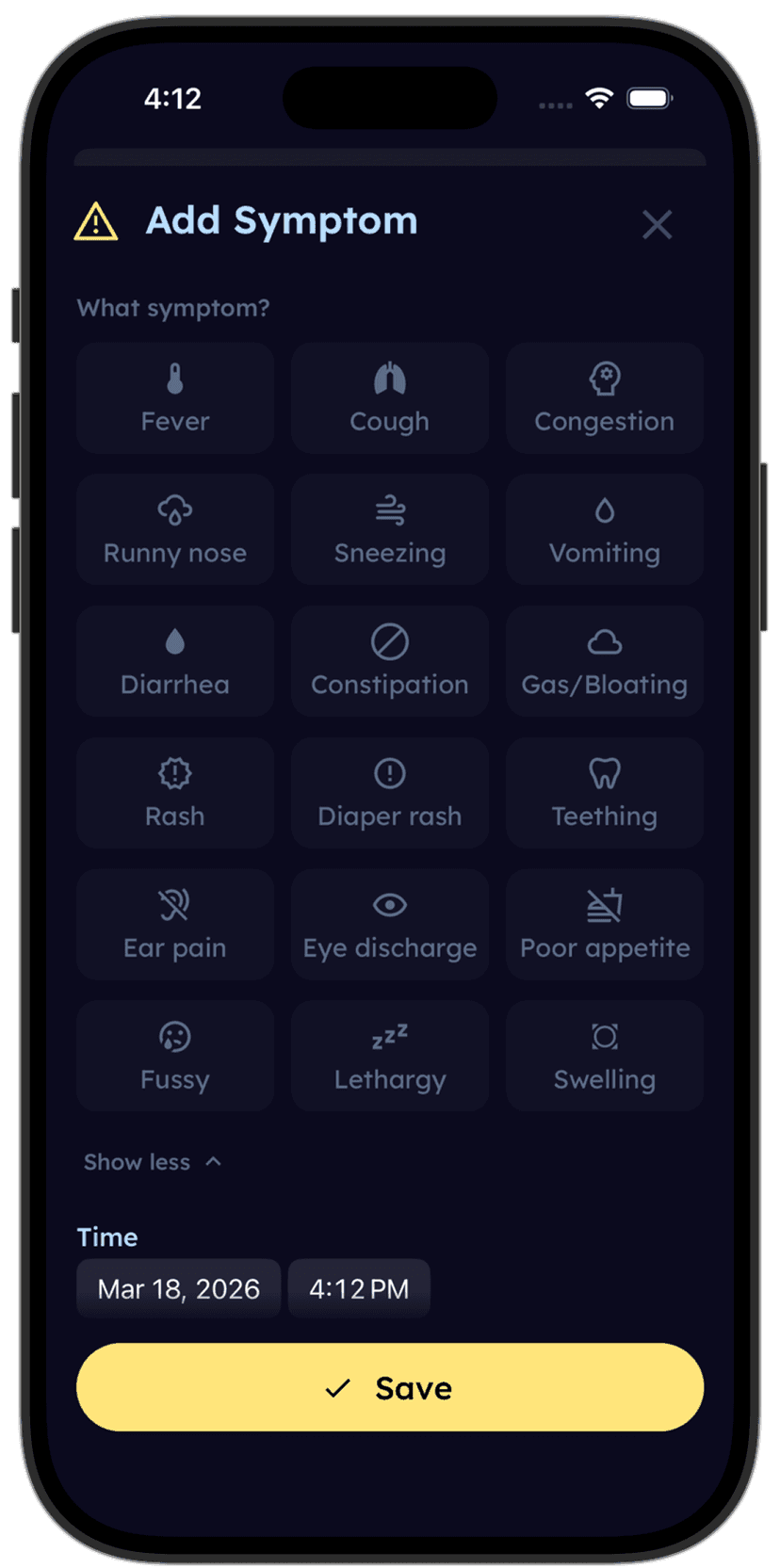
tinylog diaper tracking screen showing wet diaper count during illness monitoring

Every diaper counts — literally.

During illness, wet diaper count is the data point your pediatrician cares about most. Log every diaper change in tinylog with a single tap, and you will know exactly how many wet diapers your baby has had in the last 6, 12, or 24 hours. No guessing, no forgetting the 3 AM change. When dehydration is the concern, this data can make the difference between 'monitor at home' and 'come in now.'

Download on the App StoreGet It On Google Play

How to Check for Dehydration Signs at Home

Beyond counting wet diapers, there are several physical signs you can check at home. Practice these when your baby is healthy so you recognize changes during illness.

Fontanelle (soft spot) check. With your baby calm, upright, and not crying, gently place your fingertips on the anterior fontanelle — the diamond-shaped soft spot on the top of the head. In a well-hydrated baby, it should feel flat or very slightly curved. A sunken fontanelle — one that dips in noticeably, like a shallow bowl — suggests moderate to severe dehydration. Important caveat: the fontanelle can appear slightly sunken when a perfectly hydrated baby is sitting upright, and it may bulge slightly during crying. Always assess when the baby is calm.

Tear check. Does your baby produce tears when crying? In the first few weeks of life, many babies do not produce visible tears — the lacrimal glands are still maturing. But by one to two months, tears should be present during crying. During illness, if a baby who normally produces tears is crying without any, that is a significant dehydration sign.

Mouth and lips. Look inside your baby's mouth. The tongue and gums should look moist and glistening. Dry, sticky-looking mucous membranes or a tongue that appears coated and dry are signs of dehydration. Cracked lips are a later sign and suggest more significant fluid loss.

Skin turgor test. Gently pinch a small fold of skin on your baby's abdomen between your thumb and forefinger. Hold for one to two seconds, then let go. Well-hydrated skin snaps back instantly — like releasing a rubber band. Dehydrated skin stays pinched or "tented" for one to two seconds (moderate dehydration) or longer (severe dehydration). This test is less reliable in very young infants with naturally loose skin and in babies with more subcutaneous fat, but a clear positive result is always meaningful.

Capillary refill test. Press firmly on your baby's fingertip or toenail for two seconds, then release. The nail should turn white under pressure and then "pink up" again within two seconds. If the color takes longer than three seconds to return, it may indicate poor circulation from dehydration (or other causes) and warrants medical evaluation.

Prevention and Rehydration During Illness

Frequent, small feedings for breastfed babies

If your baby is vomiting or has diarrhea, offer the breast more frequently than usual — every one to two hours if they will take it. Even if they only nurse for a few minutes at a time, those small volumes add up. Breast milk is absorbed quickly and is less likely to be vomited back up than larger volumes.

Small-volume formula for formula-fed babies

Offer one to two ounces of formula every 30-60 minutes instead of the usual larger feedings. Smaller volumes are less likely to trigger vomiting. Do not dilute formula — keep it at the standard concentration. If your baby cannot keep even small amounts down, call your pediatrician.

Oral rehydration solution (ORS) when recommended

Pedialyte or a generic equivalent replaces both fluid and the specific electrolytes lost during vomiting and diarrhea. Offer one teaspoon (5 mL) every one to two minutes. Yes, this is painfully slow, but it works. A baby who vomits up 4 ounces at once can often keep down one teaspoon at a time. Do not use sports drinks, soda, fruit juice, or homemade salt-sugar water — the electrolyte balance is wrong and can make things worse.

Syringe or spoon feeding as backup

If your baby is refusing the bottle or breast but needs fluid, try offering small amounts by syringe (without the needle) or from a spoon. Aim for one to two mL into the cheek every few minutes. This bypasses the sucking reflex and can work when nothing else will.

Popsicles for older babies and toddlers

For babies over 12 months, frozen Pedialyte popsicles can be a lifesaver. Toddlers who refuse to drink from a cup will often happily lick a popsicle. You can buy them pre-made or freeze Pedialyte in popsicle molds. Each popsicle delivers a meaningful amount of fluid and electrolytes.

Common Causes of Dehydration in Babies

Dehydration is not a disease — it is a consequence of other problems. The most common triggers are:

Vomiting and diarrhea. Viral gastroenteritis (stomach bugs) is the leading cause of dehydration in young children worldwide. The combination of fluid loss from both ends, combined with the baby's inability or refusal to take in fluids, creates a rapid deficit. See our baby diarrhea guide for managing the underlying illness.

Fever. Every degree of fever above normal increases insensible fluid losses through the skin and respiratory system. A baby with a sustained fever of 102-103F is losing more fluid than usual just by breathing, even if there is no vomiting or diarrhea. This is why pediatricians emphasize "push fluids" during febrile illness.

Reduced intake. A baby who is too congested to nurse effectively, too nauseated to eat, or simply refusing feeds for any reason will develop a fluid deficit over time. Oral thrush, hand-foot-and-mouth disease sores, and sore throats can all make feeding painful, reducing intake.

Heat exposure. Babies cannot regulate their body temperature as effectively as adults. Hot weather, over-bundling, or a hot car (even briefly) can cause significant fluid loss through sweating and increased respiratory rate.

Inadequate feeding. In the first weeks of life, before breastfeeding is established or if formula preparation is incorrect, a baby may simply not be getting enough fluid to meet their needs. This is one reason that newborn weight checks and diaper counts in the early days are so important.

Practical Tips for Monitoring Hydration

Count wet diapers like they are currency

During illness, the single most important thing you can track is wet diaper output. Forget everything else for a moment — are the diapers wet? Are they getting less wet over time? A running count over 24-hour periods gives you an objective measure of hydration that no other home assessment can match. This is the first thing your pediatrician will ask about.

Learn the fontanelle check

The fontanelle is your baby's built-in hydration gauge. Practice feeling it when your baby is well so you know their normal. Place your fingertips gently on the soft spot when baby is calm, upright, and not crying. Normal is flat to very slightly concave. Get familiar with this feeling now — you will notice a change much faster if you already know the baseline.

Weigh diapers during serious illness

If you are closely monitoring hydration, weighing diapers can give you precise data. A dry disposable newborn diaper weighs about 25-30 grams. Weigh each diaper before and after — the difference is the fluid output in grams, which is roughly equivalent to milliliters. This level of precision is rarely necessary, but it is an option when you need it.

Dehydration can sneak up fast

A baby who seemed okay at noon can be moderately dehydrated by bedtime if they have been vomiting or having diarrhea all day. Do not reassess only when you happen to think of it — set a mental or actual timer to check in every few hours. Look at the diaper, check the fontanelle, look at their eyes and mouth. Catching the slide from mild to moderate early is the whole game.

Related Guides

Sources

  • American Academy of Pediatrics (AAP). (2024). Signs of Dehydration in Infants and Children. HealthyChildren.org.
  • World Health Organization. (2023). The Treatment of Diarrhoea: A Manual for Physicians and Other Senior Health Workers. WHO.int.
  • Freedman, S. B., et al. (2015). Oral Ondansetron for Gastroenteritis in a Pediatric Emergency Department. New England Journal of Medicine, 354(16), 1698-1705.
  • Guarino, A., et al. (2014). European Society for Pediatric Gastroenterology, Hepatology, and Nutrition/European Society for Pediatric Infectious Diseases Evidence-Based Guidelines for the Management of Acute Gastroenteritis in Children in Europe. JPGN, 59(1), 132-152.
  • Steiner, M. J., et al. (2004). Is This Child Dehydrated? JAMA, 291(22), 2746-2754.
  • Gorelick, M. H., et al. (1997). Validity and Reliability of Clinical Signs in the Diagnosis of Dehydration in Children. Pediatrics, 99(5), e6.

Medical Disclaimer

This guide is for informational purposes only and is NOT a substitute for professional medical advice. When in doubt, always call your pediatrician. If your baby is under 3 months with a fever, having difficulty breathing, showing signs of dehydration, or seems seriously unwell, seek immediate medical attention.

Get this guide in your inbox.
We'll email you the dehydration checklist so you can reference it during illness without having to search.
Track wet diapers during illness — it's your best early warning.
Download tinylog free — log diaper changes with a single tap.
Download on the App StoreGet It On Google Play