
GUIDE
Similac 360 Total Care vs. Enfamil Gentlease
Published on ·Updated on
Both are solid formulas, but they solve different problems. Similac 360 Total Care is a full-nutrition standard formula with HMO prebiotics. Enfamil Gentlease is specifically designed for fussy, gassy babies with partially broken-down proteins. Pick based on your baby's tummy, not the label.
Similac 360 Total Care and Enfamil Gentlease are two of the top-selling infant formulas in the US, but they're not direct competitors — they target different needs. Similac 360 is Abbott's flagship standard formula. Enfamil Gentlease is Reckitt's gentle/sensitive option with hydrolyzed proteins. Understanding what each one actually does will save you a lot of 3 AM panic-Googling.
Log bottles, spit-ups, and formula changes
“Partially hydrolyzed formulas can be helpful if your baby is very fussy, gassy or colicky.”
 Dr. Matthew Badgett, MD, Pediatrician, Cleveland Clinic
These Formulas Solve Different Problems
Here's the thing most comparison articles won't tell you upfront: Similac 360 Total Care and Enfamil Gentlease aren't really in the same category. Comparing them is like comparing regular Tylenol to Tylenol Extra Strength — related products, different jobs.
Similac 360 Total Care is Abbott's premium standard formula. It's designed for babies who don't have digestive issues. Its standout feature is 5 HMO prebiotics — the same types of immune-supporting sugars found naturally in breast milk.
Enfamil Gentlease is Reckitt's formula for babies with sensitive tummies. It uses partially hydrolyzed (broken-down) proteins and swaps most of the lactose for corn syrup solids. It's engineered to reduce fussiness, gas, and crying — and clinical data shows it can work within 24 hours.
If your baby is doing fine on standard formula, Similac 360 is the stronger overall formula. If your baby is miserable after every bottle, Gentlease exists for exactly that reason.
For context on how much your baby should be eating, check our baby feeding chart.
| Feature | Similac 360 Total Care | Enfamil Gentlease | What It Means |
|---|---|---|---|
| Manufacturer | Abbott Nutrition | Reckitt / Mead Johnson | Both are major, established infant nutrition companies with decades of research. |
| Formula type | Standard milk-based | Gentle / partially hydrolyzed | Different categories. Similac 360 is a general-purpose formula. Gentlease targets fussy, gassy babies. |
| Protein source | Intact nonfat milk + whey protein concentrate | Partially hydrolyzed nonfat milk + whey protein concentrate | Gentlease proteins are broken down for easier digestion. Similac 360 uses whole proteins. |
| HMO prebiotics | Yes — 5 HMO types (2'-FL, 3-FL, 3'-SL, 6'-SL, LNT) | No HMOs | Similac 360 wins here. HMOs support gut and immune development and are found naturally in breast milk. |
| DHA / ARA | Yes — from Crypthecodinium cohnii oil and Mortierella alpina oil | Yes — from single-cell oils | Both include DHA and ARA for brain and eye development. Amounts are comparable. |
| Carbohydrate source | Lactose (primary) | Corn syrup solids (70%) + lactose (30%) | Similac uses full lactose. Gentlease replaces most lactose with corn syrup solids to reduce gas and fussiness. |
| Palm oil free | Yes — no palm olein oil | No — contains palm olein oil | Similac's palm-oil-free blend may improve calcium absorption and produce softer stools. |
| Iron content | 1.8 mg per 100 kcal | 1.8 mg per 100 kcal | Tie. Both are iron-fortified and meet AAP recommendations. |
| Prebiotics / probiotics | 5 HMOs (prebiotic) | GOS + polydextrose (dual prebiotic blend) | Both support gut health but through different mechanisms. Similac's HMOs are structurally closer to breast milk prebiotics. |
| Available forms | Powder, ready-to-feed (2 fl oz, 32 fl oz) | Powder, ready-to-feed (2 fl oz, 6 fl oz, 32 fl oz) | Gentlease has a slight edge with more ready-to-feed size options. |
| Soy-free | Contains soy (soy oil) | Contains soy (soy oil) | Tie. Neither is soy-free. Both use soy oil as a fat source. |
The Protein Question: Intact vs. Partially Hydrolyzed
This is the core difference between these two formulas, and it matters a lot.
Similac 360 Total Care uses intact cow's milk proteins — full-size protein molecules that your baby's digestive system breaks down naturally. This is fine for most babies and is how standard formulas work.
Enfamil Gentlease uses partially hydrolyzed proteins — the manufacturer has already broken the protein molecules into smaller pieces before they reach your baby. Think of it as pre-chewing food. Your baby's gut has less work to do, which means less gas production, less bloating, and less fussiness.
Here's the catch: partially hydrolyzed proteins taste slightly bitter. Most babies don't care (especially if they start on Gentlease), but if you're switching from a standard formula or breast milk, your baby might make a face for a day or two. They almost always adjust.
Important: Partially hydrolyzed is NOT the same as extensively hydrolyzed (like Nutramigen or Alimentum). If your baby has a confirmed cow's milk protein allergy, Gentlease is not sufficient — you need a fully hydrolyzed or amino acid-based formula prescribed by your pediatrician.
The Carb Situation: Lactose vs. Corn Syrup Solids
This one gets parents worked up, so let's be real about it.
Similac 360 Total Care uses lactose as its primary carbohydrate — the same sugar found in breast milk. Nutritionally, this is the gold standard for infant formula carbohydrates.
Enfamil Gentlease replaces about 70% of the lactose with corn syrup solids. Before you panic: corn syrup solids are NOT high-fructose corn syrup. They're glucose polymers — simple, easily digestible carbohydrates that have been used in infant formula for decades. The FDA considers them safe and nutritionally appropriate for infants.
Why the swap? Because some babies don't fully digest lactose in the early months, and undigested lactose ferments in the gut, producing gas. Reducing lactose reduces gas. It's that straightforward.
If your baby isn't gassy, the full-lactose formula (Similac 360) is nutritionally preferable. If your baby IS gassy, the reduced-lactose formula (Gentlease) trades a minor carbohydrate difference for a major comfort improvement.
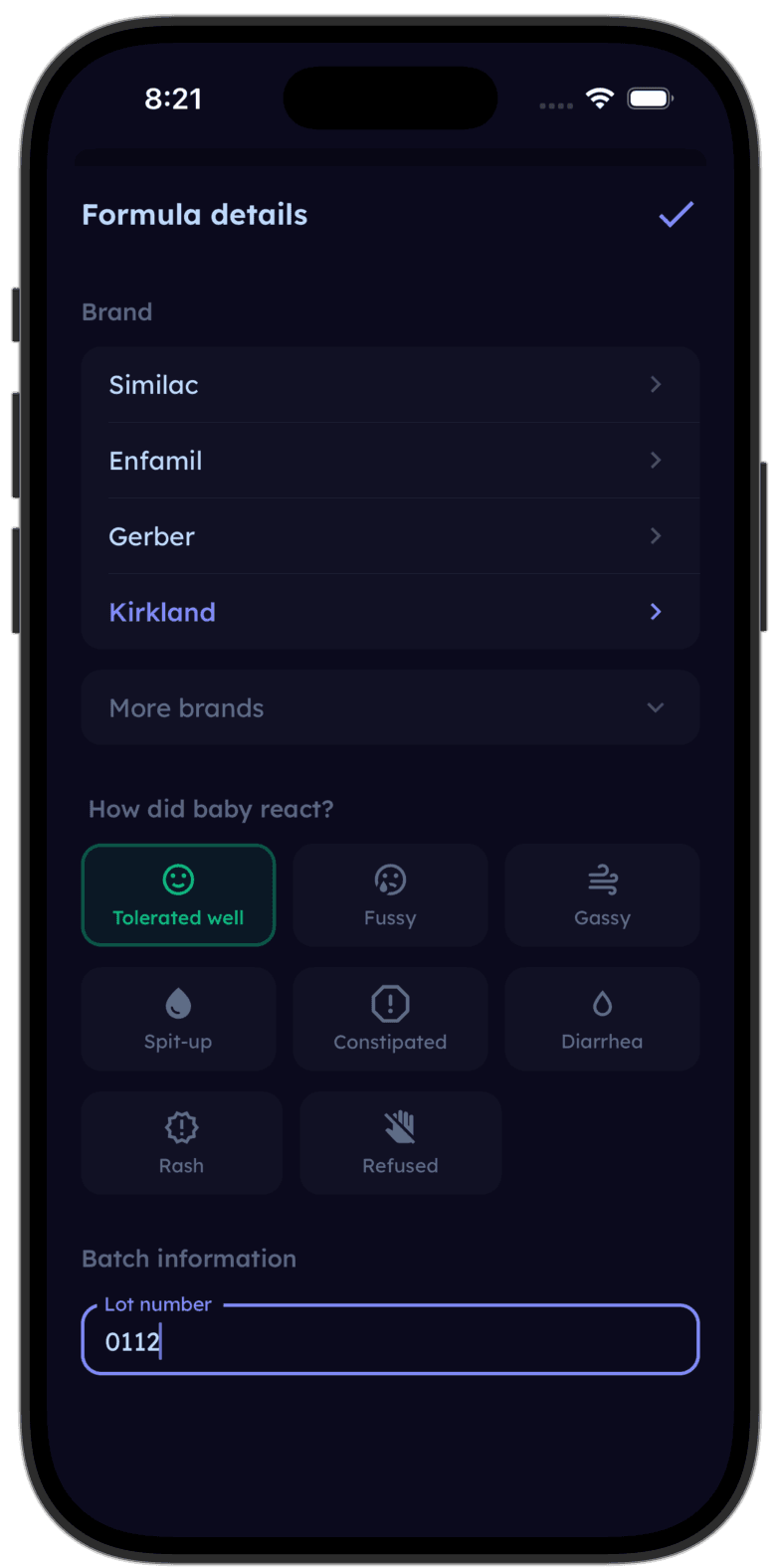
Tinylog tracks bottles so you can spot feeding patterns.
Log formula feeds, note spit-ups and fussiness, track daily intake in ounces. Bring the data to your next pediatrician visit.


HMOs: Similac's Biggest Advantage
Human milk oligosaccharides (HMOs) are the third most abundant component in breast milk after lactose and fat. They're not digestible by the baby — they feed beneficial gut bacteria and support immune development.
Similac 360 Total Care includes 5 types of HMOs: 2'-FL, 3-FL, 3'-SL, 6'-SL, and LNT. This is the broadest HMO blend in any US infant formula as of 2026. Research published in the Journal of Nutrition has shown that HMO-supplemented formulas support immune cell development closer to breastfed infant levels.
Enfamil Gentlease does not contain HMOs. It uses a GOS (galactooligosaccharide) and polydextrose prebiotic blend instead, which supports gut health but through a different mechanism.
If you're supplementing breast milk or want the closest thing to breast milk's immune-supporting components, this is a meaningful advantage for Similac 360.
| Product | Typical Price | Cost Per Prepared Ounce | Monthly Estimate |
|---|---|---|---|
| Similac 360 Total Care Powder (30.8 oz tub) | $37–$44 | ~$1.20–$1.43 | ~$150–$185 |
| Enfamil Gentlease Powder (27.7 oz tub) | $33–$40 | ~$1.19–$1.44 | ~$140–$175 |
| Similac 360 Total Care Ready-to-Feed (32 fl oz) | $11–$14 | ~$0.34–$0.44 | ~$250–$330 |
| Enfamil Gentlease Ready-to-Feed (32 fl oz) | $10–$13 | ~$0.31–$0.41 | ~$230–$310 |
Price: Both Will Hit Your Wallet Similarly
Formula is expensive no matter which brand you pick. The cost difference between Similac 360 Total Care and Enfamil Gentlease is small — usually within $5–$10 per month for powder.
Ways to save real money on formula:
- Store brands are legit. Kirkland ProCare (Costco) and Parent's Choice (Walmart) meet identical FDA nutritional standards at 30–50% less cost.
- Subscribe and save. Amazon, Target, and Walmart all offer 5–15% off recurring formula deliveries.
- Buy powder, not ready-to-feed. Ready-to-feed is convenient but costs roughly 2x more per ounce. Use it for travel and nightstand bottles; use powder for daily feeds.
- Check manufacturer coupons. Both Similac (via StrongMoms) and Enfamil (via Family Beginnings) offer signup rewards and regular coupons worth $5–$15.
- WIC covers both. If you qualify for WIC, both Similac and Enfamil products are covered in most states.
Choose Similac 360 Total Care If
- Your baby tolerates standard formula without excessive gas or fussiness
- You want HMO prebiotics that are structurally similar to those in breast milk
- You prefer a palm-oil-free formula for better calcium absorption
- You're supplementing breast milk and want the closest nutritional match
- Your baby has firm or hard stools (palm-oil-free blends tend to produce softer stools)
- Lactose as the primary carbohydrate matters to you
Choose Enfamil Gentlease If
- Your baby is fussy, gassy, or has frequent crying after feeds
- Your pediatrician recommended a gentle or sensitive formula
- Your baby spits up more than average with standard formula
- You want partially hydrolyzed proteins that are easier to digest
- Your baby seems uncomfortable or strains during digestion
- You're switching from breast milk and your baby isn't tolerating standard formula
Where to Buy
If your baby handles standard formula well, Similac 360 Total Care (~$1.30/prepared oz in powder) is the stronger overall formula — 5 HMO prebiotics, palm-oil-free fat blend, full lactose, and the broadest prebiotic profile on the market. Grab the big tub from Amazon or Costco for the best per-ounce price.
If your baby is gassy, fussy, or crying more than you'd expect after feeds, Enfamil Gentlease (~$1.30/prepared oz in powder) was literally designed for this. The partially hydrolyzed proteins and reduced lactose can make a noticeable difference within 24 hours. Worth trying before escalating to a fully hydrolyzed formula.
Real talk: if you're not sure which one your baby needs, start with a standard formula. If your baby seems uncomfortable, talk to your pediatrician about switching to a gentle option. Most formula switches are totally fine and don't require a transition period.
Tinylog earns a small commission on purchases made through these links, at no cost to you.
Tip: check promo.new before purchasing. It's hit or miss depending on the product, but when it hits, you'll be glad you checked.
The Bottom Line
Similac 360 Total Care is the better formula if your baby doesn't have digestive issues. The HMO prebiotics, palm-oil-free blend, and full-lactose carbohydrate source make it nutritionally superior on paper.
Enfamil Gentlease is the better formula if your baby is fussy and gassy. The partially hydrolyzed proteins and reduced lactose content directly address the most common formula-feeding complaints. No amount of HMOs will matter if your baby is screaming after every bottle.
The right formula is the one your baby tolerates well, gains weight on, and doesn't cause excessive discomfort. That's it. Don't overthink it.
If you're tracking feeds — which is genuinely helpful during the newborn period and when switching formulas — Tinylog makes it easy to log bottles, track ounces, and note how your baby responds to changes. Whichever brand you go with, sign up for free recall alerts to get notified if your formula is ever recalled.
Related Guides
- Baby Feeding Chart — How much your baby should eat by age
- Baby Constipation — What's normal and when to worry
- Baby Gas — Causes, relief, and when it signals something more
- Baby Spit-Up — Normal spit-up vs. reflux and when to call your doctor
Sources
- Abbott Nutrition. "Similac 360 Total Care — Product Information and Ingredients." similac.com, 2026.
- Mead Johnson / Reckitt. "Enfamil Gentlease — Product Information and Ingredients." enfamil.com, 2026.
- Marriage BJ, et al. "Infants Fed a Lower Calorie Formula With 2'-FL Show Growth and 2'-FL Uptake Like Breast-Fed Infants." Journal of Pediatric Gastroenterology and Nutrition, 2015;61(6):649-658.
- Reverri EJ, et al. "Review of the Clinical Experiences of Feeding Infants Formula Containing the Human Milk Oligosaccharide 2'-Fucosyllactose." Nutrients, 2018;10(10):1346.
- American Academy of Pediatrics. "Choosing an Infant Formula." healthychildren.org, 2024.
- Consumer Reports. "Best Baby Formulas of 2026." consumerreports.org, 2026.
- Mommyhood101. "Similac 360 Total Care Review." mommyhood101.com, 2025.
- FDA. "Infant Formula Guidance Documents & Regulatory Information." fda.gov, 2025.
This guide is for informational purposes only and is not medical advice. Formula choice should be discussed with your pediatrician, especially if your baby has allergies, reflux, or other digestive concerns. If your baby shows signs of a cow's milk protein allergy (blood in stool, severe vomiting, hives), contact your pediatrician immediately.
Frequently asked questions
- Is Similac 360 Total Care good for gassy babies?
- Similac 360 Total Care is a standard formula and does not contain partially hydrolyzed proteins. If your baby is consistently gassy or fussy after feeds, Enfamil Gentlease or a similar gentle formula with broken-down proteins may be a better fit. Some babies do fine on Similac 360 because of its HMO prebiotics, which support gut health — but it's not specifically designed for gas.
- Can I switch from Similac 360 Total Care to Enfamil Gentlease?
- Yes. You can switch formulas without a weaning period. Some pediatricians recommend mixing the old and new formula for a couple of days to ease the transition, but it's not medically required. Expect a few days of slightly different stools as your baby adjusts.
- Does Enfamil Gentlease taste different from regular formula?
- Yes. Because Enfamil Gentlease uses partially hydrolyzed proteins (broken-down milk proteins), it has a slightly bitter taste compared to standard formulas like Similac 360 Total Care. Most babies don't mind, but some picky eaters may resist the switch initially.
- Which formula is closer to breast milk?
- Similac 360 Total Care markets itself as the closest to breast milk, primarily because it includes 5 HMO prebiotics that are structurally similar to those found in human milk. Enfamil Gentlease does not contain HMOs. However, no formula perfectly replicates breast milk — both meet all FDA nutritional requirements for infant formula.
- Is Enfamil Gentlease good for reflux?
- Enfamil Gentlease can help with mild reflux symptoms because the partially hydrolyzed proteins are easier to digest, which may reduce spit-up frequency. However, it's not an anti-reflux (AR) formula. If your baby has significant reflux, ask your pediatrician about Enfamil AR or a formula with added rice starch.
- Are store-brand versions of these formulas just as good?
- Store-brand formulas must meet the same FDA nutritional standards as name brands. Kirkland (Costco), Parent's Choice (Walmart), and Up & Up (Target) all make versions comparable to Similac 360 and Enfamil Gentlease at 30–50% less cost. The active ingredients are functionally equivalent. The main differences are in branding and minor ingredients like specific prebiotic blends.