GUIDE

Tongue Tie and Breastfeeding

Tongue tie is real and can genuinely affect breastfeeding. But diagnosis rates have increased 10x in recent years, and the evidence on revision outcomes is more nuanced than many providers present.

This is one of the most divisive topics in breastfeeding. We're going to present the evidence as fairly as possible — including what we don't know yet.

The Most Divisive Topic in Breastfeeding

Tongue tie has become one of the most contentious subjects in infant feeding. On one side, there are providers and parents who believe tongue tie is vastly underdiagnosed and that revision is a simple, effective intervention. On the other, there are clinicians who worry that diagnosis has become a catch-all for breastfeeding difficulty and that revision is being performed too readily.

The truth, as with most things, is somewhere in the middle. Tongue tie is a real anatomical variation that can genuinely impair breastfeeding. It exists on a spectrum, and some ties cause significant problems while others cause none. The challenge is that our current diagnostic tools are imprecise, our evidence base is limited, and the financial incentives in this space are complicated.

This guide attempts to present the evidence fairly — including what we know, what we don't know, and what questions are still being debated.

Signs in Baby That May Suggest Tongue Tie

  • Difficulty latching or can't maintain latch — slips off repeatedly
  • Clicking, smacking, or loss of suction during nursing
  • Heart-shaped tongue tip when baby cries or tries to extend tongue
  • Tongue can't extend past the lower lip
  • Tongue can't lift to the roof of the mouth when crying
  • Poor weight gain despite frequent feeding and apparent effort
  • Excessive feeding time (45+ minutes consistently) without seeming satisfied
  • Milk dribbling from the sides of the mouth during feeds

These signs can also be caused by other factors — positioning, anatomy, prematurity, or other oral-motor issues. Tongue tie is one possible explanation, not the only one.

Signs in the Nursing Parent

  • Persistent nipple pain despite correct positioning and latch attempts
  • Nipple comes out flattened, creased, or lipstick-shaped after feeding
  • Cracked or damaged nipples that don't heal with standard interventions
  • Feeling like baby is 'chewing' rather than nursing
  • Recurrent clogged ducts or mastitis (from inefficient milk removal)
  • Low or declining supply despite frequent feeding (from poor milk transfer)

Again, these can have multiple causes. Persistent nipple pain is the most common reason tongue tie evaluation is sought — but latch issues cause the same symptoms.

What the Evidence Actually Says

Tongue tie diagnosis rates have exploded

Frenotomy (tongue tie revision) rates have increased approximately 10-fold in many countries over the past two decades. This dramatic increase has sparked debate: are we better at identifying a condition that was always there, or are we over-diagnosing? The honest answer is probably both — awareness has improved, but some providers have very low thresholds for diagnosis and revision.

The Cochrane review is cautiously positive but limited

A 2017 Cochrane review on frenotomy for tongue tie found some evidence of short-term reduction in nipple pain but no consistent improvement in breastfeeding continuation or infant weight gain. The review noted that the quality of available studies was low and called for better research. This doesn't mean revision doesn't help — it means we can't definitively prove it does from current evidence.

Posterior tongue tie is especially controversial

Anterior (front) tongue ties are visible and relatively straightforward to assess. Posterior (back) tongue ties are harder to see, harder to diagnose consistently, and more controversial. Some providers diagnose posterior ties frequently; others question whether many posterior tie diagnoses represent normal anatomical variation.

Placebo and expectation effects are real

Studies that included sham (fake) procedures found that some parents reported improvement even when no actual revision was performed. This suggests that parental expectation, time passing, and concurrent lactation support may contribute to perceived improvement after revision.

Revision alone often isn't sufficient

Even when revision is appropriate, it's rarely a standalone fix. Post-revision exercises, bodywork, and — most importantly — ongoing lactation support to re-train latch are usually needed. A revision without follow-up IBCLC support is less likely to improve breastfeeding outcomes.

Getting Evaluated: A Balanced Approach

Start with an IBCLC

Before pursuing tongue tie evaluation, work with an IBCLC to optimize positioning and latch. Many breastfeeding difficulties attributed to tongue tie are actually fixable with positioning changes. An IBCLC can also perform a functional assessment of the tongue — not just looking at the frenulum, but evaluating how the tongue actually moves during feeding.

Get multiple opinions

Tongue tie diagnosis is subjective — there's no universally agreed-upon diagnostic criteria. If one provider diagnoses a tie, getting a second opinion is reasonable, especially before revision. An IBCLC, your pediatrician, and a pediatric ENT or dentist may all assess differently.

Functional assessment > appearance

A visible frenulum doesn't automatically mean a functional tongue tie. What matters is whether the frenulum restricts tongue movement in ways that impair feeding. A short frenulum in a baby who feeds well and gains weight doesn't need intervention.

Consider the provider's diagnostic pattern

Some providers diagnose tongue tie in a very high percentage of babies they see. If a provider tells you they find ties in 50%+ of the babies they evaluate, consider that their threshold may be lower than the general clinical consensus. This doesn't mean they're wrong — but it does mean a second opinion is wise.

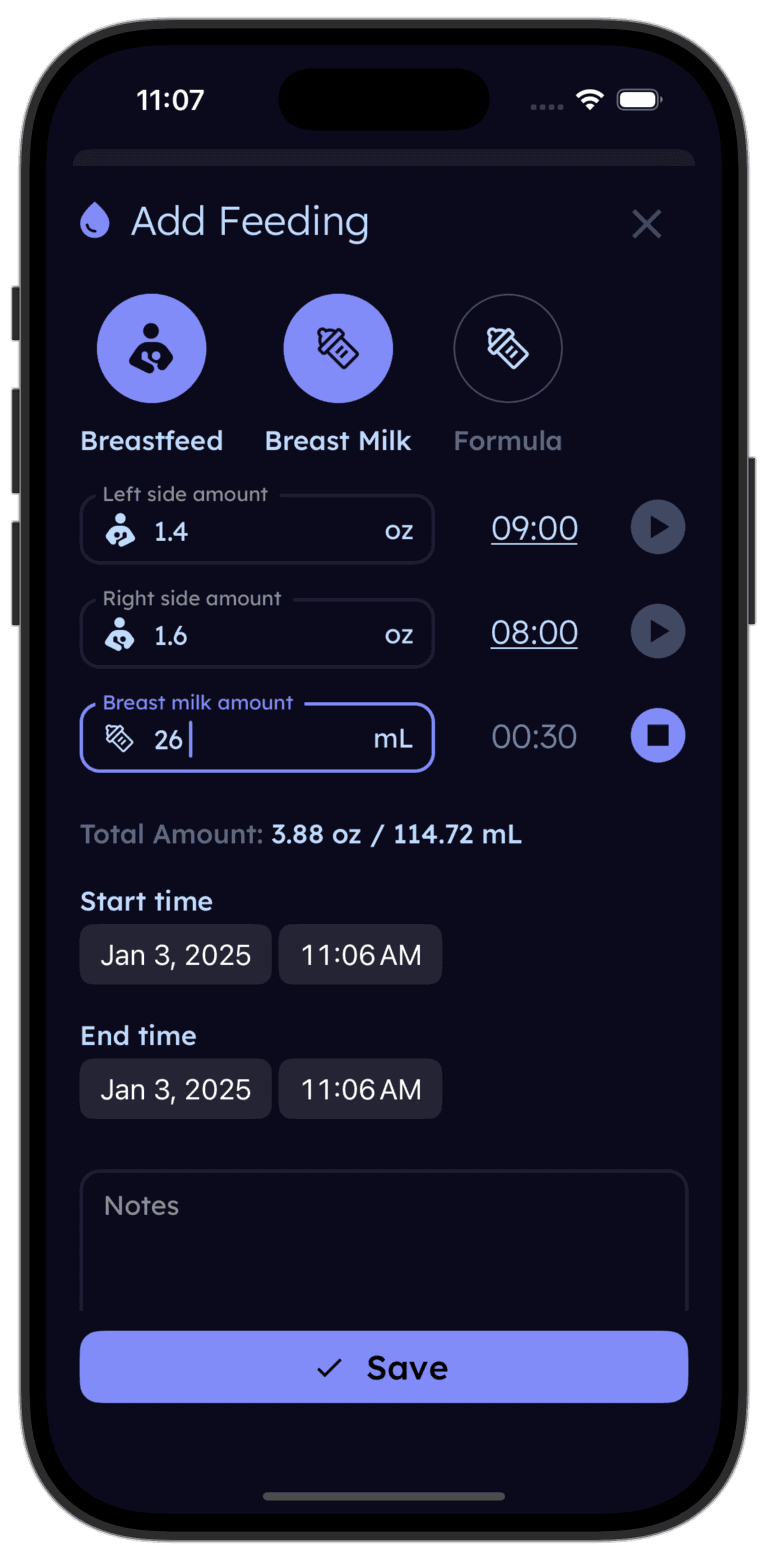
tinylog nursing log with session notes for tracking breastfeeding before and after tongue tie revision

If you're considering tongue tie revision, having detailed feed logs — session length, pain levels, latch quality, weight gain — before and after gives you objective data on whether it helped.

tinylog lets you log nursing sessions with notes and track weight over time. Share this data with your IBCLC and pediatrician to make decisions based on evidence, not hope.

Download on the App StoreGet It On Google Play

If Revision Is Recommended

If, after evaluation by multiple providers, tongue tie revision is recommended for your baby, here's what to know:

The procedure itself is quick. Frenotomy (cutting the frenulum) takes seconds and is usually done with sterile scissors or laser. Most babies cry briefly and can nurse immediately after. Bleeding is typically minimal.

Post-procedure exercises are usually recommended. Most providers prescribe oral stretching exercises to prevent the frenulum from reattaching. These can be uncomfortable for baby — follow your provider's guidance on frequency and technique.

Follow up with your IBCLC. Revision alone doesn't teach baby to use their newly freed tongue effectively. Ongoing lactation support to retrain latch after revision is critical. Many providers recommend an IBCLC visit within 1-2 days of the procedure.

Results vary. Some families see immediate improvement. Others see gradual improvement over weeks. Some see no improvement. If breastfeeding doesn't improve after revision, it's possible the tongue tie wasn't the primary issue — or that other factors need addressing.

Laser vs. scissors vs. electrocautery. All methods are used; none is definitively superior based on current evidence. The provider's skill and experience matter more than the tool.


When to Get Help and What Kind

See an IBCLC first: For latch assessment and functional tongue evaluation. Many breastfeeding problems attributed to tongue tie resolve with positioning changes alone.

See your pediatrician: For weight gain assessment and a medical perspective on whether tongue tie is affecting feeding.

See a pediatric ENT or pediatric dentist: If revision is being considered, these specialists can perform the procedure. An ENT evaluation can also rule out other oral-motor issues.

Get multiple opinions: Tongue tie diagnosis is subjective. If you're unsure, consulting 2-3 providers (IBCLC + pediatrician + specialist) gives you a more complete picture than any single provider's assessment.

If you're dealing with pain that may or may not be tongue-tie related, our painful breastfeeding guide covers all common causes. For latch-specific help, see our breastfeeding latch guide.

Related Guides

Sources

  • O'Shea, J. E., et al. (2017). Frenotomy for tongue-tie in newborn infants. Cochrane Database of Systematic Reviews.
  • Walsh, J., & Tunkel, D. (2017). Diagnosis and treatment of ankyloglossia in newborns and infants: A review. JAMA Otolaryngology-Head & Neck Surgery, 143(10).
  • Academy of Breastfeeding Medicine. (2004; updated ongoing). ABM Clinical Protocol #11: Guidelines for the Evaluation and Management of Neonatal Ankyloglossia and Its Complications in the Breastfeeding Dyad.
  • Ghaheri, B. A., et al. (2017). Breastfeeding improvement following tongue-tie and lip-tie release: A prospective cohort study. Laryngoscope, 127(5).
  • Hogan, M., et al. (2005). Randomized, controlled trial of division of tongue-tie in infants with feeding problems. Journal of Paediatrics and Child Health, 41(5-6).
  • American Academy of Pediatrics (AAP). (2022). Breastfeeding and the Use of Human Milk. Pediatrics, 150(1).

Medical Disclaimer

This guide is for informational purposes only and is not a substitute for professional medical advice. If you're experiencing breastfeeding difficulties, consider consulting an IBCLC (International Board Certified Lactation Consultant) or your pediatrician.

Get this evidence-based tongue tie guide in your inbox.
We'll send you this balanced look at tongue tie — so you can make informed decisions, not fear-driven ones.
Track feeding before and after any intervention — data shows what's working.
Download tinylog free — log feeds, output, and pain levels to see real changes over time.
Download on the App StoreGet It On Google Play