
GUIDE
Tubby Todd All Over Ointment vs. Pipette Baby Lotion
Published on
Tubby Todd All Over Ointment is a thick, multi-purpose balm that tackles dry patches, eczema flare-ups, and stubborn irritation. Pipette Baby Lotion is a lightweight, plant-derived daily moisturizer made for whole-body hydration. One is a targeted treatment; the other is an everyday staple.
Both products are clean, pediatrician-tested, and popular with parents who care about what goes on their baby's skin. But they serve different roles in a skincare routine. Tubby Todd's ointment is heavier and designed to heal problem spots. Pipette's lotion is lighter and meant for all-over, after-bath moisture. Choosing between them depends on what your baby's skin actually needs right now.
A Balm and a Lotion Walk Into a Nursery
Tubby Todd All Over Ointment and Pipette Baby Lotion both show up on "best baby skincare" lists constantly. Parents rave about both. But they are not interchangeable, and comparing them head-to-head is a little like comparing a winter coat to a T-shirt — both keep you covered, but they are built for different conditions.
Tubby Todd All Over Ointment is a thick, balm-like product packed with shea butter, jojoba oil, rosehip, and botanicals like calendula and chamomile. You scoop out a small amount and work it into problem spots — dry patches behind the ears, eczema on the cheeks, flaky cradle cap, or irritated diaper areas. It sits on the skin, creates a protective seal, and lets the oils do their work over time.
Pipette Baby Lotion is a lightweight, squalane-based moisturizer designed for daily, all-over use. You pump it out, spread it over your baby's entire body after a bath, and it absorbs in under a minute. No residue, no greasiness, no lingering scent.
The real question is not which one is "better." It is which one your baby's skin needs right now — and whether you need both.
| Feature | Tubby Todd All Over Ointment | Pipette Baby Lotion | What It Means |
|---|---|---|---|
| Brand | Tubby Todd (founded 2014, Utah-based) | Pipette (by Amyris, biotech-backed) | Tubby Todd is a family-founded indie brand. Pipette is backed by a biotech company that specializes in squalane production. |
| Product type | Thick all-over ointment / balm | Lightweight daily lotion | Different categories entirely. Ointment is heavier and more targeted; lotion is lighter and meant for full-body use. |
| Key ingredients | Shea butter, jojoba oil, rosehip oil, lavender, chamomile, calendula | Squalane (sugarcane-derived), shea butter, glycerin, jojoba esters | Both use plant-based ingredients. Tubby Todd leans on botanicals and essential oils; Pipette centers around biotech-produced squalane. |
| Texture | Thick, waxy, semi-solid balm | Lightweight, silky, fast-absorbing lotion | Very different feel. Tubby Todd sits on the skin as a protective barrier. Pipette absorbs quickly and vanishes. |
| Fragrance | Light natural scent from essential oils (lavender, chamomile) | Fragrance-free | Pipette wins for parents who want zero scent. Tubby Todd's scent is mild but present. |
| Best use case | Dry patches, eczema spots, cradle cap, diaper rash, cracked skin | Daily whole-body moisturizing after baths | Tubby Todd is a problem solver. Pipette is an everyday staple. They serve different roles. |
| Application area | Targeted — small amounts on specific areas | All-over — designed for full-body application | You use much less ointment per session than lotion, which affects how long each product lasts. |
| Skin types | Dry, very dry, eczema-prone, irritated skin | Normal to sensitive, daily maintenance | Tubby Todd is built for problem skin. Pipette is built for keeping healthy skin hydrated. |
| Free from | Parabens, sulfates, phthalates, synthetic fragrance, dyes | Parabens, phthalates, synthetic fragrance, dyes, SLS, mineral oil | Both have clean ingredient profiles. Pipette's formula is also EWG Verified. |
| Certifications | Pediatrician-tested, cruelty-free | EWG Verified, dermatologist-tested, hypoallergenic, cruelty-free | Pipette has more third-party certifications, including EWG Verified status. |
| Size options | 2 oz travel, 6 oz standard jar | 6 oz, 12 oz bottles | Pipette offers a larger size for daily use. Tubby Todd's smaller jars reflect its targeted-use nature. |
| Availability | TubbyTodd.com, Amazon, select boutiques | Pipettebaby.com, Amazon, Target, Walmart | Pipette is easier to find in stores. Tubby Todd is mostly online and direct-to-consumer. |
Texture and Feel: The Biggest Practical Difference
If you have never used Tubby Todd All Over Ointment before, the texture will surprise you. It is thick — almost like a soft wax or a very dense body butter. You warm a small amount between your fingers, then press it into the skin. It does not fully absorb. That is intentional. The ointment creates an occlusive barrier that traps moisture underneath and protects irritated skin from further exposure.
Pipette Baby Lotion is the opposite experience. It is silky, light, and disappears into the skin almost immediately. You can apply it generously over your baby's arms, legs, belly, and back without any sticky or greasy aftermath. Getting a onesie on right after application is not a problem.
For everyday post-bath moisturizing, the lotion is far more practical. For treating a specific rough patch on your baby's elbow or a dry spot behind the knee, the ointment's staying power is the whole point.
Ingredients: Clean but Different Philosophies
Both products check the "clean beauty" boxes — no parabens, no phthalates, no synthetic fragrances, no dyes. But they take different paths to get there.
Tubby Todd leans into traditional botanicals. The ingredient list reads like an herbalist's shelf: shea butter, jojoba oil, rosehip seed oil, lavender essential oil, chamomile extract, calendula flower extract. These ingredients have long histories in skin-soothing applications. The lavender and chamomile give the ointment a very mild, natural scent.
Pipette takes a more science-forward approach. The star ingredient is squalane — a hydrocarbon that occurs naturally in human skin but is produced here from sugarcane through a biotech fermentation process. Squalane is an exceptional moisturizer because it mimics the lipids your skin already produces, making it easy to absorb and very unlikely to cause reactions. The rest of the formula includes glycerin, shea butter, and jojoba esters.
One thing to note: Tubby Todd does contain essential oils. The vast majority of babies tolerate them without issue, but some pediatric dermatologists prefer to avoid essential oils on very young or eczema-prone skin. Pipette's fragrance-free, essential-oil-free formula may be the safer bet if your baby has already shown sensitivity.
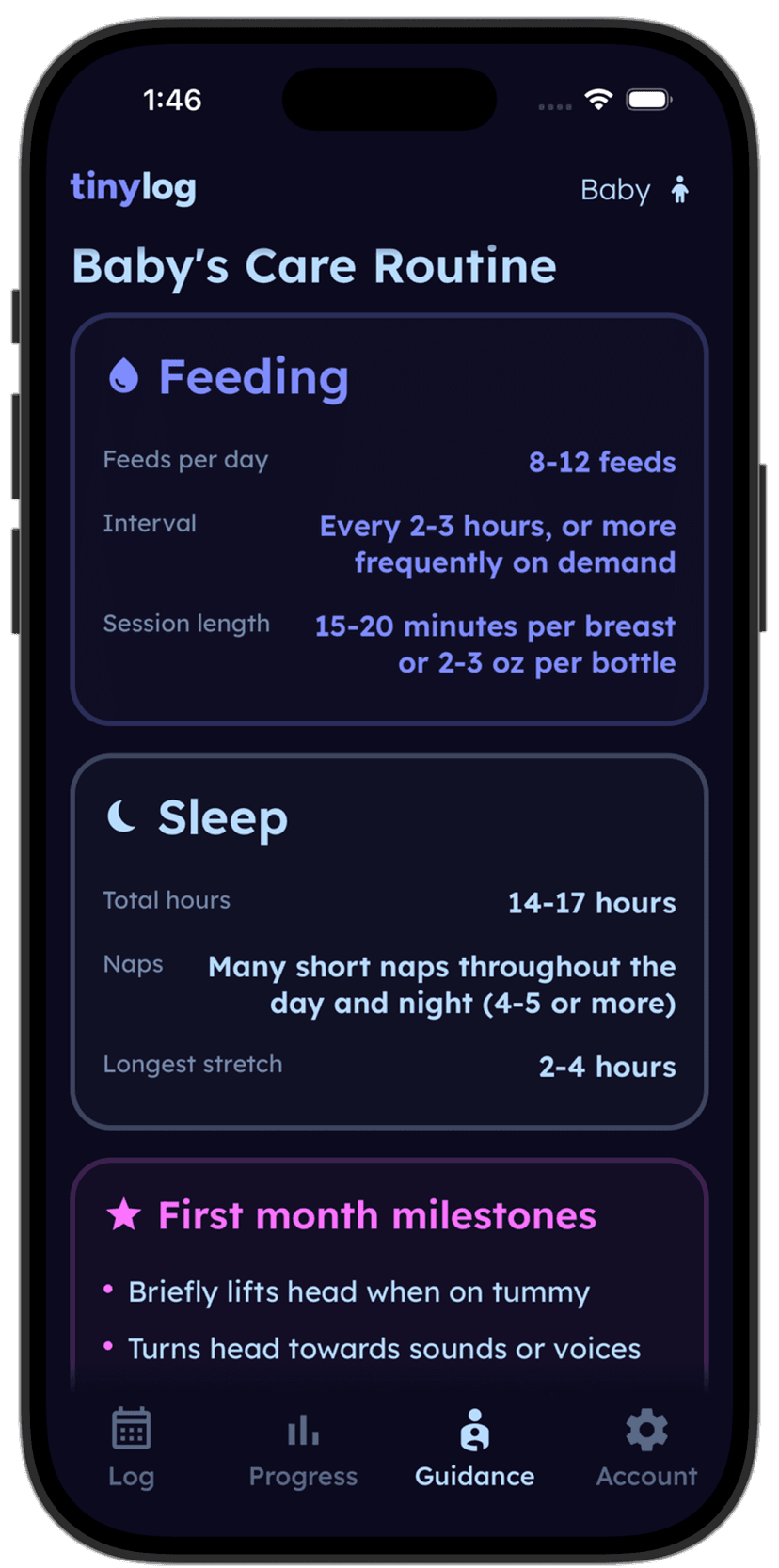
Tinylog tracks feedings so you can spot patterns.
Log every feeding, note skin changes, and track which products your baby tolerates. Bring the data to your next pediatrician visit.


| Product | Typical Price | Cost Per Ounce | Monthly Estimate |
|---|---|---|---|
| Tubby Todd All Over Ointment (6 oz jar) | $26–$32 | ~$4.30–$5.30 | ~$13–$22 (targeted use) |
| Tubby Todd All Over Ointment (2 oz travel) | $12–$15 | ~$6.00–$7.50 | Trial / travel size |
| Pipette Baby Lotion (6 oz) | $10–$13 | ~$1.70–$2.20 | ~$10–$18 (daily use) |
| Pipette Baby Lotion (12 oz) | $14–$18 | ~$1.17–$1.50 | ~$10–$16 (daily use) |
Price: Ointment Costs More Per Ounce, Less Per Use
At first glance, Tubby Todd looks significantly more expensive. A 6 oz jar runs $26–$32, compared to a 6 oz bottle of Pipette lotion at $10–$13. Ounce for ounce, the ointment costs roughly three times as much.
But here is where the math gets more nuanced. You do not use ointment the same way you use lotion. A small scoop of Tubby Todd — maybe the size of a pea — covers a dry patch on your baby's cheek. One jar can last 6–10 weeks with targeted use. Meanwhile, you are pumping out a palmful of Pipette lotion every single bath time to cover your baby's whole body. A 6 oz bottle of lotion might last 3–4 weeks.
When you factor in actual usage patterns, the monthly cost gap narrows considerably. Many families spend $13–$22/month on Tubby Todd (one jar every 6–10 weeks) and $10–$18/month on Pipette (one bottle every 3–5 weeks).
If budget is tight and you can only pick one, Pipette gives you the broader daily coverage at a lower price point. If your baby has specific problem areas that need attention, the Tubby Todd ointment may save you money on prescription creams down the road.
When to Use Each Product
The most helpful way to think about these two products is not as competitors but as teammates in a skincare lineup.
Use Pipette Baby Lotion when:
- You are doing a regular post-bath moisturizing routine
- Your baby's skin is generally healthy and just needs daily hydration
- You want quick-absorbing moisture that will not transfer to clothes or bedding
- You are applying product head to toe
Use Tubby Todd All Over Ointment when:
- Your baby has a dry, rough, or flaky patch that is not responding to regular lotion
- Eczema is flaring on cheeks, elbows, or behind the knees
- Cradle cap needs to be softened before gentle combing
- Diaper rash is developing and you want an extra barrier
- Winter weather or dry air has left your baby's skin cracked or irritated
Many parents keep both on the changing table — lotion for the routine, ointment for the rescue work.
Choose Tubby Todd All Over Ointment If
- Your baby has dry patches, eczema, or cracked skin that needs targeted repair
- You want a thick, occlusive barrier that locks in moisture for hours
- Cradle cap or stubborn flaky spots are a recurring issue
- You prefer a multi-purpose product that doubles for diaper rash and chapped cheeks
- You are comfortable with a mild natural scent from essential oils
Choose Pipette Baby Lotion If
- You need a lightweight daily moisturizer for after-bath hydration
- Your baby has generally healthy skin that just needs regular moisture
- Fragrance-free is non-negotiable for your family
- You want an EWG Verified product with strong third-party certifications
- Budget matters and you go through lotion quickly with full-body application
- You want something easy to find in stores like Target or Walmart
Where to Buy
If your baby's skin needs targeted repair work, Tubby Todd All Over Ointment (~$28 for 6 oz) is the product parents reach for when regular lotion is not cutting it. The thick, botanical-rich formula is beloved for tackling dry patches, eczema spots, and cradle cap. A little goes a long way, so one jar lasts longer than you would expect.
If you need a reliable daily moisturizer for healthy skin maintenance, Pipette Baby Lotion (~$14 for 12 oz) is a lightweight, squalane-based lotion that absorbs fast, leaves no greasy residue, and carries EWG Verified status. It is an excellent everyday staple at a very reasonable price.
Our honest take: if you can keep both on hand, that is the best setup. Pipette handles the daily routine. Tubby Todd handles the flare-ups. Your baby's skin will thank you either way.
Tinylog earns a small commission on purchases made through these links, at no cost to you.
Before you buy, it's worth checking promo.new for a deal. It doesn't cover everything, but we've had good luck with it.
The Bottom Line
Tubby Todd All Over Ointment and Pipette Baby Lotion are both high-quality baby skincare products — but they fill different roles.
Tubby Todd is the heavy hitter. Thick, protective, and packed with botanical oils, it excels at treating dry patches, eczema, cradle cap, and irritated skin. It costs more per ounce but is used sparingly on targeted areas.
Pipette is the daily workhorse. Lightweight, fragrance-free, and fast-absorbing, it keeps your baby's skin hydrated from head to toe without fuss. It costs less, absorbs faster, and works beautifully as a post-bath routine.
For babies with persistent dry or irritated skin, Tubby Todd is hard to beat. For everyday hydration with a clean, simple formula, Pipette is a standout. And for parents who want both bases covered — grab one of each.
If you are tracking feedings and want to note how your baby's skin responds to new products, Tinylog makes it easy to log patterns and share them with your pediatrician.
Sources
- TubbyTodd.com. "All Over Ointment — Ingredients and Product Information." 2026.
- Pipettebaby.com. "Baby Lotion — Ingredients and Product Information." 2026.
- Environmental Working Group. "EWG Verified: Pipette Baby Lotion." ewg.org.
- American Academy of Dermatology. "How to Care for Your Baby's Skin." aad.org.
- Healthline Parenthood. "Best Baby Lotions and Moisturizers." healthline.com, 2026.
- National Eczema Association. "Eczema and Bathing." nationaleczema.org.
- WhatToExpect.com. "Best Baby Lotions of 2026." whattoexpect.com.
Related Guides
This guide is for informational purposes only and is not medical advice. Every baby's skin is different. If your baby has persistent eczema, rashes, or skin irritation, consult your pediatrician or a pediatric dermatologist before starting any new skincare product.
Frequently asked questions
- Can I use Tubby Todd All Over Ointment on my newborn?
- Yes. Tubby Todd All Over Ointment is formulated for all ages including newborns. It is pediatrician-tested and free of common irritants like parabens, sulfates, and synthetic fragrance. Many parents start using it in the first few weeks to address cradle cap, dry patches, or diaper rash. As with any new product, test a small area first and watch for reactions.
- Is Pipette Baby Lotion safe for sensitive skin?
- Pipette Baby Lotion is designed for sensitive skin. It is dermatologist-tested, hypoallergenic, and free of parabens, phthalates, synthetic fragrances, and dyes. The formula uses squalane derived from sugarcane as a key moisturizing ingredient, which closely mimics the lipids naturally found in baby skin. Most babies tolerate it well.
- Can I use both products together?
- Absolutely. Many parents use Pipette Baby Lotion as the daily all-over moisturizer after bath time and then apply Tubby Todd All Over Ointment on specific problem areas like dry patches, eczema spots, or behind the ears. The lotion hydrates broadly, and the ointment treats locally. Using them together is a common and effective routine.
- Does Tubby Todd All Over Ointment help with baby eczema?
- Many parents report that Tubby Todd All Over Ointment helps manage mild to moderate eczema patches. The thick, occlusive formula locks in moisture and creates a protective barrier. However, it is not a prescription medication. If your baby has persistent or severe eczema, consult your pediatrician before relying on any over-the-counter product as a primary treatment.
- Why is Tubby Todd so much more expensive than Pipette?
- Tubby Todd is a smaller, direct-to-consumer brand with a concentrated formula. The ointment goes a long way because you only use small amounts on targeted areas. Pipette is more widely distributed and priced for daily whole-body use. Per application, the cost gap narrows significantly because you use far less ointment per use than you do lotion.
- Does Pipette Baby Lotion leave a greasy feel?
- No. Pipette Baby Lotion absorbs quickly and leaves a smooth, non-greasy finish. The squalane-based formula is lightweight by design. Most parents find it sinks in within a minute or two. This is one of the main differences from Tubby Todd's ointment, which is intentionally thick and leaves a protective layer on the skin.