GUIDE

When to Stop Using White Noise

There's no age where white noise becomes unsafe or where you must stop. You can keep using it as long as you follow the safety guidelines — or wean off whenever you're ready.

Here's how to know if your baby is ready, the best way to wean without wrecking sleep, and why there's no rush.

The Honest Answer: There's No Deadline

Let's start with the thing nobody tells you clearly enough: there is no age at which white noise becomes unsafe. The AAP has never issued an age-based recommendation to stop. No pediatric organization has set a cutoff. No study has found that white noise at safe levels causes harm at any age.

The reasons people do wean off white noise are practical, not medical:

  • Their child will be napping somewhere without a machine (daycare, preschool)
  • They want to simplify the bedtime routine
  • They're tired of bringing the machine on every trip
  • They want their child to be flexible about sleep environments

These are all valid reasons. But "my baby is X months old and should be past this" is not one of them. Adults use fans, sound machines, and sleep apps too. A consistent sound environment isn't a crutch — it's a preference.

Signs Your Baby Might Be Ready

Your baby may be ready to wean if...

  • Your baby sleeps through when the machine accidentally gets unplugged or the power goes out
  • Your baby sleeps well in different environments without white noise (car, stroller, grandparents' house)
  • Daycare or preschool naps are going fine without it
  • Your baby doesn't seem to notice or react when the sound turns off
  • You're not in the middle of any other transition (new bed, new sibling, potty training, sleep regression)

If several of these apply, your baby will likely handle the transition smoothly with a gradual approach.

Signs It's Not the Right Time

Consider waiting if...

  • You're in the middle of a sleep regression — this is the worst time to remove something that helps
  • You're about to transition to a toddler bed, drop a nap, or make another big change — one variable at a time
  • Your environment is genuinely noisy (shared walls, loud street, siblings) and the machine serves a real purpose
  • Your baby wakes every time the sound stops, even briefly
  • Sleep is already difficult and you'd be removing one of the few tools that's working

Timing matters more than age. A baby who's sleeping well at 18 months is a better candidate than a toddler in the middle of the 2-year sleep regression.

How to Wean Off White Noise (The Gradual Plan)

The approach that works for the vast majority of families is gradual volume reduction over 1 to 3 weeks. It's boring. It's slow. And it works — precisely because your baby barely notices each small change.

Week 1: Lower the volume at naptime

Start with daytime naps — they're lower stakes than nighttime. Turn the volume down by about 20 percent from where you normally set it. Your baby probably won't notice this small change. Keep everything else about the nap routine identical.

Days 4–7: Lower it a bit more

Drop another 20 percent. At this point, the sound should be noticeably quieter than what you started with, but still audible. If naps are going fine, you're on track. If your baby is struggling, stay at this level for a few more days before going further.

Week 2: Apply the same to nighttime

Once naps are stable at the lower volume, start reducing nighttime volume to match. Most babies handle this well because they've already adjusted during naps. Drop by 20 percent every 2 to 3 nights.

Week 2–3: Barely audible to off

By now the machine should be so quiet that you can barely hear it from across the room. Try turning it off entirely for a nap. If it goes well, try a night. If your baby sleeps through — you're done. If not, go back to barely audible for a few more days and try again.

Alternative: Switch sounds first

Some families find it easier to switch from white noise to pink or brown noise (softer, less noticeable at low volumes), then reduce volume. The softer frequency profile is easier to fade out gradually. This adds a few days to the process but can be smoother.

If it's not working: pause and try later

There is genuinely no deadline. If your baby is struggling and sleep is falling apart, put the machine back on and try again in a month or two. You haven't failed — you've just found out your baby isn't ready yet. Some kids wean at 12 months, some at 3 years, some adults still use fans. It's all normal.

For more on using white noise with toddlers specifically — including when it still actively helps — see our guide to white noise for toddlers.

But What About Dependency?

The word "dependency" gets thrown around a lot with baby sleep, and it usually creates more anxiety than clarity.

Here's a reframe: your baby associates white noise with sleep. They also associate a dark room, a specific crib, a certain temperature, and a bedtime routine with sleep. These are all sleep cues — environmental signals that tell the brain it's time to shift into sleep mode. Sleep cues are normal and useful at every age.

Adults have them too. You probably sleep better in your own bed, in a dark room, at a comfortable temperature. Some adults use a fan or a sleep mask or a specific pillow. These aren't dependencies — they're the conditions under which your brain does its best sleeping.

If you want to change those conditions, you can. It takes a bit of adjustment. But needing consistent conditions for good sleep is not a problem unless it's genuinely causing issues in your life.

If white noise is the only way your baby sleeps and it's creating real problems (can't nap at daycare, can't sleep at grandparents', can't travel without it), then working on flexibility makes sense. If it's working and you're just worried about the principle of the thing — it's fine to keep going.


Common Mistakes When Weaning

  • Going cold turkey — sudden silence is an environmental change that wakes most babies up
  • Weaning during a sleep regression, nap transition, or other big change — one variable at a time
  • Comparing your timeline to other families — every baby is different
  • Feeling guilty about still using it — there is no evidence that continued use at safe levels is harmful
  • Restarting at full volume after a pause — if you try again, start where you left off, not back at the beginning
  • Weaning for the wrong reason (social pressure, other parents' opinions) instead of because it makes sense for your family

The most common mistake isn't a technique problem — it's a timing problem. Pick a calm, stable period and give yourself permission to pause if needed.

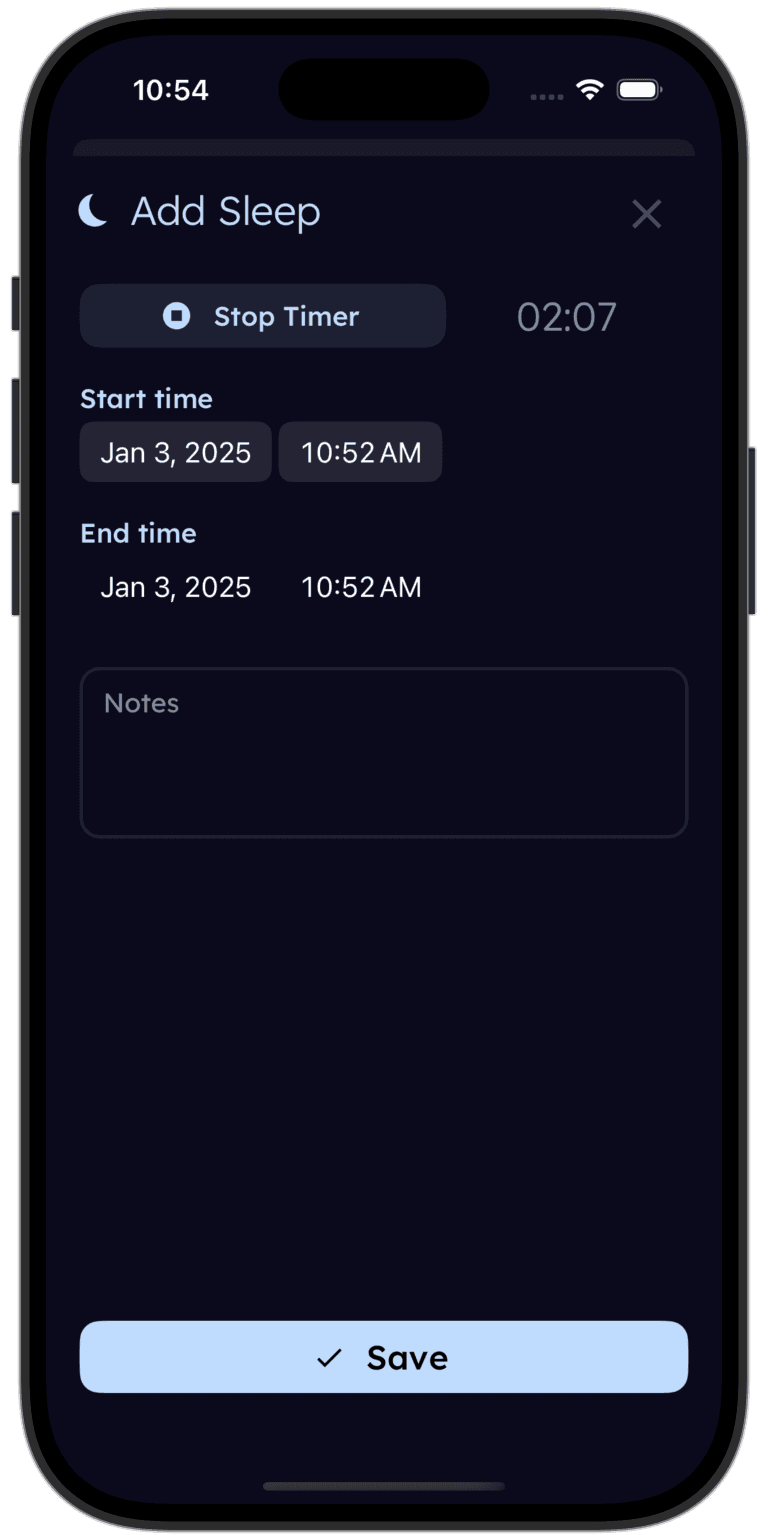
tinylog sleep tracker showing sleep trends during transitions

See how the weaning process affects sleep.

Log naps and night sleep during the transition — tinylog shows you whether sleep is actually changing or if you're just feeling anxious about it.

Download on the App StoreGet It On Google Play

Related Guides

Sources

  • American Academy of Pediatrics. (2023). Safe Sleep Guidelines and Recommendations. https://www.aap.org
  • Hugh, S. C., et al. (2014). Infant sleep machines and hazardous sound pressure levels. JAMA Pediatrics, 168(5), 404–406.
  • Mindell, J. A., et al. (2017). Sleep and Social-Emotional Development in Infants and Toddlers. Journal of Clinical Child & Adolescent Psychology.
  • Zero to Three. Helping Your Baby Sleep. https://www.zerotothree.org

Medical Disclaimer

This guide is for informational purposes only and is not a substitute for professional medical advice. If you have concerns about your child's sleep, please consult your pediatrician.

Want this guide in your inbox?
We'll send you the weaning plan so you can reference it when you're ready to make the transition.
Track how your baby sleeps through the transition.
Download tinylog free — log naps and night sleep to see if removing white noise actually changes anything.
Download on the App StoreGet It On Google Play