
GUIDE
Willow Go vs. eufy S1 Pro
Published on
Both are solid wearable pumps, but they are built for different priorities. The eufy S1 Pro wins on features and flexibility. The Willow Go wins on quiet operation and simplicity.
Wearable breast pumps have gotten shockingly good in the last couple of years. The Willow Go and eufy S1 Pro are two of the most popular options — and they take genuinely different approaches to the same problem. Here is what actually matters when you are choosing between them.
Log sessions, volumes, and feeding patterns
Two Good Pumps, Two Different Philosophies
The Willow Go and eufy S1 Pro are both fully wearable, in-bra breast pumps with hospital-grade suction. You can wear either one under a regular shirt and pump at your desk, on a Zoom call, or while doing bedtime with your toddler. That part is basically the same.
Where they differ is in how much control they give you — and what extras they pack in. The eufy S1 Pro is loaded with features: built-in heating, a wireless charging case, four flange sizes, and a genuinely good app. The Willow Go takes a more stripped-down approach: fewer modes, fewer parts, and the quietest motor you will find on any wearable pump.
Neither one is a bad choice. But depending on what drives you crazy about pumping — cold flanges, dead batteries, too many settings, not enough settings — one of these will probably fit your life better than the other.
| Feature | Willow Go | eufy S1 Pro | What It Means |
|---|---|---|---|
| Manufacturer | Willow (subsidiary of Willow Innovations) | eufy (Anker brand) | Willow is a breast-pump-first company. eufy is backed by Anker's massive hardware engineering resources. |
| Max suction | 280 mmHg (hospital-grade) | 300 mmHg (hospital-grade) | Both are hospital-grade. The 20 mmHg difference is unlikely to matter in practice — most people pump at lower settings. |
| Pumping modes | 2 modes (stimulation + expression), 15 total levels | 4 preset rhythms + custom mode, 7 suction levels, 3 speeds | eufy offers significantly more customization. You can dial in cycle speed and suction independently. |
| Heating feature | No | Yes — HeatFlow with 7 temperature settings (95–105°F) | eufy is one of the only wearable pumps with built-in warming. Warmth can help with letdown and comfort. |
| Milk capacity | 5 oz standard (7 oz containers sold separately) | 5 oz per cup | Tie at standard capacity. Willow has an edge if you need the 7 oz upgrade for high-output sessions. |
| Battery life | ~3 sessions per charge (USB-C) | 4–8 sessions per charge + wireless charging case (~5 days) | eufy wins clearly here. The charging case means you rarely think about battery life. |
| Flange sizes included | 2 sizes (21 mm and 24 mm) | 4 sizes (17, 19, 21, and 24 mm) via inserts | eufy includes twice as many size options out of the box. Proper flange fit matters for comfort and output. |
| Noise level | Near-silent | ~46 dB (very quiet) | Willow Go is slightly quieter. Both are discreet enough for office or public use. |
| Parts to clean | 5 parts (dishwasher-safe) | 4 parts (dishwasher-safe) | Slight edge to eufy. One fewer part adds up over hundreds of wash cycles. |
| App experience | Willow app — basic logging, Bluetooth pairing | eufy app — session tracking, pre-warm scheduling, custom rhythm saving | eufy's app is more polished and feature-rich. The Willow app has been criticized for bugs and slow updates. |
| Flange material | Firmer one-piece hard silicone | Soft velvety silicone with 105° angle | eufy's softer silicone and angled design are more comfortable for most users. |
The Heating Feature Is a Bigger Deal Than You Think
The single most talked-about feature on the eufy S1 Pro is HeatFlow — a built-in warming element that heats the silicone flange to between 95°F and 105°F across seven settings.
Why does this matter? Warmth promotes milk letdown. If you have ever used a warm compress before pumping, you know the difference it makes. The eufy builds that step right into the pump. You can even schedule the pump to pre-warm via the app up to 15 minutes before your session, so it is ready when you are.
The Willow Go does not have a heating feature. You can still use a warm compress separately, but it is an extra step — and when you are pumping five or six times a day, extra steps add up fast.
If you struggle with letdown or pump in cold environments (hello, over-air-conditioned offices), the heating feature alone might be enough to tip the scales toward the eufy.
Battery Life: One Clear Winner
The Willow Go gets about 3 pumping sessions per charge. If you are exclusively pumping 6–8 times a day, that means charging the pump twice a day. It charges via USB-C, which is convenient, but you need to remember to do it between sessions.
The eufy S1 Pro gets 4–8 sessions per charge on its own. But the real advantage is the wireless charging case — just drop the pumps in after each session, and the case keeps them topped off. Fully charged, the case provides roughly 5 days of regular pumping without plugging into a wall.
For working parents who pump at the office and at home, the eufy's charging case is a genuine quality-of-life improvement. You toss the pumps in the case, throw the case in your bag, and basically stop thinking about battery life.
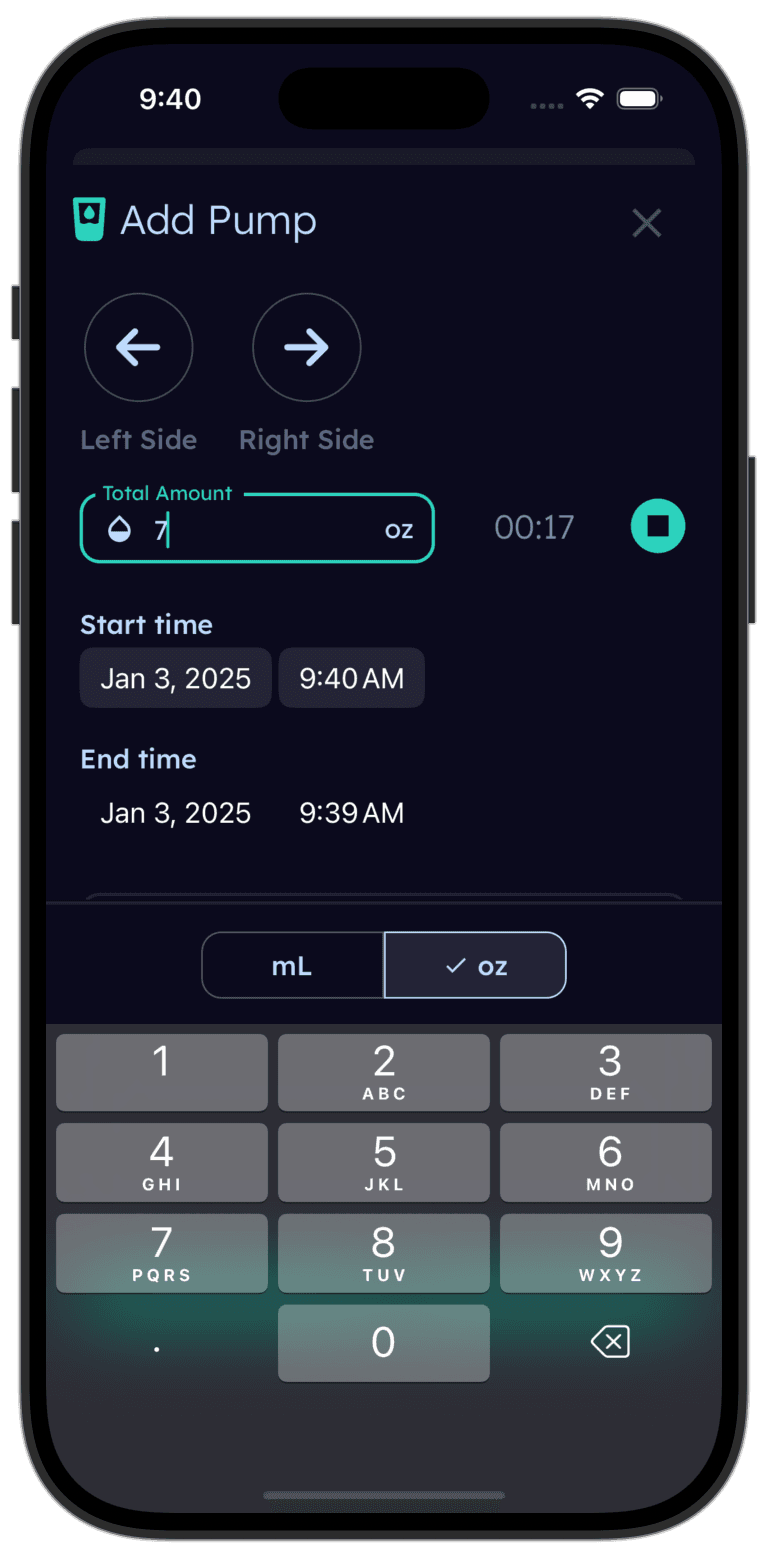
Tinylog tracks pumping sessions so you can see your output over time.
Log pump sessions, track milk volume, note which settings worked best, and bring the data to your lactation consultant.


Flange Fit: More Options Matter
Flange sizing is probably the most underrated factor in pumping comfort and output. A flange that is too big or too small will hurt, reduce your milk output, and make you dread every session.
The eufy S1 Pro ships with four sizes — 17 mm, 19 mm, 21 mm, and 24 mm — using soft silicone inserts that snap into the pump body. The flange itself is made from a velvety silicone with a 105-degree angle designed to sit more naturally against the breast.
The Willow Go ships with two sizes — 21 mm and 24 mm — in a firmer, one-piece hard silicone construction. If you need a 17 mm or 19 mm flange, you are out of luck unless you buy third-party inserts.
Many people need a size smaller than 21 mm. If you have not been professionally sized by a lactation consultant, it is worth doing before you buy either pump — but the eufy gives you more room to experiment out of the box.
| Product | Typical Price | Cost Per Day | Notes |
|---|---|---|---|
| Willow Go Double Electric Pump Kit | $270–$350 | ~$0.74–$0.96 | Base kit. 7 oz containers and extra flanges sold separately. |
| eufy S1 Pro Double Pump Kit | $280–$350 | ~$0.77–$0.96 | Includes 4 flange sizes, wireless charging case, and storage bag. |
| Willow Go replacement parts (6 months) | $40–$60 | ~$0.22–$0.33 | Duckbill valves, flanges, and containers. Replace every 2–3 months. |
| eufy S1 Pro replacement parts (6 months) | $30–$50 | ~$0.16–$0.27 | Duckbill valves and silicone inserts. Replace every 2–3 months. |
Price: Closer Than the Feature Gap Suggests
Both pumps retail in the $280–$350 range. The sticker price is nearly identical. Where the value equation shifts is in what you get for that money.
The eufy S1 Pro kit includes four flange sizes, a wireless charging case, extra duckbill valves, a storage bag, and a cleaning brush. The Willow Go kit includes two flange sizes and the pumps. If you want larger containers (7 oz) or additional flange sizes for the Willow, those are extra purchases.
Replacement parts for the eufy also tend to run slightly cheaper. Over a year of pumping, the total cost of ownership favors the eufy by $30–$60 depending on how often you replace parts.
Both pumps are available through many insurance plans. Start by checking your coverage — if one is fully covered and the other requires an upgrade fee, that changes the math entirely.
Choose the Willow Go If
- Noise level is your top priority — the Willow Go is nearly silent
- You prefer a firmer, more rigid flange that stays in place without adjustment
- You want the option to upgrade to 7 oz containers for high-output pumping sessions
- Your insurance covers the Willow Go fully and the eufy requires a significant out-of-pocket cost
- You like a simpler two-mode pumping setup without a lot of settings to fiddle with
Choose the eufy S1 Pro If
- You want built-in warming to help with letdown and comfort during pumping
- Battery life matters — you pump frequently and do not want to charge after every third session
- You need more flange size options out of the box (especially sizes smaller than 21 mm)
- You want granular control over suction, speed, and rhythm patterns
- A polished app experience with pre-warm scheduling and custom settings is important to you
- You prefer softer, more flexible silicone flanges with an angled design
Where to Buy
The Willow Go Wearable Breast Pump (~$300 street price) is a strong choice if you value quiet operation above everything else. It is nearly silent, well-built, and has a track record across thousands of pumping parents. The 7 oz container upgrade is a nice option for high-output sessions. Grab it from Amazon or check your insurance coverage through Aeroflow.
The eufy S1 Pro Wearable Breast Pump (~$300 street price) packs more features into a similar price — built-in heating, four flange sizes, a wireless charging case, and a better app. If you want the most capable wearable pump at this price point, the S1 Pro is hard to beat. Available on Amazon, the eufy website, or through insurance.
Our honest take: if both are similarly priced for your situation, the eufy S1 Pro offers more for your money. But if noise is your dealbreaker or your insurance fully covers the Willow, the Willow Go will serve you well.
Tinylog earns a small commission on purchases made through these links, at no cost to you.
Want to save a few bucks? promo.new is worth a quick look. It won't always have your product, but when it does, the savings are real.
The Bottom Line
The Willow Go and eufy S1 Pro are both good wearable breast pumps. The differences are real and worth paying attention to:
eufy S1 Pro edges out on built-in heating, battery life, flange size range, pumping customization, app quality, and total value for the price. It is the more feature-rich pump.
Willow Go edges out on noise level, simplicity of use, and the option for 7 oz high-capacity containers. It is the quieter, more straightforward pump.
For most pumping parents, we would lean toward the eufy S1 Pro — the heating feature and charging case solve two of the most common complaints about wearable pumps. But the right pump is the one that fits your body, your schedule, and your insurance plan.
If you are tracking pumping sessions — which is especially useful when establishing supply or troubleshooting output dips — Tinylog makes it easy to log sessions and spot patterns over time.
Related Guides
- Baby Feeding Chart — How much your baby should eat by age
- Breastfeeding Positions — Finding the hold that works for you and baby
- How to Increase Milk Supply — Evidence-based tips that actually work
- Pumping at Work — Your rights, a packing list, and a realistic schedule
Sources
- Willow. "Willow Go Wearable Breast Pump — Product Information." onewillow.com, 2026.
- eufy. "eufy Wearable Breast Pump S1 Pro — Product Information." eufy.com, 2026.
- Milkology. "An In-Depth Willow Go Review." milkology.org, 2026.
- Genuine Lactation. "Willow Go vs. Eufy S1 Pro: Is Willow About to Lose Her Crown?" genuinelactation.com, 2025.
- The Natural Lioness. "Eufy S1 Pro Breast Pump Review: IBCLC-Tested Wearable Pump." thenaturallioness.com, 2025.
- Pumping Milk. "Eufy S1 Pro vs Willow Go: Which Wearable Breast Pump Is Best?" pumpingmilk.com, 2025.
- Breast Pump Guide. "Eufy S1/S1 Pro Wearable Breast Pump Review 2026." breastpumpguide.com, 2026.
This guide is for informational purposes only and is not medical advice. Breast pump selection depends on individual anatomy, supply patterns, and lifestyle. If you are experiencing pain while pumping or concerns about milk supply, consult a board-certified lactation consultant (IBCLC) or your healthcare provider.
Frequently asked questions
- Is the Willow Go or eufy S1 Pro more powerful?
- The eufy S1 Pro has slightly stronger maximum suction at 300 mmHg compared to the Willow Go's 280 mmHg. In practice, most people pump well below maximum suction, so both are more than strong enough for effective milk expression. Hospital-grade suction is generally considered 250+ mmHg.
- Does the eufy S1 Pro really have a heating feature?
- Yes. The eufy S1 Pro is one of the only wearable pumps with built-in HeatFlow technology. It warms the silicone flange across seven temperature settings (95°F to 105°F) to promote milk flow and comfort. You can even pre-warm the pump up to 15 minutes before a session via the app.
- How long does the Willow Go battery last?
- The Willow Go lasts about 3 pumping sessions per charge and charges via USB-C. The eufy S1 Pro gets 4–8 sessions per charge, and its wireless charging case extends that to roughly 5 days of regular pumping without needing a wall outlet.
- Which pump is easier to clean?
- The eufy S1 Pro has 4 parts to clean. The Willow Go has 5 parts. Both are dishwasher-safe. The eufy's parts are slightly simpler to disassemble and reassemble, but neither pump is difficult to clean.
- Can I get either pump through insurance?
- Both pumps are available through many insurance plans. Coverage varies by provider and plan. Check with your insurance company or use a service like Aeroflow to see which pumps are covered under your specific plan. You may need to pay a co-pay or upgrade fee depending on your coverage.
- Which wearable pump is quieter?
- The Willow Go is slightly quieter. It operates near-silently — some users genuinely think it has stopped working because they cannot hear it. The eufy S1 Pro runs at about 46 dB, which is still very quiet, roughly the level of a whispered conversation.