
GUIDE
Willow Go vs. Motif Luna
Published on
The Willow Go is for parents who need to pump while moving. The Motif Luna is for parents who want strong, consistent suction at home or work. Both get the job done — they just solve different problems.
Choosing a breast pump used to mean picking between two beige boxes with tubes. Now you're choosing between a wearable that fits in your bra and a tabletop unit that could double as a small appliance. The good news: both of these are solid pumps with loyal followings.
Log sessions, volume, and pumping duration
Two Very Different Pumps Solving the Same Problem
The Willow Go and the Motif Luna barely look like they belong in the same product category. One tucks inside your bra and lets you pump during a Zoom call. The other sits on a table with tubes and flanges like breast pumps have for decades.
Both extract milk. Both have loyal fans. But they are built for completely different pumping situations, and picking the right one depends less on which is "better" and more on how and where you actually pump.
We compared suction, portability, noise, cost, and real-world milk output so you can skip the marketing and figure out which one fits your life.
For more on tracking your baby's feeding patterns, see our baby feeding chart.
| Feature | Willow Go | Motif Luna | What It Means |
|---|---|---|---|
| Pump Type | Wearable, in-bra | Traditional double electric with tubing | Completely different form factors. Your lifestyle determines which matters more. |
| Portability | Fully hands-free, fits inside a nursing bra | Portable with battery option, but requires setup | Willow Go wins decisively. You can pump while cooking, commuting, or chasing a toddler. |
| Maximum Suction | Moderate — suitable for most users | Strong — comparable to hospital-grade pumps | Motif Luna wins on raw suction power. Matters most for exclusive pumpers. |
| Noise Level | Very quiet — usable in meetings | Standard electric pump noise | Willow Go is noticeably quieter. Big deal if you pump at work or around a sleeping baby. |
| Milk Collection | Collects into built-in container (4 oz per side) | Collects into standard bottles | Luna uses standard bottles, making transfer easier. Willow Go requires pouring after each session. |
| Battery Life | ~2.5 hours per charge (3–5 sessions) | ~3 hours on rechargeable battery | Similar battery life. Both need daily charging with heavy use. |
| Parts to Clean | Fewer parts — no tubing | Flanges, valves, membranes, tubing, bottles | Willow Go has fewer parts, but its containers need careful cleaning. Luna has more parts overall. |
| Flange Sizes | 17mm, 19mm, 21mm, 24mm inserts included | 24mm and 28mm included, others sold separately | Willow Go includes more size options out of the box. Proper flange fit is critical for comfort and output. |
| Smart Features | App tracks session time and volume | No app — manual tracking only | Willow Go's app integration is convenient, though you can track manually with either pump. |
| Insurance Coverage | Often exceeds insurance allowance — out-of-pocket cost likely | Frequently covered in full by insurance | Motif Luna is much easier to get fully covered. The Willow Go often requires paying the difference. |
| Pumping Modes | Stimulation + expression modes | Stimulation + expression modes with let-down button | Both offer dual modes. Luna's dedicated let-down button gives slightly more manual control. |
The Real Trade-Off: Freedom vs. Suction Power
This is the core tension between these two pumps, and you should understand it clearly before buying.
The Willow Go gives you freedom. You can pump while walking, driving, working, or doing literally anything that does not involve submerging yourself in water. No tubes, no bottles dangling from your chest, no power cord tethering you to a wall. For parents who are back at work, managing older kids, or just tired of being trapped in one spot — this is a big deal.
The Motif Luna gives you suction strength. Traditional double electric pumps with direct motor-to-flange connections produce more consistent and powerful suction than wearable pumps. If your supply is still establishing, if you are exclusively pumping, or if you need to maximize output per session, that suction difference matters.
Most lactation consultants will tell you: the best pump is the one you will actually use consistently. A wearable pump used four times a day will maintain supply better than a powerful tabletop pump you skip sessions on because the setup is annoying.
Portability: Not Even Close
The Willow Go wins the portability comparison so thoroughly that it barely counts as a comparison.
You put the Willow Go cups in your bra, press the button, and go about your day. The pump is quiet enough to use in a meeting without anyone knowing. Many parents report pumping during commutes, at restaurants, and while grocery shopping.
The Motif Luna has a rechargeable battery, which means you are not chained to an outlet. But you still need to attach flanges, connect tubing, hold or strap bottles to your chest, and sit relatively still. It is "portable" in the way that a laptop is portable — you can move it, but you are not walking around freely while using it.
If being hands-free and mobile while pumping is your top priority, this comparison is already over.
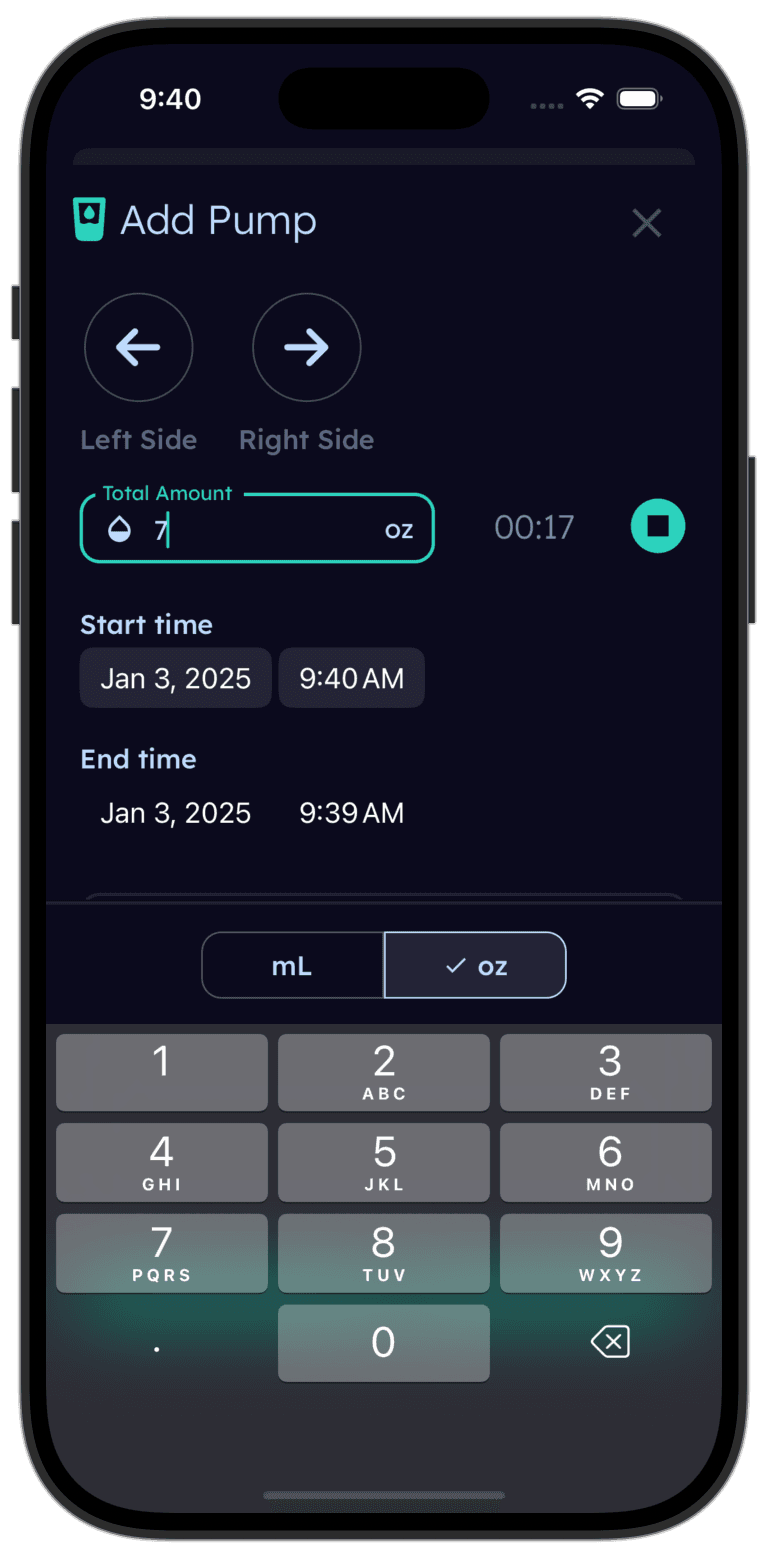
Tinylog tracks pumping sessions so you can watch your supply.
Log pump times, volume per session, and duration. See trends over days and weeks. Bring the data to your lactation consultant.


Output and Suction: Where Traditional Pumps Still Win
Here is the honest truth that wearable pump marketing does not emphasize: most users get slightly less milk per session from wearable pumps compared to traditional double electrics.
The Motif Luna produces stronger, more consistent suction. It also maintains that suction better over the course of a session. The direct mechanical connection between motor and flange means less energy loss compared to the Willow Go's compact motor.
That said, the difference is not dramatic for most people. Parents with established supply often report similar total daily output from either pump — because the Willow Go's convenience means they actually pump more frequently. Three convenient sessions can yield more total milk than two sessions you kept putting off because you did not want to deal with setup.
If you are struggling with supply or exclusively pumping, the Luna's stronger suction gives it a meaningful advantage. If your supply is solid and you just need to collect milk throughout the day, the Willow Go keeps up fine.
| Product | Typical Price | Cost Type | Ongoing Cost |
|---|---|---|---|
| Willow Go (double pump kit) | $250–$300 | One-time cost | Replacement parts ~$15–$25/mo |
| Motif Luna (double electric) | $0–$60 (often free through insurance) | One-time cost | Replacement parts ~$10–$20/mo |
| Willow Go replacement containers (2-pack) | $30–$40 | Replace every 2–3 months | ~$12–$20/mo |
Cost: Insurance Changes the Math Completely
The sticker prices look dramatically different, but the real cost depends entirely on your insurance.
The Motif Luna is one of the most commonly covered breast pumps in the US. Many insurance plans cover it at zero out-of-pocket cost through DME (durable medical equipment) suppliers. If you can get a Luna for free through insurance, the financial argument is strong.
The Willow Go retails for $250–$300. Some insurance plans cover a portion, but you will almost certainly pay something out of pocket. The question is whether that $200+ premium is worth the convenience to you.
Both pumps have ongoing replacement part costs. Membranes, valves, and flanges wear out and need replacing every few months. The Willow Go's proprietary containers add slightly more to ongoing costs compared to the Luna's standard parts.
If money is tight, getting the Luna free through insurance and spending the savings on milk storage bags is a perfectly smart move.
Choose the Willow Go If
- You need to pump while working, commuting, or caring for other kids
- Discretion matters — you want to pump without anyone noticing
- You pump 2–4 times a day to maintain supply, not exclusively pump
- You hate tubing and want fewer parts to wash
- You are willing to pay more upfront for convenience
- Noise level is a priority (shared office, sleeping baby nearby)
Choose the Motif Luna If
- You pump at home or in a private space most of the time
- You are an exclusive pumper who needs strong, consistent suction
- Insurance coverage matters — you want a pump at little or no cost
- Building a freezer stash is a priority
- You prefer collecting directly into standard bottles
- You want a reliable workhorse that does not need charging between sessions
Where to Buy
If hands-free pumping is what you need, the Willow Go ($250–$300) gives you genuine freedom to pump anywhere without anyone knowing. The included flange variety is a nice touch — getting the right fit on the first try saves a lot of frustration and sore nipples.
If you want strong suction and reliable output at the lowest possible cost, the Motif Luna (often free through insurance) is a workhorse that punches above its price point. It is a favorite among exclusive pumpers and lactation consultants for good reason.
Many parents end up owning both — a traditional pump for dedicated sessions at home and a wearable for on-the-go convenience. That is not a bad strategy if your budget allows it.
Tinylog earns a small commission on purchases made through these links, at no cost to you.
Looking for a discount? Try checking promo.new. It doesn't always find what you're looking for, but when it does, it works like a charm.
The Bottom Line
The Willow Go and Motif Luna are not really competing with each other — they are solving different problems for different situations.
Willow Go wins on portability, discretion, noise level, and convenience. It is the pump for parents who refuse to sit still.
Motif Luna wins on suction power, milk output per session, cost, and insurance coverage. It is the pump for parents who want maximum efficiency from a dedicated pumping spot.
For many families, the real answer is both — a Luna at home for power sessions and a Willow Go for everything else. But if you are picking one, ask yourself a simple question: will you actually use it consistently? The most powerful pump in the world does nothing if it stays in the cabinet because setup is a hassle.
If you are tracking pumping sessions — and you should be, especially in the early weeks — Tinylog helps you log volume and duration so you can spot supply changes before they become problems.
Related Guides
- Baby Feeding Chart — How much your baby should eat by age
- Breastfeeding Positions — Finding a hold that works for you and baby
- How to Increase Milk Supply — Evidence-based tips that actually work
- Bottle Feeding Guide — Paced feeding, formula prep, and combo feeding
Sources
- Willow.com. "Willow Go Wearable Breast Pump — Product Specifications." 2026.
- MotifMedical.com. "Motif Luna Double Electric Breast Pump — Product Information." 2026.
- Wirecutter (NYT). "The Best Breast Pumps." nytimes.com/wirecutter, 2026.
- Mommyhood101. "Best Breast Pumps of 2026, Tested & Reviewed." mommyhood101.com.
- Exclusive Pumping. "Wearable Breast Pumps: Pros, Cons, and Real Output Data." exclusivepumping.com, 2025.
- La Leche League International. "Choosing a Breast Pump." llli.org.
- HealthLine. "Best Wearable Breast Pumps of 2026." healthline.com.
This guide is for informational purposes only. Breast pump choice is a personal decision based on your pumping needs, lifestyle, and body. If you have concerns about milk supply or pumping pain, consult a board-certified lactation consultant (IBCLC) or your healthcare provider.
Frequently asked questions
- Is the Willow Go covered by insurance?
- Many insurance plans cover breast pumps, but the Willow Go's retail price often exceeds the insurance allowance. You may need to pay the difference out of pocket. Check with your insurance provider and ask specifically about wearable pump coverage — some plans now include them.
- Can the Motif Luna match the portability of the Willow Go?
- Not really. The Motif Luna has a rechargeable battery option, so you can use it without a wall outlet. But it still requires flanges, bottles, and tubing — you cannot walk around hands-free while using it. It is portable in the sense that you can move it room to room, but not wearable.
- Which pump has stronger suction?
- The Motif Luna has a stronger maximum suction level. Hospital-grade pumps and traditional double electrics like the Luna generally produce more consistent suction than wearable pumps. If you are an exclusive pumper or have supply concerns, stronger suction may matter more to you.
- Does the Willow Go leak?
- Earlier Willow models had more reported leaking issues. The Willow Go improved on this with a redesigned flange and seal system. That said, wearable pumps are more position-sensitive than traditional pumps. Leaning forward or lying down can cause spills. Most users report minimal leaking once they find the right flange size.
- Can I use either pump to build a freezer stash?
- Yes, but the Motif Luna is generally more efficient for high-volume pumping sessions. Its stronger suction and dual pumping capability make it better suited for building supply. The Willow Go works fine for maintaining supply and collecting milk throughout the day, but dedicated pumping sessions may yield less per session.
- Which pump is quieter?
- The Willow Go is significantly quieter. You can use it during meetings, in a shared office, or while the baby sleeps nearby without drawing attention. The Motif Luna has a typical electric pump motor sound — not extremely loud, but noticeable in a quiet room.