
Daily totals
See the total number of feeds and total volume (for bottles) across the last 24 hours. When your pediatrician asks "how much is the baby eating?" you'll have an exact answer instead of a guess.
FEATURE
Breast, bottle, or solids — log every feed in seconds. Tinylog tracks amounts, durations, and daily totals so you always know your baby is eating enough.
No complicated forms. No forgetting which side you nursed on. Just quick, reliable logs you can actually keep up with.
In the first weeks, you're feeding every two to three hours around the clock. By month three, you're juggling breast and bottle and maybe starting to think about solids. The feeding schedule is relentless — and your sleep-deprived brain wasn't built to track it all.
Most parents start with a notepad or a mental tally. Both fail by day three. You need something you can update with one hand while holding a baby with the other.
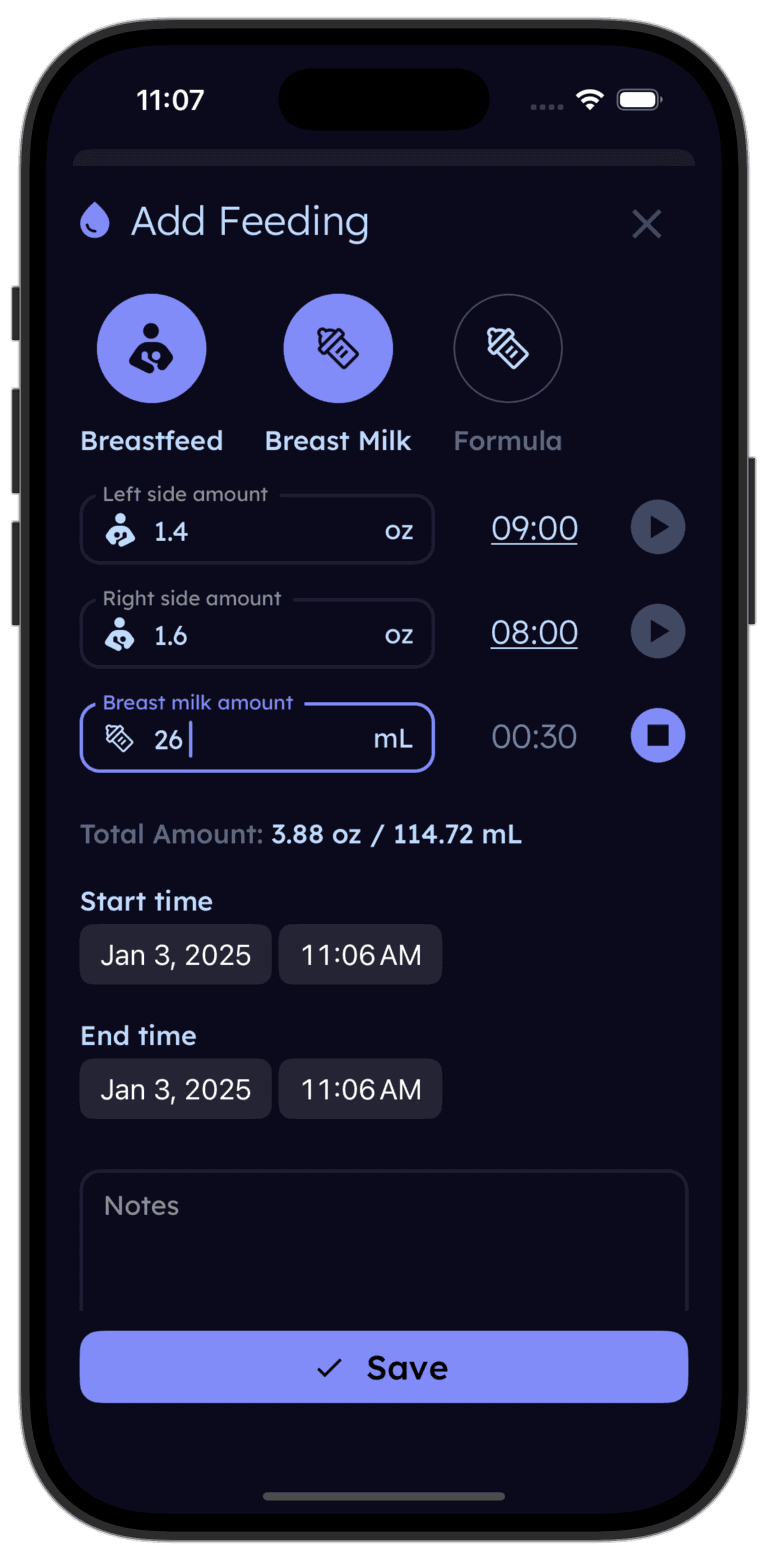
Breast, bottle, or solids — tap to start and Tinylog handles the rest. See daily totals, side reminders, and feeding intervals without doing any math.


Tinylog keeps feeding logs fast because speed is everything when you're mid-feed at 4 AM.
Breastfeeding: Tap to start a nursing timer. Select left or right side — Tinylog remembers which side you used last and prompts you to alternate. When the session ends, it saves the duration and side automatically.
Bottle feeding: Enter the amount in ounces or milliliters. Tinylog adds it to the daily running total so you can see exactly how much your baby has consumed without pulling out a calculator.
Solid foods: Log what your baby ate and add optional notes. This is especially useful for tracking allergen introductions — you'll have a timestamped record of every new food and any reactions.
Quick-add past feeds: Forgot to log? Add a feed retroactively with the time and details. Your daily totals update automatically.
Logging feeds is step one. The real payoff is what the data reveals.
See the total number of feeds and total volume (for bottles) across the last 24 hours. When your pediatrician asks "how much is the baby eating?" you'll have an exact answer instead of a guess.
Tinylog shows time between feeds so you can spot whether your baby is clustering feeds in the evening, stretching longer at night, or gradually spacing out daytime sessions — all signs of healthy development.
If you breastfeed, Tinylog tracks which side you used last and gently reminds you to switch. Alternating sides helps maintain supply and prevents discomfort — and it's the first thing you forget when you're exhausted.
When you start solids, Tinylog becomes your food diary. Track new foods by date so you can follow the "wait 3–5 days" allergen introduction rule and pinpoint any reactions quickly.
Tinylog tallies daily ounces, session counts, and feeding intervals automatically. When your pediatrician asks, you'll have the answer on your phone.
Your pediatrician wants to know how many wet diapers and feeds your newborn is having per day. Instead of trying to recall the past 24 hours, you open Tinylog and show them eight feeds totaling 19 ounces. Clear data means a faster, more productive appointment.
You're going back to work and need to introduce bottles. Tinylog shows exactly how much your baby takes from a bottle versus how long they nurse, so you and your partner can calibrate bottle amounts without overfeeding.
You started peanut butter at 6 months and want to introduce egg next week. Tinylog's food log shows exactly when each allergen was introduced and whether there were any notes about reactions — no need to dig through texts or photos of sticky notes.
Don't stress about logging every single ounce perfectly. A rough log is ten times more useful than no log. If you miss a feed, add it later with your best estimate — close enough is good enough for spotting patterns.
Want to go deeper on feeding? Check out our free guides: