GUIDE

Baby Formula Recalls

Formula recalls are rare, the safety system works, and millions of feedings happen safely every day.

A clear-eyed look at every major formula recall in US history — what happened, why, and what it means for your family. Facts, not fear.

Putting Formula Recalls in Context

Formula recalls are frightening for parents. The idea that something you are feeding your baby every day might be unsafe triggers a visceral, protective response. That reaction is completely normal and completely understandable.

But it is important to put recalls in context. The US infant formula supply is one of the most heavily regulated food products in the country. The FDA sets strict nutritional and manufacturing standards under the Infant Formula Act of 1980 and subsequent regulations. Manufacturers are required to test finished products, maintain quality systems, and report potential issues to the FDA.

When a recall does happen, it means the system is working. Contamination was detected, authorities were notified, and the product was pulled. That is the safety net functioning exactly as designed. The goal of this guide is to give you a factual, chronological understanding of what has happened — not to amplify fear, but to give you the information you need to stay informed and make calm decisions.

A Chronological History of Major Formula Recalls

The following table documents the most significant formula recalls in US history. This is not an exhaustive list of every labeling recall or minor Class III event — it focuses on recalls that had meaningful safety implications or public impact.

Major US Formula Recalls
2025
Brand / ProductByHeart
FDA ClassClass I
ReasonClostridium botulinum contamination — first known infant botulism outbreak linked to infant formula worldwide
ScopeAll ByHeart Whole Nutrition Infant Formula ever produced — cans and single-serve packs
Outcome51 infants hospitalized across 19 states (as of Dec 2025). No deaths reported. Botulinum confirmed in finished product and organic whole milk powder ingredient. FDA issued warning letters to Walmart, Target, and other retailers for failing to remove recalled product from shelves.
2024
Brand / ProductDairy Manufacturers Inc. (Crecelac, Farmalac)
FDA ClassRegulatory
ReasonProducts not evaluated by FDA — non-compliant with infant formula registration requirements (21 CFR 106.110)
ScopeAll US-distributed lots of Crecelac Infant 0-12, Farmalac 0-12, and Farmalac 0-12 Low Lactose
OutcomeNo reported illnesses. Products recalled and FDA terminated the recall after completion.
2024
Brand / ProductMt. Capra (Goat Milk Formula Recipe Kit)
FDA ClassRegulatory
ReasonFDA determined the formula recipe kit does not meet all FDA requirements for infant formula and does not provide sufficient nutrition
Scope1,506 boxes recalled
OutcomeNo reported illnesses. Regulatory non-compliance recall.
2023
Brand / ProductReckitt / Mead Johnson (Nutramigen)
FDA ClassClass II
ReasonCronobacter sakazakii contamination confirmed by Israeli Ministry of Health in product from Zeeland, MI facility
Scope675,000+ cans of Nutramigen 12.6 oz and 19.8 oz powder
OutcomeNo reported illnesses. Most product likely already consumed by time of recall. FDA had previously issued warning letter to Mead Johnson in Aug 2023 for Cronobacter detections in manufacturing zones.
2023
Brand / ProductPerrigo (Gerber Good Start SoothePro)
FDA ClassClass II
ReasonPotential Cronobacter sakazakii contamination at Eau Claire, WI facility
ScopeMultiple lots of 12.4 oz, 19.4 oz, and 30.6 oz containers. Recall extended in May 2023 after recalled product was distributed to retailers post-recall.
OutcomeNo distributed product tested positive. No reported illnesses. FDA issued warning letter to Perrigo in Aug 2023.
2023
Brand / ProductReckitt / Mead Johnson (Enfamil ProSobee)
FDA ClassClass II
ReasonPossible Cronobacter sakazakii cross-contamination from third-party material supplier
Scope~145,000 cans of ProSobee 12.9 oz Simply Plant-Based formula (US, Guam, Puerto Rico)
OutcomeAll product tested negative. No reported illnesses. Root cause traced to third-party supplier material; supplier relationship terminated.
2022
Brand / ProductByHeart
FDA ClassClass II
ReasonPossible Cronobacter sakazakii cross-contamination — positive test at third-party packaging facility
Scope5 batches of ByHeart Whole Nutrition Infant Formula (24 oz containers)
OutcomeNo reported illnesses. FDA inspected ByHeart's manufacturing facility Dec 2022–Feb 2023. FDA issued warning letter in Aug 2023 for manufacturing deficiencies.
2022
Brand / ProductAbbott (Similac, Alimentum, EleCare)
FDA ClassClass I
ReasonCronobacter sakazakii and Salmonella Newport contamination at Sturgis, MI facility
ScopeNationwide — all powdered formula produced at Sturgis plant
Outcome4 infant illnesses, 2 deaths, plant shutdown for ~5 months, nationwide formula shortage. Abbott now operates under FDA consent decree.
2022
Brand / ProductAbbott (Similac and other liquid products)
FDA ClassClass II
ReasonCap seal defect on 2 fl oz Ready-to-Feed liquid bottles — potential spoilage
ScopeMultiple lots from Columbus, OH facility. Distributed primarily to hospitals, doctors' offices, and some retailers.
OutcomeNo confirmed serious illnesses. Less than 1% of bottles affected.
2024
Brand / ProductPerrigo (H-E-B, CVS store brands)
FDA ClassClass II
ReasonVitamin D levels above maximum level permitted in store-brand Premium Infant Formula with Iron
Scope16,500 cans across 3 lots. Sold at H-E-B in TX and CVS in 12 states.
OutcomeNo reported illnesses.
2024
Brand / ProductSammy's Milk (Goat Milk Toddler Formula)
FDA ClassRegulatory
ReasonFDA concerned product was marketed for infants despite toddler labeling — did not meet infant formula requirements
ScopeAll product distributed Feb–Apr 2024. Online sales only.
OutcomeFDA warning letter Aug 2024. No reported illnesses.
2019
Brand / ProductPerrigo (Parent's Choice Advantage)
FDA ClassClass II
ReasonPotential presence of metal foreign matter in powdered infant formula
Scope23,388 containers of 35 oz Parent's Choice Advantage at Walmart
OutcomeNo reported illnesses. Recall completed and terminated.
2016
Brand / ProductSammy's Milk
FDA ClassClass II
ReasonPossible Cronobacter sakazakii contamination in Sammy's Milk Baby Food
ScopeAll lots of Sammy's Milk Baby Food
OutcomePrecautionary recall.
2010
Brand / ProductAbbott (Similac)
FDA ClassClass I
ReasonInsect contamination — small beetles and larvae found in powdered formula
ScopeApproximately 5 million containers recalled
OutcomeNo confirmed illnesses. Contamination traced to a single manufacturing facility.
2007
Brand / ProductHain Celestial (Earth's Best Organic)
FDA ClassClass I
ReasonPotential Clostridium botulinum contamination in Earth's Best Organic Stage 2 baby food
ScopeTwo product lines of baby food (not infant formula)
OutcomePrecautionary recall. No confirmed illnesses.
2006
Brand / ProductMead Johnson (Enfamil)
FDA ClassClass II
ReasonPossible Cronobacter contamination in powdered formula
ScopeLimited batch recall
OutcomePrecautionary recall. Investigation found no confirmed illnesses linked to the product.
2003
Brand / ProductMead Johnson (EnfaCare Lipil)
FDA ClassClass I
ReasonEnterobacter sakazakii contamination in powdered formula for preterm infants
Scope505 cases (3,030 cans) of 12.9 oz formula distributed to hospitals, retail stores, and WIC clinics nationwide
OutcomeClass I recall. No confirmed illnesses reported from distributed product.
2002
Brand / ProductWyeth (now Pfizer)
FDA ClassClass I
ReasonCronobacter sakazakii contamination in powdered formula
ScopeSingle lot recall in Tennessee
OutcomeOne infant death attributed to Cronobacter infection. Led to increased FDA scrutiny of powdered formula manufacturing.
2001
Brand / ProductMead Johnson (Portagen)
FDA ClassClass I
ReasonEnterobacter sakazakii contamination in specialty formula for infants with fat digestion difficulties
Scope17,358 cans recalled
OutcomeOne premature infant death from meningitis caused by Enterobacter sakazakii. Class I recall.
2001
Brand / ProductMead Johnson (Enfamil)
FDA ClassClass II
ReasonLabeling error — wrong product in containers
ScopeLimited regional recall
OutcomeNo confirmed illnesses. Containers of one formula type were labeled as another.
2000
Brand / ProductNestle (Carnation Good Start, Alsoy, Follow-Up)
FDA ClassClass II
ReasonProcessing may not have reached temperatures high enough to ensure sterility
ScopeApproximately 2.5 million cans of 13 oz concentrate
OutcomeNo confirmed illnesses.
1979
Brand / ProductSyntex (Neo-Mull-Soy)
FDA ClassN/A (Pre-modern system)
ReasonChloride deficiency in soy formula formulation
ScopeNationwide
OutcomeApproximately 20,000-50,000 infants affected with metabolic alkalosis. Led directly to the Infant Formula Act of 1980, which gave the FDA authority to set nutritional standards for formula.
This table covers the most significant events. Minor labeling recalls and Class III events are not included. Source: FDA Enforcement Reports and FDA Recall Database.

The 2025 ByHeart Recall: The First Formula-Linked Botulism Outbreak

The 2025 ByHeart recall is historically significant — it represents the first known outbreak of infant botulism linked to infant formula anywhere in the world since infant botulism was first described as a clinical entity almost 50 years ago.

ByHeart launched in 2022 as a premium, direct-to-consumer infant formula brand. Within months, the company recalled 5 batches for potential Cronobacter cross-contamination (December 2022). The FDA inspected ByHeart's manufacturing facility from December 2022 through February 2023 and issued a warning letter in August 2023 for failing to ensure products were not contaminated with microorganisms.

In November 2025, the FDA became aware of a cluster of infant botulism cases linked to ByHeart formula. On November 7, the FDA recommended a voluntary recall. On November 8, the FDA issued a public warning. By November 11, the recall was expanded to include all lots of infant formula ever produced by ByHeart.

As of December 2025, the CDC identified 51 infants across 19 states with suspected or confirmed infant botulism who had consumed ByHeart formula. All 51 required hospitalization. No deaths were reported. When investigators examined earlier cases, they found 10 additional infants who had consumed ByHeart and fell ill between December 2023 and July 2025.

Testing confirmed Clostridium botulinum in 6 of 36 finished product samples, and genetic sequencing matched the contamination to organic whole milk powder — an ingredient used in ByHeart's manufacturing process. ByHeart stated it could not rule out that all formula across all product lots may have been contaminated.

The FDA conducted over 4,300 retail checks and found recalled ByHeart formula still on shelves — in some cases for over three weeks after the recall, across 175 locations in 36 states. The FDA issued warning letters to Walmart, Target, and other retailers. In one case, recalled formula was found with promotional sale signage.

ByHeart formula represented approximately 1% of US formula sales, so the recall did not create a supply shortage.

The 2023 Cronobacter Recalls: Three Manufacturers, One Year

2023 was a significant year for formula safety. Three manufacturers — Reckitt (Mead Johnson), Perrigo, and ByHeart — all initiated recalls for Cronobacter sakazakii contamination concerns within months of each other. All three subsequently received FDA warning letters in August 2023.

In February 2023, Reckitt recalled approximately 145,000 cans of Enfamil ProSobee Simply Plant-Based formula for potential Cronobacter cross-contamination traced to a third-party material supplier. All distributed product tested negative and no illnesses were reported.

In March 2023, Perrigo recalled multiple lots of Gerber Good Start SoothePro powdered formula manufactured at its Eau Claire, Wisconsin facility for potential Cronobacter contamination. No distributed product tested positive. The recall was extended in May 2023 after Associated Wholesale Grocers distributed recalled product to Nashville-area retailers post-recall.

In December 2023, Reckitt recalled over 675,000 cans of Nutramigen powder after the Israeli Ministry of Health confirmed Cronobacter sakazakii in product imported from Mead Johnson's Zeeland, Michigan facility. The FDA's August 2023 warning letter had already cited Cronobacter detections in high and critical hygiene zones at the same facility.

These events, combined with the 2022 Abbott and ByHeart recalls, led to increased FDA scrutiny of infant formula manufacturing and the hiring of dedicated critical foods officers within the agency.

The 2022 Abbott Recall: What Actually Happened

The 2022 Abbott recall was the most significant infant formula safety event in modern US history, and it deserves a detailed account.

In September 2021, the FDA received a complaint about a Cronobacter sakazakii infection in an infant who had consumed powdered Similac formula. Over the following months, additional reports emerged. In February 2022, Abbott Nutrition voluntarily recalled powdered formulas produced at its Sturgis, Michigan facility — including Similac, Alimentum, and EleCare.

Four infant illnesses were linked to Cronobacter or Salmonella in infants who had consumed formula from the Sturgis plant. Two of those infants died. It is important to note that the FDA investigation found Cronobacter in the plant environment but was unable to definitively match the plant strains to the strains in all of the infected infants. The causal link remains established for some cases and debated for others.

The Sturgis plant — which produced roughly 40% of the US powdered formula supply — was shut down from February through July 2022. This single plant closure, combined with existing supply chain issues, triggered a nationwide formula shortage that left parents scrambling to find food for their babies. The shortage was worst in May and June 2022, when out-of-stock rates exceeded 70% in some regions.

The fallout was significant. The FDA was criticized for its slow initial response to the September 2021 complaint. New legislation — the FORMULA Act — was passed to strengthen FDA oversight and create emergency import authorities. The incident exposed how concentrated and fragile the US formula supply chain was.

The 1979 Crisis That Changed Everything

Before 2022, the most consequential formula safety event in US history occurred in 1979. Syntex Laboratories produced a soy-based formula called Neo-Mull-Soy that was deficient in chloride — an essential electrolyte. An estimated 20,000 to 50,000 infants who consumed the formula developed metabolic alkalosis, and some experienced long-term developmental effects.

This crisis directly led to the passage of the Infant Formula Act of 1980, which gave the FDA authority to set specific nutritional standards for infant formula and required manufacturers to test finished products. Before this law, formula manufacturing had less regulatory oversight. Every nutritional standard and testing requirement that exists today traces back to this event.

The 1979 crisis is a reminder that regulation matters — and that the safety system that protects babies today exists because of past failures that were taken seriously.

How the FDA Recall System Works

Understanding how recalls work reduces anxiety. When you know the system, you know what to watch for and what to do.

The FDA Recall Process
1. Detection
What HappensContamination or defect is identified through internal quality testing, consumer complaints, or FDA inspection. Manufacturers are required to report to the FDA.
2. Investigation
What HappensThe FDA and manufacturer investigate the scope — which lots, which facilities, which distribution channels are affected.
3. Classification
What HappensThe FDA classifies the recall as Class I, II, or III based on the probability and severity of potential health consequences.
4. Public Notification
What HappensFor Class I and II recalls, the FDA issues a public alert. Retailers are notified to pull affected products from shelves.
5. Consumer Action
What HappensParents check lot numbers, stop using affected product, and contact the manufacturer for refunds or replacements.
6. Resolution
What HappensThe manufacturer corrects the issue, the FDA verifies the correction, and production may resume once safety standards are met.
Most recalls are voluntary — the manufacturer initiates them. The FDA can also mandate a recall if a manufacturer is not acting. The entire process is designed to remove unsafe products from the supply chain as quickly as possible.
FDA Recall Classifications Explained
Class I
SeverityMost Serious
What It MeansReasonable probability that use of the product will cause serious adverse health consequences or death.
ExamplesMicrobial contamination (Cronobacter, Salmonella), dangerous foreign objects, grossly incorrect formulation
How CommonRare — these trigger immediate public alerts and widespread media coverage
Class II
SeverityModerate
What It MeansProduct may cause temporary or medically reversible adverse health consequences. Probability of serious harm is remote.
ExamplesMinor contamination, labeling errors (wrong allergen info), cross-contamination with trace amounts of another product
How CommonOccasional — most formula recalls fall into this category
Class III
SeverityLowest
What It MeansProduct is not likely to cause adverse health consequences.
ExamplesLabeling errors that don't affect safety (wrong weight listed, missing barcode), cosmetic packaging issues
How CommonMost common across all food recalls. Rarely makes the news.
Most formula recalls you hear about in the news are Class I, because those are the ones that generate headlines. Class II and III recalls happen more frequently but receive less attention.

What the Marketing Doesn't Tell You

Recalls are not unique to formula

Every food product category experiences recalls — peanut butter, lettuce, chicken, cereal, baby food pouches. Formula is actually recalled less frequently than many other infant and toddler food products. The emotional weight of formula recalls is higher because babies are the sole consumers, but the actual frequency is low.

Powdered formula is not sterile

This is important to understand: powdered infant formula is not a sterile product. The FDA acknowledges this directly. That is why preparation guidelines recommend using water that is at least 158 degrees F (70 degrees C) when preparing formula for high-risk infants (premature, immunocompromised). For healthy full-term babies, room temperature or warm water is standard practice, but knowing the baseline matters.

Brand size correlates with recall frequency

Larger manufacturers produce more formula in more facilities with more product lines. Statistically, they have more opportunities for something to go wrong — and more recalls in their history. This does not necessarily mean their products are less safe. Smaller brands have less history, which means less data, not necessarily better safety. For a brand-by-brand breakdown, see our formula recall scorecard.

Ready-to-feed is the safest format

Ready-to-feed (liquid) formula is commercially sterile — it has been heat-treated to kill bacteria. It is the recommended format for premature infants and hospitalized babies. It is also more expensive and produces more waste. For healthy full-term babies, powdered formula prepared according to instructions is safe for daily use.

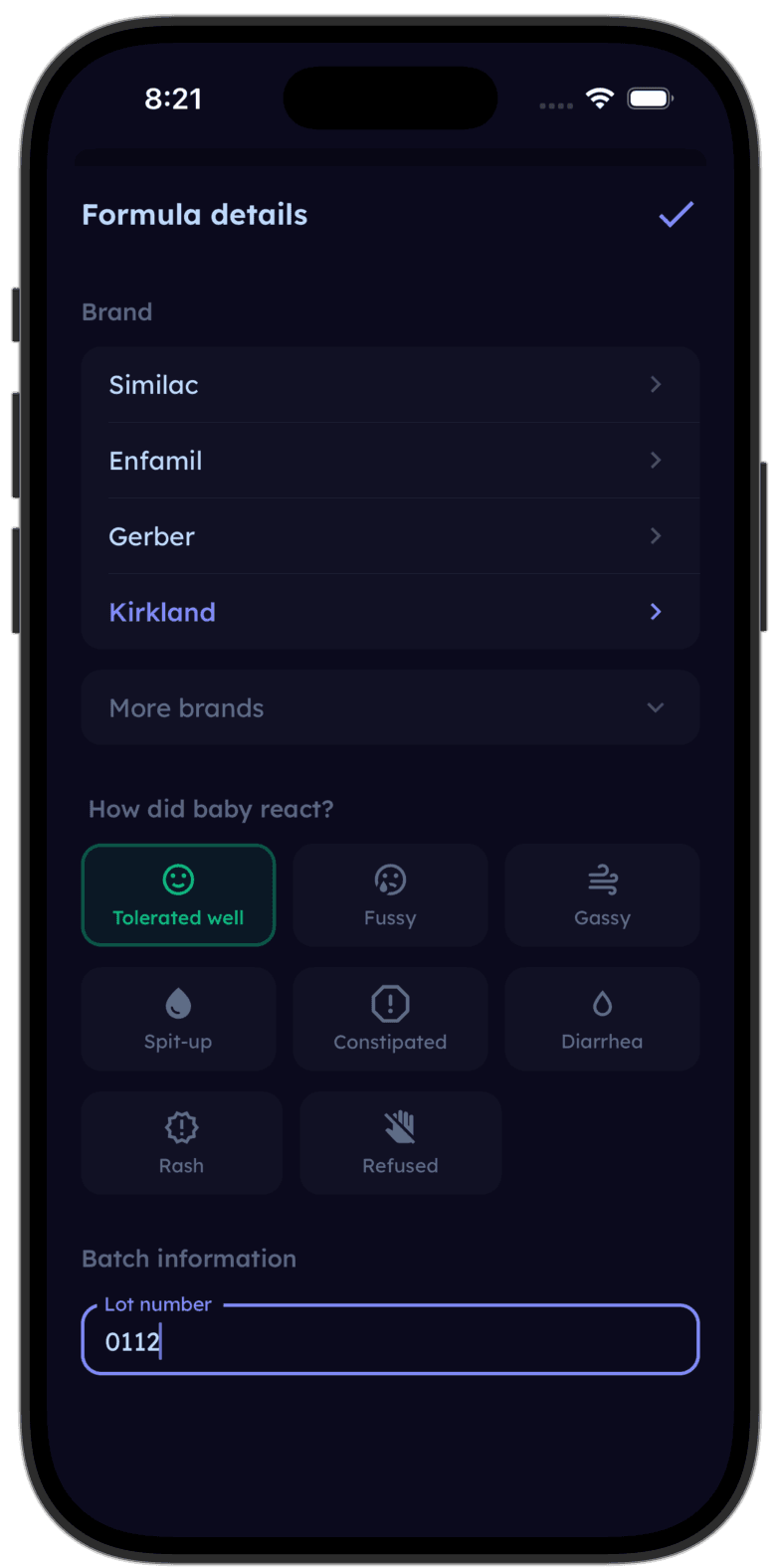
tinylog feeding log showing formula brand and intake records

tinylog gives you a record of exactly what your baby ate — and when.

Log the formula brand with each feed. If a recall ever happens, you'll know immediately whether your baby consumed the affected product — no guessing, no panic-scrolling through receipts.

Download on the App StoreGet It On Google Play

How to Check for Recalls Right Now

You do not need to live in fear of recalls. But having a simple system to check when one is announced takes 5 minutes to set up and gives you genuine peace of mind.

Know your lot number

The lot number is printed on the bottom or side of every formula container. Write it down, photograph it, or log it when you open a new can. If a recall is announced, the lot number is how you determine whether your specific container is affected.

Bookmark the FDA recall page

The FDA maintains a searchable database of all recalls at FDA.gov/safety/recalls-market-withdrawals-safety-alerts. Bookmark it. It is the authoritative source — not social media, not parent forums, not news headlines.

Sign up for FDA alerts

You can subscribe to email notifications from the FDA for food and formula recalls. Go to FDA.gov and look for the 'Subscribe to Email Updates' option. You will be notified when any infant formula recall is announced.

Check the manufacturer's website

Abbott, Reckitt (Mead Johnson), Nestle/Gerber, and other manufacturers maintain their own recall pages. These often have lot number lookup tools that let you enter your specific product details.

Do not rely on social media alone

Facebook groups and parenting forums spread recall information fast — but also spread misinformation. A viral post about a 'formula recall' may be outdated, exaggerated, or completely fabricated. Always verify with the FDA database before taking action.

The Big Picture: Formula Is Safe

  • The US formula market produces approximately 1 billion ounces of formula per month
  • An estimated 3.6 million infants in the US are fed formula at some point during their first year
  • FDA-regulated formula manufacturers undergo regular inspections and must test finished products before distribution
  • The Infant Formula Act of 1980 gave the FDA specific authority to set nutritional and safety standards for infant formula
  • Formula manufacturers are required to notify the FDA within 15 days of learning about an issue that could affect product safety
  • The 2022 shortage led to new legislation (the FORMULA Act) strengthening FDA oversight and emergency import authorities
  • In August 2023, the FDA issued warning letters to three infant formula manufacturers (ByHeart, Mead Johnson/Reckitt, and Perrigo) for violations found during inspections
  • The 2025 ByHeart botulism outbreak was the first known infant botulism outbreak linked to infant formula worldwide, leading the FDA to take new actions to improve recall effectiveness at the retail level

Recalls are a sign that the safety system is working — contamination is being caught and unsafe products are being removed. The goal is not zero risk (which is impossible in any food supply), but functional oversight that catches and corrects problems quickly.

When to Talk to Your Pediatrician

  • Your baby has consumed a recalled formula product and is showing any symptoms — fever, poor feeding, irritability, lethargy, or unusual fussiness
  • You are unsure whether your formula is affected by a recall and need guidance on alternatives
  • You need to switch formulas due to a recall and want advice on the best replacement for your baby's needs
  • Your baby has any symptoms of foodborne illness — vomiting, diarrhea, fever, or lethargy — regardless of whether a recall has been announced

If your baby has consumed a recalled product and seems fine, contact your pediatrician for guidance anyway. Most exposures do not result in illness, but your doctor can advise on monitoring and next steps.

The Bottom Line

Formula recalls are serious when they happen, and they are more frequent than many parents assume. The 2022 Abbott recall was a genuinely significant event that exposed supply chain vulnerabilities and led to real regulatory changes. The 2023 wave of Cronobacter recalls across three manufacturers revealed that contamination challenges are an industry-wide concern, not isolated to a single company. The 2025 ByHeart botulism outbreak — the first of its kind in formula history — showed that newer brands are not immune to serious safety events. Earlier recalls shaped the very laws that protect babies today.

Your job as a parent is not to live in fear of recalls. It is to know where to check, to keep your lot numbers accessible, and to follow your pediatrician's guidance if a recall does affect your formula. The system is not perfect — no food safety system is — but it is functional, it is improving, and millions of formula feedings happen safely every single day.

For a brand-by-brand breakdown of recall histories, see our formula recall safety scorecard.

Related Guides

Sources

  • U.S. Food and Drug Administration. (2026). FDA Recall Database — Safety Reporting Portal. FDA.gov/safety/recalls-market-withdrawals-safety-alerts.
  • U.S. Food and Drug Administration. (2025). Outbreak Investigation of Infant Botulism: Infant Formula (November 2025). FDA.gov.
  • U.S. Food and Drug Administration. (2025). FDA Takes Action to Improve Recall Effectiveness Following Infant Botulism Outbreak Investigation Linked to ByHeart Infant Formula. FDA.gov.
  • U.S. Food and Drug Administration. (2025). FDA's Actions to Respond to Clostridium botulinum Illnesses Associated with Consumption of Powdered Infant Formula. FDA.gov.
  • U.S. Food and Drug Administration. (2023). FDA Issues Warning Letters to Three Infant Formula Manufacturers. FDA.gov.
  • U.S. Food and Drug Administration. (2022). FDA Investigation of Cronobacter Infections: Powdered Infant Formula (February 2022). FDA.gov.
  • U.S. Food and Drug Administration. (2022). FDA Enforcement Reports. FDA.gov.
  • Centers for Disease Control and Prevention. (2025). Investigation Update: Infant Botulism Outbreak, November 2025. CDC.gov.
  • Centers for Disease Control and Prevention. (2022). Cronobacter Infection and Infants. CDC.gov.
  • Reckitt / Mead Johnson Nutrition. (2023). ProSobee Recall 2023. Enfamil.com.
  • Reckitt / Mead Johnson Nutrition. (2023). Nutramigen Product Recall Information and Updates 2023. Enfamil.com.
  • Perrigo Company. (2023). Perrigo Announces Voluntary Recall of Gerber Good Start SoothePro. Perrigo.com.
  • ByHeart Inc. (2025). An Update From Our Founders — Voluntary Recall November 2025. ByHeart.com.
  • U.S. Government Accountability Office (GAO). (2022). Infant Formula: Actions Needed to Reduce the Risk of Future Shortages.
  • Infant Formula Act of 1980, Public Law 96-359.
  • FORMULA Act (Access to Baby Formula Act), 2022.
  • Renfrew, M. J., et al. (2003). Formula feed preparation: Helping reduce the risks. UNICEF UK.

Medical Disclaimer

This guide is for informational purposes only and is not a substitute for professional medical advice. If you believe your baby has consumed a recalled product or is showing signs of illness, contact your pediatrician immediately.

Get this guide in your inbox.
We'll email you this recall history guide so you have it as a reference — including how to check for current recalls.
Know what's in your baby's bottle.
Download tinylog free — log the formula brand and lot number with each feed so you always have a record.
Download on the App StoreGet It On Google Play