GUIDE

Cronobacter and Baby Formula

Cronobacter infections from formula are extremely rare — about 4 to 6 cases per year in the U.S. — but the 2022 crisis put this bacteria in every parent's search history.

Here's what Cronobacter actually is, who is most at risk, and what you can do to minimize an already very small risk. No panic required.

What Cronobacter Actually Is

Cronobacter sakazakii is a type of bacteria found in the environment — in soil, water, and dry foods. It can survive in dry conditions for long periods, which is why it's a concern specifically for powdered products like infant formula.

For most people, Cronobacter doesn't cause illness. But in very young infants — especially those born prematurely or with compromised immune systems — it can cause devastating infections: meningitis, bloodstream infections (sepsis), and necrotizing enterocolitis (a serious intestinal condition).

The infection is rare. The CDC estimates approximately 4 to 6 cases per year in the United States, out of the millions of formula-fed infants. But when it does occur, the mortality rate is high — roughly 40% for meningitis cases. That's why prevention matters, even though the absolute risk is tiny.

The 2022 Crisis: What Actually Happened

In September 2021, the FDA received the first consumer complaint about a Cronobacter illness potentially linked to formula produced at Abbott Nutrition's manufacturing facility in Sturgis, Michigan. Additional complaints followed in the months after.

In January 2022, FDA inspectors entered the Sturgis plant and found Cronobacter in environmental samples collected from the facility — on surfaces and in areas where powdered formula was produced. This was a serious finding: it indicated systemic contamination, not an isolated incident.

On February 17, 2022, Abbott voluntarily recalled powdered Similac, Alimentum, and EleCare formulas produced at the Sturgis plant. The FDA issued a public safety alert. Four confirmed infant Cronobacter cases were linked to formula from the facility. Two of those infants died.

The Sturgis plant produced a significant share of the U.S. formula supply. When it shut down, combined with existing supply chain issues from the pandemic, the result was a national formula shortage that affected millions of families through much of 2022.


2022 Formula Crisis Timeline
Sept 2021
What HappenedFDA receives first consumer complaint about Cronobacter illness linked to Abbott's Sturgis facility
Dec 2021
What HappenedFDA receives additional complaints. Internal review begins.
Jan 2022
What HappenedFDA inspection of Sturgis facility begins. Cronobacter found in environmental samples within the plant.
Feb 17, 2022
What HappenedAbbott initiates voluntary recall of Similac, Alimentum, and EleCare powdered formulas from the Sturgis plant. FDA issues safety alert.
Feb-Mar 2022
What HappenedFour confirmed infant Cronobacter infections linked to the facility. Two infants die.
Mar 2022
What HappenedSturgis plant shuts down completely for remediation and deep cleaning.
May 2022
What HappenedNational formula shortage reaches crisis level. President invokes Defense Production Act. Operation Fly Formula begins importing formula from Europe.
June 2022
What HappenedAbbott restarts production at Sturgis under FDA consent decree with enhanced safety protocols.
July 2022
What HappenedProduction halted again briefly due to severe storms damaging the facility.
Late 2022
What HappenedFormula supply gradually stabilizes. Sturgis plant operating under heightened FDA oversight.
2023-2024
What HappenedFDA implements mandatory Cronobacter reporting. New inspection frameworks established for all formula manufacturers.
Source: FDA.gov, CDC.gov, and Congressional Research Service reports on the 2022 infant formula shortage.

Putting the Risk in Perspective

After the 2022 crisis, many parents understandably became anxious about powdered formula safety. Let's put the numbers in context.

The CDC estimates roughly 4 to 6 Cronobacter infections in infants per year in the entire United States. During the same period, approximately 3 million infants in the U.S. receive formula — many of them exclusively. The risk for any individual baby is extraordinarily small.

That said, the risk is not zero, and it's not evenly distributed. Some babies are significantly more vulnerable than others.

Who Is Most at Risk
Premature infants
Risk LevelHighest
WhyImmature immune system and gut lining. NICU babies may have additional vulnerabilities from medical interventions.
Babies under 2 months
Risk LevelHigh
WhyImmune system is still developing. Blood-brain barrier is more permeable, making meningitis a greater risk.
Immunocompromised infants
Risk LevelHigh
WhyAny condition affecting immune function reduces the body's ability to fight bacterial infection.
Low birth weight babies
Risk LevelElevated
WhyOften overlaps with prematurity. Smaller babies have fewer reserves to fight infection.
Healthy, full-term babies over 2 months
Risk LevelVery low
WhyMature enough immune systems to handle the extremely low levels of bacteria that might be present in properly prepared formula.
Source: CDC Cronobacter FAQ, 2023; WHO Guidelines on Preparation, Storage, and Handling of Powdered Infant Formula, 2007.

How to Minimize the Risk

You can't eliminate the risk entirely — powdered formula is not a sterile product. But you can reduce it substantially with proper preparation and handling.

Use ready-to-feed for high-risk babies

Ready-to-feed formula is commercially sterile — it has been heat-treated to eliminate all bacteria. The AAP and WHO recommend it for premature infants, babies under 2 months in clinical settings, and immunocompromised infants.

Heat water to at least 158 degrees F (70 degrees C)

The WHO recommends using water no cooler than 70 degrees C (158 degrees F) when preparing powdered formula to kill Cronobacter. Boil water, then let it cool for no more than 30 minutes before mixing. This is different from many manufacturer instructions, which say 'room temperature water.'

Use formula within 2 hours

Once prepared, formula left at room temperature should be used within 2 hours. Bacteria multiply rapidly in warm, nutrient-rich liquids. If baby doesn't finish a bottle within 2 hours, discard it.

Refrigerate prepared formula properly

Prepared formula can be stored in the fridge for up to 24 hours. Use a clean, covered container. When ready to feed, warm it gently — don't leave it sitting out to reach room temperature for extended periods.

Wash hands and sterilize equipment

Wash hands with soap and water before preparing formula. Sterilize bottles and nipples regularly, especially for babies under 3 months. Clean the preparation area.

Don't use leftover formula from a feeding

Once baby's mouth has touched the bottle nipple, bacteria from saliva can grow in the remaining formula. Discard any formula left in the bottle after a feeding.

The WHO vs. Manufacturer Instructions Disconnect

Here's something that surprises many parents: the World Health Organization recommends preparing powdered formula with water heated to at least 158 degrees F (70 degrees C) to kill Cronobacter and other bacteria. But most formula manufacturers in the U.S. tell you to use room temperature or lukewarm water.

Why the disconnect? Manufacturers worry that hot water preparation increases the risk of burns and may affect some heat-sensitive nutrients. The WHO's position is that the risk of bacterial infection in improperly prepared formula — while small — outweighs the minor nutrient loss from using hot water.

For healthy, full-term babies over 2 months, the practical risk difference is negligible. For premature or immunocompromised babies using powdered formula, the WHO's hot water recommendation adds a meaningful layer of protection. Talk to your pediatrician about what makes sense for your baby's specific situation.

For a deeper dive into powdered formula safety and sterility, see our guide on powdered formula safety.

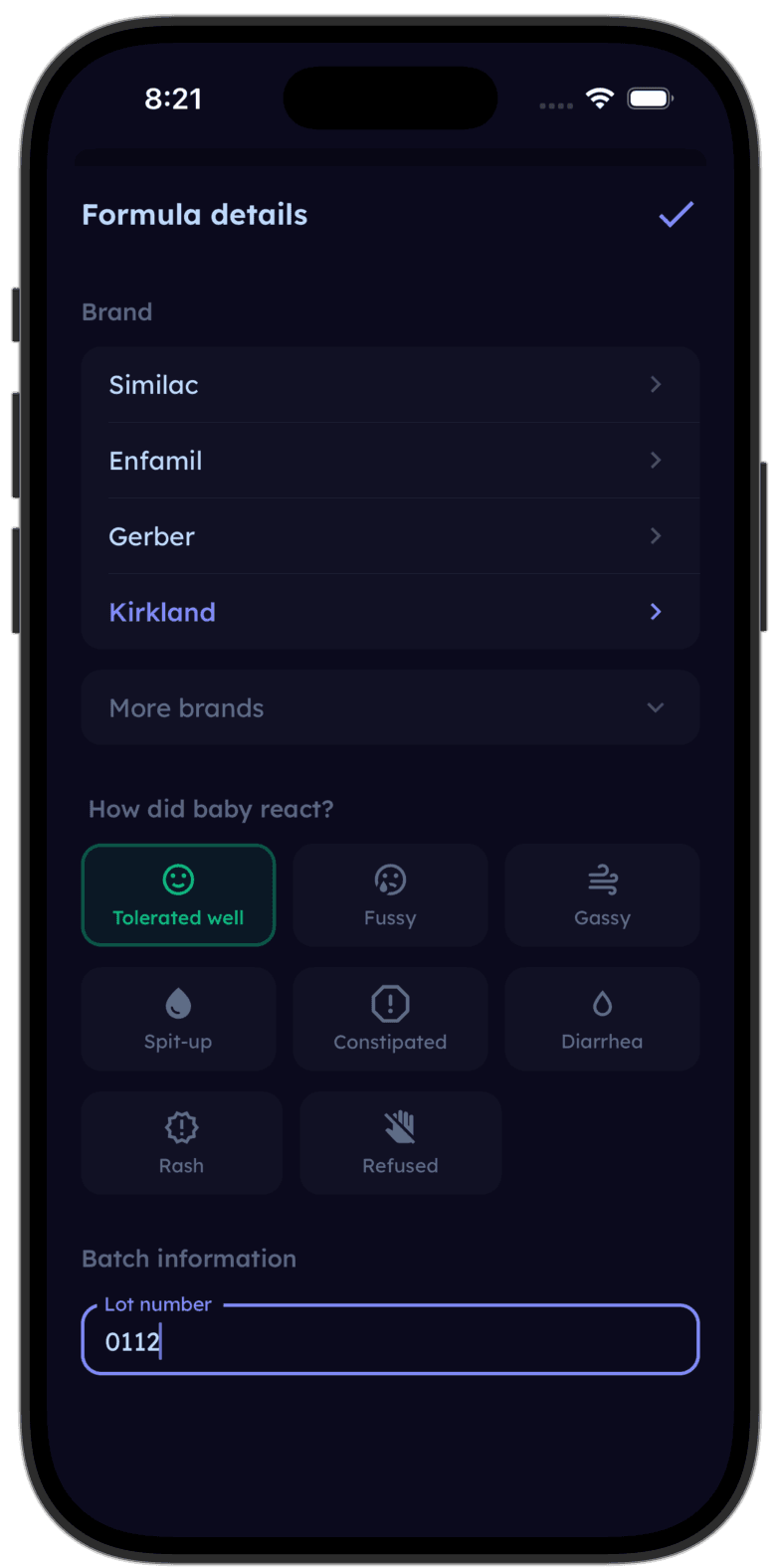
tinylog feeding tracker showing formula feed logging

tinylog helps you track what your baby eats — brand, type, and amount.

When you're managing formula preparation and keeping track of feeds, having a simple log takes one thing off your plate. Log feeds in seconds and see daily totals without doing math in your head.

Download on the App StoreGet It On Google Play

What the FDA Has Done Since 2022

The 2022 crisis exposed significant gaps in how the FDA monitored formula manufacturing. Several changes have been implemented since.

FDA Regulatory Changes Post-2022

  • Mandatory Cronobacter reporting — healthcare providers and manufacturers must now report Cronobacter infections linked to formula to the FDA
  • Enhanced inspection protocols for all domestic formula manufacturing facilities
  • Creation of the FDA Office of Critical Foods to strengthen oversight of infant formula supply
  • New requirements for environmental monitoring in formula production facilities
  • Improved coordination between FDA, CDC, and state health departments for rapid response
  • Expanded authority for FDA to conduct unannounced inspections of formula facilities

Source: FDA.gov — Infant Formula page, updated 2024. These represent meaningful improvements, though advocates continue to push for more robust oversight.

When to Talk to Your Pediatrician

For most healthy, full-term babies, Cronobacter is not something you need to actively worry about. But talk to your pediatrician if:

  • Your baby was born prematurely (especially before 37 weeks) — ask whether ready-to-feed formula is recommended
  • Your baby has any immune system condition or is on immunosuppressive medication
  • Your baby is under 2 months old and you're using powdered formula — discuss preparation techniques
  • Your baby develops symptoms of infection after feeding (high fever, poor feeding, irritability, seizures) — seek immediate medical attention
  • You have questions about whether the WHO hot water preparation method is appropriate for your baby

Your pediatrician can help you assess your baby's individual risk level and make recommendations tailored to their health status.

The Bottom Line

Cronobacter is a real risk, but it's an extremely rare one for most babies. The 2022 crisis was a failure of manufacturing oversight, and the regulatory response has strengthened the system — though no system is perfect.

What you can control: proper preparation, safe storage, and using ready-to-feed for high-risk babies. What you can't control: manufacturing processes. But the combination of FDA oversight, manufacturer testing, and your own preparation practices makes formula feeding safe for the vast majority of infants.

If you want to stay informed about recalls and safety issues, our formula recall check guide walks you through exactly how to monitor for problems.

Related Guides

Sources

  • Centers for Disease Control and Prevention (CDC) — Cronobacter Infection and Infants, 2023 update
  • U.S. Food & Drug Administration (FDA) — Cronobacter and Powdered Infant Formula Investigation, 2022
  • World Health Organization (WHO) — Safe Preparation, Storage, and Handling of Powdered Infant Formula: Guidelines, 2007
  • FDA — Infant Formula: FDA's Response to the 2022 Recall and Shortage
  • Congressional Research Service — The Infant Formula Shortage, 2022
  • American Academy of Pediatrics (AAP) — Infant Feeding Recommendations, 2022
  • Holy EW, Forsythe SJ. "Cronobacter spp. as emerging causes of healthcare-associated infection." Journal of Hospital Infection, 2014.

This guide is for informational purposes only and is not a substitute for professional medical advice. If you have concerns about your baby's formula safety or health, please consult your pediatrician.

Get this guide in your inbox.
We'll send you the key facts and prevention steps so you have them when you need them.
Track feeds and preparation details in one place.
Download tinylog free — know what your baby ate and when.
Download on the App StoreGet It On Google Play