


GUIDE

Baby Nap Schedule by Age

How many naps, how long each one should be, and when to drop one — by age.

Naps are where daytime sleep and nighttime sleep collide. Get them right and everything clicks. Get them wrong and bedtime becomes a battle. This guide covers nap counts, durations, transitions, and what to do when naps are a disaster.

How Many Naps Does Your Baby Need?
0–3 months
Naps4–6
Nap Length20 min – 2 hrs
Total Day Sleep5–7 hrs
Wake Window45–90 min
NotesIrregular, feed-driven
4–5 months
Naps3–4
Nap Length30 min – 2 hrs
Total Day Sleep3–4.5 hrs
Wake Window1.5–2.25 hrs
NotesDropping the 4th nap
6–8 months
Naps2–3
Nap Length1–2 hrs
Total Day Sleep2.5–3.5 hrs
Wake Window2–3 hrs
NotesDropping the 3rd nap
9–14 months
Naps2
Nap Length1–2 hrs
Total Day Sleep2–3 hrs
Wake Window2.5–4 hrs
NotesSolid 2-nap schedule
14–18 months
Naps1–2
Nap Length1.5–2.5 hrs
Total Day Sleep2–3 hrs
Wake Window4–5.5 hrs
NotesTransitioning to 1 nap
18–36 months
Naps1
Nap Length1–2.5 hrs
Total Day Sleep1–2.5 hrs
Wake Window5–7 hrs
NotesMay drop nap by 3 yrs
These are typical ranges — your baby might be on the high or low end and that's fine. Watch their mood and energy, not just the clock.

The 4 Nap Transitions (and How to Nail Each One)

Dropping a nap is one of the trickiest parts of baby sleep. Go too early and you get an overtired mess. Wait too long and bedtime suffers. Here's how to time each transition.

4 → 3 Naps

4–5 months
Signs they're ready
  • Can stay awake 2+ hours without melting down
  • The 4th nap is tiny (under 15 min) or not happening
  • The late catnap is pushing bedtime past 8 PM
  • Baby seems content and alert during longer wake windows
How to make the switch
  • Drop the late-afternoon catnap first
  • Stretch wake windows by 10–15 minutes every few days
  • Move bedtime 30 minutes earlier temporarily to prevent overtiredness
  • Allow 1–2 weeks for the transition to settle
Common pitfall
Rushing it. If your baby is a disaster by 5 PM, they're not ready. Bring the catnap back.
3 → 2 Naps

6–9 months
Signs they're ready
  • The 3rd nap is consistently refused or under 15 minutes
  • Baby handles 3+ hour wake windows well
  • Bedtime keeps getting pushed later
  • Still sleeping well at night despite fewer naps
How to make the switch
  • Drop the last catnap of the day
  • Gradually extend wake windows to fill the gap
  • An earlier bedtime (even 6:00 PM) is fine during the transition
  • Expect some cranky late afternoons for 1–2 weeks
Common pitfall
Letting the 2nd nap run too late. Cap it so it ends by 3:30–4:00 PM to protect bedtime.

2 → 1 Nap

14–18 months
Signs they're ready
  • Consistently refusing one nap for 2+ weeks (not just a regression)
  • Can handle 5+ hour wake windows
  • Taking forever to fall asleep for one of the two naps
  • Night sleep is still solid despite nap changes
How to make the switch
  • Move the single nap to 12:00–12:30 PM
  • Push morning wake window gradually — add 15 minutes every few days
  • Use a very early bedtime (6:00–6:30 PM) during the transition
  • Budget 2–4 weeks for adjustment
  • Some days they'll need two naps, some days one — that's normal during the transition
Common pitfall
Dropping to 1 nap too early. The 12-month regression looks like nap refusal, but most babies still need 2 naps until 14–18 months. Wait it out.

1 → 0 Naps

2.5–4 years
Signs they're ready
  • Consistently refusing the nap for 2+ weeks
  • The nap makes bedtime impossible (not falling asleep until 9+ PM)
  • Happy and functional through the afternoon without a nap
  • Still getting 10–12 hours of night sleep
How to make the switch
  • Replace the nap with 'quiet time' (books, puzzles, calm play in their room)
  • Move bedtime 30–60 minutes earlier
  • Expect some inconsistency — they may nap some days and skip others for weeks
  • Keep quiet time in the routine even after naps are gone
Common pitfall
Eliminating rest time entirely. Even kids who don't nap benefit from a midday quiet period. Their brains still need the downtime.
tinylog nap tracking showing daily nap patterns

tinylog tells you when a nap transition is coming.

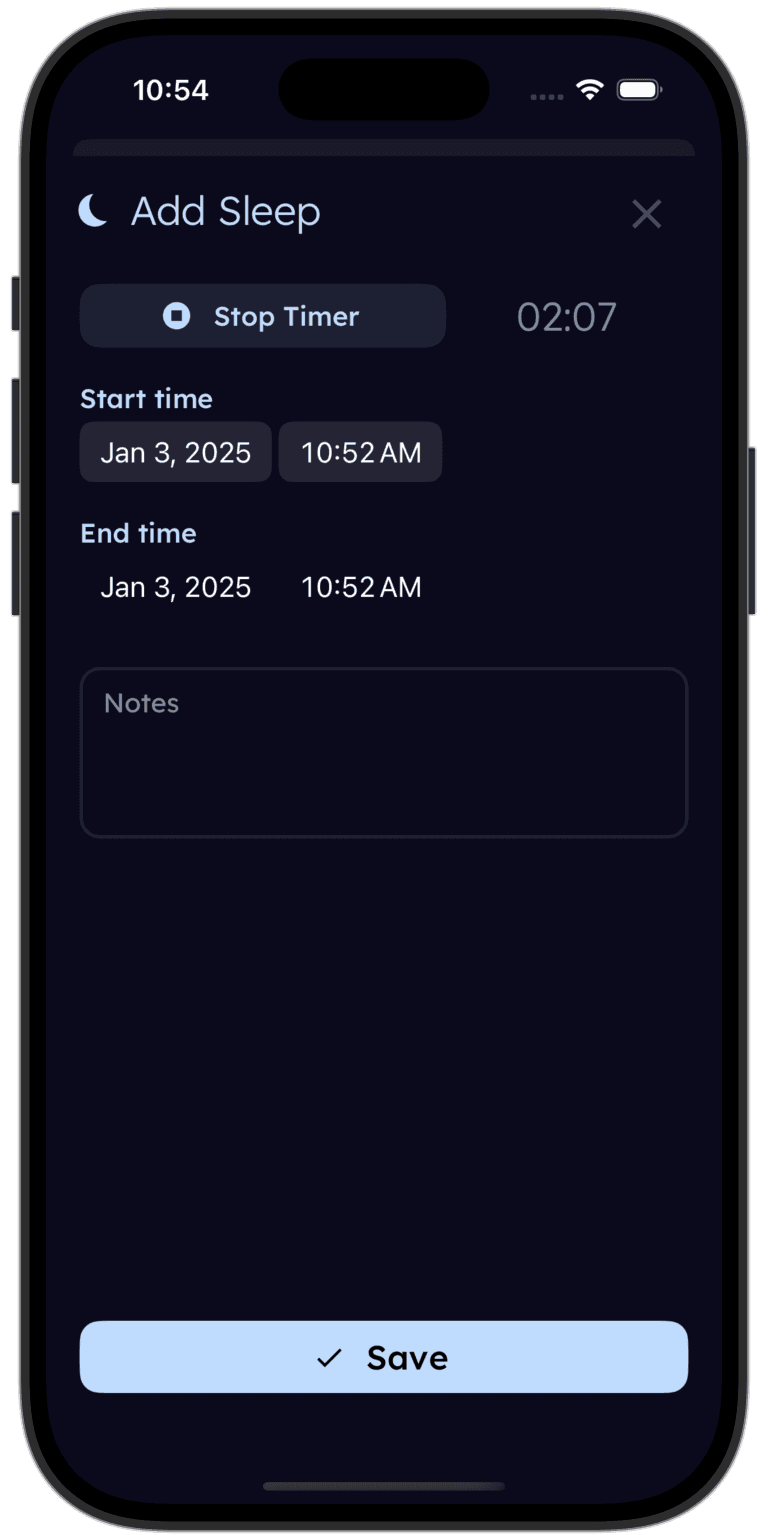
Track naps with one tap and spot the patterns — shortened naps, longer wake windows, bedtime creep — that signal it's time to drop a nap.

Download on the App StoreGet It On Google Play

Short Nap Troubleshooting

Short naps are the #1 nap complaint. Here's how to diagnose and fix them.

Naps are always under 30 minutes

Possible causes
Wake window too short, wake window too long, hasn't learned to connect sleep cycles yet (normal under 5 months), overtiredness from poor night sleep.
What to try
  • Under 5 months? This is developmentally normal — ride it out
  • Try extending the wake window by 10–15 minutes
  • Make sure the room is truly dark — even a sliver of light matters
  • White noise on for the entire nap, not just falling asleep
  • If they pop awake at 30 minutes, wait 5–10 minutes before going in — they sometimes resettle

First nap is fine, second nap is a disaster

Possible causes
The midday wake window needs adjusting (usually needs to be longer), sleep pressure is lower for the 2nd nap, or too much activity right before.
What to try
  • Stretch the wake window before nap 2 by 15–30 minutes
  • Do a calm wind-down routine before the 2nd nap (5–10 minutes of books or rocking)
  • Make sure the room setup is identical for both naps
  • If nap 1 was long, they might not be tired enough — try capping nap 1 at 1.5 hours

Only naps while held or in motion

Possible causes
Contact napping became the only way they can sleep, motion (car, stroller) is a strong sleep association, or they're not quite ready for independent crib naps.
What to try
  • Under 4 months? Contact naps are fine — enjoy them while they last
  • Start with the first nap of the day in the crib (highest sleep pressure, best odds)
  • Try the 'drowsy but awake' approach for one nap per day and build from there
  • If they cry in the crib, try a hand on their chest with gentle shushing for a few minutes
  • Don't go cold turkey — transition one nap at a time over 1–2 weeks

The Ideal Nap Environment

  • Dark room — blackout curtains or shades (light tells the brain it's time to be awake)
  • White noise — continuous, not timed (about the volume of a shower running)
  • Cool temperature — 68–72°F (20–22°C)
  • Sleep sack instead of loose blankets (safe and a great sleep cue)
  • Same sleep space for every nap when possible (consistency builds the association)
  • Brief nap routine — 3–5 minutes of wind-down (shorter than bedtime routine)
  • No screens for at least 30 minutes before nap time

You don't need all of these to be perfect — but the more consistent the environment, the stronger the sleep association becomes. Darkness and white noise are the two biggest levers.

Related Guides

Want to go deeper? These guides cover related topics:

Sources

American Academy of Pediatrics. (2022). Healthy Sleep Habits: How Many Hours Does Your Child Need?
Mindell, J. A., et al. (2016). Development of infant and toddler sleep patterns. Sleep Medicine.
Weissbluth, M. (2015). Healthy Sleep Habits, Happy Child. Ballantine Books.
Galland, B. C., et al. (2012). Normal sleep patterns in infants and children: A systematic review. Sleep Medicine Reviews.
Get this nap guide in your inbox.
We'll send you the full nap schedule breakdown so you can reference it during those tricky nap transitions.
See nap patterns you'd miss on your own.
Download ${appName} free — log naps with one tap and spot trends that tell you when your baby is ready for a transition.
Download on the App StoreGet It On Google Play