
Watch the baby, not the clock
Wake windows are a starting point, not a timer you have to obey. Your baby's sleepy cues are more reliable than any chart. Use the ranges to know roughly when to start watching for signs — then follow your baby's lead.
GUIDE
Published on ·Updated on
Wake windows are your best tool for timing naps — but they're guidelines, not gospel. Your baby's cues matter more than any chart.
Here are the realistic ranges for 0–24 months, plus how to read the signs that your specific baby is ready for sleep.
Log naps and wake windows
“Most kids have a 'tell' that indicates they are ready for sleep. Try to notice which cue, when followed consistently, allows the child to fall asleep independently and within 15 minutes of being placed into the crib.”
Wake windows are one of the most useful concepts in baby sleep. The idea is simple: there's an ideal amount of awake time between sleeps, and hitting that window makes naps easier, longer, and less of a battle.
But here's what gets lost in most wake window charts: these are ranges, not rules. Your baby hasn't read the chart. Their ideal wake window depends on their age, their temperament, how well they slept last night, how stimulating their morning was, and about a dozen other things no chart can account for.
So use the ranges below as a starting point — then watch your baby. Their cues will always tell you more than any timer on your phone.
| Age | Wake Window | Naps | Notes |
|---|---|---|---|
| 0–4 weeks | 45–60 min | 6–8 (irregular) | Almost everything is a nap at this age. Don't overthink it. |
| 4–8 weeks | 60–90 min | 5–7 | You might start noticing a first morning nap forming. |
| 2–3 months | 75–120 min | 4–5 | Still short — and that's fine. First window is often the shortest. |
| 4–5 months | 1.5–2.5 hrs | 3–4 | Bigger range now. Watch cues more than minutes. |
| 6–7 months | 2–2.75 hrs | 2–3 | Last window before bed is usually the longest one. |
| 8–10 months | 2.5–3.5 hrs | 2 | Two solid naps. Wake windows stretch noticeably. |
| 11–12 months | 3–4 hrs | 2 | Don't drop to one nap yet — most babies aren't ready. |
| 13–15 months | 3–5 hrs | 1–2 | The 2-to-1 nap transition may start here. |
| 16–24 months | 4.5–6 hrs | 1 | One big midday nap. Bedtime may need to shift earlier. |
A wake window is simply the time your baby is awake between one sleep and the next — from the moment they open their eyes to the moment they fall asleep again.
Getting this timing roughly right matters because of how baby sleep works. When your baby is awake for the right amount of time, they build up enough sleep pressure to fall asleep relatively easily and stay asleep for a full nap. Too little awake time and they're not tired enough — they'll fight the nap or wake up after 20 minutes. Too much awake time and they become overtired, which triggers stress hormones (cortisol and adrenaline) that actually make it harder to fall and stay asleep.
That's the cruel irony of baby sleep: a baby who needs sleep the most often has the hardest time getting it. Wake windows help you avoid both extremes.
For a deeper look at why sleep cycles work this way, our baby sleep cycles guide explains the science behind it.
Charts give you a ballpark. Your baby's behavior tells you the real story. Here's what to look for at different ages.
| Age | Early Cues (time to start winding down) | Late Cues (you've probably missed the window) |
|---|---|---|
| Newborn (0–8 weeks) | Looking away, zoning out, getting quiet | Fussing, crying, arching back, jerky limbs |
| 2–5 months | Yawning, rubbing eyes, losing interest in toys | Becoming hyperactive or wired, intense fussing, hard to settle |
| 6–12 months | Rubbing eyes, burying face into your shoulder, getting clumsy | Whining, tripping over things, the thousand-yard stare |
| 12–24 months | Slower movements, wanting to be held, getting quiet | Meltdowns over small things, clumsiness, hyperactivity |
The goal is to catch the early cues and start winding down before the late ones hit. If you're consistently seeing late cues, your wake window is probably running a bit too long. Shorten it by 10 to 15 minutes and see if things improve.
This is one of the trickiest parts of baby sleep. Both overtiredness and undertiredness can look like the same problem — short naps and bedtime resistance. But the fix is opposite, so it matters which one you're dealing with.
| Sign | Overtired | Undertired |
|---|---|---|
| Falls asleep easily | No — fights sleep hard, sometimes for 30+ minutes | No — plays or babbles happily instead of sleeping |
| Mood before nap | Cranky, fussy, crying escalates quickly | Content, cheerful, doesn't seem to need sleep |
| Nap length | Often short (under 30 min) due to stress hormones | Often short (under 30 min) because they weren't tired enough |
| Energy level | Wired, hyperactive, or weirdly energetic | Calm, alert, engaged with surroundings |
| Settling time | Long — lots of crying, hard to calm down | Long — but calm, just not sleepy |
| What to try | Shorten the wake window by 10–15 min next time | Extend the wake window by 10–15 min next time |
Here's a pattern that holds true for nearly every baby, across nearly every age: the first wake window of the day is the shortest, and the last wake window before bedtime is the longest.
Why the first window is short: Your baby wakes up from a long night of sleep with some residual sleep pressure still in their system. They haven't been awake long enough to build up a ton of energy, and their body is often ready for that first nap sooner than you'd expect.
Why the last window is long: By the end of the day, your baby has built up significant sleep pressure and their body is preparing for the longest sleep of the day — nighttime. They can typically handle a longer stretch of awake time before bed, and in fact, they need it. If the last wake window is too short, you'll often see bedtime resistance or early morning wake-ups.
A practical example at 8 months: The first wake window might be 2.5 hours, the middle one 3 hours, and the last one 3 to 3.5 hours. If you're using the same wake window length for every nap, try shortening the first one and lengthening the last one.
Just when you've nailed the perfect schedule, a sleep regression or nap transition will come along and shuffle everything.
During regressions: Wake windows can temporarily shift in either direction. Some babies are exhausted from disrupted nighttime sleep and need shorter windows during the day. Others have had a developmental leap that increases their stamina, and they suddenly need longer windows. The key is to watch your baby's cues more closely than usual and be willing to flex.
During nap transitions: When your baby is dropping a nap — going from three to two, or two to one — wake windows naturally need to stretch to fill the gap. This doesn't happen overnight. Expect a messy 2 to 4 week transition period where some days look like the old schedule and some look like the new one. That's completely normal.
The 4-month regression deserves special mention because it often coincides with a shift from very short wake windows to noticeably longer ones. Your baby's sleep architecture is changing permanently, and their awake time capacity is growing at the same time. If your 4-month-old suddenly can't nap on the old schedule, it might not be just the regression — they may genuinely need a longer wake window. Our 4-month sleep regression guide covers this in detail.
For the full picture of nap transitions and what to expect at each one, see our nap transitions guide.
Wake windows are a starting point, not a timer you have to obey. Your baby's sleepy cues are more reliable than any chart. Use the ranges to know roughly when to start watching for signs — then follow your baby's lead.
If naps are consistently a disaster — too short, too hard to start, too much crying — try adjusting the wake window by just 10 to 15 minutes in either direction. Small shifts often make a surprisingly big difference.
A wake window spent doing tummy time, going for a walk, or exploring new textures will tire your baby out faster than one spent in a bouncer watching the ceiling. High-stimulation awake time can shorten the window your baby needs.
Your friend's baby might handle a 3-hour wake window at 6 months while yours needs to be down at 2 hours. Both are normal. The ranges exist because individual variation is enormous.
After a few days of tracking, you'll start to see your baby's natural rhythm. Maybe their first nap always comes earlier than the chart says. Maybe the afternoon window runs long. That's your baby's schedule — trust it.
You'll finally figure out the perfect timing, and then your baby will outgrow it in two weeks. This is normal. If what was working suddenly stops, your baby probably needs a slightly longer window. Adjust by 10 to 15 minutes and see what happens.
Teething, vaccines, growth spurts, a bad night of sleep — all of these can temporarily change how long your baby can stay awake. One off day doesn't mean your schedule is broken. It means your baby is human.
That late afternoon catnap is the one most likely to be refused, run short, or throw off bedtime. If it's not happening, skip it and move bedtime earlier by 30 minutes. Don't force a nap that's causing more problems than it solves.
Both lead to short naps and bedtime fights. The difference is in the mood: overtired babies are fussy and wired, undertired babies are calm and content. If you're not sure which one you're dealing with, try adjusting the wake window in one direction for a few days and see if things improve.
For a broader look at sleep schedules, nap counts, and sample routines for every age, our baby sleep playbook pulls it all together.
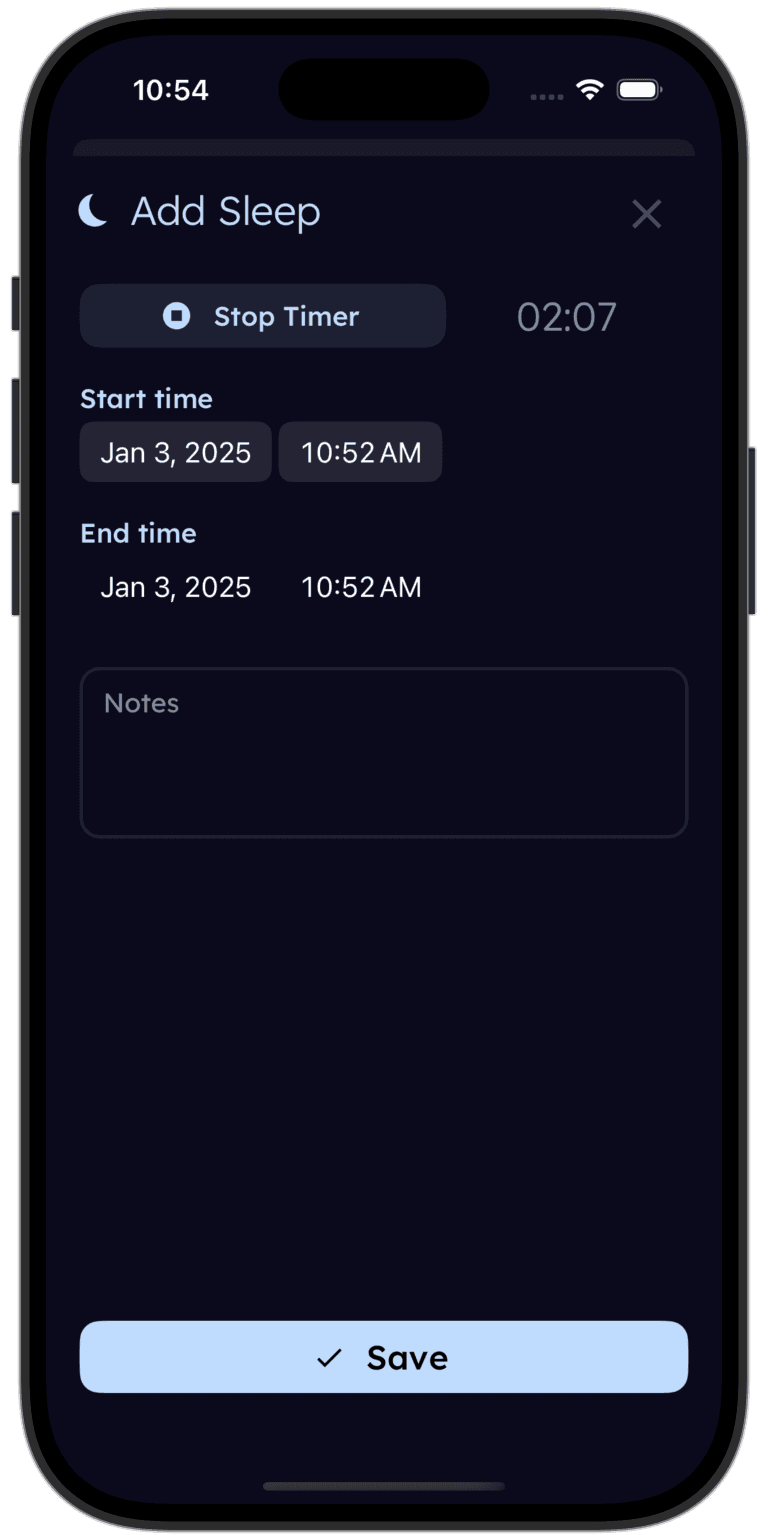
Tinylog tracks your baby's actual wake windows automatically. Log sleep in a couple taps and the app calculates how long they've been awake, spots patterns over time, and helps you see what timing actually works for your baby — no charts or mental math required.


Baby Sleep Playbook — Schedules, wake windows, and regression help
Baby Nap Schedule — Nap timing and transitions by age
Early Morning Wakings — Why your baby wakes at 5am and how to fix it
This guide is for informational purposes only and is not a substitute for professional medical advice. Every baby is different, and what works for one family may not work for another. If you have concerns about your baby's sleep, development, or health, please consult your pediatrician.