GUIDE

Baby Sleep Cycles Explained

Your baby isn't waking up because something is wrong — they're waking up between sleep cycles, just like you do. They just haven't learned to fall back asleep yet.

Understanding sleep cycles is the single most useful thing you can learn about baby sleep. Here's the plain-language version.

Sleep Cycles Are the Key to Understanding Baby Sleep

If you've ever wondered why your baby wakes up exactly 45 minutes into a nap — every single time, like clockwork — sleep cycles are the answer. Not hunger, not a bad routine, not something you're doing wrong. Sleep cycles.

Once you understand how they work, most baby sleep mysteries start making sense. The short naps, the night wakings, the dreaded 4-month sleep regression — they all come back to sleep cycles and how your baby is learning to navigate them.

This guide breaks it all down in plain language: what sleep cycles are, how they're different for babies versus adults, and what you can actually do to help your baby connect one cycle to the next.

What Is a Sleep Cycle?

A sleep cycle is one complete trip through all the stages of sleep — from light to deep and back again. Your brain does this on repeat, all night long, like laps in a pool.

For adults, one cycle takes about 90 minutes. You move from light sleep into deep sleep, then into REM sleep (the dreaming phase), and then briefly surface to near-wakefulness before starting the next cycle. You do this four to six times a night, and you almost never remember the brief awakenings between laps.

Babies do the same thing — but their cycles are shorter, their sleep stages are simpler (at least at first), and they haven't learned to fall back asleep during those between-cycle awakenings. That's the whole problem in one sentence.

Newborn Sleep Cycles vs. Older Baby Sleep Cycles

Your baby's sleep architecture goes through a massive overhaul around 4 months of age. Here's how the two systems compare.

Newborn sleep (0 to ~4 months): Your newborn only has two sleep stages — active sleep (similar to REM) and quiet sleep (similar to deep sleep). They cycle between these two stages roughly every 45 to 50 minutes. Newborns fall into deep sleep quickly and often sleep through transitions between cycles without fully waking. This is why newborns can sleep through almost anything — loud noises, being moved, the dog barking.

Older baby sleep (~4 months onward): Around 3.5 to 4.5 months, your baby's brain upgrades to the adult model with four distinct stages — stage 1 (light sleep), stage 2 (slightly deeper), stage 3 (deep, restorative sleep), and REM (dreaming sleep). Cycles lengthen to 60 to 90 minutes and include more time in light sleep stages.

This transition is permanent and it's a good thing — four-stage sleep is more restorative and better for brain development. But it comes with a cost: more light sleep means more opportunities to wake up fully between cycles. This is exactly what's happening during the 4-month sleep regression. Your baby's brain upgraded its sleep system and they haven't figured out the new controls yet.

The 45-Minute Nap Explained

The dreaded 45-minute nap is the single most common nap complaint from parents of babies under 6 months. And it has a very simple explanation: 45 minutes is one sleep cycle.

Your baby falls asleep, moves through one complete cycle of light and deep sleep, surfaces to near-wakefulness at the end of it — and wakes up. Fully. Every time, like a very annoying alarm clock they can't turn off.

Why can't they just keep sleeping? Because connecting sleep cycles is a learned skill, and they haven't learned it yet. When they surface between cycles, they need the conditions to match what was there when they fell asleep. If they fell asleep nursing, being rocked, or in your arms — and now they're in a still, quiet crib — the mismatch wakes them up completely.

When does it get better? For most babies, nap length starts improving between 5 and 6 months as the brain matures and they develop the ability to self-settle between cycles. Some babies figure it out earlier, some later. By 7 to 8 months, the majority of babies are taking at least one longer nap per day.

What if my baby is older and still taking short naps? Check wake windows first — an overtired or undertired baby is much more likely to take single-cycle naps. Also make sure the sleep environment is dark, consistent, and has white noise running. If everything checks out and your baby is happy and growing, some kids are just short nappers. It happens.


Why Babies Wake Fully Between Cycles

  • They fell asleep under different conditions than they're waking up to (rocked to sleep, then placed in crib)
  • They haven't developed the skill of self-settling yet — this is learned, not automatic
  • They're genuinely hungry — especially under 6 months, night feeds are normal and necessary
  • They're uncomfortable — wet diaper, too hot, too cold, teething pain
  • They're overtired or undertired — both make it harder to cycle smoothly
  • The sleep environment changed — white noise shut off, room got brighter, a loud sound happened

Remember: waking between cycles is biologically normal. The question isn't whether your baby will wake up — it's whether they can fall back asleep without your help.

How Sleep Cycles Connect to Regressions

Sleep cycles are the reason the 4-month sleep regression exists. That regression isn't caused by a growth spurt, teething, or a bad habit — it's caused by a fundamental change in sleep architecture. Your baby's brain goes from two sleep stages to four, which means more light sleep, more between-cycle wake points, and more opportunities to wake up fully.

This is also why the 4-month regression is the only one that's permanent. Your baby's sleep system genuinely changed. They won't go back to the simple two-stage pattern. Every regression after 4 months — at 6 months, 8 to 10 months, 12 months — is a temporary disruption caused by developmental milestones (crawling, separation anxiety, walking). Those regressions temporarily make it harder for your baby to settle at the between-cycle wake points, but the underlying sleep architecture stays the same.

The practical takeaway: if you help your baby learn to navigate sleep cycle transitions after the 4-month change, you'll be better prepared for every regression that follows. The skill of falling back asleep between cycles is the foundation of all good sleep — at any age.

Practical Tips for Helping Baby Connect Cycles

These strategies work best for babies over 4 months whose sleep architecture has matured. For younger newborns, short cycles and frequent waking are normal — you're not meant to fix them, just survive them.

Pause before you rush in

When your baby stirs or fusses between cycles, wait 5 to 10 minutes before intervening. What sounds like a full wake-up is often just a noisy transition. If you go in immediately every time, you may accidentally interrupt a cycle they would have connected on their own.

Make the room dark — really dark

During those light sleep phases between cycles, even a small amount of light can signal your baby's brain that it's time to wake up. Blackout curtains make a genuine difference. Cover any LEDs from monitors or power strips too.

Use continuous white noise

White noise smooths the transition between cycles by masking sudden sounds that can jolt a baby awake during light sleep. Keep it running for the entire nap or night — not on a timer. A consistent sound floor is what you're after.

Nail the wake window

A baby who goes down overtired or undertired will have a harder time connecting cycles. Overtired babies produce more cortisol, which makes sleep lighter and more fragmented. Undertired babies simply don't have enough sleep pressure to push through that between-cycle wake point. Check our wake windows by age guide for your baby's range.

Work on falling asleep independently

This is the big one. If your baby falls asleep being rocked and wakes up in a still crib, the mismatch startles them. Practicing drowsy-but-awake — even imperfectly — helps them learn that the crib is where sleep happens. When they surface between cycles, the environment matches what they expect.

Give it time — especially before 5 to 6 months

Before about 5 to 6 months, many babies physically cannot connect sleep cycles during naps. Their nervous systems aren't mature enough yet. This isn't a failure of your approach — it's development. Short naps are normal and will improve.

For a complete age-by-age approach to wake windows, nap schedules, and sleep strategies, check out the baby sleep playbook.

What No One Tells You

You wake between cycles too

Adults cycle through sleep stages every 90 minutes or so, and we briefly surface to near-wakefulness between every single cycle. We check that everything is the same — pillow is there, blanket is on, room is dark — and drift back off without ever forming a memory of it. Your baby is doing the same thing, minus decades of practice.

Short naps are biologically normal for young babies

The internet will make you feel like every nap should be 90 minutes or longer. For babies under 5 to 6 months, one-cycle naps are completely normal and developmentally appropriate. Your baby isn't broken and you aren't doing something wrong. Nap length naturally extends as the brain matures.

Night sleep cycles connect before nap cycles

Most babies learn to link sleep cycles overnight before they can do it during naps. The drive to sleep is stronger at night thanks to melatonin and circadian rhythm. So your baby might sleep long nighttime stretches while still taking 45-minute naps — and that's perfectly typical.

There's no single right way to handle this

Some families sleep train. Some wait it out. Some co-sleep within safe guidelines. Some do a little of everything depending on the night. All of these approaches can work. The only wrong answer is the one that makes you feel terrible and isn't working for anyone. Trust yourself.

tinylog sleep tracker showing nap duration trends over time

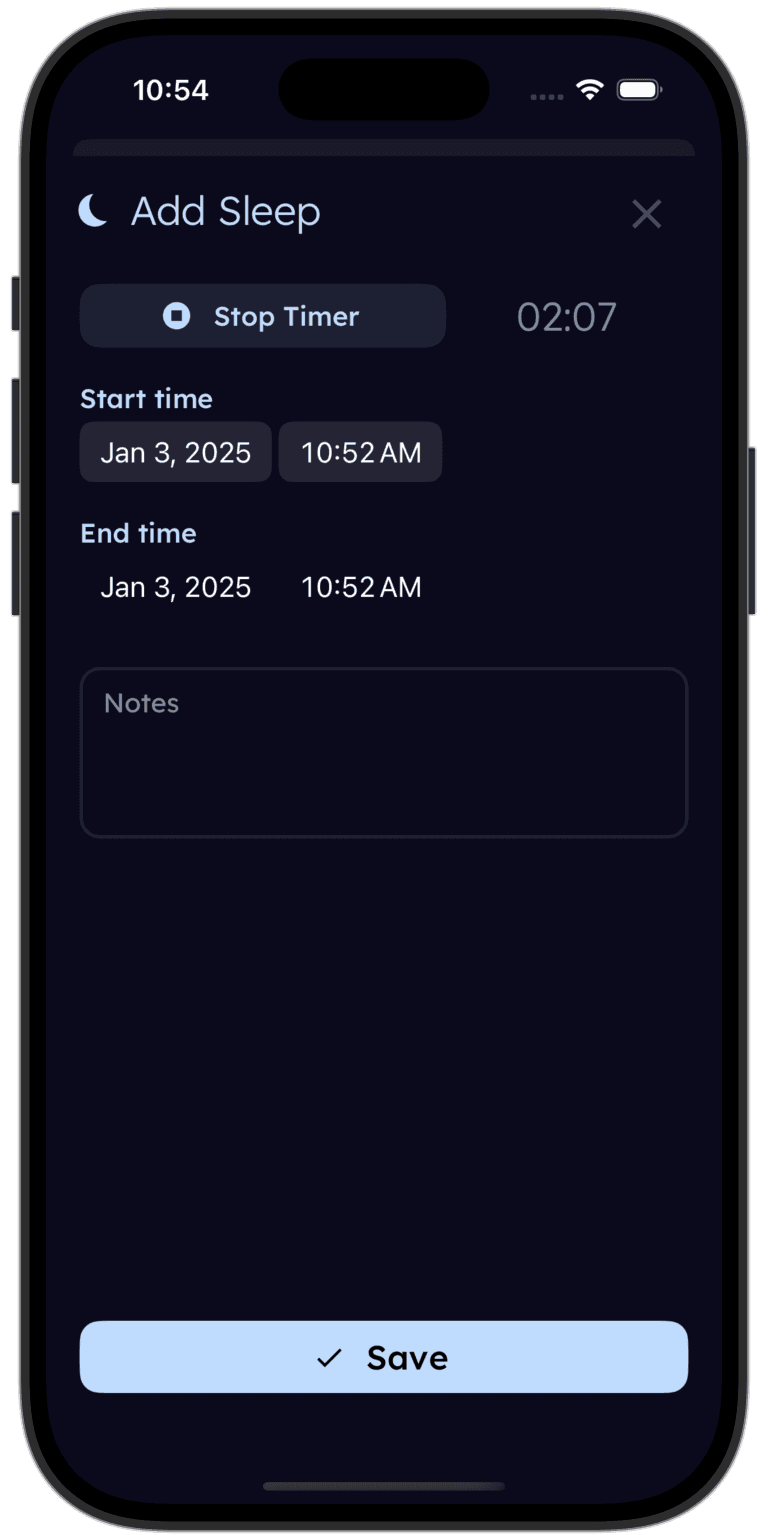
See sleep cycle patterns you'd never catch on your own.

Log naps and night sleep in a couple of taps and tinylog shows you the patterns — nap lengths, wake-ups per night, and whether those 45-minute naps are actually getting longer over time.

Download on the App StoreGet It On Google Play

When to Talk to Your Pediatrician

  • Your baby seems excessively sleepy during the day and is hard to wake for feeds
  • You notice pauses in breathing, gasping, or unusual sounds during sleep
  • The sleep disruption is severe and shows no improvement after 6 or more weeks
  • Your baby is not feeding well or refusing feeds alongside the sleep changes
  • Weight gain has stalled or your baby is losing weight
  • You're concerned about your own mental health — sleep deprivation is serious, and you deserve support too

You never need a 'good enough' reason to call your pediatrician. 'I'm worried' is always sufficient. That's what they're there for.

Related Guides

Sources

  • Mindell, J. A., Leichman, E. S., DuMond, C., & Sadeh, A. (2017). Sleep and Social-Emotional Development in Infants and Toddlers. Journal of Clinical Child & Adolescent Psychology, 46(2), 236–246.
  • Galland, B. C., Taylor, B. J., Elder, D. E., & Herbison, P. (2012). Normal sleep patterns in infants and children: A systematic review of observational studies. Sleep Medicine Reviews, 16(3), 213–222.
  • Baby Sleep Information Source (BASIS), Durham University. Normal Infant Sleep Development. https://www.basisonline.org.uk
  • Grigg-Damberger, M. M. (2017). The Visual Scoring of Sleep in Infants 0 to 2 Months of Age. Journal of Clinical Sleep Medicine, 13(2), 201–240.
  • Jenni, O. G., & Carskadon, M. A. (2007). Sleep Behavior and Sleep Regulation from Infancy through Adolescence: Normative Aspects. Sleep Medicine Clinics, 2(3), 321–329.
  • Zero to Three. Helping Your Baby Sleep. https://www.zerotothree.org

Medical Disclaimer

This guide is for informational purposes only and is not a substitute for professional medical advice. If you have concerns about your baby's sleep or health, please consult your pediatrician.

Want this guide in your inbox?
We'll send you this guide so you can reference it when the 45-minute naps are driving you crazy.
See your baby's sleep cycle patterns in real data.
Download tinylog free — track naps and night sleep to spot the cycle-by-cycle pattern.
Download on the App StoreGet It On Google Play