GUIDE

Baby Rash After Eating

Most rashes after eating are contact irritation — food sitting on sensitive skin — not a food allergy.

Your baby just ate sweet potato and now their face looks like a crime scene. Before you panic and swear off solids forever, take a breath. Where the rash is and when it appeared tells you almost everything you need to know.

The Single Most Important Question: Where Is the Rash?

Your baby just ate something and now they have a rash. Here is the question that determines whether you can relax or need to act: is the rash only where the food touched the skin, or is it showing up in places the food never went?

If the rash is just around the mouth, on the chin, on the cheeks where food smeared, and maybe on the hands — that is almost certainly contact irritation. The food is sitting on sensitive skin and irritating it. This is incredibly common when babies start solids, especially with acidic foods like tomatoes, berries, and citrus. It is not an allergy. The food is bothering the outside of the skin, not triggering an immune response inside the body.

If hives or redness are appearing on the torso, back, arms, legs — places the food did not physically touch — that is a different story. The immune system is reacting to the food from the inside. That is a potential food allergy and it needs medical attention.

This distinction — food ON skin versus food IN the body — is the single most useful framework for evaluating any rash that appears during or after a meal.

Contact Irritation vs. Food Allergy vs. Eczema Flare
Location
Contact IrritationOnly where food touched the skin — around mouth, chin, cheeks, hands
Food AllergyCan appear anywhere on the body, including areas food never touched (torso, legs, back)
Eczema FlareIn typical eczema zones — cheeks, forehead, elbow creases, behind knees
Timing
Contact IrritationDuring or immediately after eating. Clears within 30-60 minutes of washing
Food AllergyWithin minutes to 2 hours of eating. Hives may persist or worsen
Eczema FlareHours to days after eating. Gradual worsening, not sudden onset
What it looks like
Contact IrritationRed, blotchy, mildly bumpy. Flat or slightly raised. Clear boundary where food contacted skin
Food AllergyRaised welts (hives) that may migrate. Can include swelling of lips, eyes, face
Eczema FlareDry, rough, scaly patches. Looks like their usual eczema but worse
Other symptoms
Contact IrritationNone — baby acts completely normal, keeps eating happily
Food AllergyMay include vomiting, diarrhea, fussiness, swelling, wheezing, cough, or lethargy
Eczema FlareItching, scratching, possible sleep disruption. No GI or breathing symptoms
Response to washing
Contact IrritationClears quickly once food is cleaned off the skin
Food AllergyDoes not resolve with skin cleaning — the allergen is already in the body
Eczema FlareWashing does not help. Needs moisturizer and possibly prescription treatment
What to do
Contact IrritationApply barrier cream before meals. Continue offering the food
Food AllergyStop the food. Call pediatrician. Get allergy testing before reintroducing
Eczema FlareIncrease moisturizing. Note the food as a possible eczema trigger. Discuss with pediatrician
The location of the rash is the fastest way to tell these apart. Contact stays where food touched. Allergy spreads beyond. Eczema shows up in the usual eczema spots.

Common Foods That Cause Rashes (and Why)

Not all food rashes are created equal. Some foods cause rashes because they are acidic and irritate skin on contact. Other foods cause rashes because the immune system has identified their proteins as a threat. Knowing which category a food falls into changes everything about how you respond.

Acidic contact irritants — tomatoes, citrus, berries, pineapple — cause redness because of their low pH. The acid literally irritates the thin, sensitive skin around a baby's mouth. This is not an immune reaction. It is a chemical reaction. Barrier cream prevents it entirely.

The top 9 allergens — milk, egg, peanut, tree nuts, wheat, soy, fish, shellfish, and sesame — can cause true immune-mediated reactions. These are the foods that warrant careful first introductions and a two-hour observation window.

The tricky part? Some foods are both. Strawberries are acidic (contact irritant) AND contain natural histamine-releasing compounds AND are an uncommon but real allergen. A rash from strawberries could be contact irritation, a pseudo-allergic histamine response, or a true allergy. Location and additional symptoms are what help you sort it out.

Common Foods That Cause Rashes in Babies
Tomatoes / tomato sauce
TypeContact irritant
Why It Causes a RashHighly acidic (pH ~4.0). Acid irritates the thin, sensitive skin around a baby's mouth on contact.
What to DoBarrier cream before meals. Continue offering. Not a food allergy.
Citrus fruits (orange, lemon, lime)
TypeContact irritant
Why It Causes a RashVery acidic. Juice on the skin causes immediate redness and irritation, especially in babies with eczema.
What to DoBarrier cream before meals. Offer citrus mixed into other foods to dilute the acid contact.
Strawberries / berries
TypeContact irritant (usually)
Why It Causes a RashAcidic and contain natural histamine-releasing compounds. Very commonly cause a perioral rash that looks alarming but is contact-only.
What to DoIf rash is mouth-only: barrier cream, keep offering. If hives appear on body: stop and call pediatrician.
Cow's milk / dairy
TypeTop 9 allergen
Why It Causes a RashOne of the most common food allergens in infants. Can cause true IgE-mediated allergy or non-IgE reactions (FPIES, FPIAP).
What to DoIf any symptoms beyond contact zone: stop, call pediatrician, allergy testing.
Eggs
TypeTop 9 allergen
Why It Causes a RashSecond most common food allergen in children. Egg white proteins are the usual culprit. Can cause hives, vomiting, or eczema flares.
What to DoIntroduce early (around 6 months). If reaction occurs, stop and get testing. Baked egg is often tolerated even when whole egg is not.
Peanuts / tree nuts
TypeTop 9 allergen
Why It Causes a RashAmong the most common causes of severe food allergic reactions and anaphylaxis in children.
What to DoIntroduce early per LEAP study guidelines. Thinned peanut butter (not whole nuts). Watch for 2 hours after first introduction.
Wheat
TypeTop 9 allergen
Why It Causes a RashCan cause IgE-mediated allergy or contribute to eczema flares in sensitized children.
What to DoIf contact rash only: barrier cream. If hives, GI symptoms, or swelling: stop and call pediatrician.
Soy
TypeTop 9 allergen
Why It Causes a RashCommon allergen, especially in infants already allergic to cow's milk (cross-reactivity occurs in ~15% of milk-allergic infants).
What to DoIf reaction occurs: stop the food, call pediatrician, allergy testing.
Fish / shellfish
TypeTop 9 allergen
Why It Causes a RashFish allergy and shellfish allergy are separate — allergy to one does not necessarily mean allergy to the other.
What to DoIntroduce fish early. If reaction: stop and get testing.
Sesame
TypeTop 9 allergen
Why It Causes a RashAdded to the top allergen list in 2023. Found in hummus, tahini, bread, and many prepared foods.
What to DoIntroduce early. Watch for reaction. Sesame can be hidden in ingredient lists.
Contact irritants (acidic foods) cause rashes ON the skin where they touch. Allergens cause reactions INSIDE the body that show up as hives, swelling, or GI symptoms. Some foods can do both.
tinylog feed log showing recent food introductions for tracking reactions

Was it the eggs or the strawberries? Check the log.

When a rash shows up after a meal with three new ingredients, figuring out the culprit is impossible without records. Log every new food introduction in tinylog and you will always know exactly what was on the menu when a reaction happened.

Download on the App StoreGet It On Google Play

Emergency Signs — Possible Anaphylaxis

  • Swelling of the lips, tongue, face, or throat — even mild puffiness counts
  • Difficulty breathing, wheezing, repetitive coughing, or a hoarse or changed cry
  • Vomiting shortly after eating a food (within minutes to an hour)
  • Baby becoming pale, limp, or unusually drowsy
  • Widespread hives covering the torso, back, or limbs — not just around the mouth
  • Drooling or gagging that is unusual for your baby's age
  • Any combination of skin symptoms PLUS breathing or GI symptoms — this is the hallmark of anaphylaxis

If ANY of these accompany a rash after eating, use an EpiPen (if prescribed) and call 911 immediately. Anaphylaxis can escalate from mild to life-threatening in minutes. Do not wait to see if it gets better.

Reassuring Signs — Probably Contact Irritation

  • Rash is only where food touched the skin (mouth, chin, cheeks, hands)
  • Baby is eating happily, breathing normally, acting like themselves
  • Rash fades within 30-60 minutes of cleaning the skin
  • No swelling anywhere — lips, tongue, eyes all look normal
  • No vomiting, diarrhea, or unusual fussiness
  • The same rash happens with multiple acidic foods (tomato, berry, citrus) — this pattern points to contact irritation, not allergy
  • Barrier cream before the next meal prevents or reduces the rash

If all of these are true, you are almost certainly dealing with contact irritation, not a food allergy. Barrier cream before meals and carry on.

Barrier Cream: The Underrated Secret Weapon

Here is something that would save thousands of parents from unnecessary panic every year: apply petroleum jelly around your baby's mouth before messy meals. That is it. That is the whole strategy for contact rashes.

A thick layer of Vaseline, Aquaphor, or lanolin cream creates a waterproof barrier between the food and the skin. Acidic tomato sauce? Bounces right off. Smushed berries on the chin? Cannot reach the skin. The barrier cream does not interfere with eating, does not bother the baby, and takes about five seconds to apply.

This is especially critical for babies with eczema. Eczema-prone skin has a compromised barrier, which means food irritants penetrate faster and cause more dramatic redness. For eczema babies, barrier cream before meals is not optional — it is part of the management plan.

Apply it to the chin, cheeks, around the nose, and the neck folds where food and drool collect. If your baby is self-feeding, the hands will be covered in food anyway, so do not worry about barrier cream there — just wash gently after the meal.

The New Rules: Early Allergen Introduction

If you have a parent or grandparent telling you to wait until your baby is a year old (or two, or three) before giving them peanuts or eggs, that advice is outdated. The science has done a complete 180 on this.

The LEAP study — one of the most important pediatric nutrition studies in decades — showed that introducing peanut early (between 4-11 months) to high-risk babies reduced the rate of peanut allergy by roughly 80%. Not a small effect. An enormous one. Since then, every major pediatric organization has updated their guidelines: introduce allergenic foods early and often. Delaying them does not protect your baby. It may actually increase their risk.

The current recommendation is to introduce all top-9 allergens around 6 months (or as early as 4-6 months for high-risk infants with severe eczema or existing egg allergy, in consultation with your pediatrician). Once introduced, keep offering them regularly — at least a few times per week. One-time exposure is not enough. The immune system needs repeated, consistent exposure to develop tolerance.

Early Allergen Introduction Guide
Peanut
When to IntroduceAround 4-6 months for high-risk infants (severe eczema or egg allergy). Around 6 months for all others.
How to Serve ItThin smooth peanut butter with breast milk, formula, or water. Or peanut puff snacks that dissolve.
EvidenceLEAP trial: 80% reduction in peanut allergy with early introduction in high-risk infants.
Egg
When to IntroduceAround 6 months
How to Serve ItFully cooked scrambled egg, hard-boiled and mashed, or thin omelet strips. Start with small amounts.
EvidencePETIT and EAT studies suggest early egg introduction may reduce egg allergy risk.
Cow's milk (as ingredient)
When to IntroduceAround 6 months (in food, not as a drink)
How to Serve ItYogurt, cheese, milk mixed into foods. Do not replace breast milk or formula with cow's milk as the main drink until 12 months.
EvidenceEarly dairy exposure through food appears safe and may be protective.
Wheat
When to IntroduceAround 6 months
How to Serve ItToast strips, pasta, infant cereal containing wheat.
EvidenceNo strong evidence for delayed introduction. Earlier is at least as safe as later.
Soy
When to IntroduceAround 6 months
How to Serve ItTofu strips, edamame (mashed or whole for older babies), soy yogurt.
EvidenceNo benefit to delaying. Introduce along with other foods.
Sesame
When to IntroduceAround 6 months
How to Serve ItThin tahini mixed into purees or spread on toast. Hummus.
EvidenceEarly introduction recommended since sesame became a labeled allergen in 2023.
Fish
When to IntroduceAround 6 months
How to Serve ItFlaked, well-cooked fish (salmon, cod). Remove all bones. Mash or offer as finger food.
EvidenceEarly fish introduction may reduce allergy risk and provides omega-3 fatty acids.
Shellfish
When to IntroduceAround 6 months
How to Serve ItFinely chopped or pureed shrimp, crab, or lobster. Fully cooked.
EvidenceShellfish allergy is separate from fish allergy. Introduce independently.
Tree nuts
When to IntroduceAround 6 months
How to Serve ItNut butters thinned with liquid (never whole nuts — choking hazard until age 4+). Nut flour in baking.
EvidenceSimilar rationale to peanut. Early introduction is preferred over delayed.
These are general guidelines. If your baby has severe eczema, an existing food allergy, or a strong family history of food allergies, talk to your pediatrician or allergist about a personalized introduction plan — some high-risk babies may benefit from starting certain allergens even earlier.

FPIES: The Food Allergy That Looks Nothing Like an Allergy

There is a type of food allergic reaction that flies under most parents' radar because it breaks all the rules. No hives. No swelling. No rash at all. Standard allergy tests come back negative. It is called FPIES — Food Protein-Induced Enterocolitis Syndrome — and it catches families completely off guard.

Here is what happens: your baby eats a food (commonly milk, soy, rice, oats, or sweet potato), seems fine for an hour or two, and then begins vomiting. Not a little spit-up — profuse, repetitive, sometimes projectile vomiting. The baby becomes pale, lethargic, almost limp. Diarrhea often follows hours later. It looks like a stomach bug, and the first time it happens, most parents and even some doctors assume that is what it is.

But then it happens again with the same food. Same delay. Same intense vomiting. That pattern — severe vomiting 1-4 hours after a specific food, with no skin symptoms — is the hallmark of FPIES.

FPIES is not rare, but it is under-recognized. If your baby has had two episodes of severe vomiting hours after the same food, mention FPIES to your pediatrician by name. Many parents end up being the ones to suggest the diagnosis.

FPIES: What Parents Need to Know
Timing
DetailsDelayed — typically 1-4 hours after eating the trigger food. This delay is why FPIES is frequently missed.
Symptoms
DetailsProfuse, repetitive vomiting (often projectile). Lethargy, pallor. Diarrhea may follow hours later. No hives, no swelling, no skin rash.
Common triggers
DetailsCow's milk, soy, rice, oats, sweet potato, egg, fish. Triggers vary by child.
Allergy testing
DetailsStandard skin prick and blood (IgE) tests are NEGATIVE. FPIES is a non-IgE-mediated reaction. Diagnosis is clinical — based on history and symptom pattern.
Severity
DetailsCan cause dehydration and, in severe cases, hypotension (low blood pressure). ER visits for IV fluids are not uncommon.
Management
DetailsStrict avoidance of trigger food(s). Most children outgrow FPIES by age 3-5. Reintroduction is done via supervised oral food challenge in a medical setting.
What parents should know
DetailsIf your baby vomits profusely 1-4 hours after trying a new food, and it happens again with the same food, bring up FPIES with your pediatrician. Two episodes with the same food is the diagnostic pattern.
FPIES does not show up on standard allergy tests (skin prick, blood IgE). Diagnosis is based on the clinical pattern: profuse vomiting 1-4 hours after a specific food, with no skin symptoms, happening on more than one occasion with the same food.
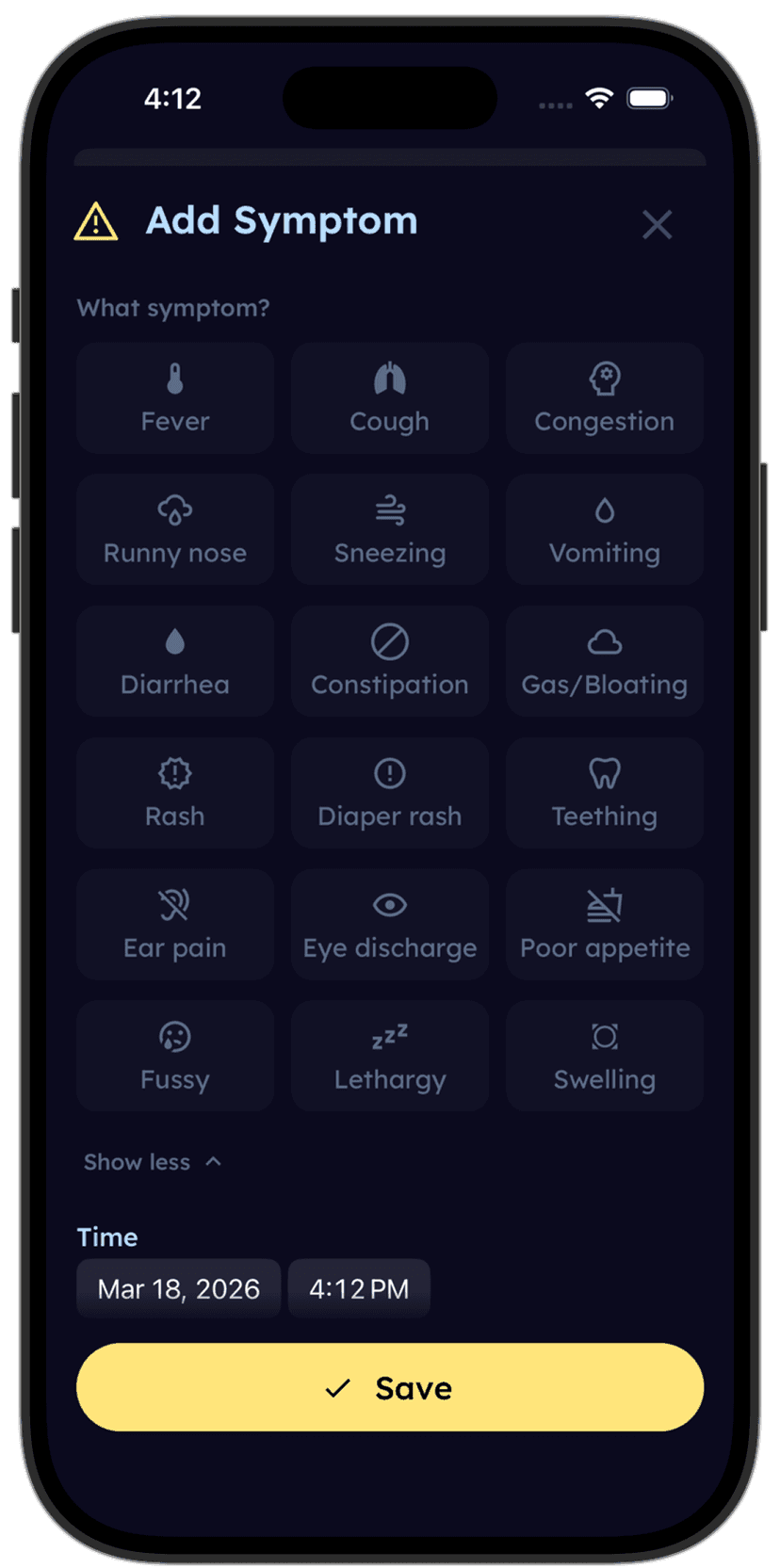
tinylog symptom and feed log showing delayed reaction timeline

Delayed vomiting after rice cereal — is there a pattern?

FPIES reactions happen hours after eating, making the connection to food easy to miss. When you log every meal and every symptom in tinylog, that two-hour delay between oat cereal and vomiting stops being invisible — the timeline tells the story your memory cannot.

Download on the App StoreGet It On Google Play

When to Get Allergy Testing

Not every rash after eating needs allergy testing. In fact, testing a baby who has only had contact rashes is likely to cause more problems than it solves — skin prick tests and blood tests for food allergies have a significant false-positive rate, which means your baby could test "positive" for an allergy they do not actually have, leading to unnecessary food avoidance.

Allergy testing makes sense when your baby has had a convincing allergic reaction — hives beyond the contact zone, vomiting, swelling, or breathing changes after a specific food. It also makes sense for babies with moderate-to-severe eczema, since about 30% of them have a co-existing food allergy.

The two main tests are skin prick testing (SPT) and serum-specific IgE blood tests. Both measure IgE antibodies to specific food proteins. A positive result means the immune system has been sensitized to that food, but sensitization does not always equal clinical allergy — plenty of babies test positive but eat the food without any problem. That is why test results must be interpreted in context with the clinical history, ideally by a pediatric allergist.

For suspected FPIES, standard allergy tests will be negative. FPIES is diagnosed clinically, based on the symptom pattern, and confirmed (when needed) with a supervised oral food challenge.

Tips for Starting Solids Without the Panic

Barrier cream is your best friend during solids

Before every messy meal, apply a thick layer of petroleum jelly (Vaseline) or lanolin around your baby's mouth — chin, cheeks, around the nose, and on the hands if they are self-feeding. This creates a waterproof shield between the food and the skin. It does not interfere with eating and it dramatically reduces contact rashes. Think of it like sunscreen for mealtimes.

The 'tomato test' tells you a lot

Acidic foods like tomatoes, berries, and citrus cause contact rashes in a huge number of babies — it is one of the most common things parents mistake for a food allergy. If your baby gets red around the mouth from tomato sauce but nowhere else on the body, and they are eating happily with no other symptoms, that is not an allergy. That is acid on sensitive skin. Barrier cream and carry on.

Two-hour observation window for new allergens

When you introduce a top-9 allergen for the first time, offer it early in the day (not right before bedtime) and watch for two hours afterward. Most IgE-mediated allergic reactions happen within this window. If your baby makes it through two hours with nothing but maybe a contact rash around the mouth, you can feel very confident it is not an allergy.

Do not delay allergens — introduce them early

The old advice to wait until 1, 2, or 3 years old to introduce allergenic foods has been completely reversed. Current evidence — especially the LEAP study for peanut — shows that early introduction (around 4-6 months for high-risk babies, 6 months for everyone else) actually reduces allergy risk. Delaying allergens does not protect your baby. It may increase their risk.

Eczema babies need allergens even more urgently

Babies with moderate-to-severe eczema are at the highest risk for developing food allergies. The theory is that allergens enter through broken skin and sensitize the immune system before the baby ever eats the food. Getting allergens into the gut (by eating them) before they sensitize through the skin may prevent allergies from developing. Talk to your pediatrician about early allergen introduction — some high-risk babies benefit from starting peanut as early as 4 months.

Photos + timestamps = better doctor visits

Rashes disappear by the time you get to the pediatrician's office. Always take photos immediately — close-ups of the rash and wider shots showing the distribution on the body. Note the time, what the baby ate, and how long after eating the rash appeared. This information is far more useful to your doctor than a verbal description of a rash they cannot see.

What This Actually Looks Like at Your Kitchen Table

Your six-month-old is trying mashed strawberries for the first time. Within minutes, the skin around her mouth turns red and blotchy. Your heart rate doubles. You grab your phone and start googling "baby allergic reaction strawberries."

But look at the whole picture. The redness is only where the strawberry mush physically touched her face. Her torso, arms, and legs look completely normal. She is not fussy — she is actually reaching for more. No swelling anywhere. No vomiting. Just a red, blotchy ring around her mouth where acidic berry juice sat on sensitive baby skin.

You gently wash her face with a warm cloth. Within twenty minutes, the redness is already fading. By naptime, her skin looks completely normal.

That was contact irritation. The strawberry's acidity irritated her skin on contact. Next time, you will put a layer of Vaseline around her mouth before the meal. The time after that, you will forget, and she will get the same red ring, and you will remember, and eventually it becomes second nature.

Now imagine a different scenario. Same six-month-old, but this time she is trying scrambled egg. Ten minutes after eating, you notice raised, red welts on her belly — nowhere near where the egg touched her face. Then a few more on her back. She starts rubbing her face and fussing. Her upper lip looks slightly puffy.

That is different. That is a food allergy. The egg proteins entered her body through her gut and triggered an immune response that is showing up everywhere, not just at the contact point. You take a photo, note the time, and call your pediatrician. They refer you to an allergist. Egg goes on the "not yet" list until testing is done.

Two very different scenarios. Two very different responses. And the key difference was simply: where is the rash?


Related Guides

  • Baby Rash Types — Visual guide to every rash your baby might get
  • Baby Hives — Allergic hives vs. contact rashes from food
  • Baby Eczema — The eczema-food allergy connection in babies
  • Drool Rash — Mouth-area irritation from drool vs. food contact
  • Baby Acne — Facial bumps that can be confused with food reactions

Sources

  • Du Toit, G., et al. (2015). Randomized Trial of Peanut Consumption in Infants at Risk for Peanut Allergy (LEAP Study). New England Journal of Medicine, 372(9), 803-813.
  • Togias, A., et al. (2017). Addendum Guidelines for the Prevention of Peanut Allergy in the United States. Journal of Allergy and Clinical Immunology, 139(1), 29-44.
  • Nowak-Wegrzyn, A., et al. (2017). International Consensus Guidelines for the Diagnosis and Management of Food Protein-Induced Enterocolitis Syndrome (FPIES). Journal of Allergy and Clinical Immunology, 139(4), 1111-1126.
  • American Academy of Pediatrics (AAP). (2024). Food Allergies in Children. HealthyChildren.org.
  • Sampson, H. A., et al. (2014). Food Allergy: A Practice Parameter Update. Journal of Allergy and Clinical Immunology, 134(5), 1016-1025.
  • Perkin, M. R., et al. (2016). Randomized Trial of Introduction of Allergenic Foods in Breast-Fed Infants (EAT Study). New England Journal of Medicine, 374(18), 1733-1743.
  • American Academy of Allergy, Asthma & Immunology (AAAAI). (2024). Prevention of Allergies and Asthma in Children. AAAAI.org.

Medical Disclaimer

This guide is for informational purposes only and is NOT a substitute for professional medical advice. If your baby shows signs of anaphylaxis — difficulty breathing, facial swelling, widespread hives with vomiting or lethargy — use an EpiPen if prescribed and call 911 immediately. For non-emergency food reactions, consult your pediatrician or a pediatric allergist for proper evaluation and testing.

Get this guide in your inbox.
We'll email you this guide so you have the contact rash vs. allergy checklist handy the next time a new food causes a reaction.
New food + new rash? Check the log.
Download tinylog free — track every food introduction and any reactions in one place.
Download on the App StoreGet It On Google Play