
GUIDE
BabyBjörn Bouncer Balance Soft vs. Fisher-Price Slim Spaces Swing
Published on
These are totally different categories solving the same problem — keeping your baby content while you eat a meal with both hands. The BabyBjörn is a premium, no-battery bouncer powered by your baby's own kicks. The Fisher-Price is a motorized swing that folds flat for small spaces. Budget, space, and your baby's temperament will decide this one.
A bouncer and a swing might live in different aisles, but they compete for the same spot in your living room. The BabyBjörn Bouncer Balance Soft (~$200) uses zero batteries and relies on natural, baby-driven motion. The Fisher-Price Slim Spaces Compact Swing (~$80) runs on batteries and delivers powered swinging with vibrations and sound. Both buy you hands-free minutes. Here is how they actually compare.
Log naps, feeds, and moods
A Bouncer and a Swing Walk Into Your Living Room
Okay so here is the thing nobody tells you: bouncers and swings are not the same product and they are not interchangeable. But they are both trying to solve the exact same problem — giving you 15 to 30 minutes where your baby is happy and your hands are free.
The BabyBjörn Bouncer Balance Soft is the fancy minimalist option. No batteries, no sounds, no motor. Your baby kicks, it bounces. That is literally the entire product. And somehow it costs $200.
The Fisher-Price Slim Spaces Compact Swing is the everything-plus-the-kitchen-sink option. Motor, vibrations, songs, nature sounds, six speeds. It folds skinny for small apartments. And it is about $80.
Both are legit. Neither is a scam. The right one depends on your baby, your space, and whether the sound of "battery-operated lullaby on repeat" makes you want to scream into a pillow.
We are comparing across categories here — bouncer vs. swing — which means this is less about "which is better" and more about "which one does your baby actually want." Some babies are bouncers. Some are swingers. Some refuse both and only want your arms, in which case, condolences.
| Feature | BabyBjörn Balance Soft | Fisher-Price Slim Spaces | What It Means |
|---|---|---|---|
| Category | Bouncer (no motor) | Swing (motorized) | Different product types. Bouncers use baby-powered motion; swings use battery-powered motion. |
| Price | ~$200 | ~$80 | The Fisher-Price costs less than half. That price gap is real. |
| Weight limit | Up to 29 lbs | Up to 25 lbs | BabyBjörn lasts a bit longer. Both cover the first year for most babies. |
| Product weight | ~4.6 lbs | ~7 lbs | The BabyBjörn is featherweight. Easy to move room to room with one hand. |
| Power source | None — baby-powered | Batteries (not included) | BabyBjörn never needs batteries. Fisher-Price will eat through them, so budget for that. |
| Soothing motion | Natural bouncing from baby's kicks | 6 swing speeds + vibrations | Swing offers more variety. Bouncer motion depends on baby being awake and active. |
| Sound/music | None | Songs + nature sounds | Fisher-Price wins if audio soothing works for your baby. BabyBjörn is silent by design. |
| Recline positions | 3 positions | 2 positions | BabyBjörn offers more flexibility as baby grows. Converts to a toddler chair. |
| Foldability | Folds flat | Folds to ~6 inches wide | Both fold for storage. The BabyBjörn is flatter; the Fisher-Price is narrower upright. |
| Fabric care | Machine-washable (removable seat) | Spot clean / machine-washable pad | BabyBjörn wins here. Pop off the seat, throw it in the wash, done. |
| Assembly | Virtually none — unfold and go | Minimal — attach seat pad and mobile | Both are easy. The BabyBjörn is ready in about 30 seconds. |
The Fundamental Difference: Baby-Powered vs. Battery-Powered
This is the whole ballgame right here.
The BabyBjörn bouncer moves when your baby moves. Your newborn wiggles, the seat gently bounces in response. You can also give it a nudge with your foot while you sit on the couch. But when baby is asleep or totally still, the bouncer is also still. It is a responsive device, not an active one.
The Fisher-Price swing moves on its own. Turn it on, pick a speed, and it swings back and forth continuously whether your baby is awake or zonked out. You can add vibrations on top of the swinging. You can layer in songs or nature sounds. It is actively doing the soothing work for you.
Why this matters: some babies are soothed by motion they control. Others need that steady, rhythmic, external swing. You genuinely will not know which camp your baby falls into until you try. This is the most annoying truth in all of baby gear — your baby gets a vote and they cannot tell you in advance.
A quick hack some parents use: before committing to either, see if a friend will let you borrow theirs for a weekend. Two days is usually enough to tell whether your baby vibes with bouncing or swinging. If borrowing is not an option, buy from a retailer with a good return policy and keep the box.
The Price Gap Is Not Small
Let us be real about the money. The BabyBjörn costs roughly $120 more than the Fisher-Price. That is significant.
What you get for that extra money: premium materials, a truly elegant Scandinavian design, a fully machine-washable seat, toddler-chair conversion, and a product that will probably still look great when you hand it down to a friend. BabyBjörn bouncers hold their resale value shockingly well. Check any local parent group and you will see used ones selling for $100 to $140.
What you get with the Fisher-Price at $80: a motorized swing that actively soothes your baby without you lifting a finger. Plus sound options. Plus vibration. Feature-for-feature, the Fisher-Price actually does more stuff.
The catch: you will spend $5 to $10 a month on batteries if you use the swing daily. Over a year that adds $60 to $120 to the total cost. Factor that in.
Quick math for the spreadsheet parents out there: at $80 purchase plus $90 average in batteries over 9 months of use, the Fisher-Price total cost of ownership is roughly $170. The BabyBjörn at $200 with zero ongoing costs and $120 average resale puts your net cost at about $80. So the "expensive" option might actually be cheaper if you resell. Just saying.
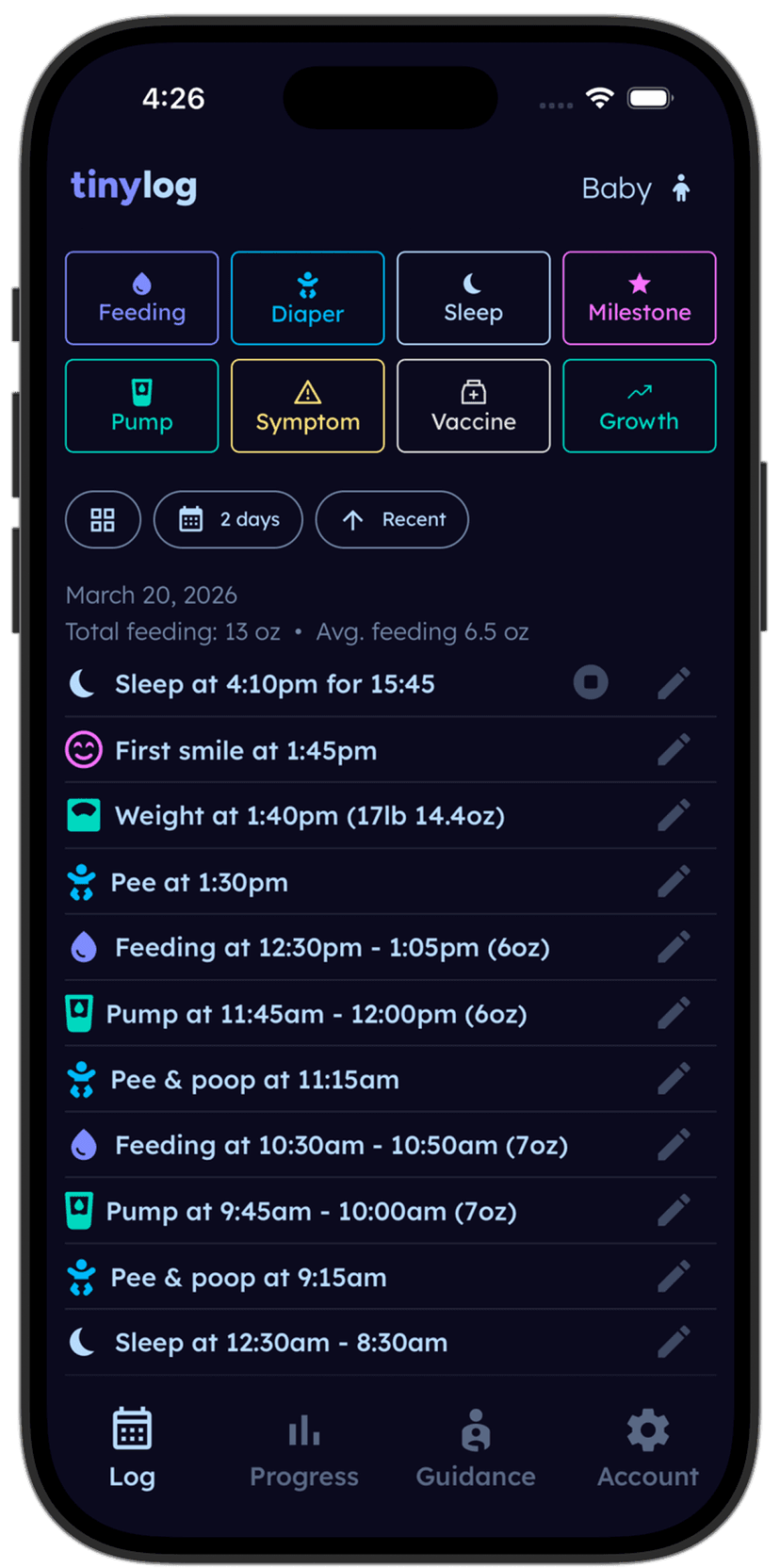
Tinylog tracks naps so you can spot patterns.
Log when your baby naps in the bouncer vs. the swing, how long they last, and what mood they wake up in. Patterns emerge fast.


Portability and Space
Both products fold, but differently.
The BabyBjörn folds completely flat. At 4.6 lbs, you can tuck it under your arm and carry it room to room, bring it to grandma's house, or throw it in the trunk. It takes up almost no space when folded. This is genuinely one of the lightest baby gear items you will own.
The Fisher-Price Slim Spaces folds to about 6 inches wide. The "Slim Spaces" name is the whole pitch — it is designed for apartments where a full-size swing would eat your entire living room. It does not fold flat like the BabyBjörn, but it fits in a closet or slides between furniture when you are not using it.
If portability between rooms and houses matters, BabyBjörn wins. If you just need something that stores small in a tiny apartment, the Fisher-Price delivers.
One thing worth mentioning: the BabyBjörn works on any surface — hardwood, carpet, tile, you name it. The rubber feet grip well and the bouncing motion works regardless of floor type. The Fisher-Price swing needs a reasonably flat surface but is not picky beyond that. Neither product should be placed on elevated surfaces like tables or countertops. Floor only, always.
| Product | Typical Price | Ongoing Cost | Monthly Cost |
|---|---|---|---|
| BabyBjörn Bouncer Balance Soft | $180–$230 | No ongoing cost | $0 after purchase |
| Fisher-Price Slim Spaces Compact Swing | $65–$90 | Batteries (~$5–$10/mo) | ~$5–$10 in batteries |
Longevity and Resale
The BabyBjörn supports up to 29 lbs and converts between three positions. The lowest position is for newborns, the middle for older babies, and the highest flips around into a toddler chair. Realistically you will get use from birth to about 2 years depending on your kid's size and interest level.
The Fisher-Price supports up to 25 lbs. Most babies outgrow swings between 6 and 9 months — not because of weight limits but because they start trying to climb out and it becomes unsafe. So the realistic use window is shorter.
On resale: BabyBjörn bouncers are legendary on the secondhand market. The fabric pops off and washes, so used ones can look almost new. You will recoup $80 to $140 on resale. The Fisher-Price resale value is much lower — maybe $15 to $30 used.
If you are thinking about future kids: the BabyBjörn is a keep-it-in-the-closet-for-baby-number-two kind of product. Wash the fabric, fold it flat, done. The Fisher-Price will work for a second baby too, but the electronics and motor have more wear-and-tear potential over time.
Choose the BabyBjörn Bouncer Balance Soft If
- You want something with zero batteries, zero cords, and zero motor noise
- Your living space is tight and you need something truly portable at under 5 lbs
- You plan to use it from newborn through toddlerhood (converts to a chair at the highest position)
- Easy cleaning matters — you want a fully machine-washable seat fabric
- You are okay spending more upfront for a buy-it-for-life kind of product
Choose the Fisher-Price Slim Spaces Swing If
- Your budget is under $100 and you need soothing gear now
- Your baby needs hands-free, continuous motion to settle down (you cannot bounce a bouncer while cooking)
- White noise and music help your baby calm down
- You want vibration as an extra soothing option
- Your apartment is small and you need something that folds to 6 inches for storage
- You are fine replacing batteries every few weeks
Where to Buy
The BabyBjörn Bouncer Balance Soft (~$200) is the kind of product that makes you feel slightly ridiculous spending that much on a baby seat — until you actually use it every single day for a year. No batteries, machine-washable, insanely light, and it holds resale value better than some cars. Worth it if the budget allows.
The Fisher-Price Slim Spaces Compact Swing (~$80) does more active soothing for less than half the price. Six speeds, vibrations, songs, nature sounds, and it folds skinny for apartment life. If your baby turns out to be a motion junkie who needs that constant swing, this thing is a lifesaver at a price that does not sting.
Real talk: if you can swing the budget (pun fully intended), having both a bouncer and a swing is the cheat code. Different times of day call for different soothing. Morning alert time? Bouncer. Fussy pre-nap meltdown? Swing. But if you have to pick one, the swing gives you more hands-free minutes; the bouncer gives you more months of use and zero ongoing costs.
Tinylog earns a small commission on purchases made through these links, at no cost to you.
Want to save a few bucks? promo.new is worth a quick look. It won't always have your product, but when it does, the savings are real.
The Bottom Line
The BabyBjörn Bouncer Balance Soft and the Fisher-Price Slim Spaces Compact Swing are solving the same parenting problem from opposite directions.
BabyBjörn is the minimalist choice — no power, no sound, no moving parts to break. It is lighter, lasts longer, washes easier, and resells for real money. You pay a premium for simplicity.
Fisher-Price Slim Spaces is the feature-rich choice — motorized swinging, vibrations, music, and a price that is hard to argue with. It does more active work so you do less. The trade-off is batteries, a shorter use window, and lower build quality.
Neither is wrong. Your baby's preference is the ultimate tiebreaker, and you will not know that until they try both.
Here is a move that actually works: if you get both (or borrow one), log nap times and fussy periods in each for a week. You will see a clear pattern — maybe the bouncer works great in the morning and the swing saves bedtime. If you are tracking nap patterns and moods, Tinylog can help you figure out what actually works fastest so you stop guessing and start sleeping.
Related Guides
- Baby Sleep Basics — Safe sleep guidelines and what to expect month by month
- 1-Month-Old Sleep Schedule — How much sleep your newborn actually needs
- Baby Feeding Chart — How much your baby should eat by age
- 3-Month-Old Sleep Schedule — Nap timing and wake windows at the peak bouncer/swing age
Sources
- BabyBjörn.com. "Bouncer Balance Soft — Product Information." 2026.
- Fisher-Price.com. "Slim Spaces Compact Swing — Product Information." 2026.
- American Academy of Pediatrics. "Safe Sleep: Back is Best." healthychildren.org, 2025.
- Consumer Reports. "Best Baby Bouncers and Swings." consumerreports.org, 2026.
- Wirecutter. "The Best Baby Bouncers and Swings." nytimes.com/wirecutter, 2026.
- CPSC. "Infant Swings Safety Information." cpsc.gov, 2025.
- Lucie's List. "Best Baby Bouncers — Tested & Reviewed." lucieslist.com, 2026.
This guide is for informational purposes only. Neither bouncers nor swings are safe for unsupervised sleep. Always follow the manufacturer's guidelines and AAP safe sleep recommendations. If your baby shows signs of discomfort or developmental concerns, consult your pediatrician.
Frequently asked questions
- Can a bouncer replace a swing?
- Not exactly. A bouncer relies on your baby's own movement or a gentle push from you. A swing provides continuous motorized motion hands-free. Some babies strongly prefer one over the other. Many parents end up owning both because they solve different moments in the day.
- Is the BabyBjörn Bouncer Balance Soft worth $200?
- For many parents, yes. It lasts from newborn to 29 lbs, the fabric is machine-washable, it folds flat for travel, and it has no batteries to replace. The build quality is noticeably higher than budget bouncers. But if your baby turns out to hate bouncers and only wants swinging motion, that is an expensive lesson.
- How long can a baby sit in the Fisher-Price Slim Spaces Swing?
- Fisher-Price recommends supervised use only and not for overnight sleep. Most pediatricians suggest limiting swing sessions to 30 minutes at a time. Babies should not sleep in swings due to positional asphyxia risk — always move a sleeping baby to a flat, firm surface.
- Does the BabyBjörn bouncer need batteries?
- No. The BabyBjörn Bouncer Balance Soft uses zero batteries and zero motors. All the bouncing comes from your baby's natural movements or a gentle push from your foot or hand. This is one of its biggest selling points — no cords, no charging, no dead batteries at 3 AM.
- Can the Fisher-Price Slim Spaces Swing fold up for storage?
- Yes. The Slim Spaces is designed specifically for small apartments. It folds to roughly 6 inches wide, so you can slide it into a closet or behind a couch when not in use. This is its main advantage over full-size swings.
- Which one is better for newborns?
- Both work from birth. The BabyBjörn has a dedicated newborn-friendly recline position and supports babies from 8 lbs. The Fisher-Price Slim Spaces also works from birth with its reclined seat. Newborns who like gentle, rhythmic motion may prefer the swing. Newborns who startle easily sometimes prefer the more contained feel of the bouncer.