


GUIDE

3 Month Old Sleep Schedule

Three months is when real patterns start forming — a more predictable bedtime, longer night stretches, and the beginning of a schedule you can almost rely on.

Your baby's circadian rhythm is kicking in, wake windows are widening, and you might be thinking 'we actually have a routine.' Enjoy this window — it's the sweet spot before the 4-month regression.

Three Months: The Turning Point

Three months is a turning point. It doesn't feel dramatic — there's no single day where everything changes — but when you look back, you'll realize this is when sleep started making sense. Your baby's circadian rhythm is genuinely online now, which means their body is producing melatonin in the evening and cortisol in the morning. Day and night are no longer abstract concepts.

You might notice a more predictable bedtime emerging, possibly shifting earlier from the 9 to 10 PM newborn range toward 7:30 to 8:30 PM. The morning wake time may be settling into a consistent window. And the naps — while still not perfectly predictable — are starting to show a rough pattern. One longer morning nap, a couple of mid-day naps, and maybe a late afternoon catnap. It won't look like this every day, but you'll start to see it more days than not.

This is also the calm before the storm. The 4-month sleep regression — the single biggest sleep disruption of the first year — typically hits between 3.5 and 5 months. If sleep is good right now, that's not a reason to panic about what's coming. It's a reason to enjoy this window and build the best sleep foundations you can.

3 Month Old Sleep at a Glance
Total sleep (24 hrs)
14–16 hours
Nighttime sleep
9–11 hours (may get one 5–6 hr stretch)
Number of naps
3–4
Nap duration
30 minutes to 2 hours
Wake windows
75–120 minutes
Every baby is different — these ranges are based on AAP and sleep research. Your baby's actual needs may vary.

Sample 3 Month Old Schedule

A realistic example — not a rigid timetable. Your baby's actual schedule may shift by 30 to 60 minutes.

Sample daily schedule

  1. Wake + feed
  2. Nap 1 (1–2 hrs — often the longest)
  3. Wake + feed
  4. Nap 2 (45 min–1.5 hrs)
  5. Wake + feed
  6. Nap 3 (45 min–1 hr)
  7. Wake + feed
  8. Catnap (20–30 min — if needed)
  9. Feed
  10. Bedtime routine (bath, pajamas, feed, book)
  11. Bedtime

The wake windows matter more than the clock times. A 3-month-old who wakes at 7:30 AM will have different nap times than one who wakes at 6:00 AM. Build the schedule around your baby's morning wake time and watch their cues within the wake windows.

Wake Windows at 3 Months

Your baby can now handle 75 to 120 minutes of awake time — a noticeable jump from just a few weeks ago. This longer awake tolerance means fewer but slightly longer wake periods, and it's what makes a more predictable daily schedule possible for the first time.

The first wake window is still the shortest — about 75 to 90 minutes. Your baby wakes up, eats, has some tummy time or interaction, and is ready for their first nap. Mid-day wake windows stretch to about 90 to 105 minutes. The last wake window before bed is often the longest — up to 2 hours — which is why the bedtime routine fits naturally here.

At 3 months, you'll get better at reading your baby's sleepy cues. Yawning, rubbing eyes, looking away from stimulation, and getting quieter are all signals that the wake window is closing. Fussing and crying mean you've probably pushed it too far. The ideal is to start your nap routine when you see those early cues, not once they're already overtired.

Naps at 3 Months

Your baby is taking 3 to 4 naps per day. The morning nap is usually the most reliable — it's often the longest (1 to 2 hours) and the easiest to get. This is because sleep pressure is highest after the overnight sleep, and the morning circadian drive supports it.

The remaining naps are less predictable. Mid-day naps may be 45 minutes to 1.5 hours. The late afternoon catnap (if your baby takes one) is usually short — 20 to 30 minutes — and its main purpose is to bridge the gap to bedtime without overtiredness.

Short naps are still completely normal at 3 months. Your baby's ability to link sleep cycles during daytime sleep is still developing. If every nap is exactly 30 to 45 minutes, that's one complete sleep cycle and it's biologically typical. This ability to connect cycles usually develops between 4 and 6 months. For now, short naps are not a problem to solve.

Nighttime Sleep at 3 Months

Nighttime sleep is genuinely improving. Many 3-month-olds can produce one stretch of 5 to 6 hours in the early part of the night, followed by shorter 2 to 3 hour stretches. Some exceptionally lucky families report 7 to 8 hour stretches — this is on the early side but within the range of normal.

Night feeds are still expected — typically 1 to 2 per night for most 3-month-olds. Your baby is growing rapidly and their caloric needs are high. If they're feeding well during the day and gaining weight appropriately, the night feeds will naturally consolidate over the coming months.

The bedtime shift is one of the most noticeable changes at 3 months. If your baby has been going to bed at 9 to 10 PM, you may notice them getting drowsy between 7 and 8 PM. Follow their lead and gradually move bedtime earlier. A bedtime routine (10 to 20 minutes of consistent calming activities) becomes meaningful now because your baby's brain can start to associate the routine with sleep.

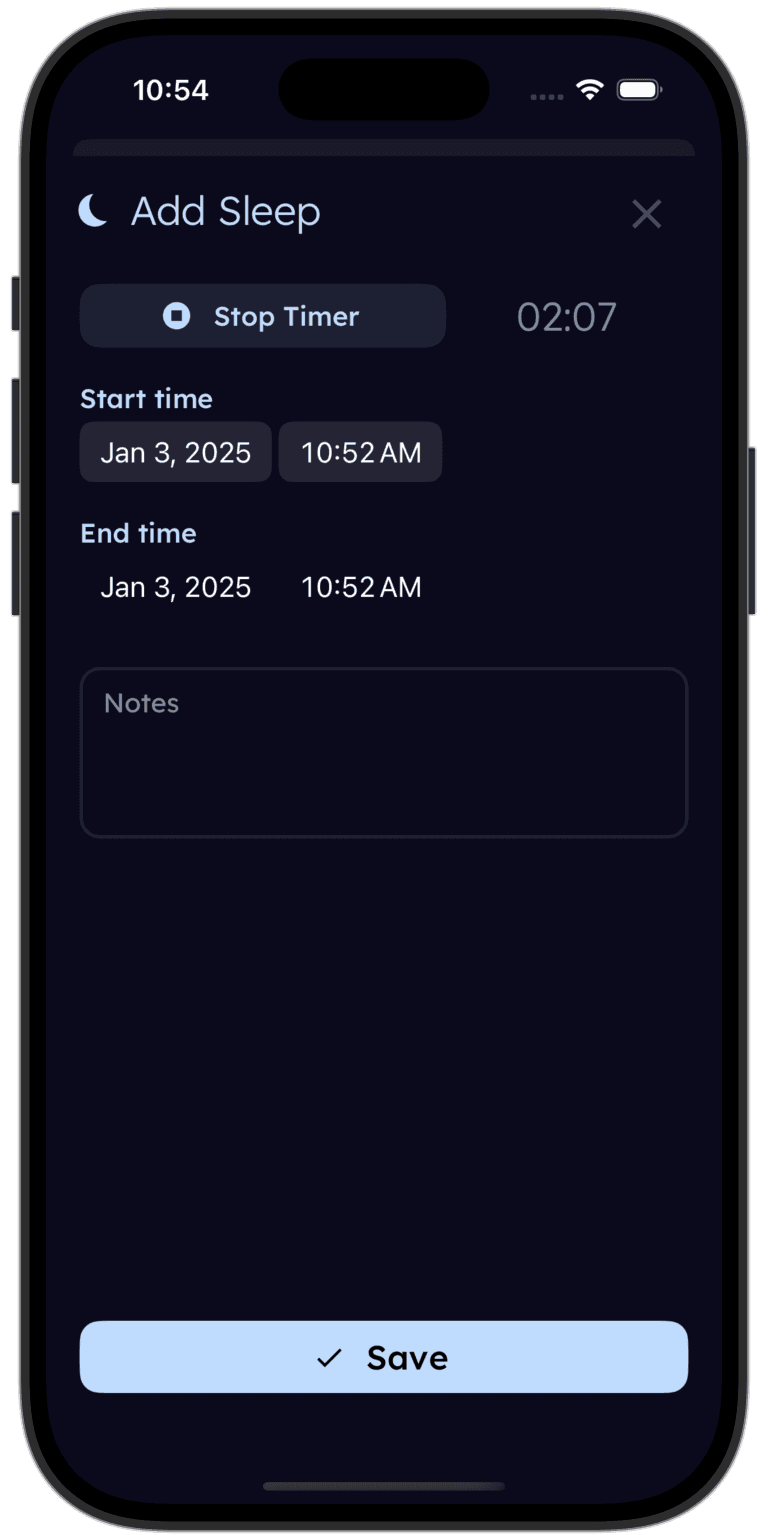
tinylog showing 3 month old sleep patterns and emerging schedule

Your baby's schedule is forming — see it in real time.

At 3 months, the pattern is emerging but it's easy to miss when you're in it. A few days of tracked sleep and feeds reveals the rhythm your baby is building, so you can lean into it instead of guessing.

Download on the App StoreGet It On Google Play

What's Happening Developmentally

Your 3-month-old is becoming a social being. They laugh, coo back and forth in "conversation," and light up when they see familiar faces. They can hold their head steady during tummy time, bat at dangling objects, and bring their hands to their mouth intentionally. These are big milestones.

The developmental change that matters most for sleep is rolling. Some babies begin rolling from tummy to back (and occasionally back to tummy) around 3 months. If your baby shows any signs of rolling — pushing up, arching, turning to one side — it's time to transition out of the swaddle. This is a safety issue: a swaddled baby who rolls to their stomach cannot use their arms to reposition.

Circadian rhythm maturation is the other major development. Your baby's suprachiasmatic nucleus (the brain's internal clock) is now responding to light and dark cycles, producing melatonin in the evening and cortisol in the morning. This is why a consistent bedtime and exposure to natural light during the day matter more now than they did a month ago — you're helping calibrate a biological clock that will serve your child for life.

Common Problems at 3 Months

The bedtime shift — when should bedtime actually move earlier?

Around 3 months, your baby's circadian rhythm is maturing and their natural bedtime starts shifting earlier. If you notice drowsiness cues between 6:30 and 8:00 PM (rubbing eyes, fussing, zoning out), that's your signal. Move bedtime 15 minutes earlier every few days until you find the right time. Don't fight the late bedtime if your baby isn't showing signs of being ready — it'll shift when their biology is ready.

Swaddle transition stress

If your baby is showing signs of rolling, you need to stop swaddling — but the swaddle has been your best sleep tool for 3 months. The transition can be rough. Try one arm out for a few nights, then both arms out, then move to a sleep sack. Some families go cold turkey. Either way, expect 3 to 7 rougher nights. White noise and a consistent bedtime routine become even more important during this transition.

Pre-regression anxiety (yours, not theirs)

You've heard about the 4-month sleep regression, and if sleep is good right now, you might be dreading it. Here's what helps: build the best sleep foundations you can NOW — consistent bedtime routine, good sleep environment (dark, cool, white noise), and practice putting baby down drowsy when you can. You can't prevent the regression, but a solid foundation makes recovery faster.

What No One Tells You About Sleep at 3 Months

This is often the sweet spot of baby sleep — enjoy it

Three months is frequently the best sleep period between birth and 6 months. The newborn chaos has settled, circadian rhythm is online, your baby may be giving you 5 to 6 hour stretches at night, and the 4-month regression hasn't hit yet. If sleep is good right now, it's not a fluke or luck — your baby's biology is in a favorable window. Enjoy it without guilt or anxiety about what's coming.

The 4-month regression can start as early as 3 months

Despite the name, the '4-month' regression is triggered by brain maturation, not a calendar. Some babies — especially those born a week or two past their due date — start showing signs at 12 to 14 weeks. If your 3-month-old was sleeping well and suddenly isn't, and they're at least 12 weeks old, the regression may have arrived early. The same rules apply: it's biological, it's not your fault, and it lasts 2 to 6 weeks.

When to Talk to Your Pediatrician

  • Your baby seems excessively sleepy and difficult to wake
  • They aren't gaining weight appropriately at their checkup
  • You notice pauses in breathing, snoring, or gasping during sleep
  • Your baby shows no interest in social interaction or smiling by the end of 3 months
  • The startle reflex hasn't diminished at all (should be fading by now)
  • You're concerned about rolling and swaddle safety
  • Your own mental health is suffering — sleep deprivation at this stage is cumulative and it's okay to ask for help

The 3- to 4-month period is a great time to discuss sleep with your pediatrician, especially if you have questions about the approaching regression or sleep training.

Related Guides

Sources

American Academy of Pediatrics (AAP). (2022). Healthy Sleep Habits: How Many Hours Does Your Child Need?
Mindell, J. A., et al. (2016). Development of infant and toddler sleep patterns. Journal of Sleep Research, 25(5), 508–516.
Galland, B. C., et al. (2012). Normal sleep patterns in infants and children: A systematic review. Sleep Medicine Reviews, 16(3), 213–222.
Baby Sleep Information Source (BASIS), Durham University. Normal Infant Sleep Development. https://www.basisonline.org.uk
Jenni, O. G., & Carskadon, M. A. (2012). Sleep Behavior and Sleep Regulation from Infancy through Adolescence. Sleep Medicine Clinics, 7(3), 529–538.

Medical Disclaimer

This guide is for informational purposes only and is not a substitute for professional medical advice. Always follow safe sleep guidelines (baby on their back, on a firm surface, in their own sleep space). Consult your pediatrician with any concerns about your baby's sleep.

Want this guide in your inbox?
We'll send you this guide so you can reference it without searching at 2 AM.
Your baby's schedule is emerging — track it.
Download ${appName} free — log sleep and feeds to see the pattern forming.
Download on the App StoreGet It On Google Play