GUIDE

4 Month Old Sleep Schedule

The 4-month regression is real, biological, and the only permanent sleep change your baby will go through. Here's how to survive it.

Your baby's sleep architecture is maturing from newborn to adult-style cycles. Everything you knew about their sleep just changed. This guide covers the schedule, the regression, and what actually helps.

The Month Everything Changes

If you're reading this, one of two things is probably happening: your baby's sleep just collapsed and you're trying to understand why, or you've heard about the 4-month sleep regression and you're bracing for impact. Either way, here's the truth: four months is the single most disruptive sleep transition of the entire first year — and it's not something you caused, something you can prevent, or something you did wrong.

At four months, your baby's brain is undergoing a permanent reorganization of how it handles sleep. The simple, two-stage newborn sleep system (active sleep and quiet sleep) is being replaced by the adult four-stage model — light sleep, deeper sleep, deep sleep, and REM sleep. This means your baby now cycles through multiple stages roughly every 45 to 60 minutes, briefly surfacing to near-wakefulness between each cycle. They have zero practice navigating these transitions.

The schedule itself is actually becoming more structured — 3 naps, predictable wake windows, a consistent bedtime. But the sleep quality within that schedule may be terrible for the next 2 to 6 weeks as your baby's brain adjusts to its new operating system. Think of it as upgrading your phone's software: the new version is better, but everything glitches during the installation.


4 Month Old Sleep at a Glance
Total sleep (24 hrs)
12–15 hours
Nighttime sleep
10–11 hours
Number of naps
3–4
Nap duration
30 min–2 hours (often short)
Wake windows
1.5–2 hours
During the regression, your baby may sleep less than these ranges — that's temporary. These numbers reflect the target, not necessarily the reality of any given week.

Sample 4 Month Old Schedule

A realistic example — not a prescription. During the regression, this schedule may feel aspirational. That's normal.

Sample daily schedule

  1. Wake + feed
  2. Nap 1 (30 min–1.5 hrs)
  3. Feed
  4. Nap 2 (30 min–1.5 hrs)
  5. Feed
  6. Nap 3 (30 min–1 hr)
  7. Feed
  8. Catnap (20–30 min — if needed)
  9. Feed
  10. Bedtime routine
  11. Bedtime

The wake windows matter more than the clock times. At 4 months, overtiredness is your biggest enemy — it creates a vicious cycle where an overtired baby sleeps worse, which makes them more overtired. Watch the clock AND your baby's cues, and err on the shorter side of wake windows during the regression.

Wake Windows at 4 Months

Your baby can handle about 1.5 to 2 hours of awake time between sleeps. The first wake window is typically the shortest — about 1.5 hours. Mid-day windows stretch to 1.75 to 2 hours. The last wake window before bed is usually right around 2 hours.

During the regression, you may need to shorten these slightly. An overtired 4-month-old has elevated cortisol (stress hormone), which makes falling asleep and staying asleep harder — the opposite of what you'd expect. If your baby is fighting naps or waking frequently at night, try pulling wake windows back by 15 minutes.

Sleepy cues at 4 months include: staring into space, becoming quiet, yawning, rubbing eyes, turning head away from stimulation. By the time they're crying, they're past the ideal window. At this age, you're often putting baby down before they look "really tired" — because the overtired tipping point happens fast.

Naps at 4 Months

Most 4-month-olds take 3 to 4 naps per day. The most common pattern: two longer naps (or attempts at longer naps) in the morning and early afternoon, and one short rescue nap in the late afternoon to bridge the gap to bedtime.

Short naps are the defining feature of this age. Many 4-month-olds nap exactly 30 to 45 minutes — one complete sleep cycle — because they wake at the light-sleep transition and can't get back to sleep. This is the same skill they're struggling with at night, but it's harder during naps because the biological drive to sleep is weaker during the day.

If your baby takes a 30-minute nap and wakes up happy, the nap was sufficient. If they wake up cranky, try to resettle them for 5 to 10 minutes (patting, shushing, gentle rocking) before getting them up. Sometimes they'll fall back asleep for another cycle. If not, shorten the next wake window slightly and try again at the next nap.

Nighttime Sleep at 4 Months

Before the regression, your baby may have been sleeping 6 to 8 hour stretches. During the regression, night wakings every 1 to 3 hours are common. This is because your baby is surfacing to light sleep every 45 to 60 minutes and doesn't know how to cycle back into deeper sleep without the conditions that were present when they first fell asleep.

Night feeds are still appropriate — 1 to 2 per night for most 4-month-olds. The challenge during the regression is distinguishing hunger wakings from sleep cycle transition wakings. A general rule: if your baby last ate more than 3 to 4 hours ago, it's likely hunger. If it's been less than 2 hours, they're probably struggling with a cycle transition and may not need to eat.

For a deep dive into the regression itself, our 4-month sleep regression guide covers the science, timeline, and survival strategies in detail.

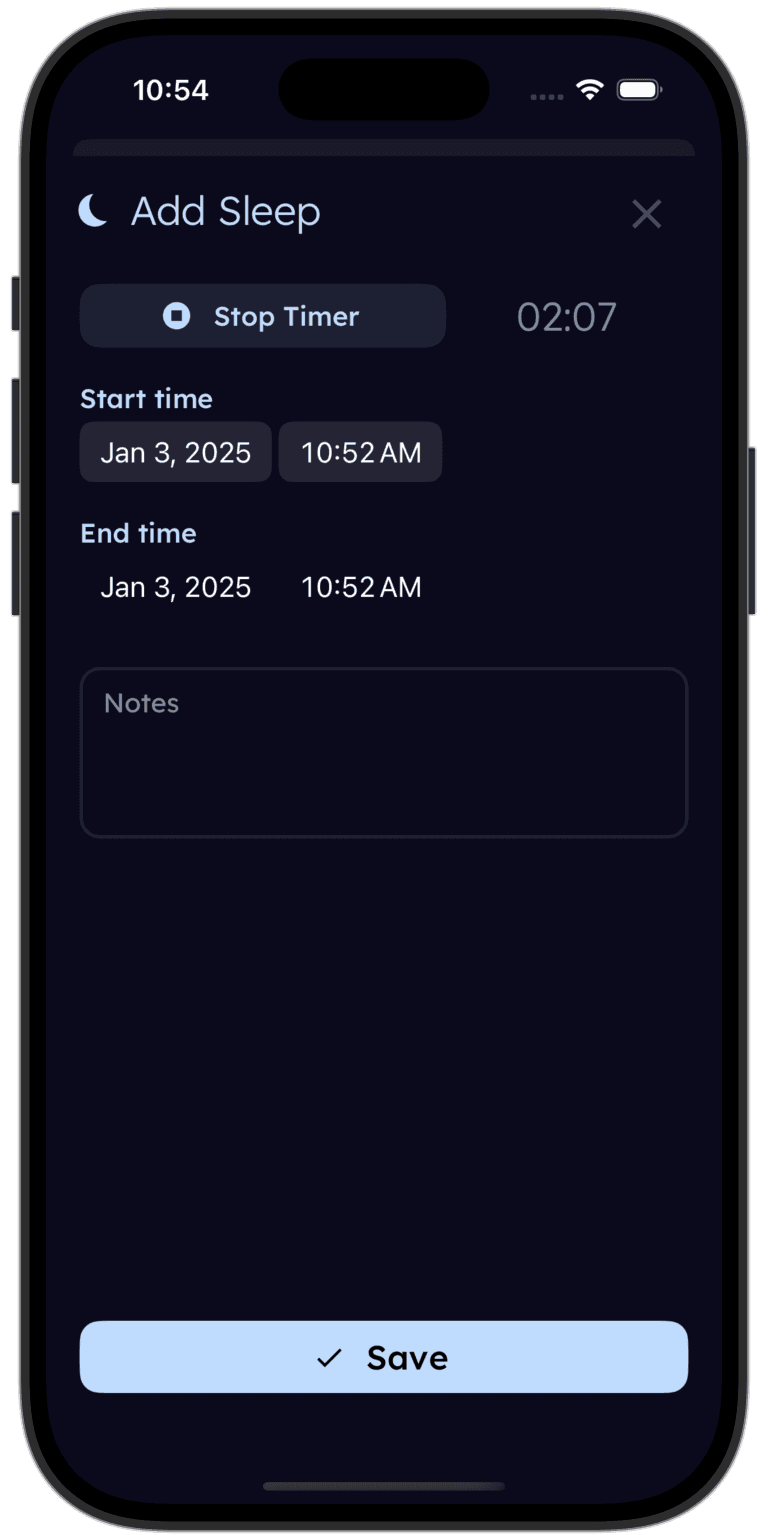
tinylog tracking 4 month old sleep showing regression recovery pattern

The regression feels endless when you can't see the progress.

Log sleep with one tap and watch the data — fewer night wakings, longer stretches creeping back, naps slowly extending. The pattern of improvement shows up in tracked data before it shows up in how you feel.

Download on the App StoreGet It On Google Play

What's Happening Developmentally

The headline development at 4 months is the sleep architecture maturation itself — a permanent shift from two sleep stages to four. This is a brain upgrade, not a setback. Your baby's sleep will be more restorative and better organized once they adjust to the new system.

Beyond sleep, your 4-month-old is making huge physical strides. Rolling from tummy to back (and sometimes back to tummy), batting at and grasping objects, bringing hands to mouth intentionally, and engaging in extended social "conversations" with cooing and laughing. These new skills are exciting and also contribute to sleep disruption — practicing rolling in the crib is common.

If your baby is rolling, swaddling must stop immediately. A swaddled baby who rolls to their stomach cannot use their arms to reposition themselves, which is a suffocation risk. Transition to a sleep sack (arms free) or wearable blanket. Expect a few rough nights during this transition — it's worth it for safety.

Common Problems at 4 Months

The 45-minute nap trap

Your baby wakes after exactly one sleep cycle — 30 to 45 minutes — every single nap. This isn't a schedule problem or an environment problem. It's a developmental limitation. Your baby's brain hasn't learned to link sleep cycles during daytime naps yet. This skill develops between 5 and 7 months for most babies. In the meantime, if they wake happy, the nap was enough. If they wake cranky, try to resettle for 5 to 10 minutes before getting them up.

Sleep fell off a cliff overnight

Your baby was sleeping 6-hour stretches and now wakes every 90 minutes. Welcome to the regression. Your baby's brain has shifted from simple newborn sleep to a four-stage sleep cycle. Between each cycle (every 45 to 60 minutes), they surface to light sleep. They haven't learned to transition through these light phases without fully waking up. This is temporary — the disruption usually lasts 2 to 6 weeks, even though the new sleep architecture is permanent.

Nothing works anymore

The swing, the swaddle, the shush-pat — tools that worked beautifully for 3 months suddenly fail. This is because your baby's sleep system has literally changed. They now have light sleep phases that are easily disrupted, and they're more aware of their environment. Focus on the basics: very dark room, consistent white noise, wake windows (not the clock), and a short predictable bedtime routine. New habits need to be built for the new sleep system.

What No One Tells You About Sleep at 4 Months

This is the only permanent sleep regression

Every other 'regression' — at 6 months, 8 months, 12 months, 18 months — is temporary, caused by developmental milestones that pass. The 4-month regression is different. Your baby's sleep architecture has permanently changed from a two-stage newborn system to a four-stage adult system. They will never go back to sleeping like a newborn. But once they learn to navigate the new system (linking cycles, transitioning through light sleep), their sleep will be better and more restorative than it was before.

Short naps aren't a problem to solve right now

Thirty-minute naps at 4 months feel like a crisis, but they're biologically normal. Your baby's brain can link sleep cycles at night (where sleep drive is strongest) before it can do so during naps. The ability to connect daytime sleep cycles develops between 5 and 7 months. Trying to 'fix' short naps at 4 months is like trying to teach a 3-month-old to walk — the hardware isn't ready yet. Focus your energy on nighttime sleep foundations instead.

When to Talk to Your Pediatrician

  • Your baby seems excessively sleepy between feeds or is hard to wake
  • They're not gaining weight appropriately
  • The regression is severe and shows no improvement after 6+ weeks
  • You notice breathing changes, pauses, or unusual sounds during sleep
  • Your baby has completely stopped napping (some disruption is normal, but zero naps is not)
  • Your own mental health is suffering — the regression is brutally exhausting and it's okay to ask for help

You never need a 'good enough' reason to call. 'My baby's sleep changed dramatically and I'm worried' is always sufficient.

Related Guides

Sources

American Academy of Pediatrics (AAP). (2022). Sleep-Related Infant Deaths: Updated 2022 Recommendations. Pediatrics, 150(1).
Mindell, J. A., et al. (2017). Sleep and Social-Emotional Development in Infants and Toddlers. Journal of Clinical Child & Adolescent Psychology, 46(2), 236–246.
Galland, B. C., et al. (2012). Normal sleep patterns in infants and children: A systematic review. Sleep Medicine Reviews, 16(3), 213–222.
Baby Sleep Information Source (BASIS), Durham University. Normal Infant Sleep Development. https://www.basisonline.org.uk
Henderson, J. M. T., et al. (2010). Sleeping Through the Night: The Consolidation of Self-regulated Sleep Across the First Year of Life. Pediatrics, 126(5), e1081–e1087.

Medical Disclaimer

This guide is for informational purposes only and is not a substitute for professional medical advice. Always follow safe sleep guidelines (baby on their back, on a firm surface, in their own sleep space). Consult your pediatrician with any concerns about your baby's sleep.

Want this guide in your inbox?
We'll send you this guide so you can reference it at 2 AM during the regression.
Track the regression so you can see it end.
Download ${appName} free — log sleep and spot the turning point in your data.
Download on the App StoreGet It On Google Play