
GUIDE
BabyBjörn Baby Carrier One vs. Ergobaby Adapt
Published on
Both are top-tier structured carriers that work from birth without an infant insert. The Ergobaby Adapt offers superior lumbar support and a wider seat for hip-healthy positioning. The BabyBjörn Carrier One excels in ease of use and offers a true forward-facing carry option.
The BabyBjörn Baby Carrier One and Ergobaby Adapt are two of the most popular structured baby carriers on the market. Both eliminate the need for a separate infant insert, both support multiple carrying positions, and both are built to last through toddlerhood. The differences come down to ergonomic design philosophy, weight distribution, and which carrying positions matter most to you.
Log feeds, sleep, and growth
Two Popular Carriers — Here's What Actually Sets Them Apart
The BabyBjörn Baby Carrier One and the Ergobaby Adapt sit at the top of almost every "best baby carriers" list, and both deserve to be there. They are well-built, safe, and designed to work from day one without a separate infant insert.
But they are built on different design philosophies. BabyBjörn prioritizes ease of use — quick buckles, intuitive design, and a detachable front panel that lets you lay a sleeping baby down without disturbing them. Ergobaby prioritizes long-haul ergonomics — a wide seat, padded lumbar waistband, and a 45 lb weight limit that carries you deep into toddlerhood.
The right carrier depends on what you value most: convenience and simplicity, or extended comfort and longevity. Here is how they compare on every feature that matters.
For tips on babywearing during daily routines, see our baby feeding chart — it helps to know when your baby will want to eat while you are out and about.
| Feature | BabyBjörn Carrier One | Ergobaby Adapt | What It Means |
|---|---|---|---|
| Manufacturer | BabyBjörn (Sweden) | Ergobaby (United States) | Both are established, well-regarded baby gear brands with decades of carrier experience. |
| Carry positions | 4 positions: front inward (newborn), front inward (toddler), front outward, back | 3 positions: front inward, hip, back | BabyBjörn wins if forward-facing out matters to you. Ergobaby offers a hip carry instead. |
| Infant insert required | No — adjustable from birth | No — adjustable from birth | Tie. Both adapt to newborns without a separate insert, saving $30–$40. |
| Weight range | 7–33 lbs (3.2–15 kg) | 7–45 lbs (3.2–20 kg) | Ergobaby's higher limit extends usability well into toddlerhood. |
| Waistband & lumbar support | Firm waistband, no dedicated lumbar pad | Wide padded waistband with lumbar support pad | Ergobaby provides noticeably better lower-back support during long carries. |
| Shoulder straps | Padded, can cross in back | Thickly padded, cross-strap or backpack style | Both are comfortable. Ergobaby's thicker padding distributes weight better with heavier babies. |
| Ease of use | Very easy — one-hand buckles, quick on/off | Moderate learning curve, especially for back carry | BabyBjörn is the easier carrier to learn. Most parents get it right on the first try. |
| Sleeping baby transfer | Front panel detaches — baby can be laid down without unbuckling | Must unbuckle to remove baby | BabyBjörn's detachable front panel is a standout feature for nap transfers. |
| Hip-healthy design | IHDI acknowledged | IHDI acknowledged | Tie. Both support the recommended M-position for hip development. |
| Machine washable | Yes | Yes | Tie. Both can go in the washing machine, which you will appreciate. |
| Carrier weight | ~2.0 lbs (0.9 kg) | ~1.76 lbs (0.8 kg) | Negligible difference. Both are light enough to toss in a diaper bag. |
The Ergonomic Difference That Matters Most
The core design difference between these two carriers is how they distribute your baby's weight across your body — and how they position your baby's hips and legs.
The Ergobaby Adapt uses a wide, bucket-style seat that keeps your baby in a deep "M-position" — knees higher than hips, thighs fully supported. This is the position recommended by the International Hip Dysplasia Institute for healthy hip development. The padded lumbar waistband shifts a significant portion of the baby's weight onto your hips, reducing shoulder and back strain.
The BabyBjörn Carrier One also achieves the M-position, but uses a narrower adjustable seat. For newborns this works well. As your baby grows past 20 lbs, some parents find the seat does not keep the thighs as fully supported as the Ergobaby. The BabyBjörn's waistband is firm but thinner, which means more weight stays on your shoulders during long carries.
For walks around the neighborhood or quick errands, this difference is minor. For long hikes, all-day babywearing, or parents with existing back issues, the Ergobaby's weight distribution is meaningfully better.
Forward-Facing: A Real Advantage or a Marketing Feature?
The BabyBjörn Carrier One offers a forward-facing out position starting around 5 months. The Ergobaby Adapt does not.
This matters more than some parenting forums suggest. Around 4–6 months, many babies become intensely curious about the world and fuss when carried inward. A forward-facing carry lets them see everything — people, dogs, trees — and can be the difference between a content baby and a squirming one on a walk.
That said, pediatric guidelines recommend limiting forward-facing carry time. In this position, babies cannot turn away from overstimulation, and the spinal support is less ideal than inward carry. Most experts suggest using forward-facing carry for short periods and switching back to inward carry for naps and longer outings.
If your baby is the curious type who hates facing your chest, the BabyBjörn's forward-facing option is genuinely useful. If you are fine with the hip carry position for outward-looking babies, the Ergobaby's hip carry serves a similar purpose while maintaining better ergonomics.
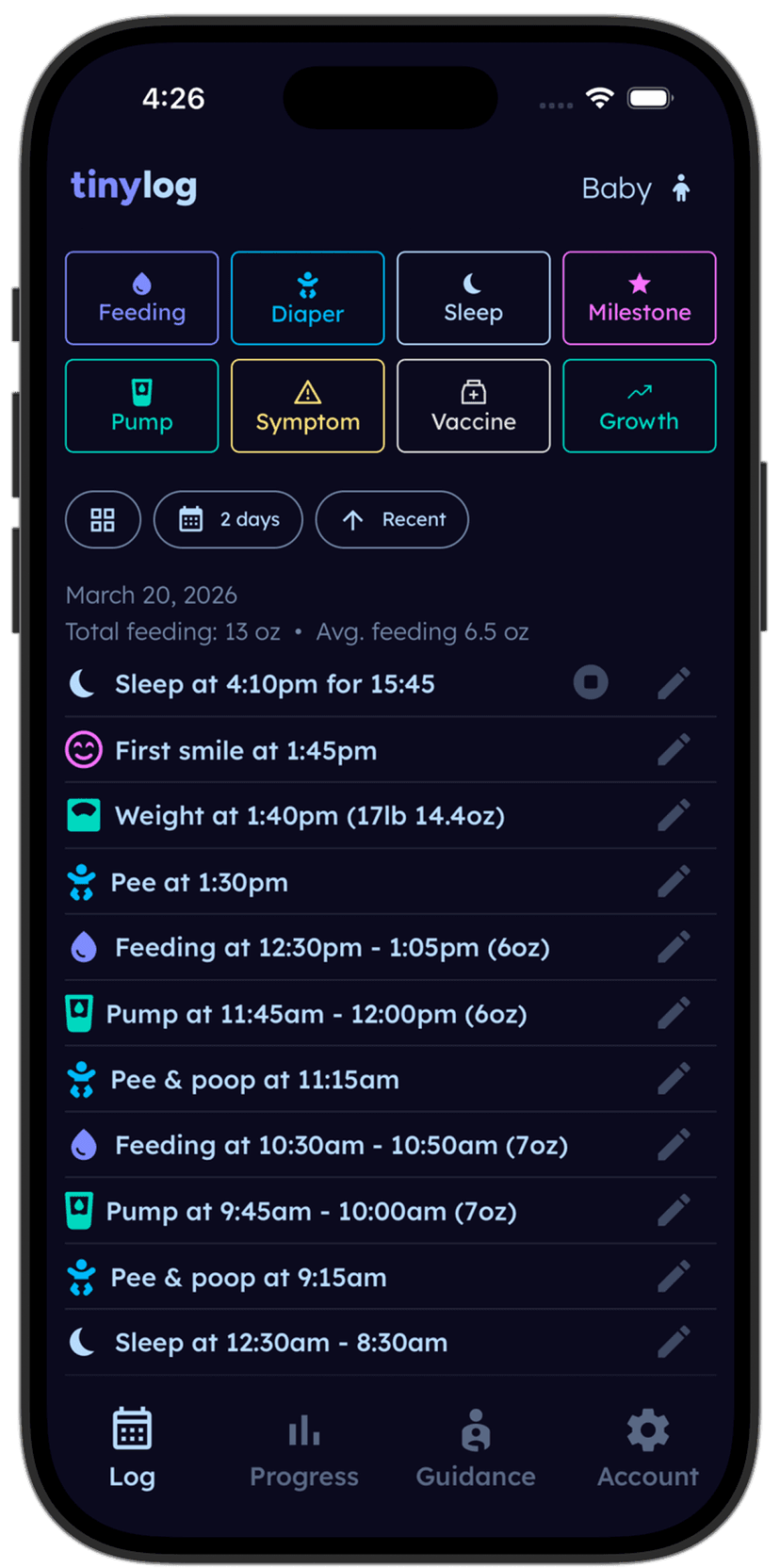
Tinylog helps you track your baby's daily routine.
Log feeds, sleep, diapers, and milestones. See patterns over days and weeks. Bring the data to your next pediatrician visit.


Ease of Use: BabyBjörn Wins This One Clearly
If you are a first-time parent who has never used a structured carrier before, the BabyBjörn Baby Carrier One is noticeably easier to figure out. The buckles click into place with one hand, the straps adjust smoothly, and most parents can get it on correctly without watching a single YouTube tutorial.
The standout feature is the detachable front panel. Once your baby falls asleep in the carrier, you can unbuckle the front panel, gently lean forward, and lay the baby down on a flat surface — still supported by the panel — without the jolting unbuckling that wakes most babies up. Parents who have used this feature tend to consider it non-negotiable in their next carrier.
The Ergobaby Adapt is not difficult to use, but it has a steeper learning curve. The back carry position, in particular, takes practice and is hard to do solo the first few times. The buckle placement requires reaching behind your back, which is awkward until you build the muscle memory.
After a week or two of daily use, most parents become comfortable with either carrier. But out of the box, BabyBjörn is the more intuitive experience.
Fabric and Breathability
Both carriers come in mesh and cotton versions, and the fabric you choose matters more than most parents expect — especially if you live in a warm climate or tend to run hot.
BabyBjörn Carrier One Air uses a 3D mesh fabric throughout the entire carrier. It is noticeably cooler than the cotton version and dries quickly after washing. The mesh is soft against skin but does not have the plush feel of cotton. For summer babywearing or warm indoor environments, the Air version is worth the price premium.
Ergobaby Adapt SoftFlex Mesh also uses an all-mesh construction. It is breathable and lightweight, though some parents report it feels slightly less airy than the BabyBjörn mesh. The older cotton Ergobaby Adapt has been discontinued in most markets, so the mesh version is now the standard.
If you choose the cotton version of the BabyBjörn, expect both you and your baby to get warm during summer outings. A sweaty, uncomfortable baby will fuss regardless of how good the carrier's ergonomics are. For most climates, the mesh versions of either carrier are the smarter buy.
| Product | Typical Price | Cost Per Month of Use | Notes |
|---|---|---|---|
| BabyBjörn Baby Carrier One (Cotton) | $149–$179 | ~$6–$7 (over 24 months of use) | Cotton version. Air mesh version runs $179–$219. |
| Ergobaby Adapt (SoftFlex Mesh) | $149–$169 | ~$4–$5 (over 36+ months of use) | Longer usable lifespan due to 45 lb limit. Older cotton version is discontinued. |
Price and Long-Term Value
At retail, both carriers land in the $149–$179 range for their standard versions. The BabyBjörn Carrier One Air (mesh) version runs closer to $179–$219.
Where the value equation shifts is longevity. The Ergobaby Adapt supports babies up to 45 lbs, meaning you can realistically use it until your child is 3–4 years old. The BabyBjörn Carrier One tops out at 33 lbs, which most children reach around 18–24 months.
If you plan to carry past age 2, the Ergobaby Adapt delivers more months of use per dollar. If you are buying primarily for the first year and a half, the cost difference is negligible.
Both carriers hold their value well on secondhand markets. A gently used BabyBjörn or Ergobaby typically resells for 50–70% of retail price, making either a reasonable investment even if your babywearing window turns out to be shorter than expected.
Choose the BabyBjörn Carrier One If
- You want the easiest carrier to put on and take off, especially solo
- Forward-facing out carry is important to you (for curious babies 5+ months)
- You want the detachable front panel for laying sleeping babies down gently
- Your baby is under 20 lbs and you value streamlined, minimal design
- You prefer a carrier that works intuitively without watching tutorial videos
Choose the Ergobaby Adapt If
- You plan to carry well into toddlerhood (up to 45 lbs)
- You have back pain or want maximum lumbar support
- Hip carry is important to you (great for older babies who want to see the world)
- You want the most ergonomic seat width for hip-healthy positioning
- You prioritize long-wear comfort over quick on/off convenience
- You want a carrier that grows with your child for 3+ years
Where to Buy
If ease of use and forward-facing carry are your priorities, the BabyBjörn Baby Carrier One ($149–$179) is hard to beat. The one-hand buckles, detachable front panel, and intuitive design make it the fastest carrier to learn and the best option for transferring sleeping babies. The cotton version is the best value; the Air mesh version adds breathability for warm climates.
If long-term comfort and extended use matter most, the Ergobaby Adapt ($149–$169) is the stronger pick. The padded lumbar waistband, wider ergonomic seat, and 45 lb weight limit mean this carrier will serve you from birth through toddlerhood — and your back will thank you on long carry days.
Our honest advice: if you can, try both on in a store with your baby. Carrier comfort is surprisingly personal — shoulder width, torso length, and your baby's preferences all play a role. The "better" carrier is the one that feels right on your body.
Tinylog earns a small commission on purchases made through these links, at no cost to you.
Tip: check promo.new before purchasing. It's hit or miss depending on the product, but when it hits, you'll be glad you checked.
The Bottom Line
Both the BabyBjörn Baby Carrier One and the Ergobaby Adapt are excellent structured carriers that work from birth without an infant insert. The differences are meaningful but not dramatic:
BabyBjörn Baby Carrier One wins on ease of use, forward-facing carry, the detachable front panel for nap transfers, and intuitive design that works right out of the box.
Ergobaby Adapt wins on lumbar support, long-term comfort, a higher weight limit (45 lbs vs. 33 lbs), a wider ergonomic seat, and overall value per month of use.
For most families, either carrier will work well. If you are primarily carrying a newborn or young infant and value convenience, lean toward the BabyBjörn. If you want one carrier that lasts from birth through toddlerhood with the best possible back support, lean toward the Ergobaby.
If you are tracking your baby's feeds, sleep, and milestones, Tinylog makes it easy to log everything and share data with your pediatrician.
Related Guides
- Baby Feeding Chart — How much your baby should eat by age
- Tummy Time — When to start and how to make it work
- Baby Growth Spurts — What to expect and when they happen
- Pampers vs. Huggies — The two biggest diaper brands compared side by side
Sources
- BabyBjörn.com. "Baby Carrier One — Product Information." 2026.
- Ergobaby.com. "Adapt Baby Carrier — Product Information." 2026.
- International Hip Dysplasia Institute. "Baby Carriers, Seats & Other Equipment." hipdysplasia.org.
- Consumer Reports. "Best Baby Carriers From Our Tests." consumerreports.org, 2026.
- Wirecutter (New York Times). "The Best Baby Carriers." nytimes.com/wirecutter, 2025.
- American Academy of Pediatrics. "Babywearing Safety Tips." healthychildren.org.
- Mommyhood101. "The Best Baby Carriers of 2026, Tested & Reviewed." mommyhood101.com.
This guide is for informational purposes only. Baby carrier choice depends on your body type, your baby's size and preferences, and your intended use. Always follow manufacturer instructions for safe babywearing. If you have concerns about your baby's hip development, consult your pediatrician.
Frequently asked questions
- Can both the BabyBjörn Carrier One and Ergobaby Adapt be used from birth?
- Yes. Both carriers are designed to be used from birth (approximately 7 lbs / 3.2 kg) without a separate infant insert. The BabyBjörn uses an adjustable head support and seat width. The Ergobaby Adapt uses a sliding seat panel and adjustable head and neck support to accommodate newborns.
- Which carrier is better for a parent with back pain?
- The Ergobaby Adapt is generally the better choice for parents with back pain. It features a padded lumbar support waistband that transfers more of the baby's weight to the hips. The BabyBjörn Carrier One distributes weight well, but its waistband is thinner and offers less lower-back support during long carries.
- Does the BabyBjörn Carrier One allow forward-facing carrying?
- Yes. The BabyBjörn Carrier One supports four carry positions: front-facing in (newborn), front-facing in (older baby), front-facing out, and back carry. The Ergobaby Adapt does not offer a forward-facing out position.
- What is the weight limit for each carrier?
- The BabyBjörn Baby Carrier One supports babies from 7 lbs to 33 lbs (3.2–15 kg). The Ergobaby Adapt supports babies from 7 lbs to 45 lbs (3.2–20 kg). The Ergobaby's higher weight limit means it can be used well into toddlerhood.
- Are these carriers safe for baby hip development?
- Both carriers have received the International Hip Dysplasia Institute's acknowledgment as hip-healthy products when used correctly. The Ergobaby Adapt's wider seat panel generally provides a deeper, more consistent M-position (knees above hips) across a wider age range. Proper positioning is important regardless of which carrier you choose.
- Which carrier is easier to put on and take off?
- The BabyBjörn Carrier One is widely considered easier to put on and take off, especially solo. Its buckles and clips are one-hand-friendly, and the front panel detaches so you can lay a sleeping baby down without waking them. The Ergobaby Adapt requires a bit more practice, particularly for the back carry position.