
GUIDE
Bibs Colour Pacifier vs. Sophie la Girafe Teether
Published on
These are different products that solve different soothing needs. The Bibs Colour pacifier is a lightweight, natural rubber pacifier for non-nutritive sucking comfort. Sophie la Girafe is a natural rubber teether designed for chewing and gum relief during teething. Many families end up owning both because they serve distinct roles at different stages.
The Bibs Colour pacifier and Sophie la Girafe teether are two of the most recognizable baby products in the world. One is a Danish-designed pacifier with a cult following on Instagram. The other is a French rubber giraffe that has been in nurseries since 1961. Parents often compare them because both are premium, natural rubber soothing products — but they work in fundamentally different ways and peak at different developmental windows.
Log feedings, teething symptoms, and soothing patterns
Two Iconic Baby Products — One for Sucking, One for Chewing
The Bibs Colour pacifier and Sophie la Girafe teether are both sitting in millions of nurseries right now, and for good reason. They are beautifully designed, made from natural rubber, and genuinely good at calming fussy babies. But they are not the same kind of product.
The Bibs Colour pacifier is for non-nutritive sucking. Babies are born with a powerful sucking reflex, and a pacifier gives them a way to self-soothe between feedings, during naps, and when the world feels too much. Bibs became wildly popular because its round shield design looks lovely and the natural rubber nipple is soft and flexible.
Sophie la Girafe is a teething toy. She gives babies something safe to chew on when their gums are swollen and sore from incoming teeth. Her legs, ears, and head are all different shapes and textures that babies instinctively bring to their mouths. The squeaker adds a layer of sensory play that keeps babies engaged.
The honest truth: these products are not competing with each other. They serve different developmental needs at different stages. Most families that buy one eventually buy the other. This guide helps you figure out which one your baby needs right now — and whether both belong in your diaper bag.
| Feature | Bibs Colour Pacifier | Sophie la Girafe Teether | What It Means |
|---|---|---|---|
| Product type | Pacifier (non-nutritive sucking) | Teether / sensory toy (chewing and gum relief) | Different categories entirely. The pacifier soothes through sucking; the teether soothes through chewing. |
| Manufacturer | BIBS (Denmark, est. 1978) | Vulli (France, Sophie created in 1961) | Both are heritage brands with decades of trust behind them. |
| Material | 100% natural rubber latex nipple, BPA-free polypropylene shield | 100% natural rubber latex (entire toy), food-grade paint | Both use natural rubber. Sophie is all-rubber; the Bibs shield is plastic. |
| Primary soothing method | Satisfies the sucking reflex — calms babies between feeds, helps with sleep | Provides textured surfaces to chew — relieves gum pressure from incoming teeth | Sucking vs. chewing. Most babies need both at different times. |
| Age range | 0–18 months (Size 1: 0–6 mo, Size 2: 6–18 mo) | 0+ months, but peak use during teething (3–12 months) | Bibs starts strong from birth. Sophie becomes most useful once teething begins. |
| Safety certifications | EN 1400, BPA-free, phthalate-free | CE marked, EN 71 toy safety, BPA-free, phthalate-free | Both meet rigorous European safety standards. |
| Sensory stimulation | Minimal — focused on soothing comfort | Multi-sensory — squeaker (hearing), spots (sight), soft texture (touch), rubber scent (smell) | Sophie doubles as a developmental toy. The pacifier is a single-purpose soother. |
| Cleaning | Sterilize in boiling water for 5 minutes; air dry. Do not microwave or dishwasher. | Surface wipe only with damp cloth and mild soap. Never submerge in water. | The pacifier is easier to sterilize thoroughly. Sophie requires more careful cleaning. |
| Durability | Replace every 4–8 weeks; natural rubber degrades with use and sterilization | Lasts 6–12 months with proper care; rubber can get sticky if exposed to heat or moisture | Sophie lasts longer per unit, but a pacifier sees far more daily use. |
| Design / aesthetics | Minimalist Scandinavian design; 30+ muted colors; round shield with a vintage look | Iconic giraffe shape; hand-painted spots; recognizable worldwide | Both are beautiful products. Bibs wins on color variety; Sophie wins on character. |
| Portability | Lightweight (~0.3 oz), clips to pacifier chains, fits in any pocket | Larger (~7 inches tall), needs a bag or diaper bag pocket | The pacifier is far easier to carry. Sophie takes up real space. |
| Price | ~$6–$8 per pacifier; ~$10–$13 for a 2-pack | ~$22–$28 per teether | Bibs is cheaper per unit, but you replace them more often. Sophie costs more upfront but lasts longer. |
How They Soothe: Sucking vs. Chewing
This is the core distinction and the reason this comparison exists.
The Bibs Colour pacifier works by satisfying the sucking reflex. Newborns have a strong, instinctive need to suck — not just for nutrition, but for comfort and self-regulation. A pacifier provides that outlet without extra feeding. Research supports that non-nutritive sucking helps calm fussy babies, reduces crying, and can even lower the risk of SIDS during sleep when used in the first year.
The natural rubber nipple on the Bibs Colour is softer and more flexible than silicone pacifiers. Many babies who reject rigid silicone pacifiers will accept a natural rubber one because it feels more like skin. The round shield allows airflow around the mouth and has that distinctive retro look that parents love.
Sophie la Girafe works through counter-pressure on the gums. When teeth start pushing through the gum line (usually between 4 and 7 months, but it varies wildly), babies instinctively want to bite down on something firm. Sophie's legs and head provide different shapes to chew on, and the natural rubber has just enough give to be satisfying without being too hard.
Sophie also works as a sensory toy. The squeak teaches cause and effect. The contrasting dark spots stimulate developing vision. The natural rubber has a subtle scent. Babies can grasp her body, which is sized for small hands. She is doing more than just soothing sore gums — she is helping your baby learn.
Here is the practical takeaway: If your baby is under 3 months and fussy, a pacifier is probably what you need. If your baby is 3+ months, drooling excessively, and gnawing on everything in sight, a teether is the better call. If your baby is in the 4–8 month sweet spot where teething is active, having both available gives you two different soothing tools for different moments.
Materials and Safety: What Is in Your Baby's Mouth
Both products use natural rubber latex, and that matters.
Bibs Colour uses 100% natural rubber for the nipple, sourced from the sap of the Hevea brasiliensis tree. The shield is BPA-free polypropylene. It meets the EN 1400 European pacifier safety standard, which covers size, shape, mechanical strength, and chemical composition. The natural rubber is free from BPA, PVC, and phthalates.
Sophie la Girafe is made entirely from 100% natural rubber, with food-grade paint for the spots and features. She is CE marked and meets the EN 71 European toy safety standard, which covers physical properties, flammability, and chemical safety. No BPA, PVC, or phthalates.
One thing to know about natural rubber: a small number of babies may have a latex sensitivity. If you notice redness, irritation, or a rash around your baby's mouth after using either product, stop use and talk to your pediatrician. True latex allergies are rare in infants, but sensitivities can occur.
The other material consideration is durability. Natural rubber breaks down faster than silicone. The Bibs pacifier should be replaced every 4–8 weeks because the nipple can develop micro-cracks that harbor bacteria. Sophie is more durable because she is thicker, but she can get sticky or tacky if exposed to excessive heat or moisture.
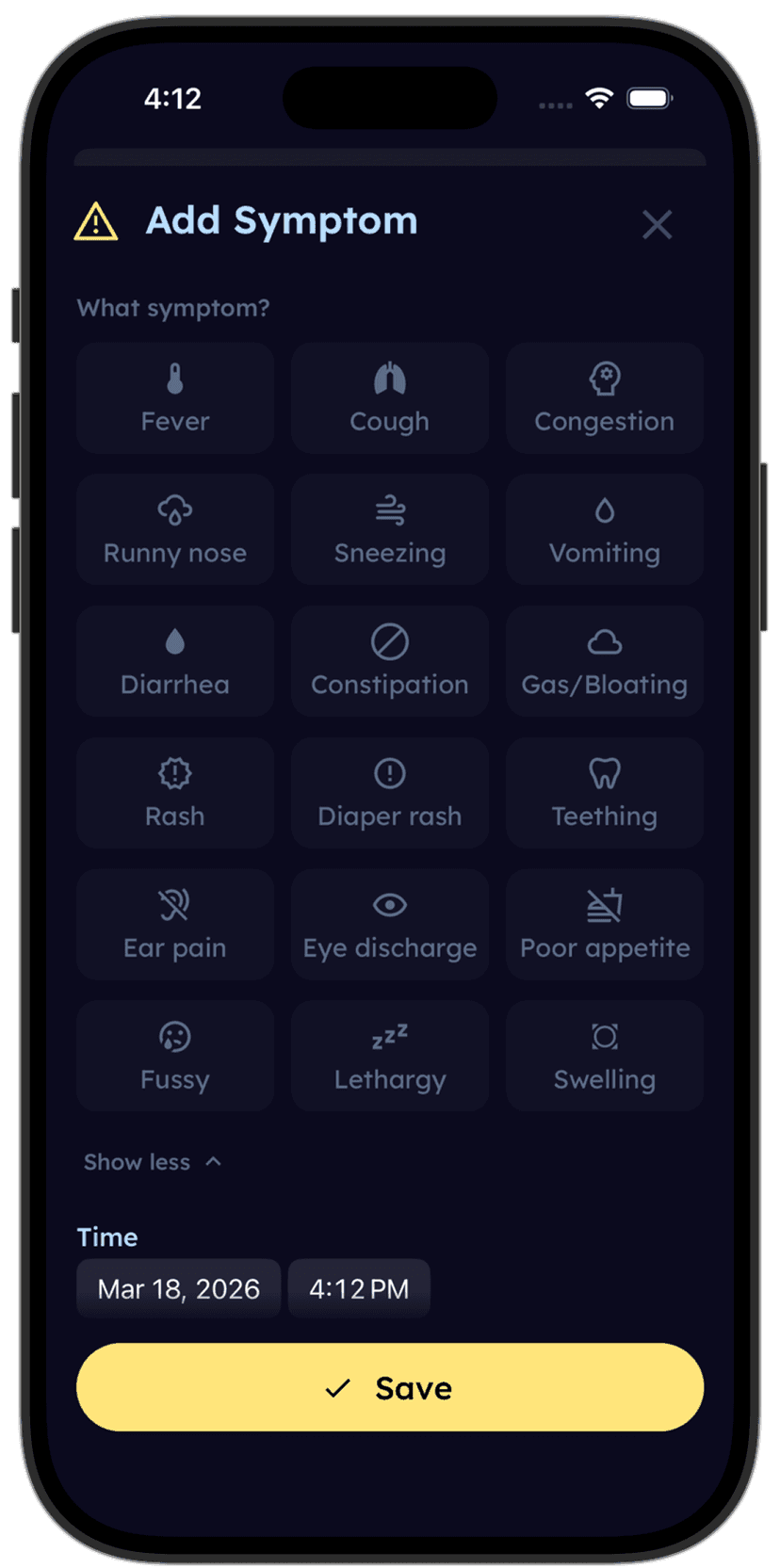
Tinylog tracks feedings so you can spot patterns.
Log feedings, note teething symptoms and fussiness, and see patterns over days and weeks. Bring the data to your next pediatrician visit.


The Cleaning Difference
How you clean these products is genuinely different, and it matters for daily life.
The Bibs Colour pacifier can be sterilized by boiling in water for 5 minutes. This is the gold standard for pacifier hygiene, and natural rubber handles it well (though repeated boiling accelerates wear). You can also use a steam sterilizer. Do not put it in the dishwasher or microwave. After sterilizing, squeeze out any water trapped in the nipple and let it air dry. Simple, effective, thorough.
Sophie la Girafe should never be submerged in water. The squeaker hole allows water inside the toy, and moisture trapped in a dark rubber interior is an invitation for mold. This made headlines a few years ago when parents cut open old Sophies and found mold growing inside. The fix is straightforward: wipe the surface with a damp cloth and mild soap. Do not put Sophie in water.
This is a meaningful practical difference. If you are a parent who wants to sterilize everything that goes in your baby's mouth, the pacifier is easier to keep clean. Sophie requires a gentler, surface-only approach. Neither is a dealbreaker, but it is worth knowing before you buy.
Age and Stage: When Each Product Shines
These two products peak at different points in your baby's first year.
Bibs Colour pacifier is useful from day one. The sucking reflex is strongest in the newborn stage, and many parents introduce a pacifier in the first few weeks (some lactation consultants recommend waiting until breastfeeding is established, typically 3–4 weeks). The pacifier remains relevant through 12–18 months, when most pediatric dentists recommend beginning to wean.
Sophie la Girafe can technically be used from birth — she is safe for newborns — but her real value starts when teething begins. Most babies show the first signs of teething around 3–4 months (drooling, gum rubbing, irritability), with the first tooth typically breaking through between 6 and 10 months. Sophie is most useful during that 3–12 month teething window.
This means there is a natural handoff. You might rely on the Bibs pacifier in the early months for general soothing and sleep, and then bring in Sophie when teething starts. By the time you are weaning off the pacifier (12–18 months), Sophie may be a beloved comfort object your toddler carries around.
Many parents keep both in the diaper bag: pacifier for calming and sleep, Sophie for teething fussiness and play. They are complementary, not competing.
| Product | Typical Price | Cost Per Unit | Notes |
|---|---|---|---|
| Bibs Colour Pacifier, 2-pack | $10–$13 | ~$5.00–$6.50 each | Replace every 4–8 weeks; budget ~$30–$50 for the first year |
| Bibs Colour Pacifier, single | $6–$8 | ~$6–$8 each | Single packs available in most colors |
| Sophie la Girafe Teether (original) | $22–$28 | ~$22–$28 | One-time purchase; lasts 6–12 months with proper care |
| Sophie la Girafe + So'Pure teething ring set | $30–$38 | ~$30–$38 | Includes Sophie and a natural rubber teething ring |
Cost: Different Math for Different Products
Comparing the cost of a pacifier to a teether is a bit like comparing the cost of socks to shoes — they are different products with different replacement cycles.
The Bibs Colour pacifier costs about $5–$8 per pacifier depending on whether you buy a single or a 2-pack. That sounds cheap, but natural rubber pacifiers need replacing every 4–8 weeks. Over 12 months of use, you might go through 6–12 pacifiers, putting your annual cost at roughly $30–$80. Add a pacifier clip or two ($8–$12 each), and you are looking at $50–$100 total for the first year.
Sophie la Girafe costs about $22–$28 upfront. That is a premium price for a baby toy, and plenty of parents experience sticker shock. But Sophie typically lasts 6–12 months of active chewing with proper care, making her a one-time purchase for most families. The annual cost is just that initial buy.
Over a full year, the total spending is surprisingly similar. The pacifier is cheaper per unit but adds up through replacements. Sophie costs more upfront but does not need replacing (usually). Neither product will break the bank, but knowing the full-year math helps you budget.
Choose the Bibs Colour Pacifier If
- Your baby is a newborn and you need something to satisfy the sucking reflex between feedings
- You want a lightweight soother that clips to clothing and goes everywhere
- Sleep is your primary challenge and you need help with settling at naptime and bedtime
- You prefer a product you can fully sterilize in boiling water
- You want affordable color options that match your nursery aesthetic
Choose Sophie la Girafe Teether If
- Your baby is showing early signs of teething — drooling, gum rubbing, fussiness
- You want a toy that doubles as a teether with multi-sensory stimulation
- Your baby has started reaching for and grasping objects (around 3–4 months)
- You prefer a single product that lasts months rather than replacing it every few weeks
- You want something your baby can hold independently and bring to their mouth on their own
- You value a toy with developmental benefits beyond just soothing — cause and effect, sensory exploration
Where to Buy
If your baby needs soothing between feedings and help settling for sleep, the Bibs Colour Pacifier (~$6–$8 single, ~$10–$13 for a 2-pack) is a gorgeous, well-made natural rubber pacifier with a devoted following for good reason. The soft nipple, round shield, and 30+ color options make it both functional and beautiful. Grab a 2-pack so you always have a backup when one falls under the couch.
If teething is the challenge and you want a toy that does double duty as a sensory development tool, the Sophie la Girafe Teether (~$25) has been the go-to teething toy for over 60 years. The varied chewing surfaces, squeaker, and graspable shape make her one of the most engaging teethers on the market. Just keep her out of the bathtub.
Our honest take: if your baby is under 3 months, start with the pacifier. If your baby is 3+ months and showing teething signs, start with Sophie. If you can budget for both, get both — they solve different problems and your baby will use them at different times throughout the day.
Tinylog earns a small commission on purchases made through these links, at no cost to you.
Tip: check promo.new before purchasing. It's hit or miss depending on the product, but when it hits, you'll be glad you checked.
The Bottom Line
The Bibs Colour pacifier and Sophie la Girafe teether are both excellent products, but they are not interchangeable. Comparing them is a bit like comparing a blanket to a pillow — both help you sleep, but they do different things.
The Bibs Colour pacifier is the right pick for calming the sucking reflex, helping your baby self-soothe, and supporting sleep. It is most useful from birth through 12–18 months. The natural rubber nipple is soft and well-accepted by babies, the design is timeless, and the price is reasonable.
Sophie la Girafe is the right pick for teething relief, sensory exploration, and developmental play. She peaks during the 3–12 month teething window and often becomes a beloved companion well into toddlerhood. The multi-sensory design goes beyond simple gum relief.
For most families, the real question is not "which one should I buy?" but "which one do I need right now?" And the answer often is: start with the pacifier, add Sophie when teething begins, and let your baby tell you which one they reach for at any given moment.
If you are keeping an eye on feeding patterns, teething symptoms, or general fussiness — Tinylog makes it easy to log everything and see trends over time.
Related Guides
- Baby Teething Timeline — When to expect each tooth and what to watch for
- Are Teething Gels Safe? — What the research says about benzocaine and lidocaine
- Amber Teething Necklaces — Safety concerns and what the evidence shows
- Baby Feeding Chart — How much your baby should eat by age
- Baby First Foods — When and how to start solids
Sources
- BIBS. "Colour Pacifier — Product Information." bibsworld.com. 2026.
- Vulli. "Sophie la Girafe — Product Information and History." sophielagirafe.com. 2026.
- American Academy of Pediatrics. "Pacifiers: Satisfying Your Baby's Needs." healthychildren.org. 2025.
- American Academy of Pediatric Dentistry. "Policy on Pacifiers." aapd.org. 2024.
- Consumer Product Safety Commission. "Pacifier Safety." cpsc.gov. 2025.
- Babylist. "Sophie la Girafe Teether Review." babylist.com. 2025.
- Wirecutter (NYT). "The Best Pacifiers." nytimes.com/wirecutter. 2025.
This guide is for informational purposes only. Product choice is a personal preference based on your baby's individual needs and developmental stage. If your baby has persistent fussiness, feeding difficulties, or signs of latex sensitivity, consult your pediatrician.
Frequently asked questions
- Can I use the Bibs Colour pacifier and Sophie la Girafe teether together?
- Yes, and most families do. They serve different purposes. The Bibs Colour pacifier satisfies the sucking reflex and helps with general calming and sleep. Sophie la Girafe gives babies something to chew on when their gums are sore from incoming teeth. You might use the pacifier from birth and introduce Sophie around 3–4 months when teething signs appear.
- Is natural rubber safe for babies?
- Yes. Both products use 100% natural rubber latex, which is soft, flexible, and free of BPA, PVC, and phthalates. A small percentage of babies may have latex sensitivity, so watch for any skin irritation around the mouth. If you notice redness or a rash, discontinue use and consult your pediatrician.
- Why does Sophie la Girafe squeak?
- Sophie's squeaker is intentional. The sound stimulates auditory development and helps babies understand cause and effect — squeeze the giraffe, hear the squeak. It also makes Sophie more engaging as a toy beyond just teething. Some parents find the squeak annoying at 5 AM, which is fair.
- At what age should I stop using a pacifier?
- Most pediatric dentists recommend weaning off pacifiers between 12 and 24 months to reduce the risk of dental misalignment. The American Academy of Pediatric Dentistry suggests stopping by age 3 at the latest. The Bibs Colour pacifier comes in two sizes — one for 0–6 months and one for 6–18 months.
- Can mold grow inside Sophie la Girafe?
- If water gets inside the toy through the squeaker hole, mold can develop over time. To prevent this, never submerge Sophie in water or use her during bath time. Clean the surface only with a damp cloth and mild soap. Squeeze out any water that accidentally enters the hole, and let her air dry completely.
- How often should I replace each product?
- Replace the Bibs Colour pacifier every 4–8 weeks or immediately if the nipple shows signs of cracking, stickiness, or discoloration. Natural rubber degrades faster than silicone. Replace Sophie la Girafe if the rubber becomes sticky, cracked, or if you suspect moisture has entered the interior. With proper care, Sophie typically lasts 6–12 months of active use.