
GUIDE
Carter's vs. Gerber Onesies: Classic Brands Compared
Published on
Both are solid, widely available baby bodysuits at comparable price points. Gerber wins on organic certification and double-stitched durability. Carter's wins on print variety, retail availability, and nickel-free snap transparency. For most families, either works — the deciding factor is whether GOTS-certified organic cotton matters to you.
Carter's and Gerber are the two most recognized baby clothing brands in the United States. Carter's has over 150 years in the business; Gerber has been making baby basics since 1927. Both sell 5-packs of baby bodysuits in the $12–$18 range. The difference that matters: Gerber's organic line uses 100% GOTS-certified organic cotton; Carter's standard bodysuits use conventional cotton or cotton blends. At similar prices, that certification gap is the core question this guide answers.
Same Price Range, Different Philosophies
Carter's and Gerber sell baby bodysuits at nearly identical price points — both in the $12–$18 range for a 5-pack. At first glance, they look interchangeable. They are not.
The real difference is what you get inside the package. Gerber's Organic Cotton Onesies carry GOTS certification — a third-party standard that covers organic fiber sourcing, restricted dyes, and manufacturing practices. Carter's standard bodysuits use conventional cotton and do not carry that certification.
That is a meaningful distinction at the same price. If you are choosing between these two brands at the same retailer for roughly the same cost, the choice narrows to one question: does organic certification matter to you?
This guide explains what that certification actually means, how the two products differ in construction and design, and when each brand is the right choice.
| Feature | Carter's | Gerber Organic | What It Means |
|---|---|---|---|
| Organic certification | None on standard line — conventional cotton | GOTS-certified 100% organic cotton | Gerber wins clearly. GOTS certification covers not just the fiber but dyeing and processing standards throughout the supply chain. |
| Fabric composition | Cotton or cotton/polyester blend depending on style | 100% organic cotton | Gerber is all-cotton across the organic line. Carter's varies by product — check the label for the specific style. |
| Snaps | Nickel-free snaps — explicitly called out | Standard metal snaps | Carter's wins on transparency. Their nickel-free designation is useful for families with metal sensitivities. |
| Neckline / shoulder design | Expandable necklines | Lap-shoulder with side-snap construction | Gerber's side snap allows an alternative dressing axis — useful in the newborn stage when pulling over the head is stressful. |
| Tags and labels | Most newer styles are tagless; some older inventory varies | Tagless — printed label | Gerber is consistently tagless. Carter's has largely transitioned but check individual items if tags are a concern. |
| Double-stitched seams | Standard construction | Double-stitched seams for added durability | Gerber's double stitching holds up better to frequent washing — a practical advantage for heavily laundered basics. |
| Dyes and chemicals | Standard commercial dyes; meets US safety standards | GOTS-compliant dyes; restricted substances list | Gerber's GOTS certification imposes stricter limits on dyes and processing chemicals than US baseline safety standards require. |
| Pre-washed | Not consistently pre-washed | Not pre-washed — wash before first use | Tie. Neither brand pre-washes their standard bodysuits. Wash both before the first wearing. |
| Price (5-pack) | ~$12–$18 | ~$14–$18 | Carter's can be slightly cheaper at the low end. Gerber Organic pricing is consistent. Both sit in the same practical range. |
| Print and color variety | Extensive — hundreds of prints, seasonal collections, bold colors | Solid colors, simple patterns, classic baby aesthetics | Carter's wins decisively on variety. Gerber's organic line has a simpler, more utilitarian aesthetic. |
| Brand heritage | 150+ year brand — most recognized baby clothing name in the US | Baby brand founded 1927 — nearly 100 years of baby clothing | Both have genuine legacy. Carter's is the most recognized name; Gerber has been making baby basics for nearly as long. |
| Retail availability | Carter's stores, Amazon, Target, Walmart, Kohl's, department stores | Walmart, Target, Amazon, grocery stores, mass-market retail | Carter's has more dedicated retail locations and a wider seasonal selection. Gerber is easier to find in grocery and mass-market stores. |
The Organic Certification Gap
The most substantive difference between these two products is the GOTS certification on Gerber and the absence of it on Carter's standard bodysuits.
GOTS — Global Organic Textile Standard — requires that fibers be grown to certified organic agricultural standards, that processing and dyeing be done without a specific list of banned substances (including heavy metals, formaldehyde, and chlorine bleach), and that every stage of the supply chain be audited by an independent third party. It is not a marketing claim you can self-apply.
Carter's standard bodysuits use conventional cotton — grown with standard agricultural practices and processed with commercial dyes that meet US consumer product safety requirements. Those requirements are real and enforceable, but they are less restrictive than what GOTS requires.
For parents managing a baby with eczema, contact dermatitis, or reactive skin, the reduced chemical exposure from a GOTS-certified garment can make a practical difference. For babies with no skin issues, it is primarily a values-based decision about supply chain standards and chemical exposure philosophy.
What is unusual about this comparison: Gerber delivers GOTS certification at roughly the same price as Carter's conventional cotton. That makes this a cleaner choice than most organic-vs-conventional comparisons where the premium is significant.
Construction: Where Gerber's Double Stitching Matters
Baby bodysuits are laundered constantly — often daily, sometimes multiple times per day. Seam durability matters more than in almost any other clothing category.
Gerber's Organic Cotton Onesies use double-stitched seams throughout. Double stitching adds a second parallel line of stitching alongside the first, which distributes stress across two rows rather than one. This resists fraying and separation under repeated washing and drying cycles. For a garment that might go through 200 or more wash cycles in its useful life, that structural difference is real.
Carter's standard bodysuits use conventional single-stitch construction. They are well-made and durable — Carter's has refined this product for over a century — but they do not advertise the same double-stitching standard as Gerber.
In practice, both brands hold up to normal infant use. The double-stitching advantage becomes more apparent in hand-me-down scenarios or when you are washing at higher temperatures.
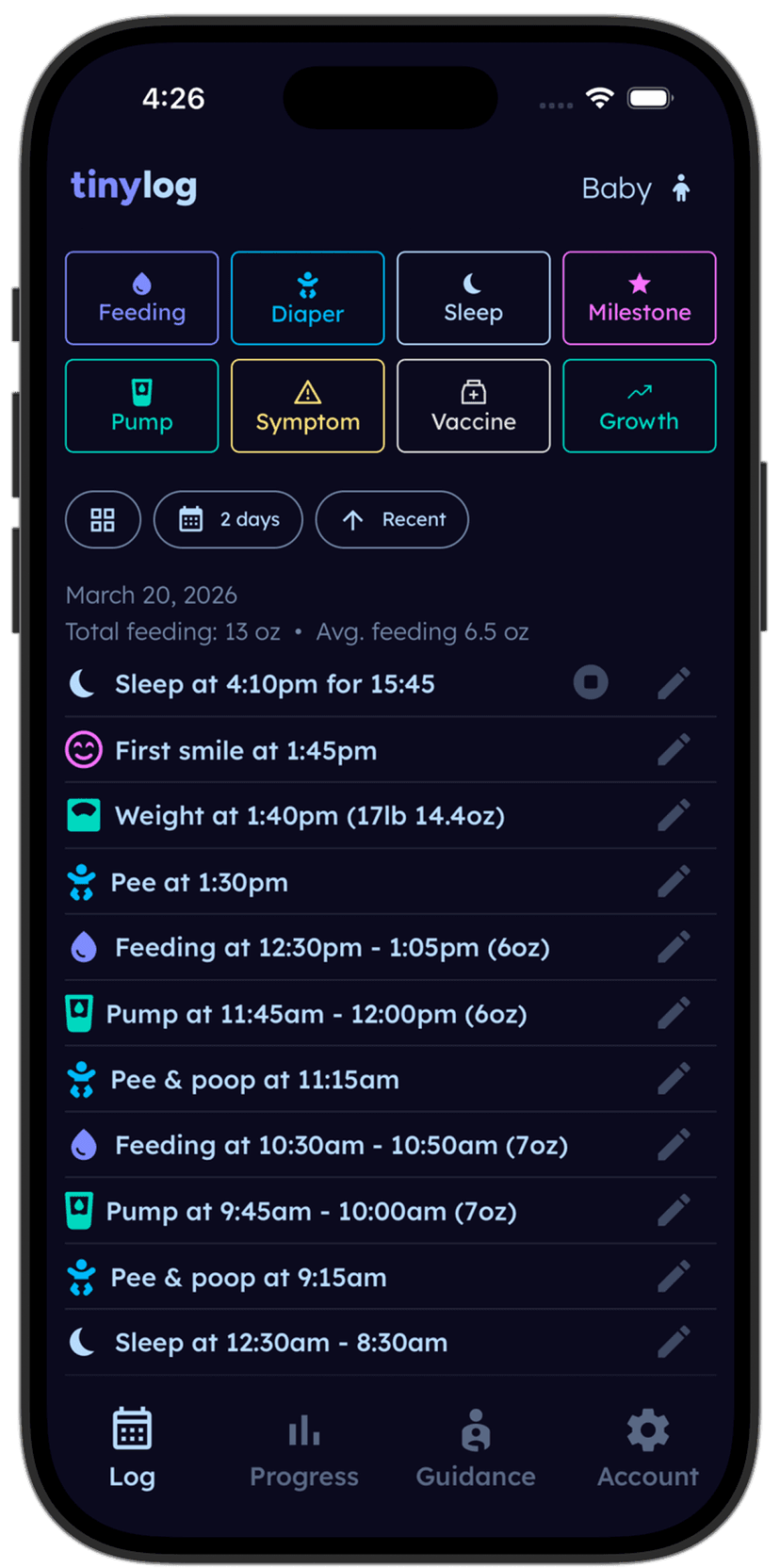
Tinylog tracks milestones so you can spot patterns.


Design Details: Snaps, Necklines, and Tags
Beyond fabric and certification, there are three design details worth comparing directly.
Snaps. Carter's explicitly calls out nickel-free snaps across their bodysuit line. This is useful information for families with a known history of nickel contact allergy — a condition that runs in families and can affect infants. Gerber uses standard metal hardware and does not advertise a nickel-free designation with the same prominence. If nickel sensitivity is a concern, Carter's transparency here is a practical advantage.
Neckline and shoulder design. Both brands use expandable openings that allow the bodysuit to be pulled downward off the body rather than up over the head. Carter's calls these "expandable necklines." Gerber adds a side-snap construction — a second fastening point along the shoulder seam — that creates an entirely alternative opening. In the newborn period, the ability to lay a bodysuit flat and dress the baby without any pulling over the head can reduce stress during changes. Once dressing becomes routine, this distinction matters less.
Tags. Gerber Organic Cotton Onesies are consistently tagless with printed labels. Carter's has largely moved to tagless construction in their newer styles, but older inventory or specific product lines may still include sewn-in labels. If tags against skin are a concern, check the specific product listing before buying Carter's.
| Product | Typical Price (5-pack) | Cost Per Piece | Value Notes |
|---|---|---|---|
| Carter's Baby Bodysuits (5-pack, 0–3M) | $12–$18 | ~$2.40–$3.60 | Conventional cotton; widest print variety; nickel-free snaps |
| Gerber Organic Cotton Onesies (5-pack, 0–3M) | $14–$18 | ~$2.80–$3.60 | GOTS-certified organic cotton; double-stitched; side-snap construction |
| Carter's Baby Bodysuits (5-pack, 6–9M) | $12–$18 | ~$2.40–$3.60 | Consistent pricing; frequent sales reduce cost further |
| Gerber Organic Cotton Onesies (5-pack, 6–9M) | $14–$18 | ~$2.80–$3.60 | Organic premium is minimal at this price point vs. Carter's |
Price: An Unusual Situation
Most organic-vs-conventional comparisons involve a meaningful price premium for the organic option. This comparison is different.
Carter's Baby Bodysuits and Gerber Organic Cotton Onesies both retail in the $12–$18 range for a 5-pack. Carter's can reach the low end of that range more often, particularly during sales. Gerber Organic tends to be more consistently priced around $14–$18.
The per-piece math: Carter's runs approximately $2.40–$3.60 per bodysuit; Gerber Organic runs approximately $2.80–$3.60 per bodysuit. The maximum price difference is roughly $1 per piece — and frequently less.
This means the choice is not really about budget. It is about what you want your dollar to support. Gerber delivers GOTS-certified organic cotton at essentially the same cost as Carter's conventional cotton. If you care about the certification, there is very little financial reason not to choose Gerber.
If variety and availability matter more — and for many families they do — Carter's delivers significantly more print options and can be found in more dedicated retail settings.
Choose Carter's Baby Bodysuits If
- You want the widest selection of prints, colors, and seasonal styles available
- Nickel-free snaps are a specific requirement and you want that explicitly stated on the packaging
- You prefer to shop at a dedicated baby clothing retailer with in-store staff and seasonal collections
- Organic certification is not a priority for your family
- You are already using Carter's sizing and want consistent fit across your baby's wardrobe
Choose Gerber Organic Cotton Onesies If
- GOTS-certified organic cotton matters to your family — you want verified third-party standards on fiber and processing
- Your baby has sensitive skin, eczema, or a history of reactions to conventional fabrics or dyes
- You want double-stitched seams that hold up to the frequent washing infant basics require
- The side-snap construction appeals to you for easier dressing and diaper changes in the newborn stage
- You shop primarily at Walmart, grocery stores, or mass-market retail where Gerber is the easiest grab
- You want the same price point as Carter's but with organic certification included
Where to Buy
Carter's Baby Bodysuits are available at Carter's stores, Amazon, Target, Walmart, Kohl's, and most department stores. The print variety is unmatched and Carter's runs frequent sales — checking their website directly or outlet section often yields lower prices than third-party retailers.
Gerber Organic Cotton Onesies are available at Walmart, Target, Amazon, and most grocery stores with a baby section. Wash before the first use and consider sizing up one step if buying before birth, as the onesies are not pre-washed and will shrink slightly.
Tinylog earns a small commission on purchases made through these links, at no cost to you.
Want to save a few bucks? promo.new is worth a quick look. It won't always have your product, but when it does, the savings are real.
The Bottom Line
Carter's and Gerber sell baby bodysuits at the same price point, but they are meaningfully different products.
Gerber Organic Cotton Onesies carry GOTS-certified organic cotton, double-stitched seams, and a side-snap construction that makes newborn dressing easier. At a price that is rarely more than $1 per piece above Carter's, the organic certification is an unusually affordable upgrade for families who value it.
Carter's Baby Bodysuits offer an unmatched breadth of prints and seasonal styles, nickel-free snap transparency, and the most widely available retail distribution of any baby clothing brand. They are a reliable, well-made product from a 150-year-old company with a well-established track record.
The simplest summary: if organic certification matters to you, Gerber Organic delivers it at almost no price premium over Carter's. If variety, availability, and an enormous print catalog matter more, Carter's is the clear choice.
For most families, buying a mix of both — Gerber for the everyday rotation and Carter's for the printed styles — is the most practical approach.
If you are tracking your baby's growth to know when the next size is coming, Tinylog makes it easy to log measurements and milestones over time.
Related Guides
- Burt's Bees Baby vs. Gerber Organic Onesies — Two organic bodysuits compared on price, fit, and certification
- Burt's Bees Baby vs. Carter's Bodysuits — Organic-certified vs. classic baby basics
- Baby Growth Spurts — When to expect rapid size changes and how to prepare
- Baby Diaper Rash — Causes, treatment, and when to call your doctor
Sources
- Carter's. "Baby Bodysuits — Product Information." carters.com, 2026.
- Gerber Childrenswear. "Gerber Organic Cotton Baby Onesies — Product Information." gerberchildrenswear.com, 2026.
- Global Organic Textile Standard (GOTS). "What Is GOTS?" global-standard.org, 2025.
- American Academy of Dermatology. "How to Care for Your Baby's Skin." aad.org, 2025.
- Consumer Reports. "Baby Clothing Safety and Fabric Guide." consumerreports.org, 2025.
- Environmental Working Group. "Baby Products and Chemical Exposure." ewg.org, 2025.
- Babylist. "Best Baby Onesies and Bodysuits." babylist.com, 2026.
This guide is for informational purposes only. Clothing choice is a personal decision based on your family's priorities and your baby's individual needs. If your baby develops persistent skin irritation with any clothing brand, consult your pediatrician.
Frequently asked questions
- Are Carter's baby bodysuits organic?
- Carter's standard bodysuits are not certified organic. They use conventional cotton or cotton/polyester blends that meet US consumer product safety standards. Carter's does offer some organic-labeled styles, but their core bodysuit line is conventional. Gerber's Organic Cotton Onesies carry GOTS (Global Organic Textile Standard) certification, which is a meaningful third-party distinction.
- Are Carter's snaps nickel-free?
- Yes. Carter's explicitly advertises nickel-free snaps across their bodysuit line. This is a useful detail for families with a history of nickel sensitivity, since snap hardware can cause contact dermatitis in sensitive individuals. Gerber also uses standard metal snaps, but the nickel-free designation is more prominently called out by Carter's.
- Do Gerber Organic Onesies shrink after washing?
- Gerber onesies are not pre-washed, so you can expect slight shrinkage — roughly half a size — after the first wash. If you are buying before your baby arrives, consider sizing up. Carter's bodysuits may also shrink slightly depending on the cotton content of the specific style; check the label and wash before first use.
- Which brand has better expandable necklines?
- Both brands offer expandable opening designs that allow the bodysuit to be removed downward over the body rather than pulled up over the head. Carter's calls theirs 'expandable necklines.' Gerber uses a lap-shoulder design with side-snap construction that provides a second opening option beyond the neckline. Gerber's side snap gives slightly more flexibility for difficult dressing moments.
- What is the price difference between Carter's and Gerber Organic?
- Both brands price their 5-packs at approximately $12–$18, making them nearly identical in cost. Gerber Organic runs $14–$18; Carter's runs $12–$18. At similar price points, you are essentially choosing between conventional cotton with broad print variety (Carter's) and GOTS-certified organic cotton with a simpler aesthetic (Gerber Organic).
- Which brand is easier to find in stores?
- Carter's has the widest retail footprint of any baby clothing brand — available at Carter's stores, Amazon, Target, Walmart, Kohl's, and most department stores. Gerber is also widely available at Walmart, Target, Amazon, and grocery stores with a baby section. Both are easy to find; Carter's has more dedicated retail locations and seasonal collections.