
GUIDE
Cradlewise Smart Crib vs. HALO BassiNest Swivel Sleeper 3.0
Published on
The Cradlewise (~$1,499–$1,799) is a smart crib with a built-in baby monitor, AI sleep tracking, and gentle bouncing — and it converts from bassinet to crib to toddler bed. The HALO BassiNest (~$280–$380) is a bedside bassinet with a 360-degree swivel and lowering sidewall for easy nighttime access. One is a long-term tech investment. The other is a well-engineered, affordable bassinet that does exactly what it needs to do.
These two products occupy completely different categories. The Cradlewise is a full-size smart crib designed to last from birth through toddlerhood with AI-powered features. The HALO BassiNest is a traditional bedside sleeper built for the first 5–6 months with an emphasis on nighttime convenience. Comparing them means weighing smart technology and longevity against simplicity, bedside access, and a much lower price.
Log sleep, feeds, and diapers in seconds
A Smart Crib vs. a Bedside Bassinet — Two Different Products for Two Different Needs
The Cradlewise Smart Crib and HALO BassiNest Swivel Sleeper 3.0 both give your newborn a safe place to sleep. Beyond that, they share almost nothing in common.
The Cradlewise is a full-size smart crib. It has a built-in HD camera, AI-powered sleep tracking, and a gentle bouncing mechanism that detects when your baby is stirring and tries to soothe them back to sleep before they fully wake. It starts with a bassinet insert for newborns, converts to a standard crib, and eventually becomes a toddler bed. It lives in the nursery, connects to Wi-Fi, and runs through an app that gives you detailed analytics about your baby's sleep.
The HALO BassiNest is a bedside bassinet. No camera, no AI, no app. What it does have is a 360-degree swivel base and a sidewall that lowers with one hand, putting your baby within arm's reach from your bed. When baby fusses at 2 AM, you reach over, lower the wall, and pick them up. The 3.0 model adds vibration, a nightlight, and lullabies — but these are convenience features, not a sleep automation system.
The real question is not which product is "better." It is what matters most to you right now: long-term smart features or short-term bedside convenience.
| Feature | Cradlewise Smart Crib | HALO BassiNest 3.0 | What It Means |
|---|---|---|---|
| Product type | Smart crib with bassinet insert (birth to toddlerhood) | Traditional bedside bassinet (birth to ~5–6 months) | Completely different categories. The Cradlewise is a long-term crib. The HALO is a short-term bedside sleeper. |
| Auto-soothing | Gentle bouncing motion triggered by AI detection of early wake signs | Soothing center with vibration, nightlight, and lullabies (3.0 model); manual soothing by parent | Cradlewise wins. Its AI-driven bouncing is genuinely automated. The HALO's soothing features are basic extras, not a sleep system. |
| Sleep tracking | AI-powered — tracks sleep stages, breathing patterns, movement, and trends over time | None built-in | Cradlewise wins clearly. Detailed sleep analytics without a wearable or separate device. |
| Built-in baby monitor | HD camera with night vision, two-way audio, room temperature monitoring | No monitor | Cradlewise wins. The built-in monitor saves $100–$250 on a separate camera. |
| Bedside access | Full-size crib — typically placed in nursery, standard pickup from top | 360° swivel + lowering sidewall brings baby right to your bedside | HALO wins by a wide margin. The swivel and drop-down wall make nighttime pickups and nursing noticeably easier. |
| Size and placement | Full-size crib — needs nursery space, does not fit bedside | Compact bassinet — designed to sit right next to your bed | HALO wins for bedroom use. The Cradlewise needs its own room. |
| Longevity | Birth through toddlerhood (2–3+ years with bassinet insert, crib, and toddler bed conversion) | Birth to ~5–6 months (20-lb weight limit or until baby pushes up on hands and knees) | Cradlewise wins by years. You buy one sleep product instead of a bassinet plus a crib. |
| Swaddling flexibility | Works with any swaddle or sleep sack | Works with any swaddle or sleep sack | Tie. Both let you use whatever your baby prefers. |
| Safety certifications | Meets ASTM crib standards (F1169) | Meets ASTM bassinet standards (F2194), JPMA certified | Both meet applicable safety standards. Different standards apply because they are different product types. |
| App and connectivity | Feature-rich app — monitor feed, sleep analytics, bounce control, milestone tips; requires Wi-Fi | No app, no Wi-Fi needed | Depends on preference. Cradlewise's app is genuinely useful. The HALO's simplicity means nothing to set up, troubleshoot, or update. |
| Noise level | Quiet bouncing motor — no built-in sound machine | Optional vibration and lullabies; otherwise silent | Both are reasonably quiet. You will likely want a separate white noise machine with either product. |
| Price | ~$1,499–$1,799 | ~$280–$380 | The HALO costs a fraction of the Cradlewise. But you will need a crib later, which closes the gap. |
Bedside Access: The HALO's Best Feature
The HALO BassiNest exists because of one insight: nighttime feedings are easier when you do not have to stand up.
The bassinet rotates 360 degrees on its base, so you can swing it directly over the edge of your mattress. The sidewall lowers with one hand. Baby is right there — within arm's reach, at mattress height. For breastfeeding parents, this means you can lift baby out, nurse in bed, and return them to the bassinet without putting your feet on the floor.
The Cradlewise cannot replicate this. It is a full-size crib. It stays in the nursery. When baby wakes at night, you walk to the nursery, pick baby up, and handle the feeding there (or bring baby back to your room). For parents who want baby sleeping next to them for the first several months — which the AAP recommends for at least the first 6 months — the Cradlewise requires a separate plan.
If nighttime access and room-sharing are your priorities, the HALO BassiNest is the clear winner regardless of what the Cradlewise offers in other areas.
Smart Features: Where the Cradlewise Pulls Ahead
The Cradlewise packs a lot of technology into a crib, and most of it is genuinely useful rather than gimmicky.
Sleep tracking uses the built-in camera and sensors to monitor sleep stages (active vs. quiet sleep), breathing patterns, and movement. Over weeks and months, the AI builds a profile of your baby's sleep and can predict when wake-ups are likely. This data lives in the app, where you can review naps, nighttime stretches, and long-term trends.
Preemptive soothing is the standout feature. When the Cradlewise detects early signs that baby is transitioning between sleep cycles — movement, breathing changes — it starts a gentle bounce before baby fully rouses. The idea is to extend sleep stretches by intervening at the right moment, rather than waiting for a full cry.
The built-in monitor includes an HD camera with night vision and two-way audio. You can check on baby from anywhere through the app. Room temperature monitoring is included. This eliminates the need for a separate baby monitor entirely.
The HALO BassiNest offers none of this. Its 3.0 soothing center (vibration, nightlight, lullabies) is modest by comparison — helpful for settling baby, but not an automated sleep system. There is no sleep tracking, no camera, and no app.
For parents who want data and automation, the Cradlewise delivers. For parents who find technology in the nursery more stressful than helpful, the HALO's simplicity is a feature, not a limitation.
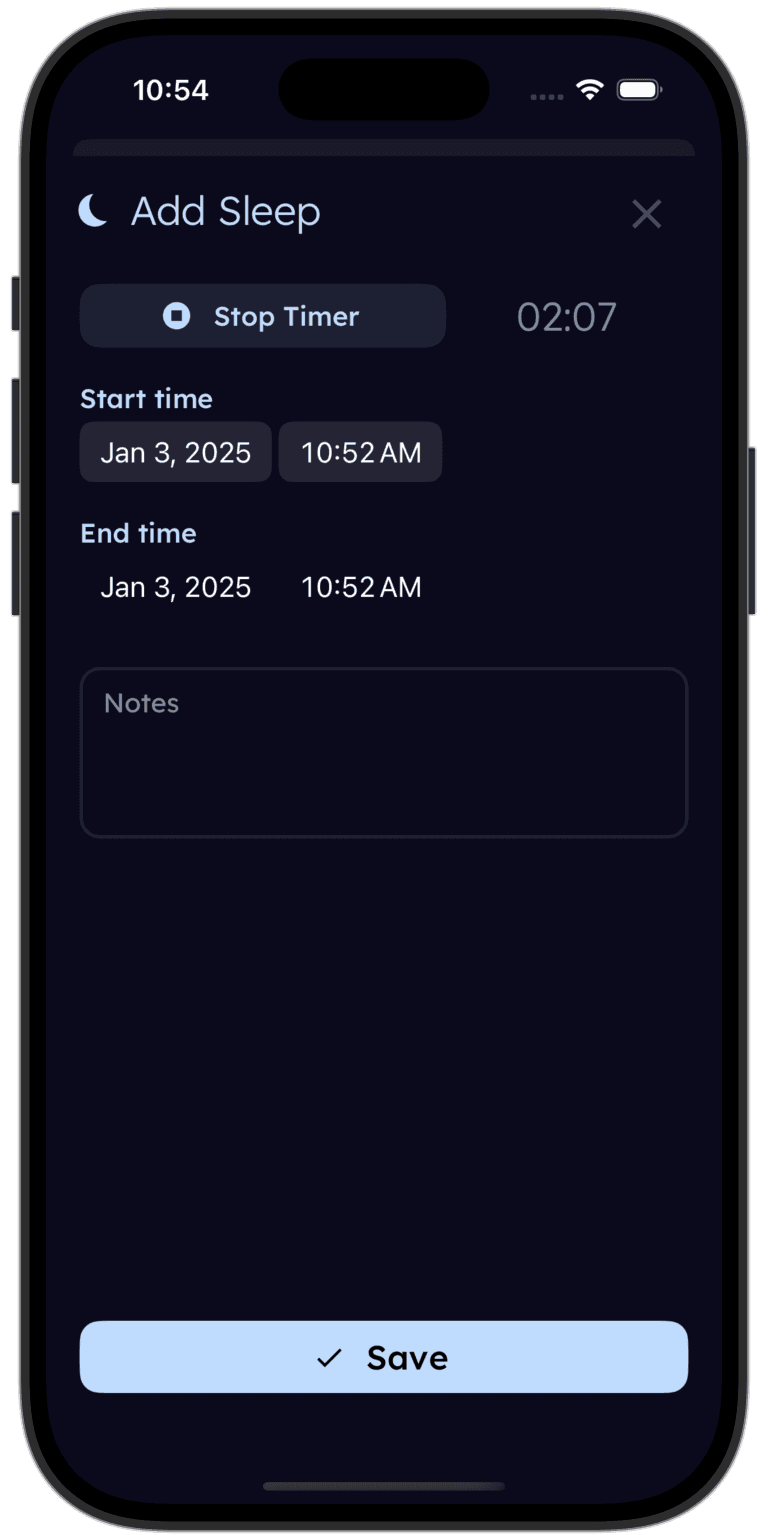
Tracking sleep helps you spot when baby's stretches are getting longer. That 2-hour block that became a 3-hour block? That's progress.
Log sleep sessions in a few taps with Tinylog — watch patterns emerge over days and weeks, and bring the data to your pediatrician if anything looks off.


Longevity: The Cradlewise's Strongest Argument
This is where the Cradlewise makes its financial case.
The HALO BassiNest is a bassinet. You will use it for about 5–6 months — until baby outgrows the 20-lb weight limit or starts pushing up on hands and knees. Then you need a crib. And you probably need a baby monitor too if you do not already have one.
The Cradlewise starts as a bassinet (with a newborn insert), converts to a full crib, and eventually becomes a toddler bed. One product, potentially 3+ years of use. The smart features — camera, sleep tracking, gentle bouncing — work throughout. You are not buying a bassinet, then a crib, then a monitor. You are buying one thing.
When you calculate cost-per-year, the math shifts. The HALO at $350 for 5 months is roughly $70/month. The Cradlewise at $1,699 for 3 years is roughly $47/month. Add the cost of a crib and monitor to the HALO path, and the total cost difference narrows considerably.
If buying fewer things and using them longer appeals to you, the Cradlewise aligns with that approach. If you want the best bedside tool for the newborn phase and will figure out the crib situation later, the HALO makes more sense.
| Product | Typical Price | Notes |
|---|---|---|
| Cradlewise Smart Crib | $1,499–$1,799 | Replaces bassinet, crib, and baby monitor. No separate crib purchase needed. Price varies by model and promotions. |
| HALO BassiNest Swivel Sleeper 3.0 | $280–$380 | Bassinet only — you will need a crib (~$200–$600) and baby monitor (~$100–$250) separately. |
| HALO BassiNest + crib + monitor (total) | $580–$1,230 | Combined cost of the HALO plus a mid-range crib and a decent baby monitor. Still often less than the Cradlewise, but the gap narrows. |
| Cradlewise cost per year (over 3 years) | ~$500–$600/year | If used from birth through toddlerhood, the per-year cost is comparable to the traditional bassinet-then-crib path. |
Cost: The Full Picture
The sticker prices tell one story: the Cradlewise costs roughly $1,499–$1,799, and the HALO BassiNest costs roughly $280–$380. That is a gap of over $1,100.
But sticker price is not total cost of ownership.
The HALO path: BassiNest (~$330) + crib (~$200–$600) + baby monitor (~$100–$250) = roughly $630–$1,180 total. Still less than the Cradlewise in most scenarios, but the gap is no longer $1,200.
The Cradlewise path: Smart crib (~$1,499–$1,799) and you are done. No crib purchase, no monitor purchase. Total: $1,499–$1,799 all-in.
The honest math: if you were planning to buy a mid-range crib and a decent baby monitor anyway, the Cradlewise costs roughly $300–$600 more than the traditional path — and you get AI sleep tracking and automated soothing included. If you were planning to buy a budget crib and skip the fancy monitor, the HALO path is meaningfully cheaper.
Neither product has significant ongoing costs. No subscriptions required for either one.
Choose the Cradlewise If
- You want one smart sleep product that works from birth through toddlerhood — buy once, use for years
- Built-in baby monitor and AI sleep tracking matter to you — no separate camera or tracking app needed
- You have nursery space ready and are comfortable with baby sleeping there relatively early
- You prefer automated, preemptive soothing that tries to catch wake-ups before they become full cries
- You want detailed sleep stage data and breathing insights you can review over time
- You would rather invest more upfront than buy a bassinet, then a crib, then a monitor separately
Choose the HALO BassiNest If
- Easy nighttime access is your top priority — you breastfeed in bed and want baby within arm's reach
- You want a quality bedside bassinet without spending over a thousand dollars
- You prefer simplicity with no app, no Wi-Fi setup, and no subscription to worry about
- You already have a crib picked out (or plan to buy one later) and just need something for the first few months
- You want to keep baby in your bedroom for the first 6 months, which the AAP recommends
- You are a light sleeper and prefer a bassinet with no motor running overnight
Where to Buy
The Cradlewise Smart Crib (~$1,499–$1,799) is the right pick if you want one smart sleep product that grows from newborn through toddlerhood. The built-in monitor, AI sleep tracking, and preemptive soothing are genuinely useful features that justify the investment for families who plan to use the crib for years. Available directly from Cradlewise.
The HALO BassiNest (~$280–$380) is the right pick if you want the best bedside bassinet experience at a reasonable price. The 360-degree swivel and lowering sidewall make nighttime access easier than any other bassinet on the market. It does one thing well — keeping baby safe and close — and it does it without any setup complexity. Available from Amazon, Target, buybuy BABY, and most major baby retailers.
Whichever you choose: follow the AAP safe sleep guidelines. Back to sleep, firm flat surface, nothing else in the sleep space. No smart feature or clever bassinet design overrides the basics.
Tinylog earns a small commission on purchases made through these links, at no cost to you.
Want to save a few bucks? promo.new is worth a quick look. It won't always have your product, but when it does, the savings are real.
The Bottom Line
The Cradlewise Smart Crib and HALO BassiNest Swivel Sleeper 3.0 are built for different families solving different problems.
Cradlewise wins on longevity (one product from birth through toddlerhood), smart features (AI sleep tracking, built-in monitor, automated soothing), and long-term value per dollar. It is the pick for parents who want technology working on their behalf and are willing to invest more upfront to avoid buying multiple products over the next few years.
HALO BassiNest wins on bedside access (the swivel and lowering wall are unmatched), simplicity (no app, no Wi-Fi, no learning curve), affordability (a fraction of the Cradlewise price), and room-sharing friendliness (it fits right next to your bed, which aligns with AAP guidance).
For most families, the decision comes down to two questions. First: do you want baby sleeping next to your bed for the first several months? If yes, the HALO is the stronger choice — the Cradlewise is too large for bedside use. Second: are you willing to invest in a smart crib that replaces multiple products over several years? If yes, the Cradlewise delivers genuine value that a bassinet alone cannot match.
There is nothing wrong with starting with the HALO for the newborn phase and buying a crib (smart or otherwise) later. And there is nothing wrong with going straight to the Cradlewise if you have the nursery space and the budget. Both are well-made products with loyal followings.
If you are logging sleep sessions to understand your baby's patterns — which helps you see the bigger picture regardless of which product you use — Tinylog makes it easy to track in a few taps.
Related Guides
- Snoo vs. Cradlewise — The two most popular smart sleep products compared
- Snoo vs. HALO BassiNest — Smart bassinet vs. traditional bedside sleeper
- 1-Month-Old Sleep Schedule — What sleep actually looks like in the early weeks
- Baby Fighting Sleep — When your baby won't settle no matter what you try
- Safe Sleep Guidelines — AAP recommendations for infant sleep safety
Sources
- Cradlewise. "Smart Crib — Product Details and Sleep Tracking Technology." cradlewise.com, 2026.
- HALO Innovations. "BassiNest Swivel Sleeper 3.0 — Product Information." halosleep.com, 2026.
- American Academy of Pediatrics. "Safe Sleep Recommendations." healthychildren.org, 2025.
- ASTM International. "F1169 — Standard Consumer Safety Specification for Full-Size Baby Cribs." astm.org, 2024.
- ASTM International. "F2194 — Standard Consumer Safety Specification for Bassinets and Cradles." astm.org, 2024.
- U.S. Consumer Product Safety Commission. "Safe Sleep — Cribs and Bassinets." cpsc.gov, 2025.
- Babylist. "Cradlewise Smart Crib Review." babylist.com, 2025.
- What to Expect. "Best Bassinets of 2026." whattoexpect.com, 2026.
- Wirecutter (NYT). "The Best Bassinets and Smart Cribs." nytimes.com/wirecutter, 2025.
This guide is for informational purposes only and is not a substitute for professional medical or safety advice. Product specifications, pricing, and features can change — always verify current details on the manufacturer's website before purchasing. Follow the American Academy of Pediatrics safe sleep guidelines regardless of which product you choose. If you have questions about safe sleep, talk to your pediatrician.
Frequently asked questions
- Can the Cradlewise replace both a bassinet and a crib?
- That is the intent. The Cradlewise includes a bassinet insert for newborns that sits higher in the crib, then converts to a full crib, and eventually a toddler bed. Some parents still use a separate bedside bassinet like the HALO for the first few weeks since the Cradlewise is full crib-sized and typically stays in the nursery rather than next to the bed.
- Does the HALO BassiNest swivel actually help with nighttime feedings?
- Yes. The 360-degree swivel and lowering sidewall let you pull the bassinet right next to your bed and reach your baby without standing up. For breastfeeding parents especially, this design means you can lift baby out, nurse in bed, and return them to the bassinet with minimal disruption. It is one of the BassiNest's strongest features and something the full-size Cradlewise cannot replicate.
- How does Cradlewise sleep tracking work?
- Cradlewise has a built-in camera and sensors that use AI to monitor your baby's sleep stages, movement, and breathing patterns. It can detect when baby is transitioning between sleep cycles and gently bounce to help them settle back down before fully waking. Sleep data is sent to the app, where you can review naps, nighttime stretches, and trends over time.
- How long can a baby use the HALO BassiNest?
- The HALO BassiNest is designed for use from birth until approximately 5–6 months, or until your baby can push up on hands and knees, whichever comes first. It has a 20-lb weight limit. Most babies transition to a crib between 4 and 6 months regardless of weight.
- Is the Cradlewise too big to use as a bedside sleeper?
- The Cradlewise is a full-size crib, so it will not fit next to most beds the way a bassinet does. Most families set it up in the nursery from the start. If having baby right next to your bed for the first few months matters to you, you will either need a separate bedside bassinet or accept that baby will be in a different room.
- Does the Cradlewise work without Wi-Fi or the app?
- The crib itself functions as a safe sleep space without Wi-Fi, but the smart features — sleep tracking, the baby monitor feed, bounce activation from the app, and notifications — all require a Wi-Fi connection and the Cradlewise app. If your internet goes down, baby still has a safe crib to sleep in, but the automated features will not work.