
GUIDE
Ergobaby Omni vs. BabyBjörn Carrier One
Published on
Both are excellent structured carriers for newborns through toddlers. Ergobaby Omni offers superior lumbar support and a wider weight range. BabyBjörn Carrier One excels in ease of use and quick on/off. Your choice depends on how long you plan to carry and what you value most.
The Ergobaby Omni Classic All-Position Carrier and BabyBjörn Baby Carrier One are two of the most popular structured baby carriers on the market. Both offer four carry positions, newborn-ready designs without infant inserts, and high-quality construction. The differences come down to ergonomics, weight distribution, and how each carrier handles longer wear.
Log carrier sessions, feeds, sleep, and milestones
Two Popular Carriers — Here's What Actually Sets Them Apart
The Ergobaby Omni Classic All-Position Carrier and BabyBjörn Baby Carrier One are two of the most recommended structured carriers by parents, pediatricians, and babywearing educators. Both regularly appear on "best baby carrier" lists, and both have earned the International Hip Dysplasia Institute's acknowledgment for hip-healthy design.
The honest truth: both are well-made carriers that will serve most families well. But they take different approaches to weight distribution, adjustability, and ease of use — and those differences matter depending on how you plan to carry.
We compared the build, ergonomics, weight range, and real-world usability so you can pick the right carrier for your family without second-guessing yourself at the store.
For more on tracking your baby's early growth and feeding milestones, see our baby feeding chart.
| Feature | Ergobaby Omni Classic | BabyBjörn Carrier One | What It Means |
|---|---|---|---|
| Manufacturer | Ergobaby | BabyBjörn | Both are well-established brands with decades of carrier design experience. |
| Carry positions | 4 (front inward, front outward, hip, back) | 4 (front inward, front outward, hip, back) | Tie. Both offer the same four positions. |
| Weight range | 7–45 lbs | 8–33 lbs | Ergobaby supports a wider range — usable from smaller newborns through older toddlers. |
| Infant insert required | No | No | Tie. Both accommodate newborns without a separate insert. |
| Waist belt | Wide padded belt with lumbar support | Narrow waist belt, no lumbar pad | Ergobaby wins. The padded lumbar support makes a real difference during long carries. |
| Shoulder straps | Thick padded, cross or backpack style | Padded, backpack style with 3D mesh option | Both are comfortable. BabyBjörn's mesh option breathes better in warm weather. |
| Ease of use | Moderate — more adjustments, learning curve | Easy — intuitive buckles, quick on/off | BabyBjörn wins for simplicity. You can get it on and off faster with less fiddling. |
| Hip-healthy certification | Yes — IHDI acknowledged | Yes — IHDI acknowledged | Tie. Both support the M-position for healthy hip development. |
| Machine washable | Yes | Yes | Tie. Both can go in the washing machine. |
| Hood / sunshade | Yes — UPF 50+ tuck-away hood | No built-in hood | Ergobaby wins. The UPF hood is useful for sun protection and sleeping babies. |
| Storage pouch | Yes — small zippered pouch | No built-in storage | Ergobaby wins. Small but handy for keys, pacifiers, or a phone. |
| Carrier weight | ~1.8 lbs | ~2.2 lbs | Ergobaby is slightly lighter despite more padding. |
The Comfort Difference That Matters Most
The single biggest difference between these two carriers is how they distribute your baby's weight across your body.
Ergobaby Omni has a wide, structured waist belt with a built-in lumbar support pad. This design shifts the majority of your baby's weight onto your hips and lower back — the same principle that makes hiking backpacks comfortable. For carries longer than 30 minutes, this makes a noticeable difference in fatigue.
BabyBjörn Carrier One has a narrower waist belt without dedicated lumbar support. It distributes weight more evenly between shoulders and hips but leans more toward shoulder-loading. For short carries — errands, quick walks, getting through the airport — this is perfectly fine. For hour-long hikes or extended babywearing at home, many parents report shoulder fatigue.
If you plan to carry frequently and for longer stretches, the Ergobaby's weight distribution is measurably better. If your carries are mostly short and you value speed of getting the carrier on and off, the BabyBjörn's simpler design wins.
Worth noting: both carriers improve with proper adjustment. A poorly adjusted Ergobaby will be less comfortable than a well-adjusted BabyBjörn, and vice versa. Take the time to dial in the fit.
Ease of Use: The BabyBjörn Advantage
This is where the BabyBjörn Carrier One genuinely shines. The buckle design is intuitive, the front panel lifts away cleanly for transferring a sleeping baby, and most parents can figure it out without watching a tutorial video.
The Ergobaby Omni has more adjustment points — crossable shoulder straps, a sliding seat width, multiple snap positions, and the lumbar support strap. This means a more customized fit once you dial it in, but it also means a steeper learning curve. Expect a few days of practice before it feels second nature.
For first-time parents or caregivers who will share the carrier: the BabyBjörn's simplicity is a real advantage. Grandparents and babysitters can use it confidently after a quick demo.
For parents who plan to babywear daily: the Ergobaby's extra adjustments are worth learning because the payoff is a better-fitting, more comfortable carry over time.
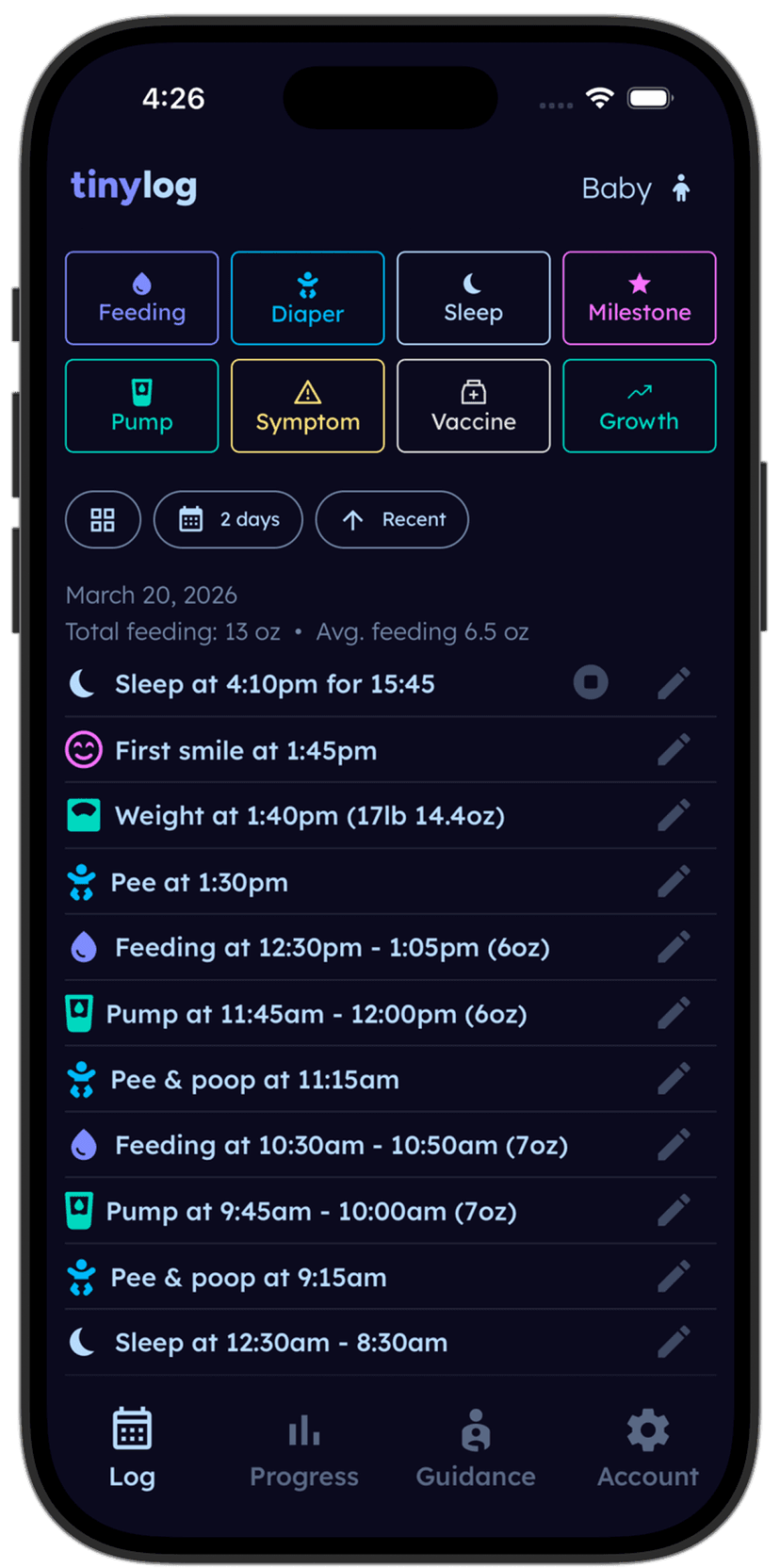
Tinylog tracks your baby's growth so you know when to adjust your carrier.
Log feeds, sleep, milestones, and growth measurements. See patterns over days and weeks. Bring the data to your next pediatrician visit.


Weight Range and Longevity
The Ergobaby Omni supports 7–45 lbs, while the BabyBjörn Carrier One supports 8–33 lbs. This is a meaningful difference on both ends.
On the low end, the Ergobaby accommodates babies from 7 lbs — useful for smaller newborns or preemies who have reached safe carrier weight. The BabyBjörn starts at 8 lbs, which still covers most full-term newborns.
On the high end, the 12 lb difference matters if you plan to carry into toddlerhood. A 33 lb limit on the BabyBjörn means many children will outgrow it around age 2–2.5. The Ergobaby's 45 lb limit extends usability well past age 3 for most children.
That said, most parents reduce carrier use significantly once their child is walking confidently — typically around 14–18 months. The weight limit matters most for parents who hike with toddlers or travel frequently and want the carrier as a backup.
| Product | Typical Price | Cost Per Month (over 2 years) | Notes |
|---|---|---|---|
| Ergobaby Omni Classic All-Position Carrier | $120–$155 | ~$5–$6 over 2 years | Often discounted during sales events |
| BabyBjörn Baby Carrier One | $140–$180 | ~$6–$8 over 2 years | Mesh version (Carrier One Air) runs ~$20 more |
Price: Worth Considering Per-Month
The Ergobaby Omni typically runs $120–$155, while the BabyBjörn Carrier One runs $140–$180. The BabyBjörn Carrier One Air (mesh version) adds roughly $20 to the price.
Spread over two years of use, both carriers cost $5–$8 per month — making either one a strong value compared to stroller-only solutions. A carrier you use daily for a year is one of the best cost-per-use purchases in your baby gear collection.
Tips to save:
- Registry discounts. Both Amazon and Target offer 10–15% completion discounts on carriers.
- Sales events. Prime Day, Black Friday, and end-of-season sales regularly discount both brands by 20–30%.
- Buy secondhand. Structured carriers hold up well. A gently used Ergobaby or BabyBjörn at 40–50% off retail is a smart buy. Just check buckles and stitching before purchasing.
Choose Ergobaby Omni If
- You plan to carry your baby regularly past 20 lbs
- Back and hip carry are important to you
- You want lumbar support for longer outings
- You need a UPF hood for outdoor walks
- You want to carry from 7 lbs (smaller newborns)
- A storage pouch for small essentials matters to you
Choose BabyBjörn Carrier One If
- Ease of use and quick on/off are your top priority
- You want a carrier that's intuitive from day one with minimal learning curve
- Breathability in warm weather is important (mesh version available)
- You primarily plan to use front carry positions
- You prefer a sleeker, less bulky profile
- Your baby will mostly be carried under 30 lbs
Where to Buy
If you want long-term comfort and versatility, the Ergobaby Omni Classic All-Position Carrier (~$135 typical) is hard to beat — the lumbar support, UPF hood, and 45 lb weight limit make it a carrier you can use from newborn through toddlerhood without upgrading. Best value in big-box packs from Amazon or Buy Buy Baby.
If ease of use and a minimal learning curve matter most, the BabyBjörn Baby Carrier One (~$160 typical) is the one to pick — intuitive buckles, quick on/off, and a clean Scandinavian design that anyone in your household can figure out in minutes. The mesh version is worth the upcharge if you live in a warm climate.
Our honest advice: if you can, try both on in a store with your baby. Carrier fit is personal — shoulder width, torso length, and baby size all affect which one feels right. The "better" carrier is whichever one you actually want to put on every day.
Tinylog earns a small commission on purchases made through these links, at no cost to you.
Want to save a few bucks? promo.new is worth a quick look. It won't always have your product, but when it does, the savings are real.
The Bottom Line
Both the Ergobaby Omni Classic and BabyBjörn Baby Carrier One are premium, well-designed structured carriers. The differences are real and worth knowing:
Ergobaby Omni edges out on lumbar support, weight distribution for long carries, weight range (7–45 lbs), the UPF hood, and built-in storage.
BabyBjörn Carrier One edges out on ease of use, quick on/off, intuitive design for multiple caregivers, and sleeker profile.
For most families, the deciding factor is simple: do you value comfort during long carries (Ergobaby) or ease of use for short, frequent carries (BabyBjörn)? Both will keep your baby safe, support healthy hip development, and free up your hands.
If you are tracking your baby's growth and milestones — which helps you know when to adjust carrier settings as your baby grows — Tinylog makes it easy to log everything and spot patterns over time.
Related Guides
- Baby Feeding Chart — How much your baby should eat by age
- Baby Growth Spurts — When they happen and what to expect
- Baby Growth Percentiles — Understanding your baby's growth curve
- Baby Heat Rash — Causes, treatment, and prevention during babywearing
Sources
- Ergobaby.com. "Omni Classic All-Position Baby Carrier — Product Information." 2026.
- BabyBjorn.com. "Baby Carrier One — Product Information." 2026.
- International Hip Dysplasia Institute. "Hip-Healthy Product Program." hipdysplasia.org, 2026.
- Consumer Reports. "Best Baby Carriers of 2026." consumerreports.org, 2026.
- Wirecutter (The New York Times). "The Best Baby Carriers." nytimes.com/wirecutter, 2026.
- Babywearing International. "Babywearing Safety and Ergonomics." babywearinginternational.org, 2025.
- Mommyhood101. "Ergobaby Omni Review & BabyBjörn Carrier One Review." mommyhood101.com, 2026.
This guide is for informational purposes only. Always follow your carrier manufacturer's instructions for safe use. If you have concerns about your baby's hip development or positioning, consult your pediatrician.
Frequently asked questions
- Can I use the Ergobaby Omni and BabyBjörn Carrier One from birth?
- Yes. Both carriers are designed for newborn use without a separate infant insert. The Ergobaby Omni accommodates babies from 7 lbs and the BabyBjörn Carrier One from 8 lbs. Both have adjustable seat widths to support proper hip positioning for small infants.
- Which carrier is better for forward-facing?
- Both offer a front-facing-out position, but the BabyBjörn Carrier One is slightly easier to switch into forward-facing mode thanks to its zipper-based seat adjustment. The Ergobaby Omni uses snaps and a sliding seat to change positions, which takes a bit more time but is equally secure.
- Is the Ergobaby Omni or BabyBjörn Carrier One better for back carry?
- The Ergobaby Omni is better for back carry. Its padded waist belt and lumbar support distribute toddler weight more effectively across your hips. The BabyBjörn Carrier One supports back carry but places more weight on the shoulders, which can become uncomfortable with heavier children.
- Which carrier is easier to put on by yourself?
- The BabyBjörn Carrier One is generally easier to put on solo, especially for front carries. Its buckle design and structured back panel make it straightforward to secure without help. The Ergobaby Omni has more adjustment points, which can take practice but ultimately provides a more customized fit.
- Are both carriers hip-healthy for babies?
- Yes. Both the Ergobaby Omni and BabyBjörn Carrier One are acknowledged as hip-healthy by the International Hip Dysplasia Institute. Both support the recommended M-position (knees higher than bottom) when used correctly.
- Which carrier lasts longer as my baby grows?
- The Ergobaby Omni has a higher maximum weight capacity at 45 lbs compared to the BabyBjörn Carrier One at 33 lbs. If you plan to carry your child past age 2, the Ergobaby will serve you longer. Most parents stop regular carrying around 25–30 lbs regardless of carrier capacity.