
GUIDE
Happy Baby vs. Plum Organics Pouches
Published on
Both are USDA Organic, non-GMO, and free of added sugars. Happy Baby leads on variety and transparent sourcing. Plum leads on flavor creativity and B Corp certification. Cost is nearly identical.
Happy Baby Organics and Plum Organics are two of the most trusted brands in the organic baby food pouch category. Both offer stages 1 through 4, BPA-free packaging, and clean ingredient lists. The differences come down to flavor philosophy, sourcing transparency, and brand ethics — not safety or nutrition quality.
Log meals, solids, and more
Two Solid Organic Options — The Differences Are in the Details
Happy Baby Organics and Plum Organics are among the most widely available organic baby food pouches in the United States. Both are USDA Organic, non-GMO verified, free of added sugars and salt, and sold in BPA-free packaging. For most babies, either brand is a fine choice.
The real differences are not safety or nutrition quality — both clear that bar comfortably. The differences are in flavor philosophy, sourcing transparency, packaging design, and brand ethics. Understanding those distinctions helps you decide which brand better fits your priorities.
This guide focuses on what actually distinguishes the two brands, based on publicly available ingredient data, certifications, and testing disclosures.
For guidance on how much to feed and when to start solids, see our baby first foods guide.
| Feature | Happy Baby Organics | Plum Organics | What It Means |
|---|---|---|---|
| USDA Organic | Yes | Yes | Both certified organic. Neither uses synthetic pesticides or fertilizers. |
| Non-GMO | Yes — Non-GMO Project Verified | Yes — Non-GMO Project Verified | Tie. Both carry third-party non-GMO verification. |
| Added sugars | None | None | Tie. Sweetness comes only from naturally occurring fruit and vegetable sugars. |
| Added salt | None | None | Tie. Neither brand adds sodium to baby food pouches. |
| Stages available | Stages 1–4 | Stages 1–4 | Tie. Both cover the full range from first purees through toddler meals. |
| Flavor variety | Very wide — 50+ SKUs across stages | Wide — unique and adventurous combinations | Happy Baby has more total options. Plum stands out for unusual flavor pairings. |
| Sourcing transparency | High — publishes heavy metal testing reports | Moderate — organic certification but less public testing data | Happy Baby edges out on transparency with published third-party testing. |
| B Corp certification | No | Yes | Plum Organics is a certified B Corporation, reflecting broader ethical business standards. |
| BPA-free packaging | Yes | Yes | Tie. Both use BPA-free pouch materials. |
| Resealable cap | Standard screw cap | Resealable cap on most SKUs | Plum's resealable design makes partial servings easier to store in the fridge. |
| Protein pouches / combos | Yes — some stages include quinoa, oatmeal, lentils | Yes — includes spinach, kale, chickpea, and grain combos | Both go beyond fruit and vegetable purees into protein and grain-inclusive options. |
| Price per pouch | ~$1.50–$2.00 | ~$1.50–$2.00 | Essentially identical pricing. Bulk packs and subscriptions reduce cost for both. |
Ingredient Quality: Both Pass, With Nuances
The organic certification means a lot here. Both brands use ingredients grown without synthetic pesticides or fertilizers, and neither adds sugar, salt, or artificial preservatives. That alone puts them significantly above conventional baby food pouches.
Heavy metals: the industry-wide issue you should know about
Organic certification does not address heavy metals. Arsenic, lead, cadmium, and mercury occur naturally in soil and can concentrate in certain crops — particularly rice, sweet potatoes, and root vegetables. This is an industry-wide issue, not unique to either brand.
Happy Baby publishes a transparency report that includes heavy metal testing data for their products. This does not mean their products are free of heavy metals, but it does mean you can see actual measurements rather than relying on certification alone. Plum Organics does not publish equivalent testing data publicly as of early 2026.
If heavy metal levels are a significant concern, the FDA's Closer to Zero initiative and the Clean Label Project database are the most current independent resources for evaluating specific products.
Ingredient simplicity
Stage 1 pouches from both brands are appropriately simple — typically one or two ingredients, no fillers. Stage 2 and 3 products introduce combinations, and this is where flavor philosophy diverges. Happy Baby tends toward approachable, familiar combinations (peas and brown rice, apple and spinach). Plum leans toward more adventurous pairings — spinach, peas, and pear with a touch of cinnamon; or kale, avocado, and apple.
Neither approach is nutritionally superior. But if you are working to expand your baby's palate with unexpected flavor profiles, Plum's lineup offers more of that.
Flavor Variety and Stages
Both brands cover stages 1 through 4, giving you options from first purees through toddler meals.
Happy Baby Organics has one of the largest SKU counts in the organic baby food category — over 50 distinct pouches across stages. This breadth is useful if you want to rotate through many different flavors (which supports broader palate development) or if you have a picky eater who accepts some flavors but not others. Their stage 4 Clearly Crafted line emphasizes transparent packaging so you can see the actual food inside.
Plum Organics offers fewer total SKUs but invests more in each individual flavor. Their combinations tend to include a wider range of vegetables, legumes, and whole grains than the category average. Spinach, kale, chickpea, and lentil combinations appear more frequently in Plum's lineup than Happy Baby's. If expanding vegetable variety and protein sources is a priority, Plum's stage 2 and 3 lineup is worth examining closely.
Both brands offer grain-forward options — oatmeal pouches, multi-grain combinations — in their later stages.
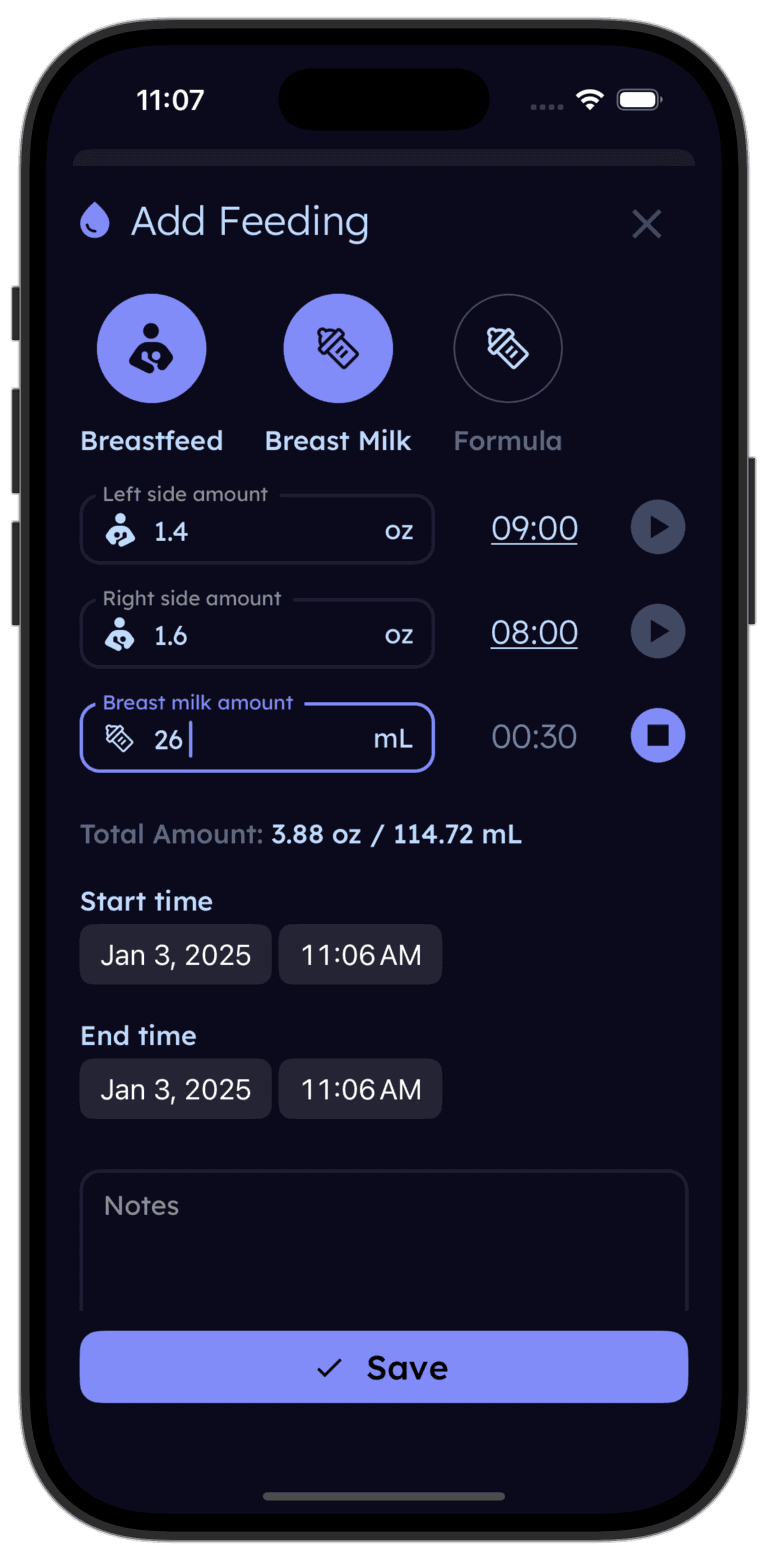
Tinylog tracks meals so you can spot patterns.
Log each solid feeding, track which flavors your baby accepted or rejected, and monitor how solids are progressing alongside breast milk or formula. Useful data for your pediatrician visits.


Packaging: The Resealable Cap Difference
Both brands use BPA-free pouch materials. The functional difference is in the cap design.
Plum Organics pouches use a resealable cap on most of their products. If your baby does not finish a pouch in one sitting, you can seal it and refrigerate the remainder (typically good for 24 hours after opening). This is genuinely useful for younger babies who may only eat half a pouch at a sitting.
Happy Baby pouches use a standard screw cap. The pouch can be re-capped but is not designed to create an airtight seal for storage in the same way. If your baby regularly eats partial pouches, this is worth considering.
Neither brand should be used to feed directly from the pouch to a baby in a way that leaves saliva in contact with remaining food — the leftover food should be discarded or kept in a separate container after contact with saliva.
B Corp and Brand Ethics
Plum Organics holds B Corporation certification. This is a meaningful distinction that goes beyond product ingredients.
B Corp certification requires companies to meet verified standards of social and environmental performance, accountability, and transparency across their entire business — not just what goes into their products. It involves third-party auditing and periodic recertification. Plum was one of the first major baby food companies to earn B Corp status.
Happy Baby is owned by Groupe Danone, a large multinational food company. They do not hold B Corp certification as a brand, though Danone as a company has pursued broader sustainability commitments. Transparency efforts are focused primarily on product-level ingredient and testing disclosure rather than whole-company ethical certification.
Which of these matters more to you is a values question, not a nutrition question. Both brands make good-quality organic pouches. The difference is whether the overall business practices of the company matter to your purchasing decision.
| Product | Typical Price | Cost Per Pouch | Monthly Estimate |
|---|---|---|---|
| Happy Baby Organics Stage 1 (4-pack) | $6–$8 | ~$1.50–$2.00 | ~$45–$90/month (3–6 pouches/day) |
| Happy Baby Organics Stage 2 (16-pack) | $22–$28 | ~$1.38–$1.75 | ~$40–$80/month (3–6 pouches/day) |
| Plum Organics Stage 1 (4-pack) | $6–$8 | ~$1.50–$2.00 | ~$45–$90/month (3–6 pouches/day) |
| Plum Organics Stage 2 (12-pack) | $18–$24 | ~$1.50–$2.00 | ~$45–$90/month (3–6 pouches/day) |
Price: Essentially Identical
Happy Baby and Plum Organics are priced within cents of each other across comparable stages and pack sizes. Per-pouch cost runs approximately $1.50–$2.00 for both brands at standard retail. Bulk multipacks — typically 12 or 16 pouches — drop the per-pouch cost slightly for both.
Subscription delivery through Amazon, Walmart+, or Target Circle can reduce costs by 10–15% for either brand on recurring orders.
Neither brand is meaningfully cheaper than the other. Price should not be the deciding factor here because there is effectively no price difference to decide on.
If overall cost of the solids phase is a concern, note that homemade purees — made in a blender and stored in ice cube trays — cost a fraction of pouches for comparable ingredients. Pouches are a convenience product, and the cost reflects that.
Choose Happy Baby Organics If
- You want the widest possible variety of flavors and stages from a single brand
- Sourcing and heavy metal testing transparency is important to you — Happy Baby publishes their reports
- You are introducing first foods and want a trusted, well-established stage 1 option
- Your baby is a picky eater and you want to rotate through many different flavor combinations
- You prefer a brand that explicitly tracks and publishes third-party quality testing results
Choose Plum Organics If
- B Corp certification and broader ethical business practices matter to your purchasing decisions
- You want more creative and adventurous flavor combinations — Plum skews bolder
- The resealable cap design is important for your routine (partial servings, on-the-go storage)
- You value a brand with a strong mission-driven identity beyond the product itself
- Your baby has already accepted standard flavors and you want to expand their palate
- You want a brand that integrates grains and legumes into more of their pouch lineup
Where to Buy
The Happy Baby Organics Pouches are available at most major retailers including Target, Walmart, Whole Foods, and Amazon. Multipack boxes offer the best per-pouch value. Happy Baby's Clearly Crafted line at stage 2 and above is worth looking at if you want to see exactly what is in the pouch before buying.
The Plum Organics Pouches are similarly available at Target, Whole Foods, and online. Their stage 2 and 3 variety packs are a practical way to test multiple flavor combinations before committing to a larger order. The resealable cap products are worth trying if your baby typically leaves food in the pouch.
Our honest advice: buy a small variety pack from each brand, see which flavors your baby accepts, and stock up on whichever works. Both are excellent organic options.
Tinylog earns a small commission on purchases made through these links, at no cost to you.
Want to save a few bucks? promo.new is worth a quick look. It won't always have your product, but when it does, the savings are real.
The Bottom Line
Happy Baby Organics and Plum Organics are two of the best organic baby food pouches available. Both are USDA Organic, non-GMO verified, free of added sugars and salt, and packaged in BPA-free materials. Neither brand is a clear winner across all categories — the right choice depends on what you prioritize.
Happy Baby Organics leads on variety (50+ SKUs), sourcing transparency, and published heavy metal testing data. It is a strong choice if you want the broadest selection and the most information about what is in the food.
Plum Organics leads on B Corp certification, adventurous flavor combinations, and a resealable cap design. It is the better choice if ethical business certification matters to your purchasing and if you want to push your baby's palate in less conventional directions.
For tracking which foods your baby has tried, which flavors they accepted, and how solid intake is progressing alongside breast milk or formula, Tinylog makes it easy to log every meal and bring real data to your next pediatrician visit.
For more on starting solids, see our baby first foods guide and our baby feeding chart.
Related Guides
- Baby First Foods — What to introduce, when, and how
- Baby Feeding Chart — How much your baby should eat by age
- Baby-Led Weaning vs. Purees — How to decide which approach fits your family
- Baby Gagging on Solids — Normal gag reflex vs. signs of a real problem
Sources
- U.S. Food and Drug Administration. "Closer to Zero: Reducing Childhood Exposure to Contaminants from Foods." fda.gov, 2024.
- Happy Family Brands. "Transparency Report — Heavy Metal Testing." happyfamilyorganics.com, 2025.
- Clean Label Project. "Baby Food Report." cleanlabelproject.org, 2024.
- B Lab. "B Corp Certification Standards." bcorporation.net, 2025.
- American Academy of Pediatrics. "Starting Solid Foods." HealthyChildren.org, 2024.
- U.S. Department of Agriculture. "National Organic Program." ams.usda.gov, 2024.
- Non-GMO Project. "Product Verification Standards." nongmoproject.org, 2025.
This guide is for informational purposes only and is not a substitute for professional medical advice. Feeding decisions, including timing and food selection, should be made in consultation with your pediatrician. If your baby shows signs of a food allergy or feeding difficulty, seek professional evaluation.
Frequently asked questions
- Are Happy Baby and Plum Organics pouches both USDA Organic?
- Yes. Both brands carry the USDA Organic seal and are non-GMO verified. Organic certification means the ingredients were grown without synthetic pesticides or fertilizers. Neither brand adds sugar or salt to their pouches.
- Are baby food pouches safe for heavy metals?
- Heavy metal contamination (arsenic, lead, cadmium, mercury) in baby food is a documented industry-wide issue, not specific to any one brand. Happy Baby publishes a transparency report with heavy metal testing data for their products. Plum Organics does not publish equivalent data publicly. Neither brand has had major recalls related to heavy metals as of early 2026, but parents who are concerned should review the Clean Label Project database and the FDA's Closer to Zero initiative for the most current data.
- What is the difference between Stage 1 and Stage 4 pouches?
- Stage 1 pouches (typically for 4–6+ months) are single-ingredient purees with a very smooth texture — ideal for first foods. Stage 2 (6+ months) introduces multi-ingredient combinations. Stage 3 (9+ months) includes thicker textures with small chunks. Stage 4 (12+ months) is for toddlers and may include grains, legumes, and more complex flavors. Both Happy Baby and Plum Organics follow this general staging framework.
- How many pouches should a baby eat per day?
- There is no universal number. At 6–8 months, most babies eat 1–3 servings of solids per day alongside breast milk or formula, which remains the primary nutrition source. By 9–12 months, solids increase but breast milk or formula is still recommended. A typical pouch is 3.5–4 oz — roughly one serving. Your pediatrician should guide your baby's specific feeding schedule.
- Is Plum Organics really a B Corp?
- Yes. Plum Organics holds B Corporation certification, which requires meeting verified standards of social and environmental performance, accountability, and transparency. This certification is renewed periodically and involves third-party auditing. It reflects a broader commitment to ethical business practices beyond just product ingredients.
- Can I use pouches as a complete meal replacement for my baby?
- Pouches should be thought of as one component of a varied diet — not a complete meal replacement. They are convenient and nutritious, but babies benefit from exposure to a range of textures, tastes, and eating experiences, including spoon-feeding from a bowl, finger foods, and family meals. Pediatric feeding therapists generally recommend not relying exclusively on pouches past 12 months, as sipping from a pouch does not develop the same oral-motor skills as chewing and spoon-eating.