
GUIDE
Hatch Rest+ vs. HoMedics SoundSpa
Published on
The HoMedics SoundSpa is a capable, no-frills white noise machine at ~$20. The Hatch Rest+ is a WiFi-connected sleep system — sound machine, nightlight, toddler clock, and app — at ~$75. Your choice depends on whether you want a simple sound source or a full nursery sleep tool.
Both machines play sounds to help babies sleep. That's where the similarities end. The HoMedics SoundSpa is one of the most popular budget white noise machines for a reason: it works, it's portable, and it costs about as much as two cups of coffee per week for a year. The Hatch Rest+ is a connected device that grows with your child — programmable schedules, a customizable nightlight, a toddler clock that teaches kids when to stay in bed, and USB-C charging. They serve overlapping but distinct needs.
Log sleep, wake windows, and more
A Simple Sound Machine vs. a Full Sleep System
The Hatch Rest+ and the HoMedics SoundSpa are both marketed as sound machines for babies and young children. Beyond that common description, they are fundamentally different products with different price points and different use cases.
The HoMedics SoundSpa plays one of six sounds, has a timer, and costs about $20. It does exactly what it says. No setup, no WiFi, no app — just plug it in and turn the dial. Millions of families use it and never feel like they're missing anything.
The Hatch Rest+ is a connected nursery device: white noise machine, full-spectrum nightlight, app-controlled schedule system, and toddler sleep clock — all in one cylinder. It costs roughly three times as much and requires WiFi and an app to unlock most of its value.
Neither is the objectively correct choice. The right one depends on what you need the device to do.
For context on how sound machines fit into overall sleep hygiene, see our guide to white noise vs. pink noise vs. brown noise for babies.
| Feature | Hatch Rest+ | HoMedics SoundSpa | What It Means |
|---|---|---|---|
| Price | ~$70–$80 | ~$20–$25 | HoMedics is roughly 3–4x cheaper. The Hatch price reflects a multi-function device designed to last years. |
| Sound library | Large library via app (white noise, nature sounds, lullabies, and more) | 6 preset nature sounds (ocean, rain, summer night, brook, thunder, white noise) | Hatch offers far more variety. HoMedics covers the basics well. |
| Volume control | Fully adjustable via app or on-device | Manual dial (continuous adjustment) | Both give you volume control. Hatch lets you set precise levels through the app. |
| App control | Yes — full WiFi control via Hatch app (iOS and Android) | No — button and dial controls only | Hatch lets you adjust settings from your phone without entering the nursery. HoMedics requires physical interaction. |
| Nightlight | Yes — fully customizable color, brightness, and schedule via app | No | Hatch doubles as a nursery nightlight with millions of color options. HoMedics is sound-only. |
| Toddler sleep clock | Yes — programmable color cues for 'stay in bed' and 'OK to wake' | No | A meaningful feature for families with toddlers 2+. HoMedics has nothing comparable. |
| Schedules and routines | Yes — programmable day/night schedules through app | Auto-off timer (15, 30, 60 min) | Hatch can automatically switch sounds and light at bedtime and wake-up. HoMedics offers only a basic timer. |
| Power source | USB-C (wall adapter included) | AC adapter or 4x AA batteries | HoMedics has the edge for travel — battery mode means it works anywhere. Hatch is wall-only. |
| WiFi required | Yes — for app control (also works manually without WiFi) | No | Hatch needs WiFi for full functionality. HoMedics works anywhere with no connectivity. |
| Portability | Low — designed for the nursery | High — compact, lightweight, battery-powered option | HoMedics wins on portability. It fits in a diaper bag and runs on batteries. |
| Design / size | Larger cylindrical device, designed to sit on a nightstand or shelf | Small, flat, compact unit | HoMedics takes up less space. Hatch is a more prominent nursery fixture. |
| Grows with child | Yes — infant sound machine, toddler nightlight, and sleep clock all in one device | No — serves the same function at every age | Hatch extends its value from newborn through preschool. HoMedics is a single-function device at any age. |
Sound Quality: Both Deliver Usable White Noise
For pure white noise function — masking household sounds and creating a consistent sleep environment — both machines are adequate.
The HoMedics SoundSpa offers six sounds: ocean waves, rain, a summer night (crickets), brook, thunder, and white noise. All six are looped recordings. The white noise track is the most commonly used for infants, and it does the job. Some parents notice the loop point on the nature sounds over time, but for infant sleep purposes this rarely matters.
The Hatch Rest+ streams sound through the app and, with the Hatch+ subscription, provides a much larger library — multiple white noise variants, pink noise, brown noise, heartbeat sounds, lullabies, and more. Without the subscription, you still get a usable selection of sounds. Sound quality through the Rest+ speaker is slightly fuller than the HoMedics at equivalent volume levels, though both are adequate for a nursery.
If your primary goal is reliable white noise and nothing else, you cannot meaningfully distinguish the two at 3 AM.
App Control: A Real Quality-of-Life Difference
This is where the Hatch Rest+ justifies part of its premium for many families.
Being able to adjust sound volume, change tracks, or dim the nightlight from your phone without opening the nursery door is genuinely useful. Entering the room to adjust a dial can disturb a sleeping baby. Most parents who use the Hatch app report that remote control becomes one of their most-used features — especially during nap transitions and overnight feeds.
The HoMedics SoundSpa has no app and no remote control. Volume is a dial, sound selection is a button, and the timer is a physical switch. This simplicity is a feature for some families — nothing to set up, no account, no WiFi dependency. But it means every adjustment requires physically going to the device.
For parents who prioritize minimalism and low setup friction, the HoMedics approach is entirely reasonable. For parents who want full control without entering the room, the Hatch app is a meaningful upgrade.
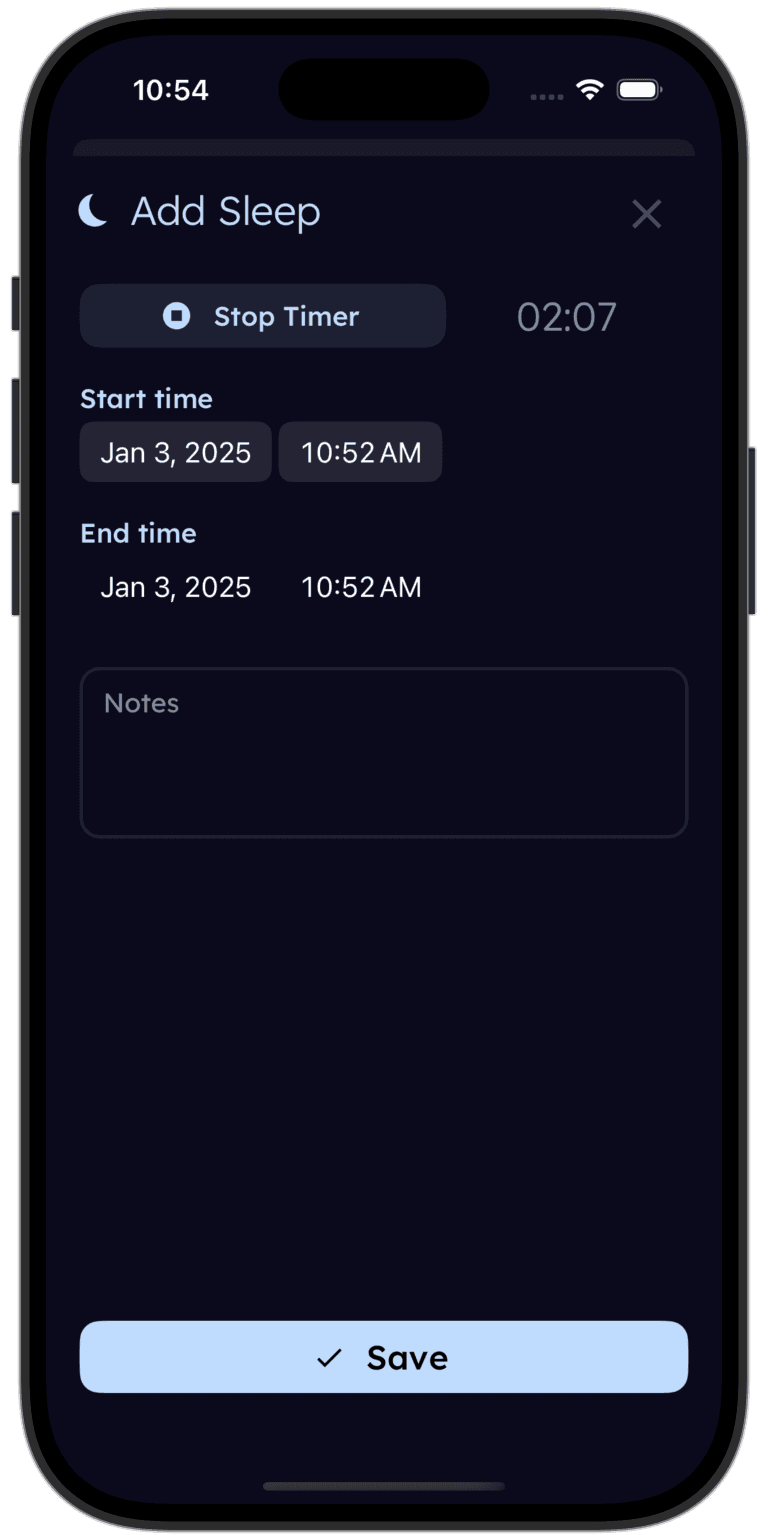
Tinylog tracks sleep so you can spot patterns.
Log naps and overnight sleep, track wake windows, and see how your baby's sleep evolves over weeks and months. Bring the data to your next pediatrician visit.


The Nightlight and Toddler Clock: What Makes the Hatch Different
The two features that most clearly separate the Hatch Rest+ from any budget competitor are the customizable nightlight and the toddler sleep clock.
The nightlight lets you set any color and brightness level, with different settings for different times of day. During night feeds, many parents set a dim red light — wavelengths less likely to suppress melatonin or fully wake a groggy adult. During morning wake-ups, a brighter warm white. None of this is possible on the HoMedics.
The toddler sleep clock is a programmed color cue — typically red for "stay in bed" and green for "it's OK to get up." For children around ages 2–3 who understand simple visual rules, this feature can meaningfully reduce early morning wake-ups. It's essentially a child-readable clock that communicates in color rather than numbers. If you have a toddler who gets up at 5 AM, this feature alone can make the Hatch feel worth the price difference.
If your child is a newborn, you won't need the toddler clock for at least two years. But many families factor in the long lifespan of the device when evaluating the cost.
| Product | Typical Price | Annual Cost | Notes |
|---|---|---|---|
| HoMedics SoundSpa (standard model) | $20–$25 | ~$20–$25 | One-time purchase, no subscription required |
| Hatch Rest+ (hardware only) | $70–$80 | ~$70–$80 (year 1) | Core features work without subscription |
| Hatch Rest+ with Hatch+ subscription | $70–$80 + ~$50/year | ~$120–$130 (year 1), ~$50 thereafter | Full sound library and sleep programs require subscription |
Price and Long-Term Value
The HoMedics SoundSpa costs $20–$25 and does one job for as long as it lasts. There is no subscription, no account, no ongoing cost.
The Hatch Rest+ costs $70–$80 for the hardware. Core features — white noise, nightlight, manual app control — work without a subscription. The Hatch+ subscription (~$50/year) unlocks the full sound library, sleep programs, and additional content. In the first year, a fully subscribed Hatch setup costs roughly $120–$130.
A few ways to think about the value:
- Useful lifespan: The HoMedics does one thing at every age. The Hatch serves as a sound machine in infancy, a programmable nightlight through toddlerhood, and a sleep clock through preschool. Spread over three or four years, the hardware cost drops to $20–$25/year — comparable to buying a new HoMedics every year.
- Replacing multiple devices: Families who would otherwise buy a separate nightlight and a separate toddler clock in addition to a sound machine will find the Hatch consolidates three purchases into one.
- Subscription optional: The Hatch+ subscription is genuinely optional for many families. If you are satisfied with the base sound library, you do not need to subscribe.
The honest math: if you only need white noise and you're not interested in app control, nightlights, or toddler clocks, the HoMedics is the rational choice. If you want the full package, the Hatch is worth the premium.
Portability: An Important Practical Consideration
This is an area where the HoMedics SoundSpa has a clear practical advantage.
The HoMedics is small, lightweight, and battery-powered. It fits in a diaper bag. It works in hotel rooms, at grandparents' house, in vacation rentals, and anywhere without a WiFi network. For families who travel frequently or want a machine for multiple locations, this flexibility is significant.
The Hatch Rest+ is designed to live in the nursery. It requires wall power, and its app-control features require a WiFi connection. It works offline for manual adjustments, but the programmed schedules and remote control depend on connectivity. Traveling with it is possible but not convenient.
Many families who own a Hatch as their primary nursery machine also own a HoMedics specifically for travel — spending $20 to avoid disrupting the home setup on the road.
Choose the Hatch Rest+ If
- You want app-controlled sound and light without entering the nursery at night
- A customizable nightlight is important — you want to set the color and brightness for bedtime, night feeds, and morning
- You plan to use the toddler sleep clock feature when your child is 2–3 years old
- You want programmable schedules so the device automatically changes sounds and light at bedtime and wake-up
- Budget allows for a multi-function device that replaces a separate nightlight and sleep trainer
Choose the HoMedics SoundSpa If
- Budget is a priority and you need reliable white noise for under $25
- You want a travel-friendly machine that runs on batteries and fits in a diaper bag
- Simple, physical controls are preferred — no app, no WiFi, no setup
- You already have a separate nightlight and don't need the added features
- You want a backup machine for grandparents' house, travel, or a secondary room
- Your child is older and the toddler clock and nightlight features are not relevant
Where to Buy
The Hatch Rest+ (~$70–$80) is available at Amazon, Target, Buy Buy Baby, and direct from Hatch at hatch.co. If you plan to subscribe to Hatch+, check whether bundled deals are available at checkout. The device occasionally goes on sale during major retail events.
The HoMedics SoundSpa (~$20–$25) is widely available at Amazon, Target, Walmart, Walgreens, and most big-box stores. It's a common registry item and a practical gift because it ships quickly and has no setup friction.
Tinylog earns a small commission on purchases made through these links, at no cost to you.
Before you buy, it's worth checking promo.new for a deal. It doesn't cover everything, but we've had good luck with it.
The Bottom Line
The HoMedics SoundSpa and the Hatch Rest+ are both legitimate answers to the same basic question — how do I create a consistent sound environment for my baby's sleep?
The HoMedics SoundSpa is the right choice if you want simple, reliable white noise at minimal cost. It has no learning curve, no subscription, no WiFi requirement, and it travels well. For families who already have a nightlight, don't need app control, and want to spend as little as possible on sound, it is genuinely sufficient.
The Hatch Rest+ is the right choice if you want an app-controlled sleep system that grows with your child. The nightlight replaces a separate nursery light, the toddler clock extends the device's usefulness through preschool, and the remote control via app means you can adjust settings at 2 AM without opening the door. The premium is real, but so is the functionality.
There is no universal right answer. For many families, the HoMedics handles the first six months perfectly well and a Hatch makes sense when the toddler phase approaches. For others, starting with the Hatch from day one simplifies the nursery setup. Either machine will help your baby sleep — and tracking that sleep in Tinylog helps you understand whether what you're doing is working.
Related Guides
- White Noise vs. Pink Noise vs. Brown Noise for Babies — Which type of noise is best for infant sleep
- Baby Fighting Sleep — Why it happens and what to do about it
- 4-Month Sleep Regression — What changes at 4 months and how to get through it
- 2-Year Sleep Regression — Why toddlers suddenly fight sleep again
Sources
- American Academy of Pediatrics. "Infant Sleep Safety Recommendations." healthychildren.org, 2026.
- Hatch. "Rest+ Sound Machine & Nightlight — Product Specifications." hatch.co, 2026.
- HoMedics. "SoundSpa White Noise Machine — Product Information." homedics.com, 2026.
- Consumer Reports. "Best White Noise Machines for Babies." consumerreports.org, 2026.
- BabyGearLab. "Best Baby Sound Machines of 2026, Tested and Reviewed." babygearlab.com, 2026.
- Wirecutter / NYT. "The Best White Noise Machine." nytimes.com/wirecutter, 2026.
- National Sleep Foundation. "White Noise and Sleep." sleepfoundation.org, 2026.
This guide is for informational purposes only. Sound machine use should follow safe sleep guidelines from the American Academy of Pediatrics. Place all sound machines at least 7 feet from your baby's sleep space and keep volume at or below 50 decibels. If you have questions about your child's sleep, consult your pediatrician.
Frequently asked questions
- Is the Hatch Rest+ worth the price compared to a budget white noise machine?
- It depends on how you'll use it. If you only want continuous white noise, the HoMedics SoundSpa does that job for $20. The Hatch Rest+ earns its ~$75 price tag through its app-controlled schedules, customizable nightlight, toddler sleep clock, and the fact that it adapts as your child grows from infant through the preschool years. For families who want one device to handle sleep cues and bedtime routines for multiple years, the cost-per-year math gets more favorable over time.
- Can the HoMedics SoundSpa run all night?
- The HoMedics SoundSpa has an auto-off timer with settings for 15, 30, and 60 minutes. It does not have a continuous-play mode that runs indefinitely. If you need all-night sound, you would need to turn off the timer or leave the button in the continuous position depending on your model. Always check your specific model's instructions. The Hatch Rest+ can run all night through its app-controlled schedules.
- Does the Hatch Rest+ require a subscription?
- The Hatch Rest+ hardware functions without a subscription. Basic sound and light control through the app is included. The Hatch+ subscription (currently ~$5/month or $50/year) unlocks the full sound library, sleep programs, and additional content. The core functionality — white noise, nightlight, toddler clock — works without it.
- Is white noise safe for babies?
- The American Academy of Pediatrics recommends keeping white noise machines at least 7 feet from an infant's sleep space and at a volume no louder than 50 decibels — roughly the level of a quiet conversation. Both machines should be placed at a safe distance from the crib. Avoid placing any sound machine directly inside the crib or attached to the rail at full volume.
- Can I use the HoMedics SoundSpa for travel?
- Yes. The HoMedics SoundSpa is compact and lightweight, making it a popular travel option. It runs on either AC power or four AA batteries, so it works in hotel rooms or anywhere without a convenient outlet. The Hatch Rest+ is less travel-friendly — it's larger, requires WiFi for app control, and does not have a battery mode.
- What age is the Hatch Rest+ toddler clock feature useful?
- The toddler clock (sometimes called the 'OK to Wake' feature) becomes useful around ages 2–3, when children develop enough understanding to associate the light color with whether it's time to stay in bed or get up. Many families buy the Hatch Rest+ as an infant sound machine and then find the toddler clock feature extends its useful life through the preschool years.