
GUIDE
Honey and Babies
Published on
No honey before 12 months. Not raw, not pasteurized, not in baked goods, not 'just a tiny bit.' The risk is infant botulism, and it's not worth taking.
This is one of the few absolute rules in infant feeding. Here's why, and what to use instead.
Log foods and reactions
Why Honey Is Different From Other Foods
Most food rules for babies have nuance. Most of them have some flexibility. The honey rule does not.
Honey can contain spores of Clostridium botulinum, the bacterium that causes botulism. In adults and older children, these spores are harmless — the mature gut has enough competing bacteria and acidity to prevent the spores from colonizing. But in babies under 12 months, the gut is still immature. The spores can germinate, colonize the intestine, and produce botulinum toxin — one of the most potent toxins known.
Infant botulism is rare (about 100 cases per year in the US), but it's serious. It can cause progressive muscle weakness, breathing difficulty, and hospitalization. Most babies recover with treatment, but recovery can take weeks to months.
This is why every major health organization — the AAP, CDC, WHO, and every relevant medical body — says the same thing: no honey before 12 months. Not raw, not pasteurized, not in baked goods, not "just a tiny taste."
Signs of Infant Botulism
- Constipation — often the first sign, and it may be the only early sign
- Weak or altered cry — sounds different from normal, may be softer or higher-pitched
- Poor feeding — baby seems uninterested in eating or has difficulty sucking/swallowing
- Lethargy — excessive sleepiness, less responsive than usual
- Weak muscle tone (hypotonia) — baby seems floppy, can't hold head up as well as before
- Decreased movement — less active than normal
- Difficulty breathing in severe cases — this is a medical emergency
Symptoms typically appear 3-30 days after exposure. Constipation is often the earliest sign. If your baby has consumed honey and develops any of these symptoms, contact your pediatrician immediately and mention the honey exposure.
Common Questions That Come Up
"But my grandmother gave my parent honey as a baby and they were fine." Probably. Most honey doesn't contain botulinum spores, and most exposures don't result in illness. But some honey does contain spores, and when it does, the consequences for a baby are serious. The risk is low per exposure, but the potential outcome is severe. It's a simple rule to follow for 12 months.
"Can I use honey in baking for baby?" The official recommendation is no. Botulinum spores are extremely heat-resistant and may survive standard baking temperatures. Temperatures above 250°F (121°C) under sustained pressure (like in a pressure cooker or autoclave) are needed to reliably destroy spores. Your oven reaches higher temperatures, but the internal temperature of the food may not sustain those levels long enough. It's not worth the gamble when safe alternatives exist.
"What about corn syrup? I heard that's a risk too." Light corn syrup was historically flagged as a potential botulism source, but the risk is considered very low with commercially processed corn syrup. The AAP does not specifically warn against corn syrup for babies, though it's not a recommended food for nutritional reasons (it's pure sugar). If you're concerned, avoid it — you don't need corn syrup in baby food.
| Alternative | Use For | Notes |
|---|---|---|
| Mashed banana | Sweetening oatmeal, yogurt, or baked goods | Natural sweetness, easy to mash, adds potassium and fiber |
| Unsweetened applesauce | Baking, mixing into cereal, sweetening yogurt | Widely available, mild flavor, adds moisture to baked goods |
| Mashed dates | Baking, energy balls, smoothies | Very sweet, nutrient-dense (iron, fiber). Soak in water to soften before blending. |
| Maple syrup (pure) | Sweetening oatmeal, yogurt, baked goods | Safe for babies over 6 months (no botulism risk). Use sparingly — it's still added sugar. |
| Fruit purees | Any recipe calling for sweetener | Pear, peach, and mango purees all add natural sweetness |
| Cinnamon or vanilla | Adding flavor without sweetness | A dash of cinnamon in oatmeal or yogurt adds perceived sweetness without actual sugar |
Hidden Honey Sources to Watch For
- Honey graham crackers — check ingredients
- Some breads and baked goods — honey is a common ingredient
- Honey-flavored cereals and snacks
- Some BBQ sauces and marinades
- Honey-sweetened yogurt
- Some cough syrups and herbal remedies — always check labels
- Homemade baked goods from well-meaning relatives — let everyone know the rule
Read ingredient labels on anything you feed baby — honey shows up in products you wouldn't expect. And make sure every caregiver (grandparents, babysitters) knows the rule.
One less thing to track — once baby turns 12 months, honey is fair game.
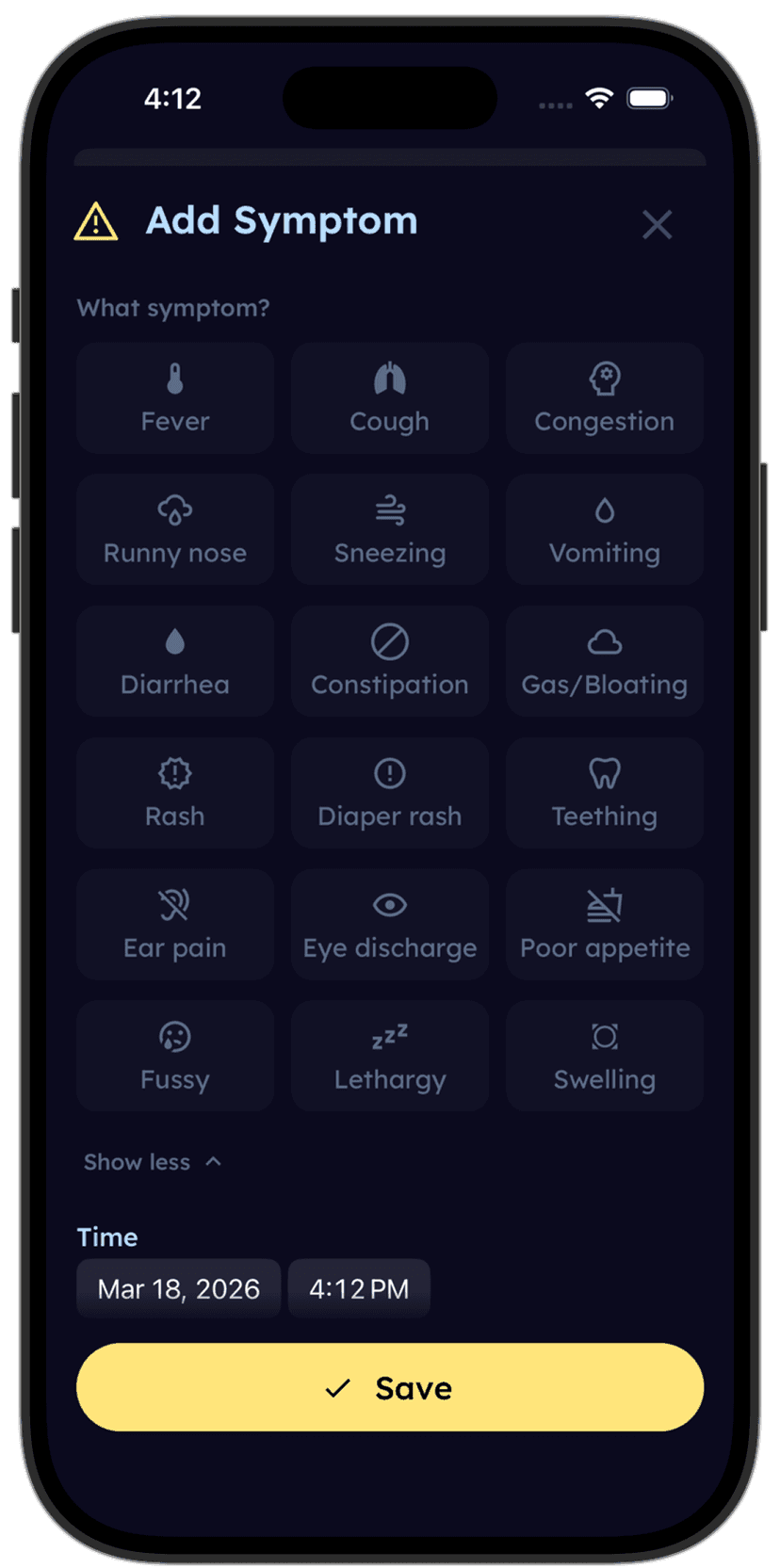
Until then, Tinylog helps you keep track of everything else — meals, new foods, and milestones — so you can focus on what matters without the mental juggling.


Related Guides
-
Water for Babies — When to start and how much
-
First Foods for Baby — Best foods to start with
-
How to Start Solids — A first-time parent's complete guide
Sources
- American Academy of Pediatrics. (2024). Botulism. HealthyChildren.org.
- Centers for Disease Control and Prevention. (2024). Infant Botulism. CDC.gov.
- World Health Organization. (2023). Complementary Feeding. WHO.int.
- Arnon, S. S., et al. (2006). Botulinum Toxin as a Biological Weapon: Medical and Public Health Management. JAMA, 285(8), 1059-1070.
- FDA. (2024). Bad Bug Book: Clostridium botulinum.
Medical Disclaimer
This guide is for informational purposes only and is not a substitute for professional medical advice. Consult your pediatrician before starting solids, especially regarding allergen introduction for high-risk infants. All caregivers should be trained in infant CPR before offering solid foods.
Frequently asked questions
- Can babies have honey in baked goods?
- The official recommendation is to avoid honey in all forms before 12 months, including baked goods. While the high temperatures in baking may destroy some Clostridium botulinum spores, it's not guaranteed to eliminate all of them — spores are remarkably heat-resistant. The AAP, CDC, and WHO all recommend avoiding honey entirely before 12 months.
- Is pasteurized honey safe for babies?
- No. Pasteurization does not destroy Clostridium botulinum spores. Pasteurized honey and raw honey carry the same botulism risk for infants. The spores require temperatures above 250°F (121°C) sustained under pressure to be reliably destroyed — standard pasteurization doesn't reach this threshold.
- What about Manuka honey or organic honey?
- Same rule — no honey of any kind before 12 months. Manuka, organic, raw, pasteurized, local, imported — the botulism risk is identical regardless of the type, source, or processing of the honey.
- What happens if a baby accidentally eats honey?
- Don't panic. A single accidental exposure does not guarantee illness — the risk is real but not 100%. Watch for symptoms over the next 3-30 days: constipation, weak cry, poor feeding, lethargy, weak muscle tone (floppiness). If you notice any of these symptoms, contact your pediatrician immediately and mention the honey exposure.
- When can babies have honey?
- After their first birthday (12 months). By this age, the gut has matured enough that Clostridium botulinum spores are no longer able to colonize and produce toxin. After 12 months, honey is safe and can be enjoyed as a natural sweetener.