GUIDE

Water for Babies

No water before 6 months. Small sips with meals starting at 6 months. Water becomes a regular drink as solid food intake increases toward 12 months.

Water is simple for adults. For babies, the rules are a little different — and the reasons matter.

The Simple Timeline

Water rules for babies are straightforward, but the reasons behind them matter — especially the 'no water before 6 months' rule, which trips up a lot of well-meaning parents and grandparents, particularly in hot weather.

Before 6 months, breast milk and formula are 80-90% water. They provide all the hydration your baby needs — even in summer, even on the hottest day. Adding water to a young baby's diet displaces the calorie-dense milk they need and, in extreme cases, can dangerously dilute their blood sodium levels.

After 6 months, when solid foods start, small sips of water with meals are fine. The primary purpose at this stage is cup-drinking practice, not hydration — milk is still handling most of the fluid needs. Water intake gradually increases as solid food intake increases, and by 12 months, water is a regular part of baby's drink rotation alongside milk.


Water by Age
0-6 months
Water NeededNone
SourceBreast milk or formula provides all the fluid baby needs (both are 80-90% water)
NotesDo not give water. Even in hot weather, extra breast milk or formula is the answer — not water.
6-8 months
Water NeededA few sips with meals (1-2 oz per meal)
SourceOpen cup or straw cup, offered during solid food meals
NotesThis is practice, not hydration. Breast milk/formula is still the primary fluid. The cup skill matters more than the volume.
9-11 months
Water Needed2-4 oz per day (in addition to milk)
SourceOpen cup or straw cup with meals and snacks
NotesAs solid food intake increases, water intake naturally increases. Follow baby's thirst cues.
12 months+
Water Needed4-8 oz per day, increasing with age
SourceOpen cup throughout the day, with meals and as needed
NotesWater becomes a regular drink alongside whole cow's milk (16-24 oz) and meals.
1-3 years
Water NeededApproximately 16-32 oz per day total fluids (including milk)
SourceOpen cup, straw cup, water bottle
NotesOffer water regularly. Toddlers who are active or in hot weather need more.
These are guidelines, not rigid targets. Follow your baby's thirst cues. In hot weather or when baby is active, they may need more.

Why Too Much Water Is Dangerous for Babies

  • Water intoxication (hyponatremia) — too much water dilutes sodium in the blood, which can cause seizures, brain swelling, and in extreme cases, death. This is most dangerous in babies under 6 months but can happen at any age with excessive water intake.
  • Reduced breast milk or formula intake — water fills the tiny stomach and displaces the calorie-dense, nutrient-rich milk that baby actually needs. A baby who drinks water instead of milk is getting fewer calories and nutrients.
  • In hot weather, the answer is more breast milk or formula, not water — at least for babies under 6 months. Breast milk adjusts its composition in hot weather to provide more hydration.

Water intoxication is rare, but it's preventable. Follow the age-appropriate guidelines and never give water to a baby under 6 months.

Cup Skills: Start Practicing at 6 Months

Open cup (recommended from 6 months)

A small, open cup — like a shot glass or tiny cup — is the best way to teach drinking skills. Yes, there will be spills. Yes, baby will pour it on themselves. This is how they learn. Open cups promote proper oral motor development and lip closure.

Straw cup (from 6-9 months)

Straw drinking develops different oral motor skills than open cup drinking — both are valuable. Many babies figure out straws between 6-9 months. Start with a softer silicone straw. You can hold the straw to baby's lips with a bit of water in it so they get the idea.

360 cups / sippy cups (not recommended as primary)

360 cups and traditional sippy cups use a sucking motion similar to a bottle, not the lip closure and tongue movement of real cup drinking. They're not harmful, but they shouldn't be the only cup baby uses. Prioritize open and straw cups.

Starting cup practice at 6 months — even though baby will mostly dribble water down their front — sets up the transition away from bottles by 12-15 months. The AAP recommends weaning from bottles by 12-15 months to protect dental health and reduce excessive milk consumption.

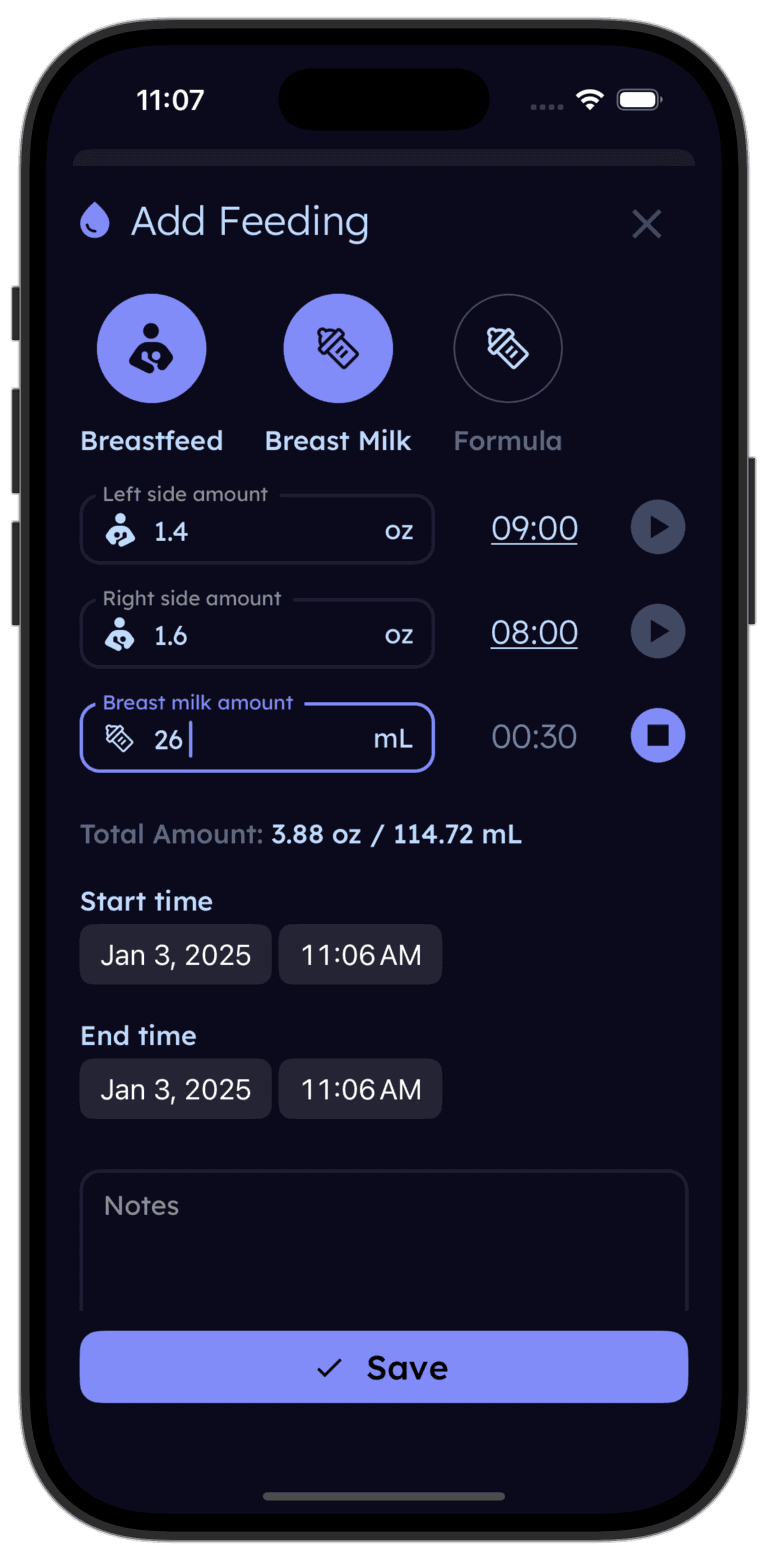
tinylog tracking showing mix of milk feeds, solids, and water

Milk, solids, water — as the balance shifts, having a log helps you (and your pediatrician) see the full picture.

tinylog tracks both milk feeds and solid meals, so you can see how the balance shifts over time. When water enters the mix, you've got the complete intake picture in one place.

Download on the App StoreGet It On Google Play

Fluoride and Baby's Water

Tap water: Most US municipal water is fluoridated, which supports dental health. Tap water is fine for babies over 6 months. If you're on well water, check fluoride levels — your pediatrician can recommend fluoride supplements if needed.

Nursery water: Marketed as "baby water," usually with added fluoride. Not necessary if your tap water is fluoridated. Not harmful, just not required.

Bottled water: Fine to use if you prefer, but no advantage over tap water for safety or nutrition in most US locations. Most bottled water is not fluoridated.

Distilled water: Sometimes recommended for mixing formula. Not needed for drinking water after 6 months — regular tap or filtered water is fine.

Related Guides

Sources

  • American Academy of Pediatrics. (2024). Recommended Drinks for Children Age 5 & Younger. HealthyChildren.org.
  • USDA & HHS. (2020). Dietary Guidelines for Americans, 2020-2025.
  • AAP Committee on Nutrition. (2017). The Use and Misuse of Fruit Juice in Pediatrics. Pediatrics, 139(6).
  • World Health Organization. (2023). Complementary Feeding. WHO.int.
  • CDC. (2024). Water and Healthier Drinks. CDC.gov.

Medical Disclaimer

This guide is for informational purposes only and is not a substitute for professional medical advice. Consult your pediatrician before starting solids, especially regarding allergen introduction for high-risk infants. All caregivers should be trained in infant CPR before offering solid foods.

Get this guide in your inbox.
We'll send you the water timeline so you know exactly when and how much.
Feeds, solids, water — track it all in one place.
Download tinylog free — a complete picture of your baby's intake.
Download on the App StoreGet It On Google Play