
GUIDE
Infant Optics DXR-8 PRO vs. HelloBaby HB32W
Published on
Both are solid video baby monitors without Wi-Fi. The DXR-8 PRO wins on image quality, interchangeable lenses, and range. The HB32W costs about half the price and still delivers reliable monitoring for most nurseries.
These two monitors represent opposite ends of the dedicated (non-Wi-Fi) baby monitor market. The Infant Optics DXR-8 PRO is a premium pick with an interchangeable lens system and 720p video. The HelloBaby HB32W is a budget favorite that nails the basics without frills. Choosing between them comes down to how much you value optical flexibility and whether the price gap is worth it for your setup.
Log naps, wake windows, and night wakings
Two Monitors, Two Price Points — Same Core Job
The Infant Optics DXR-8 PRO and the HelloBaby HB32W are both dedicated, non-Wi-Fi video baby monitors. That means no apps, no cloud accounts, no firmware updates at 2 AM, and no one hacking into your nursery camera. They connect directly between camera and parent unit on an encrypted signal, and that is it.
The DXR-8 PRO is the premium option in this matchup. It has a 720p HD camera, a 5-inch parent unit screen, and an interchangeable lens system that no other consumer baby monitor offers. The HelloBaby HB32W costs roughly half the price and skips the bells and whistles, but it does the core job — letting you see and hear your baby — without complaints.
We compared video quality, range, night vision, features, and value so you can figure out which one makes sense for your nursery and your wallet.
| Feature | DXR-8 PRO | HelloBaby HB32W | What It Means |
|---|---|---|---|
| Video resolution | 720p HD | 640 × 480 (VGA) | The DXR-8 PRO delivers noticeably sharper video, especially in daylight. |
| Screen size | 5" IPS LCD | 3.2" TFT LCD | Bigger screen on the DXR-8 PRO makes it easier to see details from across the room. |
| Connection type | FHSS 2.4 GHz (no Wi-Fi) | FHSS 2.4 GHz (no Wi-Fi) | Tie. Both are closed-circuit with no internet dependency or hacking risk. |
| Range (open air) | Up to 1,000 ft | Up to 960 ft | Functionally similar. In-home range depends on walls and interference. |
| Night vision | Infrared, automatic, sharp | Infrared, automatic, adequate | Both switch on automatically. The DXR-8 PRO image is clearer in the dark. |
| Interchangeable lenses | Yes — normal, wide-angle, zoom sold separately | No — fixed lens only | Unique DXR-8 PRO feature. Lets you swap lenses to fit different room sizes. |
| Two-way audio | Yes | Yes | Tie. Both let you talk to your baby through the parent unit. |
| Temperature sensor | Yes — displayed on screen | Yes — displayed on screen with high/low alerts | Both show nursery temperature. The HB32W adds configurable alert thresholds. |
| Lullabies | Yes — 4 built-in | Yes — 8 built-in | HelloBaby offers more lullaby options, though sound quality is basic on both. |
| Multi-camera support | Up to 4 cameras | Up to 4 cameras | Tie. Both systems expand for multiple rooms or kids. |
| VOX mode (sound-activated) | Yes | Yes | Tie. Screen turns off to save battery and wakes when baby makes noise. |
| Parent unit battery | Rechargeable, ~10 hrs in VOX mode | Rechargeable, ~8 hrs in VOX mode | DXR-8 PRO lasts a bit longer, but both will get you through a night. |
Video Quality: Where the Price Difference Shows Up
This is the most obvious gap between the two monitors. The DXR-8 PRO shoots at 720p, and the HelloBaby HB32W tops out at VGA (640 × 480). On paper that is a big difference. In practice, it matters most in two situations: daytime viewing where you want to see facial expressions clearly, and night vision where more resolution means more detail in a dark room.
If you mostly check the monitor to confirm your baby is breathing and still in the crib, VGA is honestly fine. If you want to zoom in and see whether those little eyes are open or closed from across the house, the 720p upgrade is worth it.
The screen size compounds this difference. The DXR-8 PRO's 5-inch IPS display is bright and crisp. The HB32W's 3.2-inch screen is small enough that VGA resolution looks acceptable on it, but you will be squinting more if the parent unit is across the room.
The Lens System: A Feature Nobody Else Has
The DXR-8 PRO's interchangeable lens system is genuinely unique. The camera ships with a standard-view lens, and you can swap in a wide-angle lens (great for large rooms or if the crib is off-center) or an optical zoom lens (useful if the camera must sit far from the crib).
Each lens costs about $10–$15. They twist on and off in seconds. It is a clever solution to the problem every baby monitor has: a fixed lens works perfectly for one room layout and terribly for another. With the DXR-8 PRO, you can adjust.
The HelloBaby HB32W has a fixed lens with a decent field of view for a standard nursery. If your room is a normal rectangle and you can mount or place the camera within about 6–8 feet of the crib, you will be fine. But you cannot adjust it if your setup changes.
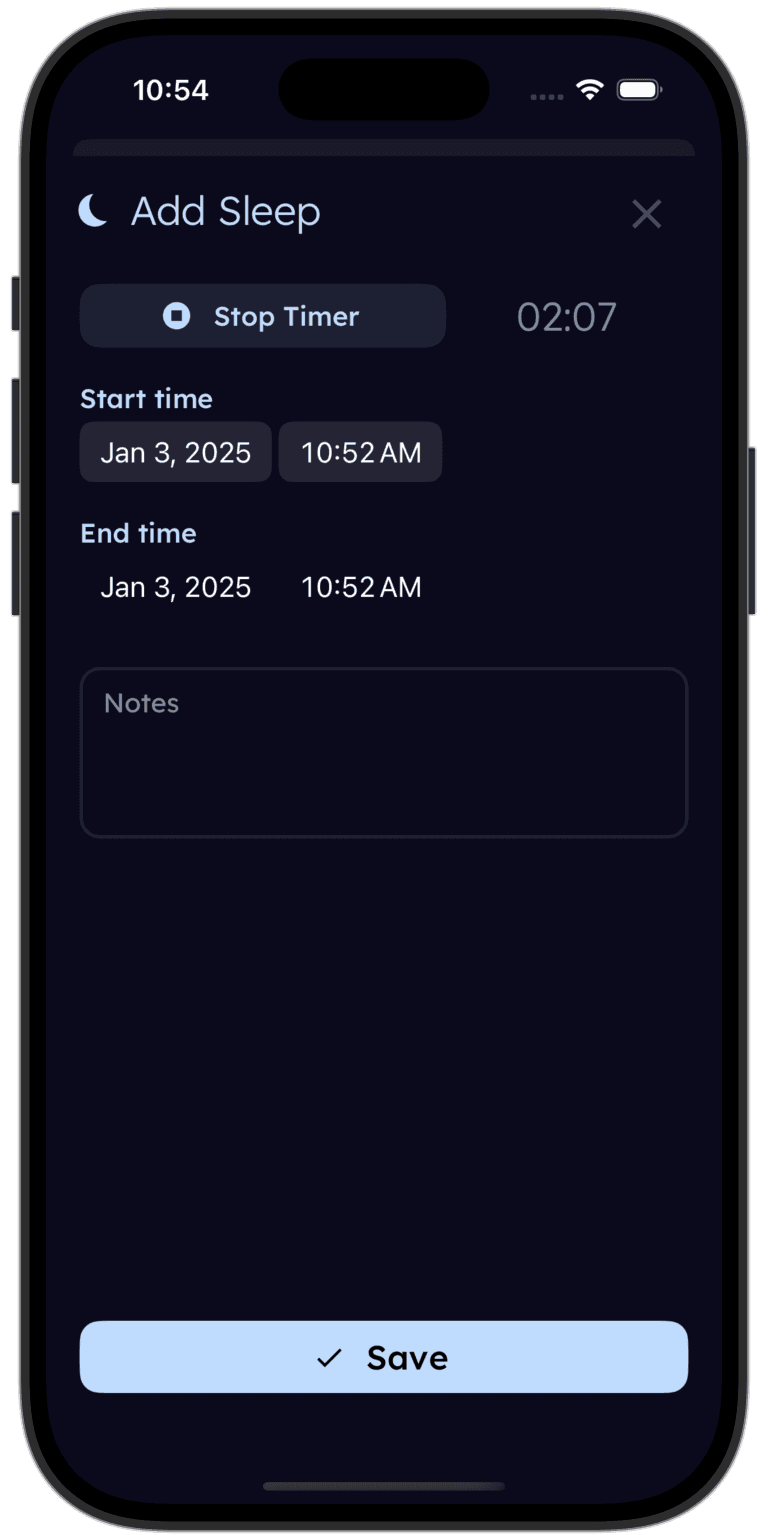
Tinylog tracks sleep so you can spot patterns.
Log naps and night wakings, track wake windows, and see your baby's sleep trends over days and weeks. Bring the data to your next pediatrician visit.


Range, Reliability, and Night Vision
Both monitors use FHSS 2.4 GHz connections with similar rated ranges (1,000 ft for the DXR-8 PRO, 960 ft for the HB32W). In a real home with drywall, furniture, and other wireless devices, expect 150–250 feet of solid performance from either one.
Both have out-of-range alerts that beep when you wander too far. Both reconnect automatically when you come back in range. Neither requires your home Wi-Fi to be working, which is a real advantage during internet outages.
Night vision is automatic on both — the cameras detect low light and switch to infrared. The DXR-8 PRO produces a crisper, more detailed night image thanks to the better sensor. The HB32W night vision is perfectly functional but softer. You can still clearly see your baby in either case.
| Product | Typical Price | — | Notes |
|---|---|---|---|
| Infant Optics DXR-8 PRO (camera + parent unit) | $149–$179 | — | One-time purchase |
| Infant Optics add-on camera | $99–$119 | — | Per additional camera |
| HelloBaby HB32W (camera + parent unit) | $49–$69 | — | One-time purchase |
| HelloBaby add-on camera | $29–$39 | — | Per additional camera |
Price: The Elephant in the Nursery
Let's be direct about the money. The DXR-8 PRO typically costs $149–$179. The HelloBaby HB32W typically costs $49–$69. That is a $100+ gap for what is fundamentally the same category of product.
Is the DXR-8 PRO three times better? No. But it is meaningfully better in video quality, screen size, lens flexibility, and build quality. Whether that justifies the price depends entirely on your priorities.
A few things worth considering:
- Baby monitors get used for 2–3 years minimum. Spreading $150 over 900+ nights of use is about 17 cents a night. The HB32W is about 6 cents a night. Both are cheap per-use purchases.
- If you plan multiple kids, the DXR-8 PRO's build quality and multi-camera support make it a better long-term investment.
- If you just need something that works and your budget is tight, the HB32W is genuinely good. It is the best-selling budget baby monitor on Amazon for a reason.
Choose the Infant Optics DXR-8 PRO If
- You want the sharpest video quality you can get without Wi-Fi
- Your nursery is large or oddly shaped and you might need a wide-angle lens
- You plan to use the monitor for multiple kids over several years
- You want a bigger parent-unit screen for easier viewing at a glance
- You value a longer parent-unit battery life for overnight use
Choose the HelloBaby HB32W If
- Your budget is under $70 and you want a reliable no-frills monitor
- You have a standard-sized nursery where VGA resolution is plenty clear
- You want temperature alerts that notify you when the room gets too hot or cold
- You prefer more built-in lullaby options
- You need an affordable multi-camera setup for twins or multiple rooms
- You want a simple, compact parent unit that fits in a pocket
Where to Buy
The Infant Optics DXR-8 PRO (~$165 at most retailers) is the monitor to get if you want the best image quality and lens flexibility in a non-Wi-Fi baby monitor. The 5-inch screen and 720p camera make a real difference, and the interchangeable lens system means it adapts as your nursery setup changes. Amazon and Target tend to have the best prices.
The HelloBaby HB32W (~$55 at most retailers) is the smart pick if you want a reliable, simple baby monitor without paying premium prices. It does everything a baby monitor needs to do — video, audio, night vision, temperature — and it does it well enough that millions of parents have given it strong reviews.
Whichever you choose, you are getting a secure, non-Wi-Fi monitor that will let you keep an eye on your baby without worrying about app crashes or internet outages.
Tinylog earns a small commission on purchases made through these links, at no cost to you.
Want to save a few bucks? promo.new is worth a quick look. It won't always have your product, but when it does, the savings are real.
The Bottom Line
The Infant Optics DXR-8 PRO and HelloBaby HB32W both do the fundamental job well: they let you see and hear your baby on a secure, dedicated connection without any Wi-Fi dependency.
The DXR-8 PRO is the better monitor by every technical measure — sharper video, bigger screen, interchangeable lenses, and longer battery life. It is a premium product that justifies its price for parents who want the best non-Wi-Fi option available.
The HelloBaby HB32W is the better value. It costs roughly half as much and still delivers reliable video, clear audio, night vision, temperature monitoring, and lullabies. For parents on a budget or those who just need a straightforward monitor without extras, it is hard to beat.
If you are tracking your baby's sleep schedule — which is helpful for establishing nap routines and spotting regression patterns — Tinylog makes it easy to log naps and night wakings alongside your monitoring setup.
Related Guides
- 1-Month-Old Sleep Schedule — What to expect and how to start building habits
- Baby Feeding Chart — How much your baby should eat by age
- 4-Month Sleep Regression — Why it happens and how to get through it
- Newborn Not Sleeping — Common causes and what to try
Sources
- InfantOptics.com. "DXR-8 PRO — Product Specifications." 2026.
- HelloBaby.com. "HB32W Video Baby Monitor — Product Information." 2026.
- BabyGearLab. "Best Baby Monitors of 2026." babygearlab.com.
- Wirecutter (The New York Times). "The Best Baby Monitors." nytimes.com/wirecutter, 2026.
- Consumer Reports. "Best Baby Monitors From Our Tests." consumerreports.org, 2026.
- FCC.gov. "FHSS and Digital Spread Spectrum Technologies." Federal Communications Commission.
This guide is for informational purposes only. Product features and prices may change. Always verify current specifications on the manufacturer's website before purchasing.
Frequently asked questions
- Does the Infant Optics DXR-8 PRO use Wi-Fi?
- No. The DXR-8 PRO uses a closed FHSS 2.4 GHz signal that connects directly between the camera and parent unit. There is no Wi-Fi, no app, and no cloud connection, which means it cannot be hacked remotely.
- Can the HelloBaby HB32W pan and tilt remotely?
- No. The HB32W has a fixed camera. You can manually adjust the angle during setup, but you cannot pan, tilt, or zoom from the parent unit. The DXR-8 PRO also has a fixed camera body but supports interchangeable optical lenses for different fields of view.
- Which monitor has better night vision?
- Both monitors offer infrared night vision that activates automatically in low light. The DXR-8 PRO produces a sharper, more detailed night image thanks to its 720p sensor. The HB32W night vision is adequate for seeing your baby clearly but with less fine detail.
- How far away can I take the parent unit?
- The Infant Optics DXR-8 PRO is rated for up to 1,000 feet in open air. The HelloBaby HB32W is rated for up to 960 feet. In a typical home with walls and interference, expect roughly 150–250 feet of reliable range from either unit.
- Do I need to buy extra lenses for the DXR-8 PRO?
- The DXR-8 PRO ships with a standard normal-view lens. Infant Optics sells optional wide-angle and optical zoom lenses separately for about $10–$15 each. The wide-angle lens is popular for larger nurseries. The base lens works fine for most rooms.
- Can I use multiple cameras with either monitor?
- Yes to both. The DXR-8 PRO supports up to four cameras on a single parent unit. The HelloBaby HB32W also supports up to four cameras. Additional cameras are sold separately for each system.