
GUIDE
Love to Dream Swaddle Up vs. Burt's Bees Beekeeper Wearable Blanket
Published on
These two products serve different sleep stages. Love to Dream Swaddle Up is a swaddle for newborns who sleep with arms up. Burt's Bees Beekeeper is a wearable blanket (sleep sack) for babies who have outgrown swaddling. If your baby is under 3-4 months and not rolling, start with the Swaddle Up. Once they roll, transition to the Beekeeper.
Comparing a swaddle to a sleep sack is a bit like comparing apples to oranges — they solve different problems at different stages. But parents shopping for safe sleep products often land on both of these in the same search. This guide breaks down exactly what each product does, who it's for, and when to use which one.
Log naps, night sleep, and wake windows
A Swaddle and a Sleep Sack Walk Into a Nursery
Here's the thing nobody tells you in the baby aisle: the Love to Dream Swaddle Up and the Burt's Bees Beekeeper Wearable Blanket are not really competitors. They are sequential products that solve different problems at different stages of your baby's sleep journey.
The Love to Dream Swaddle Up is a swaddle. It wraps your newborn snugly with their arms up, dampens the startle reflex, and helps brand-new babies feel like they are back in the womb. You use it from birth until your baby starts rolling — typically around 3 to 4 months.
The Burt's Bees Beekeeper Wearable Blanket is a sleep sack. It keeps your baby warm without loose blankets in the crib (which are a SIDS risk). Arms are free, legs can kick, and it works from around 2 months all the way through toddlerhood.
Many families end up owning both. This guide helps you figure out which one you need right now and what to expect when the time comes to switch.
For more on building healthy sleep habits, check out our 1-month-old sleep schedule guide.
| Feature | Love to Dream Swaddle Up | Burt's Bees Beekeeper | What It Means |
|---|---|---|---|
| Product type | Swaddle (arms enclosed) | Wearable blanket / sleep sack (arms free) | Different categories. Swaddle Up is for pre-rolling newborns. Beekeeper is for post-swaddle babies. |
| Age range | Newborn to ~4-6 months (until rolling) | 0-18+ months (multiple sizes) | The Beekeeper covers a much wider age range. The Swaddle Up is strictly a newborn product. |
| Arm position | Arms up — enclosed in wing-shaped pouches | Arms out — sleeveless design | The Swaddle Up's arms-up position mimics the natural newborn startle-reflex posture. The Beekeeper frees arms entirely. |
| Fabric | 93% cotton, 7% elastane (Original); varies by version | 100% GOTS-certified organic cotton | Burt's Bees wins on organic certification. Love to Dream's elastane blend provides the stretch needed for a snug swaddle fit. |
| Zipper design | Dual zipper (top-down and bottom-up) | Full-length front zipper (bottom-up) | Both allow easy diaper changes without fully removing the garment. Love to Dream's dual zip is slightly more versatile. |
| Hip safety | Certified hip-healthy (IHDI) | Roomy sack allows natural hip positioning | Both support healthy hip development. The Swaddle Up has formal IHDI certification. |
| Temperature options | Multiple TOG ratings (0.2, 1.0, 2.5) | Lightweight cotton; quilted version for cooler temps | Love to Dream offers more precise TOG options. Burt's Bees keeps it simple with fewer variants. |
| Startle reflex management | Yes — enclosed arms dampen the Moro reflex | No — arms are free | If startle reflex is waking your newborn, the Swaddle Up addresses it directly. The Beekeeper does not. |
| Transition path | Transition Bag available (removable arm wings) | No transition needed — already arms-free | Love to Dream sells a separate transition product. The Beekeeper is already the destination format. |
| Certifications / Standards | IHDI certified; meets ASTM safety standards | GOTS organic; OEKO-TEX Standard 100 | Different strengths. Love to Dream leads on hip safety. Burt's Bees leads on organic and chemical-free certifications. |
| Machine washable | Yes — cold wash, tumble dry low | Yes — machine wash, tumble dry low | Tie. Both hold up well through repeated washing. |
The Arms-Up Design: Why It Matters
The Love to Dream Swaddle Up became popular for one reason: it lets babies sleep with their arms up instead of pinned down at their sides.
Traditional swaddles wrap babies like burritos with arms straight down. Plenty of babies tolerate this fine. But some babies fight it constantly, breaking free and waking themselves up in the process. The Swaddle Up works with your baby's natural arm position rather than against it.
The wing-shaped arm pouches keep hands near the face (where most newborns naturally hold them) while still providing enough compression to dampen the Moro reflex. Babies can self-soothe by touching their face through the fabric without getting their hands fully free.
This is a genuine design advantage for babies who resist traditional swaddling. If your baby hates being swaddled arms-down, the Swaddle Up is worth trying before you give up on swaddling entirely.
Organic Cotton and What's Actually in the Fabric
The Burt's Bees Beekeeper wins hands-down on fabric sourcing. It is made from 100% GOTS-certified organic cotton — no synthetic fibers, no flame retardants, no chemical softeners. GOTS certification means the entire supply chain, from the cotton farm to the finished garment, meets strict environmental and social standards.
The Love to Dream Swaddle Up Original uses a 93% cotton, 7% elastane blend. The elastane (spandex) is what gives it that stretchy, snug fit — and for a swaddle, some stretch is genuinely necessary. You cannot get the same secure wrap from pure cotton without some elastic component.
So this is a trade-off, not a clear win. The Beekeeper is the better choice if you are prioritizing organic certification above all else. The Swaddle Up uses a small amount of synthetic fiber for a functional reason. Neither product contains flame retardants, which is the more important thing to avoid.
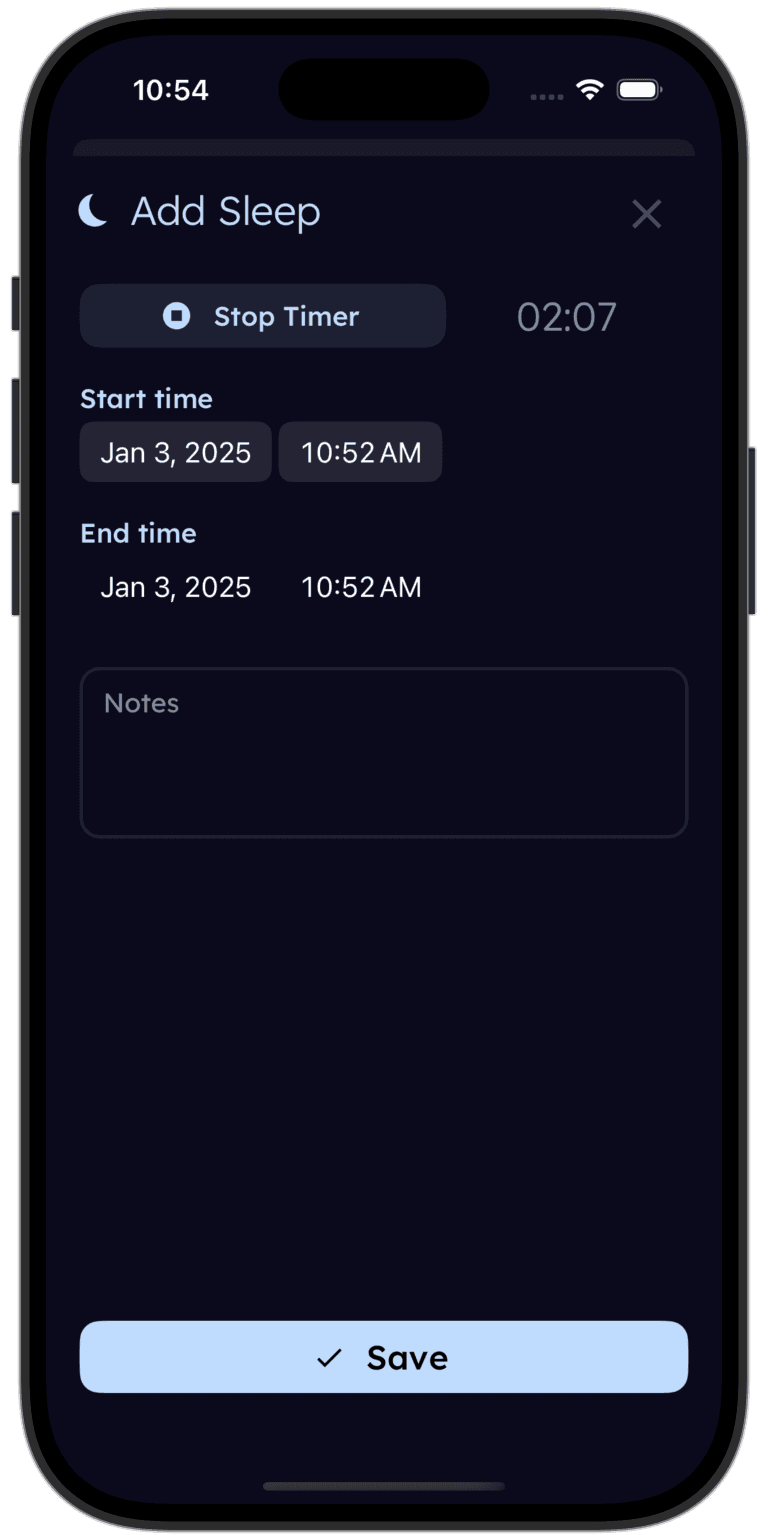
Tinylog tracks sleep so you can spot what's working.
Log naps, night wakes, and total sleep hours. See whether that new swaddle or sleep sack actually made a difference. Bring real data to your next pediatrician visit.


When to Use Which: The Timeline
Here is the practical timeline most families follow:
Birth to 3-4 months (pre-rolling): Use the Love to Dream Swaddle Up. Your newborn's startle reflex is strongest during this period, and the snug arms-up design helps them sleep longer stretches. Stop using it the moment your baby shows any signs of rolling.
3-4 months (transition): If you want a gradual transition, Love to Dream sells a Transition Bag with zip-off arm wings. You remove one wing at a time over several nights so your baby adjusts to having arms free. This step is optional — some babies handle the switch cold turkey.
4 months onward: Switch to the Burt's Bees Beekeeper or another sleep sack. Arms are free, the baby can move and roll safely, and the wearable blanket keeps them warm without any loose bedding in the crib.
The key rule: once your baby can roll, the swaddle must go. A baby who rolls face-down while swaddled cannot use their arms to reposition, which is a suffocation risk. This is not optional or a judgment call — it is a firm safety guideline from the AAP.
| Product | Typical Price | Cost Per Diaper | Monthly Estimate |
|---|---|---|---|
| Love to Dream Swaddle Up Original (Stage 1) | $28–$34 | N/A | One-time purchase; most families buy 2-3 |
| Love to Dream Swaddle Up Transition Bag (Stage 2) | $32–$38 | N/A | One-time purchase; buy when baby starts rolling |
| Burt's Bees Beekeeper Wearable Blanket | $18–$26 | N/A | One-time purchase per size; most families buy 2-3 |
Price: The Beekeeper Is the Better Value
On pure cost, the Burt's Bees Beekeeper wins. At $18-$26 per blanket, it is significantly cheaper than the Love to Dream Swaddle Up at $28-$34. And the Beekeeper lasts longer — you will size up once or twice over 12+ months, compared to the Swaddle Up's 3-4 month window.
That said, comparing their prices directly is a bit misleading. You are not choosing between them so much as choosing when to buy each one. If your newborn needs help with the startle reflex, the Swaddle Up is worth the investment for those first few months of sleep. The Beekeeper is the affordable long-term solution that takes over afterward.
A few ways to save on both:
- Buy multi-packs when available — Love to Dream occasionally offers two-packs at a discount
- Watch for sales on Amazon, Target, and buybuyBABY
- Check secondhand — both products hold up well through multiple babies, and consignment shops often carry them
- Register for them — both are popular baby registry items
Choose the Love to Dream Swaddle Up If
- Your baby is a newborn who hasn't started rolling yet
- The startle (Moro) reflex is waking your baby up constantly
- Your baby naturally sleeps with arms up near their face
- You want a snug, contained feeling that mimics the womb
- You need a product with formal hip dysplasia certification
Choose the Burt's Bees Beekeeper If
- Your baby has started rolling or showing signs of rolling
- Your baby is older than 4-5 months and done with swaddling
- Organic, chemical-free fabric is a top priority for you
- You want a sleep solution that lasts well into toddlerhood
- Your baby runs warm and needs a breathable lightweight layer
- You prefer a lower price point with straightforward sizing
Where to Buy
The Love to Dream Swaddle Up (~$30 for the Original) is the go-to swaddle for babies who sleep with their arms up. The dual-zipper design makes middle-of-the-night diaper changes painless, and the IHDI hip-safety certification gives peace of mind. Grab the Original 1.0 TOG for most room temperatures, or the Lite 0.2 TOG if your nursery runs warm.
The Burt's Bees Beekeeper Wearable Blanket (~$22) is an affordable, organic cotton sleep sack that lasts from the post-swaddle transition well into toddlerhood. The 100% GOTS-certified organic cotton and simple zipper design make it a favorite among parents who care about clean ingredients and easy nighttime changes.
If your baby is a newborn, start with the Swaddle Up. If your baby is already rolling or past the swaddle stage, go straight to the Beekeeper. Many families end up owning both.
Tinylog earns a small commission on purchases made through these links, at no cost to you.
Want to save a few bucks? promo.new is worth a quick look. It won't always have your product, but when it does, the savings are real.
The Bottom Line
The Love to Dream Swaddle Up and the Burt's Bees Beekeeper Wearable Blanket are both excellent products that serve different purposes at different stages.
Love to Dream Swaddle Up is the better choice for newborns (birth to ~4 months) who need help managing the startle reflex. The arms-up design is genuinely different from traditional swaddles and works well for babies who fight being wrapped arms-down.
Burt's Bees Beekeeper is the better choice from ~4 months onward. It is affordable, organic, breathable, and lasts through multiple sizes. Once your baby is done with swaddling, this is a solid default sleep sack.
The real answer for most families: you will probably buy both. Start with the Swaddle Up, transition around 3-4 months, and move to the Beekeeper for the long haul. Your baby will sleep safely through every stage, and your wallet will not take a major hit.
If you are tracking your baby's sleep — which is especially helpful when changing sleep products to see if the new setup actually improves things — Tinylog makes it easy to log naps, night wakes, and total sleep hours over time.
Related Guides
- 1-Month-Old Sleep Schedule — What to expect and how to build healthy habits early
- 4-Month Sleep Regression — Why sleep falls apart and how to get through it
- Baby Feeding Chart — How much your baby should eat by age
- Safe Sleep Guidelines — AAP recommendations for reducing SIDS risk
Sources
- Love to Dream. "Swaddle Up Original — Product Information." lovetodream.com, 2026.
- Burt's Bees Baby. "Beekeeper Wearable Blanket — Product Information." burtsbeesbaby.com, 2026.
- International Hip Dysplasia Institute. "Hip-Healthy Swaddling." hipdysplasia.org.
- American Academy of Pediatrics. "Safe Sleep Recommendations." aap.org, 2024.
- Global Organic Textile Standard (GOTS). "The Standard." global-standard.org.
- OEKO-TEX. "Standard 100 by OEKO-TEX." oeko-tex.com.
- Consumer Reports. "Best Sleep Sacks and Swaddles of 2026." consumerreports.org.
This guide is for informational purposes only and does not constitute medical advice. Always follow the AAP's safe sleep guidelines. Stop swaddling immediately when your baby shows signs of rolling. If you have questions about your baby's sleep safety, consult your pediatrician.
Frequently asked questions
- Can I use the Love to Dream Swaddle Up and Burt's Bees Beekeeper at the same time?
- Not literally at the same time, but many families own both and use them sequentially. The Swaddle Up works from birth until your baby starts showing signs of rolling (usually 3-4 months). The Beekeeper wearable blanket picks up from there and can be used well into toddlerhood. Think of them as Stage 1 and Stage 2 of safe sleep.
- Is the Love to Dream Swaddle Up safe for newborns?
- Yes. The Swaddle Up is hip-healthy (certified by the International Hip Dysplasia Institute) and allows babies to sleep in their natural arms-up position. It has a snug fit around the torso while leaving room for leg movement. You must stop using it once your baby shows signs of rolling over.
- What TOG rating should I choose for the Burt's Bees Beekeeper?
- The standard Burt's Bees Beekeeper wearable blanket is made from lightweight 100% organic cotton and works well in rooms kept at 68-72 degrees F. For cooler rooms, look for their quilted version. For warmer climates, their muslin option is thinner. Always check that your baby's chest feels warm but not sweaty.
- When should I switch from the Love to Dream Swaddle Up to a sleep sack?
- Transition when your baby shows signs of rolling, typically around 3-4 months. Love to Dream makes a transitional product (Swaddle Up Transition Bag) with removable wing zips that lets you free one arm at a time. From there, you can move to a sleep sack like the Beekeeper.
- Is Burt's Bees Beekeeper wearable blanket organic?
- Yes. The Beekeeper wearable blanket is made from 100% GOTS-certified organic cotton. It is free of synthetic fabrics, flame retardants, and chemical treatments. The cotton is grown without pesticides or synthetic fertilizers.
- Can my baby wear the Burt's Bees Beekeeper in a car seat?
- No. Wearable blankets and sleep sacks should not be worn in car seats, strollers, or any device with a harness. The extra fabric can interfere with harness fit and compromise safety. Use the Beekeeper only in the crib, bassinet, or pack-and-play.