
GUIDE
Lovevery The Play Gym vs. Fisher-Price Jumperoo
Published on
These serve different developmental stages and purposes. The Lovevery Play Gym is a Montessori-inspired floor play mat for newborns through 12 months. The Fisher-Price Jumperoo is an upright bouncing activity center for babies who can hold their heads up (4+ months) through walking. Most families benefit from both at different times.
Comparing a play gym to a jumper is like comparing a library to a playground — both have value, but they do completely different things for your kid. The Lovevery Play Gym focuses on sensory exploration, tummy time, and open-ended play on the floor. The Fisher-Price Jumperoo lets your baby bounce upright, spin, and interact with lights and music. Understanding when and why to use each one helps you spend smarter.
Log tummy time, play sessions, and developmental milestones
Totally Different Products — Here's Why You Might Want Both
Ok so real talk: comparing the Lovevery Play Gym to the Fisher-Price Jumperoo is like comparing a yoga mat to a trampoline. They are not the same category of thing. But parents search for this comparison constantly because they have a limited budget, limited space, and a baby who needs something to do.
The Lovevery Play Gym is a floor-based activity mat designed by child development researchers. It has five developmental zones, organic cotton construction, and high-contrast visuals for newborns. It is quiet, intentional, and very Montessori. Your baby lies on it, bats at things, does tummy time, and explores textures.
The Fisher-Price Jumperoo is a spring-loaded bouncing seat surrounded by spinning toys, lights, and music. Your baby stands upright in it, bounces like a tiny maniac, and is thoroughly entertained while you do literally anything else for 15 minutes.
Both are good products. They just solve completely different problems at different stages.
| Feature | Lovevery The Play Gym | Fisher-Price Jumperoo | What It Means |
|---|---|---|---|
| Type | Floor play gym / activity mat | Upright stationary jumper / activity center | Fundamentally different products. One is floor-based, the other is upright. |
| Age range | 0–12 months | 4+ months until walking (~12 months) | The Play Gym starts from birth. The Jumperoo requires head and neck control first. |
| Price | ~$140 | ~$80 | The Jumperoo costs about half. But the Play Gym has longer total usability and higher resale value. |
| Developmental focus | Sensory exploration, tummy time, cause-and-effect, fine motor skills | Gross motor activity, bouncing, 360-degree exploration, lights and sounds | Play Gym is quieter and more exploratory. Jumperoo is active and stimulating. |
| Materials | Organic cotton, sustainably sourced wood, silicone teether | Plastic frame, fabric seat, electronic toy attachments | Lovevery wins on material quality. Fisher-Price wins on durability and wipeability. |
| Stimulation level | Low-to-moderate — high-contrast cards, textured zones, batting toys | High — lights, music, spinning toys, spring-loaded bouncing | Depends on what you want. Montessori families prefer low stimulation. Babies universally love bouncing. |
| Footprint / storage | Folds flat, stores under furniture | ~32×32 inches, does not fold flat | The Play Gym is far easier to store. The Jumperoo lives wherever you put it. |
| Hands-free parent time | Moderate — baby is on the floor and mobile | High — baby is contained, upright, and entertained | If you need to cook dinner or take a call, the Jumperoo buys you more time. |
| Tummy time support | Yes — designed for it with prop pillow and zones | No — baby is upright in a seat | Only the Play Gym supports tummy time. Tummy time is critical for motor development. |
| Longevity / reuse | Converts to a play tent / fort for toddlers | Retired once baby walks — no secondary use | The Play Gym has a second life. The Jumperoo is a one-phase product. |
| Resale value | $80–$100 used | $20–$35 used | Lovevery products hold value extremely well. Jumperoos flood the secondhand market. |
The Developmental Argument: Floor Time vs. Bounce Time
Here is what pediatric occupational therapists will tell you if you ask them point blank: floor time wins for development. Tummy time builds core strength, neck control, and the foundation for crawling. Reaching for dangling toys develops hand-eye coordination. Rolling around on a mat teaches spatial awareness.
The Lovevery Play Gym is built around this philosophy. The five zones — black and white contrast cards for newborns, a wooden batting ring, a silicone teether, a mirror, and textured fabric — are designed to match specific developmental windows. It is not flashy. It does not make noise. That is the point.
The Jumperoo does something different. It lets babies who can hold their heads up experience upright bouncing, which they absolutely love. The 360-degree spinning seat means they can reach toys in every direction. The lights and sounds provide cause-and-effect feedback. Babies go wild in these things.
But here is the catch: the American Academy of Pediatrics and most pediatric physical therapists recommend limiting jumper time to 15-20 minutes per session. Extended time in jumpers can reinforce toe-walking patterns and may delay the progression from standing to independent walking. The bouncing motion does not translate to the muscle patterns needed for actual walking.
Floor time has no such limit. You literally cannot overdo tummy time (as long as baby is supervised and awake).
The Honest Case for the Jumperoo
Look. Developmental ideals are great. But you know what else is great? Taking a shower. Eating food with both hands. Having five minutes where nobody is crying.
The Jumperoo is a sanity product. Your baby is contained, upright, safe, and genuinely happy. The bouncing is self-directed — baby controls the intensity. The toys keep them engaged. And you get a window of hands-free time that floor play simply does not provide, because a mobile baby on a play mat still needs you right there.
Nobody should feel guilty about putting their baby in a Jumperoo. The 15-20 minute guideline exists so it does not become an all-day thing. Used in reasonable bursts, it is a perfectly fine tool in your rotation.
Also worth noting: some babies just hate floor time. They scream during tummy time. They want to be upright. For those babies, the Jumperoo is a gift from the baby product gods.
One more thing worth mentioning: the Jumperoo teaches cause-and-effect in a way that floor play does not. Baby pushes off with their feet, they bounce. Baby hits a spinning toy, it makes a sound. That feedback loop is genuinely valuable — it just happens to come packaged in a big plastic circle with flashing lights, which makes Montessori parents twitch. Both types of learning matter.
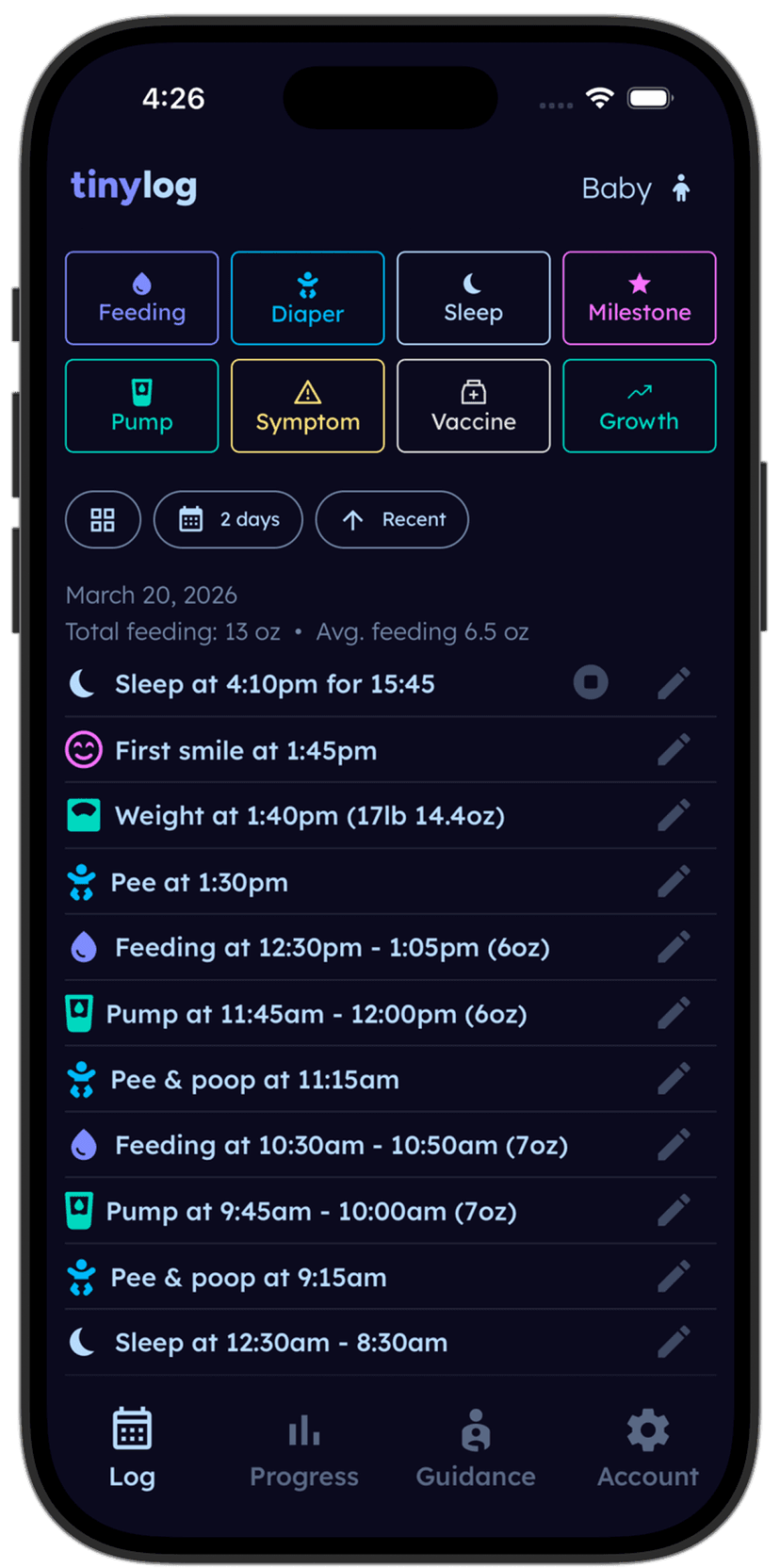
Tinylog tracks tummy time and play sessions.
Log tummy time minutes, play activities, and milestones. See patterns over weeks and months. Bring the data to your next pediatrician visit.


| Product | Typical Price | Daily Cost | Monthly Cost |
|---|---|---|---|
| Lovevery The Play Gym | $140 | ~$0.38/day over 12 months | ~$11.67/month if used full age range |
| Fisher-Price Jumperoo | $70–$90 | ~$0.33/day over 8 months | ~$10/month if used full age range |
| Both products together | $210–$230 | — | ~$19/month combined over 12 months |
Price: The Jumperoo Costs Less but the Play Gym Holds Value
At $140 vs. $80, the Lovevery Play Gym costs nearly twice as much upfront. But the math shifts when you factor in two things:
Usable age range. The Play Gym works from birth. The Jumperoo works from about 4-6 months until walking. So you get more months out of the Play Gym, and the daily cost ends up being similar.
Resale value. Lovevery products are wildly popular on the secondhand market. A used Play Gym in good condition sells for $80-$100 on Facebook Marketplace, Poshmark, and Mercari. That means your net cost could be as low as $40-$60. Used Jumperoos sell for $20-$35 because the market is flooded with them.
If you buy both and resell both, your total net cost is something like $85-$130 for two products that covered your baby's entire first year of play. That is honestly a solid deal.
Choose the Lovevery Play Gym If
- Your baby is a newborn and you want something they can use from day one
- You value open-ended, Montessori-style play with minimal overstimulation
- Organic and sustainably sourced materials matter to you
- You live in a smaller space and need something that stores flat
- You want strong resale value when your baby outgrows it
Choose the Fisher-Price Jumperoo If
- Your baby can hold their head up and is ready to bounce (4+ months)
- You need a contained, hands-free activity station so you can get stuff done
- Your baby is the type who wants to be upright and moving constantly
- You want maximum entertainment value per dollar spent
- You do not mind the larger footprint and plastic construction
- Your baby seems bored with floor play and craves more stimulation
Where to Buy
The Lovevery The Play Gym (~$140) is available direct from Lovevery's website and on Amazon. It is a beautiful, thoughtfully designed floor gym that grows with your baby from newborn through toddlerhood. If you care about materials, developmental research, and resale value, this is the one. Buy direct from Lovevery if you want their satisfaction guarantee.
The Fisher-Price Jumperoo (~$80) is available at Target, Walmart, Amazon, and basically everywhere baby products are sold. It is a proven, beloved bouncing station that babies absolutely lose their minds over. Multiple versions exist at different price points — the basic model delivers 90% of the experience at the lowest cost.
Our honest take: if your budget allows, get both. Use the Play Gym from birth for tummy time and sensory exploration, then add the Jumperoo around 4-6 months when baby wants to be upright. They complement each other perfectly.
Tinylog earns a small commission on purchases made through these links, at no cost to you.
Want to save a few bucks? promo.new is worth a quick look. It won't always have your product, but when it does, the savings are real.
The Bottom Line
The Lovevery Play Gym and the Fisher-Price Jumperoo are not competitors — they are complements. One is a calm, research-backed floor exploration tool for newborns. The other is a high-energy bouncing station for babies who want to move.
The Lovevery Play Gym is the better developmental investment. It supports tummy time, sensory exploration, and open-ended play from birth. It uses premium materials, stores flat, and resells for a surprising amount of money.
The Fisher-Price Jumperoo is the better sanity investment. It contains a wiggly baby safely, entertains them thoroughly, and gives you hands-free minutes that feel like hours. Just keep sessions to 15-20 minutes.
If you can only pick one and your baby is under 4 months, start with the Play Gym. If your baby is 4+ months, already over floor time, and you desperately need a hands-free solution, the Jumperoo will change your life immediately.
And if someone tells you that buying a Jumperoo means you are not doing Montessori right, you can tell them that a well-rested parent who got to eat lunch is a better parent than one who is white-knuckling it through hour three of floor play. Use both. Your baby will be fine.
If you are tracking your baby's tummy time, play sessions, and milestones — Tinylog makes it easy to log everything and see developmental progress over time.
Quick Note on Safety
Both products meet current CPSC and ASTM safety standards. A few things to keep in mind:
- Play Gym: Always supervise tummy time for young babies. Remove detachable parts when baby starts mouthing everything aggressively. The wooden frame legs should be secured flat if baby is rolling.
- Jumperoo: Adjust the seat height so baby's feet are flat on the floor, not on tiptoes. Stop using once baby can climb out or pull to standing on the frame. Never place on an elevated surface.
- Both: Check for recalls periodically. Fisher-Price in particular has had recalls on other products, though the Jumperoo line has a strong safety record.
Related Guides
- Baby Milestones — Month-by-month developmental milestones from birth to 24 months
- Tummy Time — How much, how often, and what to do when baby hates it
- Baby Feeding Chart — How much your baby should eat by age
- 4-Month Sleep Regression — What is happening and how to survive it
Sources
- Lovevery.com. "The Play Gym — Product Information and Research." 2026.
- Fisher-Price.com. "Jumperoo Activity Centers — Product Information." 2026.
- American Academy of Pediatrics. "Back to Sleep, Tummy to Play." healthychildren.org, 2025.
- Pediatric Physical Therapy Journal. "Effects of Baby Jumpers and Walkers on Motor Development." 2024.
- Consumer Reports. "Best Baby Activity Centers and Gyms." consumerreports.org, 2026.
- What to Expect. "Best Baby Jumpers and Bouncers." whattoexpect.com, 2026.
- Mommyhood101. "Lovevery Play Gym Review." mommyhood101.com, 2025.
This guide is for informational purposes only. Every baby develops differently. If you have concerns about your baby's motor development or milestone progression, consult your pediatrician or a pediatric occupational therapist.
Frequently asked questions
- Can I use the Lovevery Play Gym and Fisher-Price Jumperoo at the same time?
- Yes, but they serve different purposes. The Play Gym is ideal from birth through about 12 months for floor-based sensory exploration. The Jumperoo works once your baby can hold their head up independently (around 4-6 months) until they start walking. Many families use the Play Gym for tummy time and calm exploration, then put baby in the Jumperoo when they need hands-free time and baby wants to bounce.
- Is the Lovevery Play Gym worth $140?
- It depends on what you value. The Play Gym uses organic cotton, has five research-backed developmental zones, and converts from a newborn gym to a play tent for toddlers. If Montessori-style open-ended play matters to you, it is a thoughtful investment. If you want more stimulation and entertainment value, a standard play gym at half the price plus a Jumperoo might be a better use of that budget.
- Are jumpers like the Jumperoo bad for baby development?
- Pediatric physical therapists recommend limiting jumper time to 15-20 minutes per session. Extended time in jumpers can reinforce toe-walking patterns and delay independent standing. Used in moderation, jumpers are fine and babies love them. They should not replace floor time.
- What age is best for each product?
- The Lovevery Play Gym works from birth. Newborns benefit from the high-contrast cards and dangling toys overhead. The Jumperoo is appropriate once baby has strong head and neck control, usually around 4-6 months, and should be retired once baby starts pulling to stand or walking.
- Does the Fisher-Price Jumperoo take up a lot of space?
- Yes. The Jumperoo has a large footprint — roughly 32 by 32 inches — and does not fold flat. The Lovevery Play Gym folds up relatively easily and stores under a couch or bed. If space is tight, this is a real consideration.
- Which product has better resale value?
- The Lovevery Play Gym holds its resale value extremely well — used ones regularly sell for $80-$100 on Facebook Marketplace and Poshmark. The Jumperoo resale market is more saturated, and used ones typically go for $20-$35.